3 waves of Russian missiles slam Kyiv overnight, killing at least 1, injuring 8
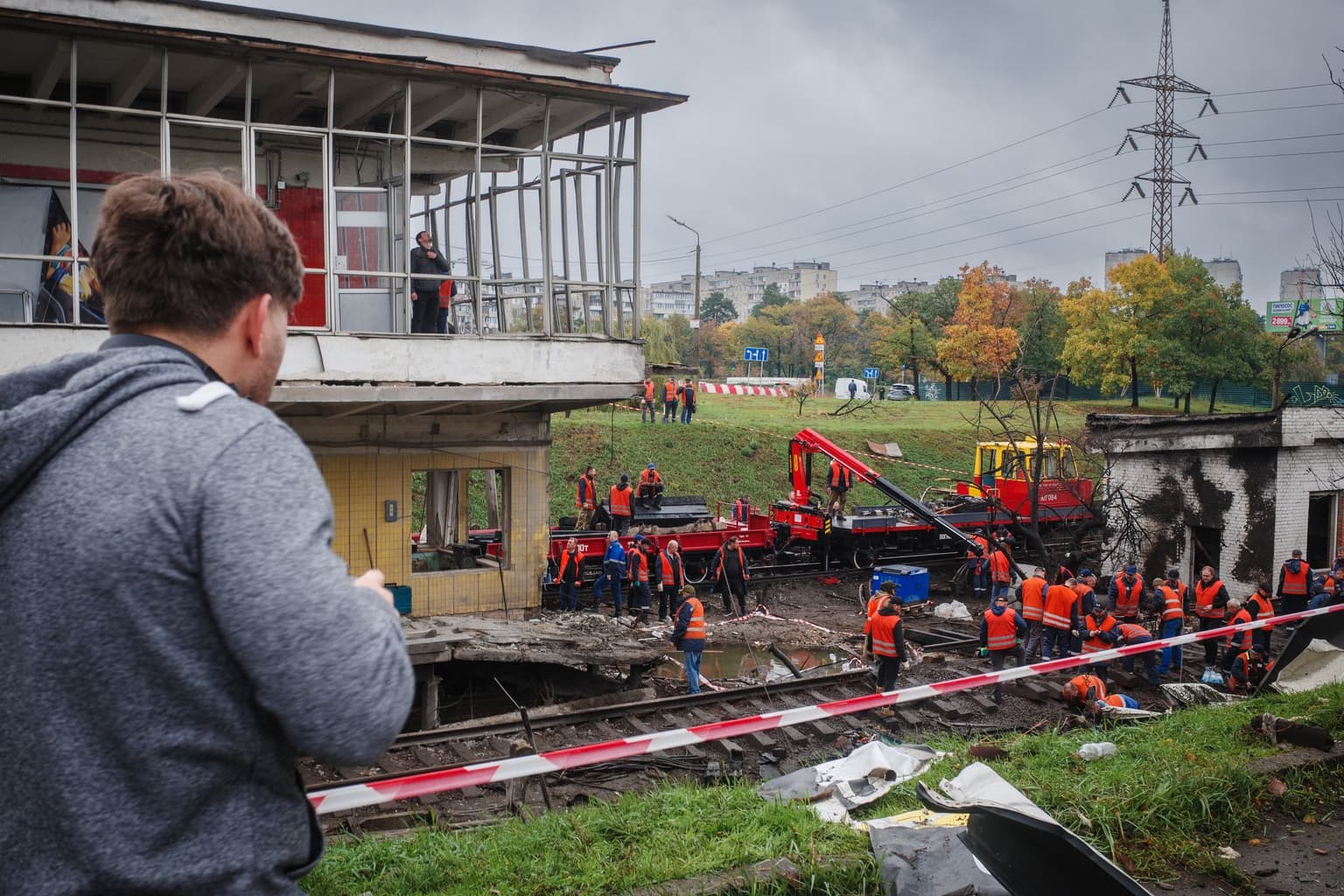
Metro workers repair tracks damaged in a Russian attack in Kyiv, Ukraine, on Oct. 19, 2026. (Chris Occhicone/The Kyiv Independent)
 on Google
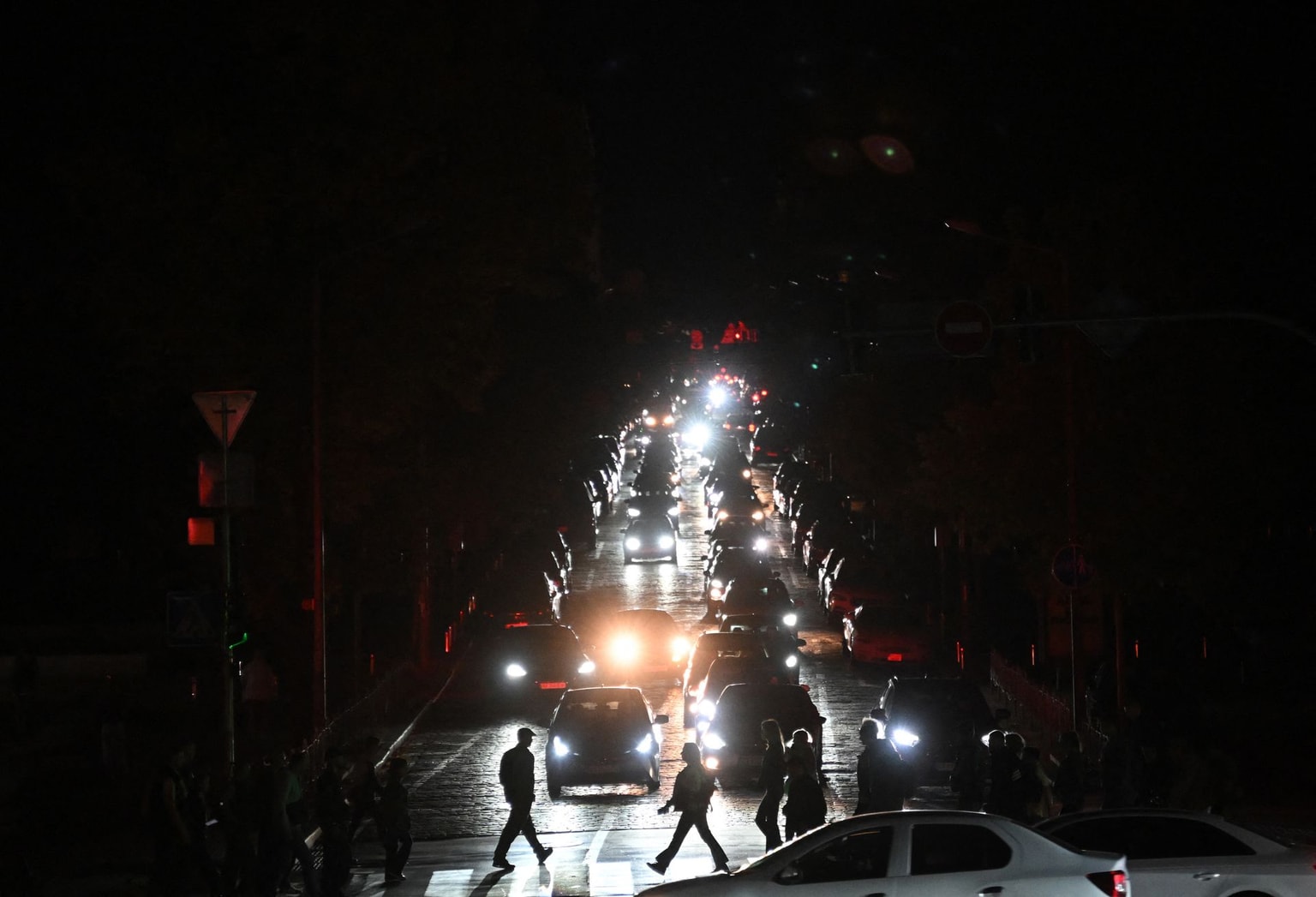
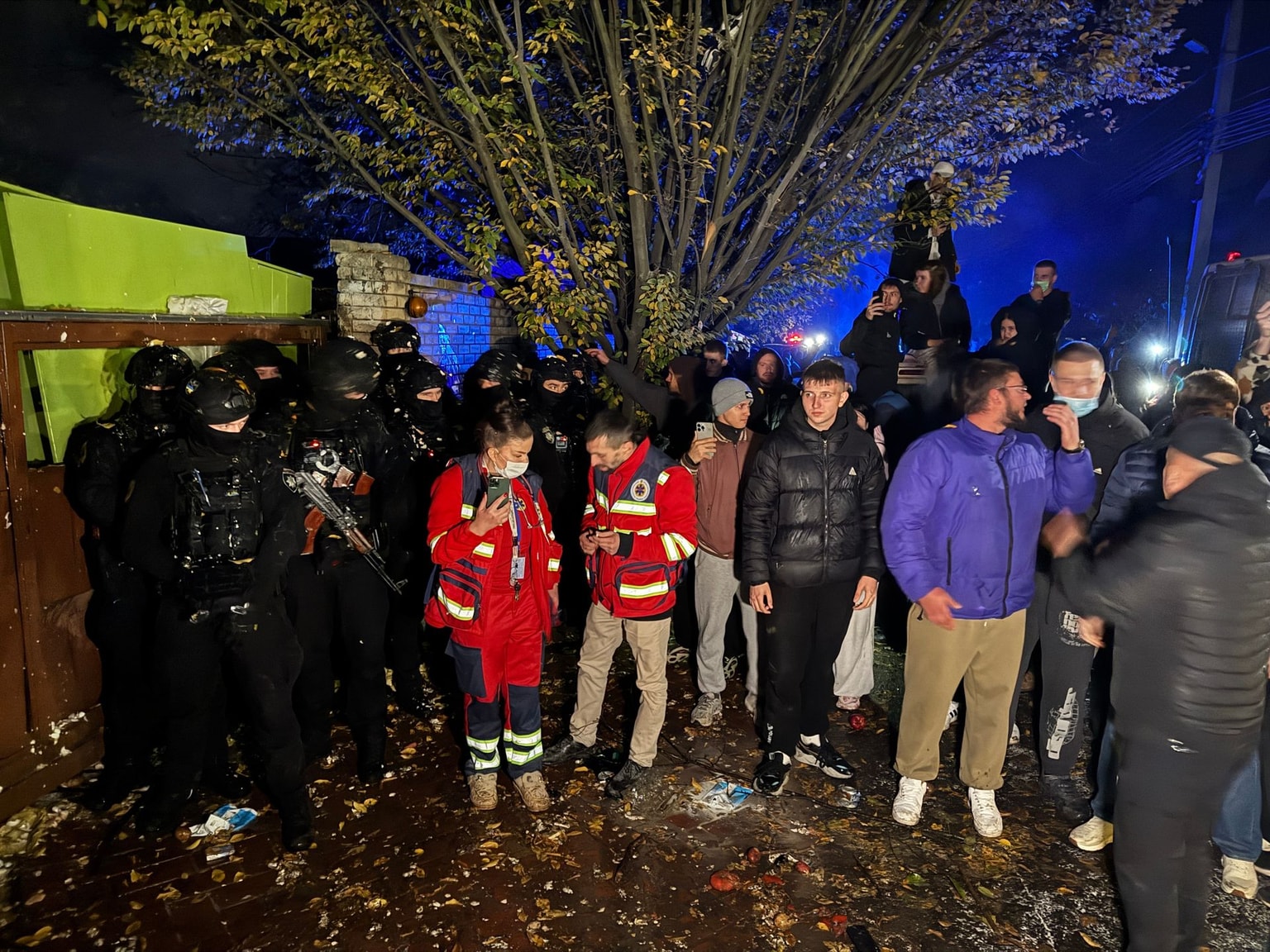
At least one person was killed and eight others injured after multiple waves of Russian missiles struck Kyiv overnight on Oct. 19.
Several explosions rocked the capital just before 11 p.m., with further attacks around 3 a.m. and 7 a.m., Kyiv Independent journalists on the ground reported. Ukraine's State Emergency Service (DSNS) said damage was reported in at least three districts.
One person was killed in the Desnianskyi District where a non-residential building caught fire and a metro station was damaged, DSNS said. Kyiv Mayor Vitali Klitschko earlier reported a fatality was that of 21-year-old woman.
The above-ground Chernihivska and Lisova metro stations were temporarily closed for repairs, city officials said.
Later on Oct. 19, Kyiv Mayor Vitali Klitschko said more than 70 workers were repairing the damaged metro infrastructure, with the most difficult work involving power supply and train control systems. Repairs had continued since overnight but were being slowed by air raid alerts, which forced crews to take shelter.
Train service between Lisova and Akademmistechko stations was expected to resume that evening, with trains skipping Chernihivska until repairs were completed, Klitschko added.
Five people were injured in the Solomianskyi District when a 25-story residential building was damaged, Kyiv Mayor Vitali Klitschko reported. It is not yet clear where the other injuries occurred.
The Cosmo Multimall shopping and entertainment center sustained significant damage in the Solomianskyi District. Its administration said no employees were injured and that the mall was working to resume operations as soon as possible. The center did not disclose the extent of the damage or provide a timeline for repairs.
Serhii Misan, 68, a local resident, had planned to pick up his new refrigerator from Cosmo Multimall on the morning of Oct. 19.
"I only paid for a refrigerator yesterday, and they told me I could pick it up today," Misan said. "And now look at what's happening here."
"(The Russians) are terrorists. They strike civilian targets. They spare no one — not children, not equipment, no one. They just kill civilians."

Misan added that, in light of recent developments, Ukraine would struggle to resist Russia without a strong partner like the U.S.
"If aid is reduced, it will be very difficult to stand up to an aggressor like Russia," he said. "We are not trying to seize their land. We are trying to defend our right to live freely on our own land."
Sofiia Kelli, 18, who lives in the Solomianskyi district, told The Kyiv Independent that her apartment was also damaged in the Russian attack on the capital. Her family was only able to take shelter in an underground parking garage after the attack began, as there was too little time between the air raid alert and the strikes.
"It was a huge shock. It was extremely loud — nothing like the other explosions we've heard in our neighborhood," Kelli said.
"I couldn't fall asleep afterward. Then I just sat in the bathroom and cried for a very long time. It's hard to process everything that happened because you always think something like this won't happen to you. And then it does."
"They [Russians] strike civilian targets. They [Russians] spare no one — not children, not equipment, no one. They [Russians] just kill civilians."
Kelli said she intends to stay in Kyiv despite the latest attack and is getting ready for the coming winter.
"Everything depends on electricity. Of course, it's difficult, but we're doing the best we can. We've installed solar panels (on the building) and a generator to keep the elevators running," she added.
Klitschko also reported damage to a medical center in the same district. The blast wave shattered more than 200 windows, damaged doors and ceilings, and damaged medical equipment, he said.
No medical center staff were injured, and there were no patients inside the facility at the time of the attack.

The Russian attack also destroyed a data center operated by telecommunications company Datagroup, which provides electronic communications services to users in more than 90 settlements across Ukraine.
The company said the facility's equipment and infrastructure had been damaged beyond repair. No employees were injured in the attack.
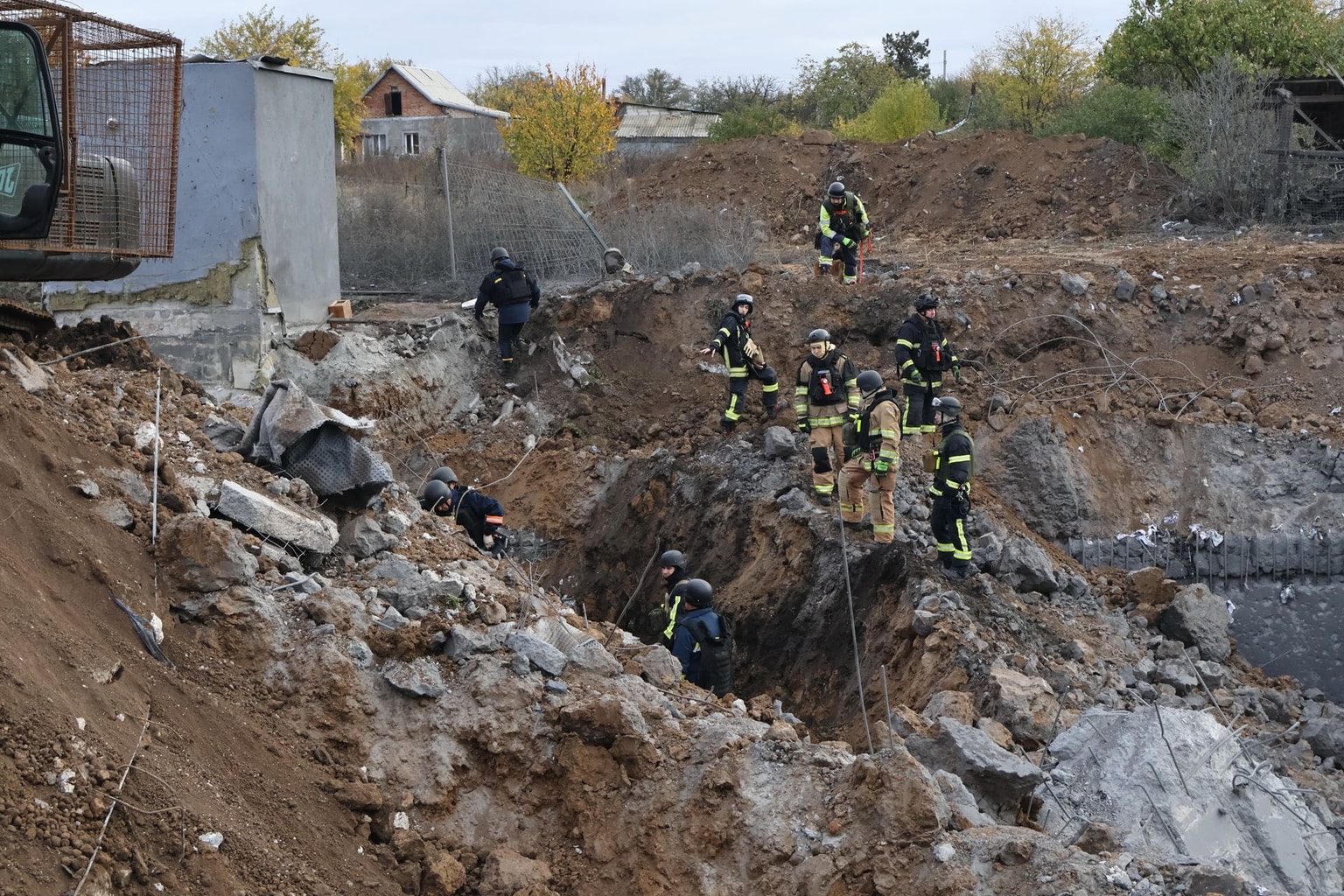
Russian attacks also hit settlements in Kyiv Oblast surrounding the capital. In Irpin, about 20 kilometers (12 miles) northwest of Kyiv, one woman was killed and 19 people were injured, including nine children.
At around 9 a.m. local time, Tymur Tkachenko, head of the Kyiv Regional Military Administration, said that three people were missing. Search operations are ongoing, he added.
The Russian strikes damaged 70 houses, five apartment buildings, industrial facilities, and warehouses in Irpin, according to Tkachenko.
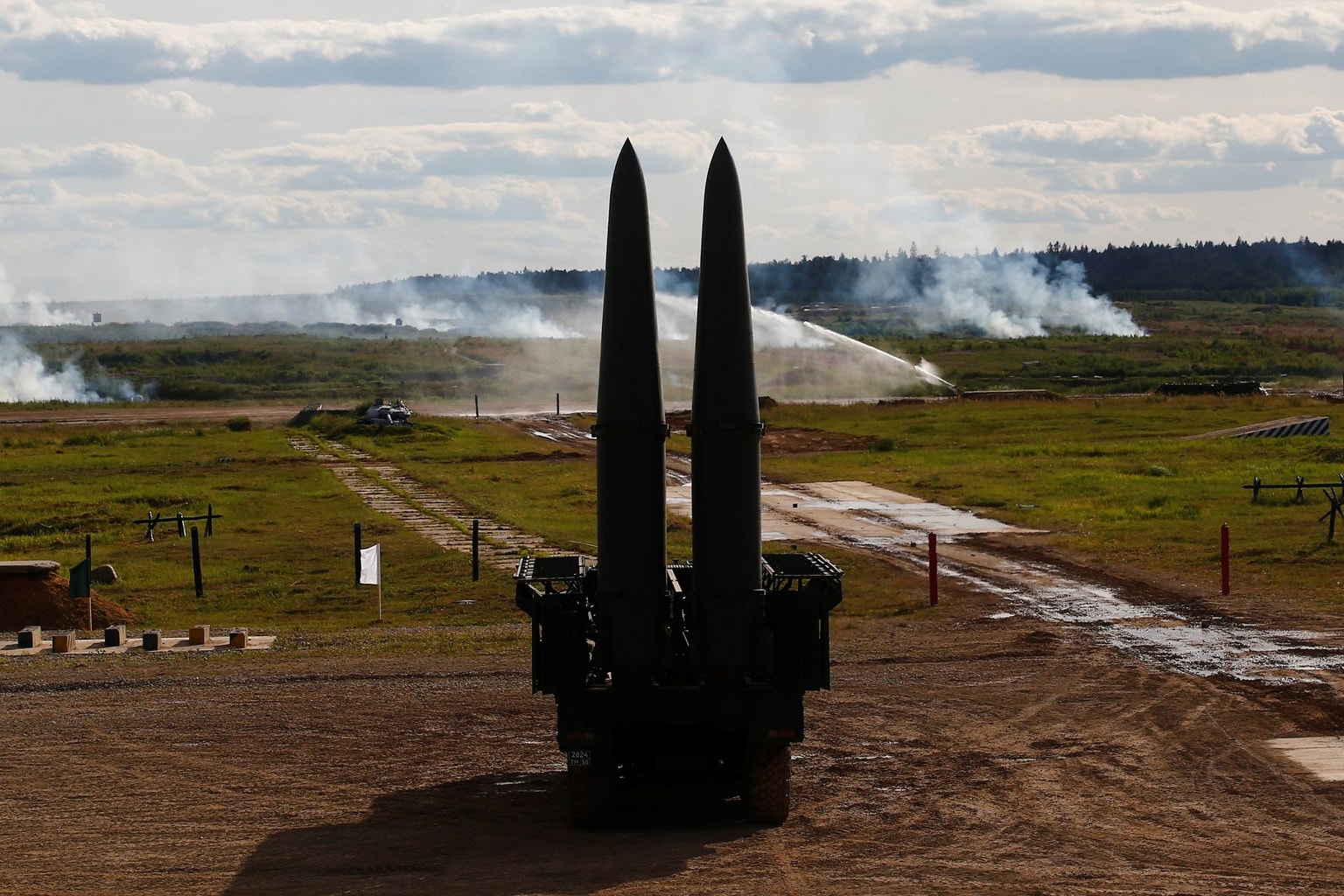
Recent ballistic missile strikes on Kyiv have arrived with little or no advance warning amid deteriorating relations between Ukraine and the U.S., which provides intelligence used to track Russian missile launches.
President Volodymyr Zelensky confirmed on the morning of Oct. 19 that Russian forces had attacked Ukraine with ballistic missiles, adding that Kyiv had received no advance warning from its partners about the launches.
According to Zelensky, Russia fired 16 ballistic missiles, with Kyiv and the surrounding region being the primary targets.
"When deliveries of missiles for Ukraine's air defense are blocked while Russia is granted relief or delays in sanctions, this is, unfortunately, a denial of reality on the part of our partners," Zelensky wrote on X.
"The reality is that the war continues, and it continues solely because of Russian strikes and Russia's desire to drag this war out."

Yurii Ihnat, head of the Ukrainian Air Force's communications department, said on national television that Russia launched two waves of ballistic missile attacks overnight on Oct. 19, at around 11 p.m. and 3 a.m. local time.
Ukraine received no advance warning from its partners ahead of the first wave, but information about the second wave was provided, Ihnat said.
He added that a similar situation had occurred during previous attacks, including the one overnight on Oct. 14.
"Information was indeed not provided the first time, for certain reasons. Our experts are looking into this together with our partners, as this is not the first time such a situation has occurred. Information was provided at 3 a.m.," Ihnat said.
"The 'warning' about a ballistic threat came through only after the strike had already happened."
Commenting on Ukrainian officials' claims that partners had not provided advance warning of Russia's ballistic missile launches overnight, U.S. Secretary of State Marco Rubio told reporters on the morning of Oct. 19 that he "did not know exactly" what had happened.
"I know a few nights ago there was a software problem involving (Ukrainian) early warning system," Rubio said.
"I know that EUCOM (U.S. European Command) had been involved in looking at, and that's the report they gave us back. I can't comment on what happened last night," he added.
Alerts did sound before the overnight strikes though the warnings were unusually short. The first explosions were simultaneous with the blaring of air raid sirens, according to Kyiv Independent journalists on the ground.
Phone alerts went off moments before the blasts, while the street sirens began "howling during the explosions," Chief Editor Olga Rudenko reported.
A senior Ukrainian official told the Kyiv Independent that the first overnight wave followed a similar pattern.
"The 'warning' about a ballistic threat came through only after the strike had already happened," the official said. "They're up to something again."
It can be common for Russia's high-speed ballistic missiles to hit with very little advance warning.
The attack came just hours after Zelensky said the U.S. had resumed intelligence sharing with Ukraine about Russian missile launches.

The president's announcement came as a relief, after Kyiv endured "massive explosions" on Oct. 12, when five Russian S-400 missiles struck the Ukrainian capital. Air raid sirens and mobile alerts sounded only after the attack.
The Oct. 12 attack came after the U.S. threatened to withhold intelligence from Ukraine unless Kyiv stopped attacking Russian refineries, sources told the Kyiv Independent.
Ukrainian officials have previously explained that satellite surveillance of launch sites can be vulnerable to transmission delays. Bad weather may also cause interference with the Space-Based Infrared System (SBIRS) satellites, a surveillance network U.S. forces use to monitor Russian launch sites.
But the senior official who spoke to the Kyiv Independent said although bad weather had affected warnings before, this number of strikes with little to no warning "has never happened before."
"Now we're seeing 'bad weather' three times in a row," the official said. "When nothing comes through on any channel... well, we get it."