Russia has capacity to mobilize 5 million trained troops, Syrskyi says
 on Google
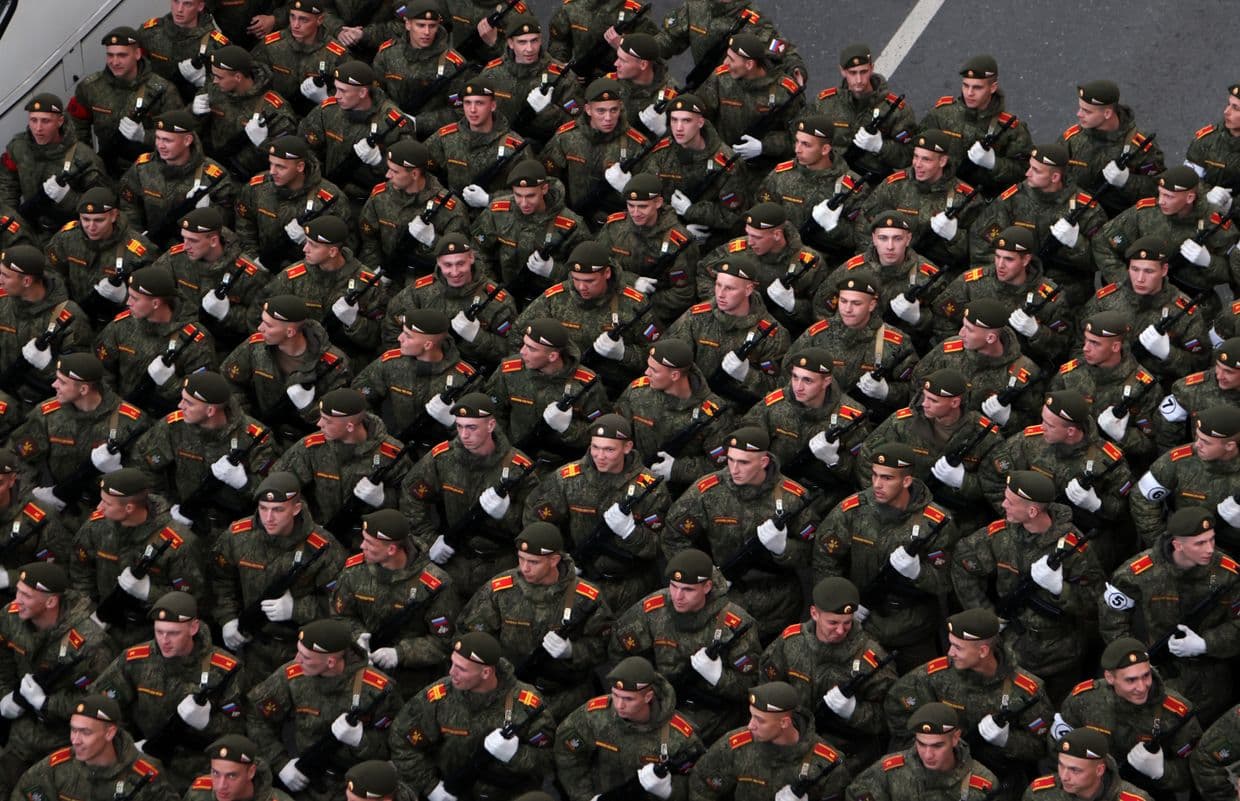
Russia can mobilize 5 million troops who have undergone military service and training, while its overall mobilization capacity is as many as 20 million, Ukraine's Commander-in-Chief Oleksandr Syrskyi said in an interview with the LB.UA outlet published on April 9.
Syrskyi named the figure to underscore the disparity between Russia's and Ukraine's potential, arguing that Kyiv must keep mobilizing its forces to sustain resistance against Moscow's onslaught.
Russia has increased its force in Ukraine "fivefold since the beginning of the aggression," Syrskyi said in the interview, putting the number of Russian troops currently deployed in the country at 623,000.
"Every month, they increase it by 8,000-9,000; in a year, it's 120,000-130,000."
The disparity of forces is apparent on the battlefield, as the Ukrainian military has said Russian troops outnumber Ukrainian defenders 10 to 1 in some sectors.
According to Syrskyi, Ukraine must mobilize 30,000 soldiers every month, a figure previously named by President Volodymyr Zelensky.
The Kremlin implemented only a partial mobilization in the fall of 2022 but has not declared a full draft, replenishing its forces with contract soldiers. Moscow has been largely successful in offsetting its massive battlefield losses in Ukraine, while Kyiv has struggled in recent months with manpower shortages.
Russia has been building up its military capacities despite the U.S.'s efforts to broker a ceasefire in Ukraine. On March 31, Russian President Vladimir Putin ordered the regular spring conscription of 160,000 men, the largest number in 14 years.
Although Russian conscripts are typically not deployed in active combat, Moscow has relied on financial incentives and other methods to recruit civilians for the war in Ukraine.
Syrskyi noted that some battlefield trends are working in Ukraine's favor, namely that Russia's advantage in artillery ammunition dropped from 10 to 1 to 2 to 1 over the past year.
The commander-in-chief connected this development to Ukraine's long-range strikes against Russian arms warehouses in the rear.
"(Russia) used about 40,000 or more rounds every day. After our strikes, the figure changed dramatically and is oscillating around 23,000; now, it has slightly increased, to 27,000-28,000."