When Ukraine takes key step toward Europe, Russian star will be performing next door
 on Google

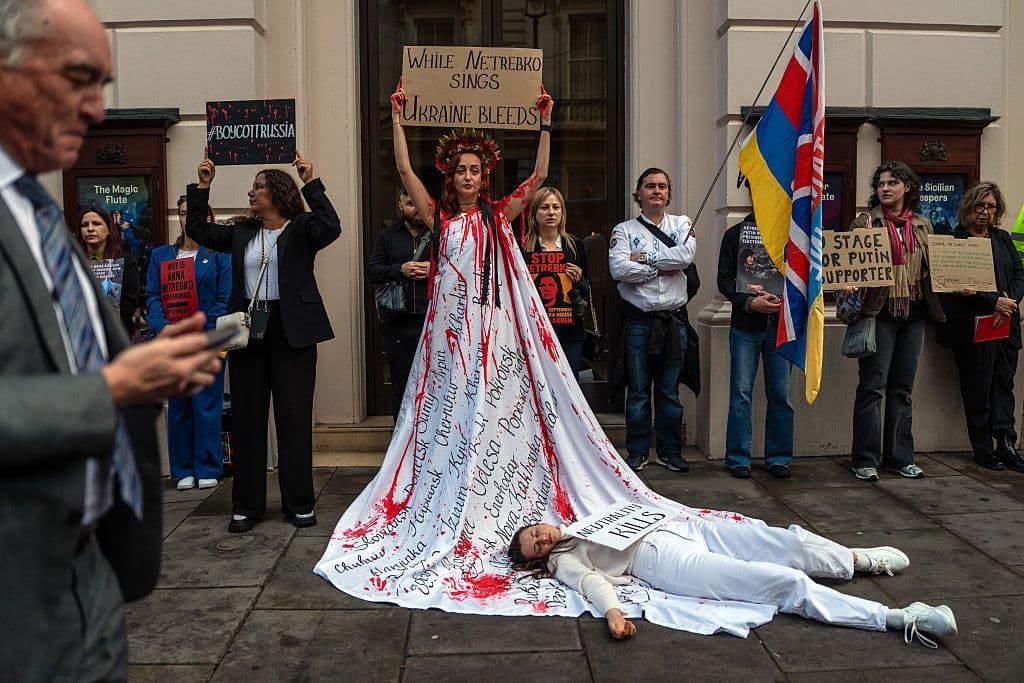
As Ukraine and Moldova move closer to the European Union on June 15, Russian opera star Anna Netrebko will take the stage at the Philharmonie Luxembourg next door.
The contrast reflects a growing, worrying trend across Europe where some of the Russian cultural figures once boycotted after 2022 for their views are steadily being normalized again.
Ukraine's embassy to Belgium and Luxembourg published a press release on June 10, expressing concern over Netrebko's planned performance.
"For many years Ms. Netrebko has been publicly associated with the political and cultural establishment of the Russian Federation. She has expressed support for (Russian President) Vladimir Putin during his presidential campaigns, received state awards from him, and participated in initiatives promoting Russia's state-sponsored cultural narratives," reads the press release.
The embassy said that continuing to collaborate with Russian artists, with the war ongoing, is "deeply painful" for Ukrainians, and they called on Luxembourg to review the "circumstances around the event."
The Kyiv Independent approached Luxembourg's Foreign Ministry for comment, which recommended reaching out to the Culture Ministry, which in turn said that "as this matter relates more specifically to program content than to political considerations, we would kindly recommend contacting the Philharmonie directly."
At the time of publication, the Philharmonie had not responded to a request for comment. However, the newspaper Luxemburger Wort reports that the Philharmonie told them it considers itself a "place of dialogue" and that the selection of Netrebko "does not constitute a political statement."
They also point out that Netrebko publicly spoke out on social media in 2022 against Russia's full-scale invasion of Ukraine. However, in both of her statements at the time, she never explicitly condemned Putin, and in her first statement, she even argued that asking artists to "denounce their homeland" is "not right."
Two different realities
Just a short walk from the Luxembourg Philharmonie where Netrebko will perform, EU foreign ministers will meet on the very same day, and at a side event afterwards Ukraine is expected to open the first of six so-called enlargement "clusters."
On the agenda for foreign ministers will be a discussion of more ways to increase pressure on Russia in the cultural sphere, including the country's participation in cultural and sporting events, and Moscow's representation in international bodies, a senior EU official told journalists on the condition of anonymity.
A non-paper produced by Lithuania sent to EU countries, and seen by the Kyiv Independent, proposes EU countries discourage Russian participation in major international sports and cultural events "in a more coordinated manner."
They propose that countries apply national measures in these situations, giving as examples "cancellation of visas, (and) not issuing overflight permits."
After that discussion is complete, ministers will be joined by Ukraine and Moldova for the so-called "intergovernmental conference," where they formally take the next step in Ukraine's EU membership process.
Next door, Netrebko will be "drawing from the rich traditions of German, French, and Russian music," according to the Philharmonie's webpage advertising the performance.
"One thing is certain: when Netrebko is on stage, it's an event," claims the Philharmonie.
Russia's growing cultural 'rehabilitation'
Luxembourg is far from alone in granting a platform to the Russian performer. Netrebko is set to take her act to Paris, London, Madrid, among others, reports the Luxemburger Wort.
The opera singer has tried to distance herself from past comments praising Putin and his policies.
Following Russia's invasion of Georgia, Netrebko told Russian state media in 2009 that she is "always unambiguously for Russia,” dismissing international coverage of the war as "extremely negative" attacks on her country.
In 2014, she also donated one million rubles to an opera house in Russian-occupied Donetsk.
Although Netrebko claimed that the donation was first and foremost about supporting her fellow artists, she was photographed at the St. Petersburg event where she made the donation alongside Oleg Tsaryov, a pro-Russian Ukrainian politician, holding the flag of the Russian occupation authorities.

The opera world's reembrace of Netrebko isn’t the only sign that the West is welcoming artists with a record of pro-Kremlin views.
Russia's presence at the 2026 Venice Art Biennale also drew widespread criticism ahead of its May opening, given the commissioner of the Russian pavilion's personal affiliations with the Russian military industrial complex and the selection of pro-war artists to represent the country at the major international event.
In recent weeks, a number of international sports organizations have also announced that Russian athletes will be allowed to compete under their national flag, rather than as part of neutral teams that were introduced to ease the outright bans put in place in 2022.
Andrew Parsons, president of the International Paralympic Committee (IPC), sparked controversy in early March when he suggested that injured Russian soldiers who fought against Ukraine should be allowed to compete in future Paralympic Games, arguing that the event offers them "a second chance."
This growing trend has not gone unnoticed by the EU.
Reacting to Netrebko's performance at the Luxembourg Philharmonie, European Commission spokesperson Eva Hrncirova told the Kyiv Independent that "decisions on culture remain national, but they must not undermine the EU’s response to Russian aggression against Ukraine."
"We urge cultural organizations to work with artists who stand for democratic values — and to reject the instrumentalization of culture by aggressor states," Hrncirova added.
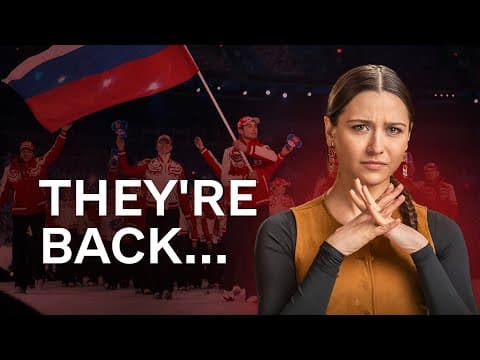
For many, the issue is not necessarily the very presence of Russian cultural figures at international events.
Russian filmmaker Andrey Zvyagintsev’s "Minotaur," which is set in Russia during the full-scale war, won the Grand Prix at the 2026 Cannes Film Festival and has been praised by critics as an anti-war film.
Zvyagintsev spoke out against the war in 2022 and has a history of critically examining the downfall of Russian society under Putin in his earlier work, although many Ukrainians were dissatisfied by what they saw as his meek appeal to Putin to end the war in his acceptance speech.
The fundamental problem, as exiled Russian artist Katia Margolis says, is that artists with pro-Kremlin histories aren’t being singled out by the West as such, and their creative work is, once again, being seen as somehow detached from their political stances.
"I find it unacceptable when culture is used to normalize violence or conceal it behind a mask of neutrality," Margolis told the Kyiv Independent.
"This is not about excluding Russian artists because of their nationality — it is about refusing to legitimize public figures, projects, and institutions with a documented record of supporting an aggressive and repressive regime, or of pretending not to see the war and the crimes being committed by one’s Russian compatriots in Ukraine."