Remains of 20th century Ukrainian military leader Andrii Melnyk brought to Kyiv for reburial
 on Google
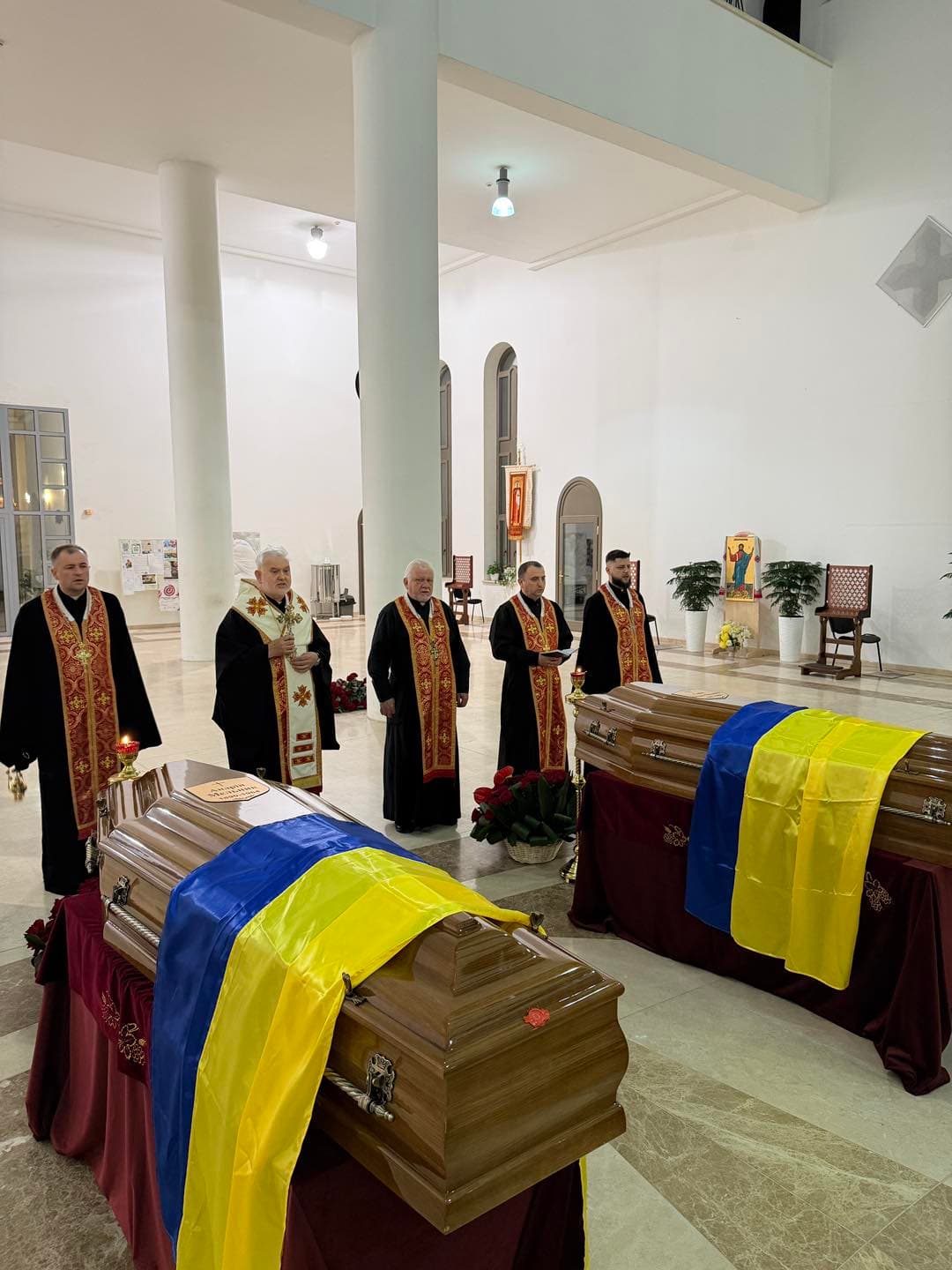
The remains of 20th-century Ukrainian military leader Andrii Melnyk and his wife, Sofiia, arrived in Kyiv overnight on May 22, the Patriarchal Cathedral of the Resurrection of Christ reported.
According to the Ukrainian Greek Catholic Church, a memorial service was held for Melnyk and his wife's remains, and people are welcome to visit through May 23 to pay their respects.
Melnyk emerged as one of several leaders of the Ukrainian independence movement in the 20th century, opposing rule under both Poland and the Soviet Union. He was part of the Organization of Ukrainian Nationalists (OUN), which would later split into two rival factions – one led by Melnyk himself, and the other by Stepan Bandera – after its founder, Yevhen Konovalets, was assassinated in 1938.
Both the OUN-M and OUN-B factions remain the subject of controversy and debate today due to their wartime activities, which involve periods of tactical collaboration with Nazi Germany during World War II. This collaboration was driven by a shared opposition to the Soviet Union, which both OUN factions saw as one of the main threats to Ukrainian national identity.

The Nazis, who did not support an independent Ukrainian state, eventually turned against Melnyk and other Ukrainian leaders. Melnyk was placed under house arrest and later transferred to the Sachsenhausen concentration camp.
He died in Germany in 1964 and was buried in Luxembourg.
During his post-war years in exile, Melnyk continued to advocate for Ukraine's independence and worked to unite the Ukrainian diaspora. He was among the initiators of the idea for the World Congress of Ukrainians, which was officially established three years after his death, in 1967.
On May 19, his remains, along with those of his wife, were exhumed for reburial at the National War Memorial Cemetery near Kyiv, where the ceremony is scheduled to take place on May 24.
"Today, Ukraine is bringing home not only an outstanding figure — we are restoring a part of our own historical memory. Andrii Melnyk was unable to return to his native land during his lifetime, but today his journey is finally ending at home, in the Ukrainian soil for which he fought throughout his life," the statement from the Patriarchal Cathedral of the Resurrection of Christ reads.
"For decades, Ukrainians were deprived of the opportunity to properly honor many of their heroes. Today, however, Ukraine is asserting its right to independently shape its national memory, paying due tribute to those who fought for its independence even when hope seemed almost impossible."