Oil prices plummet as Iran says Strait of Hormuz 'completely open'
 on Google
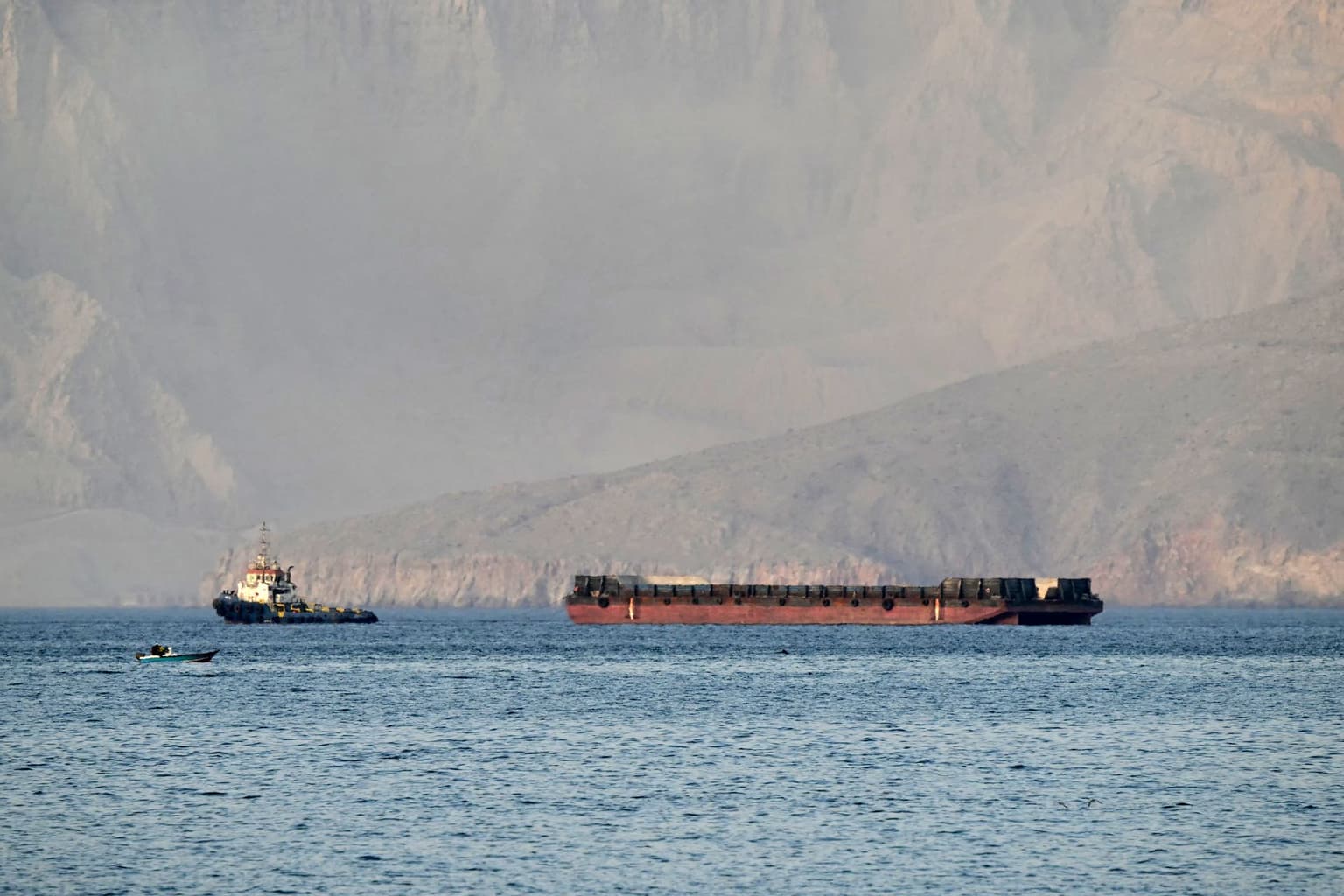
Oil prices plunged on April 17 after Iran's foreign minister said that the Strait of Hormuz was "completely open" to commercial ships, after a ceasefire between Israel and Lebanon took hold.
"In line with the ceasefire in Lebanon, the passage for all commercial vessels through the Strait of Hormuz is declared completely open for the remaining period of the ceasefire," Iranian Foreign Minister Seyed Abbas Araghchi said on X.
The statement comes almost 10 days after a strained ceasefire deal was reached by the U.S., Israel, and Iran on April 8. A major stumbling block had been the lack of a ceasefire in Israel's war on the Lebanese terrorist group Hezbollah, which was eventually reached on April 16.
U.S. President Donald Trump said, however, that the U.S. naval blockade of Iranian ports remained in force.
"THE STRAIT OF HORMUZ IS COMPLETELY OPEN AND READY FOR BUSINESS AND FULL PASSAGE, BUT THE NAVAL BLOCKADE WILL REMAIN IN FULL FORCE AND EFFECT AS IT PERTAINS TO IRAN, ONLY, UNTIL SUCH TIME AS OUR TRANSACTION WITH IRAN IS 100% COMPLETE," Trump wrote on Truth Social.
"THIS PROCESS SHOULD GO VERY QUICKLY IN THAT MOST OF THE POINTS ARE ALREADY NEGOTIATED."
Sea traffic through the Strait of Hormuz — a key artery for global oil and gas flows — all but collapsed in the wake of U.S.-Israeli strikes on Iran since Feb. 28, as Tehran targeted tankers and hit oil and gas infrastructure across the region.
Roughly 20% of the world's oil and liquefied gas usually flows through the strait every day, stoking fears that an extended closure could cause a severe global energy crisis.
Brent crude oil, a widely used global benchmark, rose to near $120 a barrel in March, prices last seen in 2022 after Russia's full-scale invasion of Ukraine.
Prices fell by 10% to below $90 a barrel on April 17, after the ten-day ceasefire between Israel and Lebanon came into effect.
The war in the Middle East has been a boon for Russia, which reaped a windfall from higher energy prices and more demand for its oil and gas, after the U.S. temporarily waived global sanctions on purchasing Russian oil. The waiver expired on April 11.
The International Monetary Fund (IMF) on April 14 upgraded Russia's growth forecasts for 2026 by 0.3% off the back of higher energy prices. The fund now forecasts that Russia's economy will grow by 1.1% in 2026.
"The main driver of the upgrade to Russia's growth this year comes from an increase in the price of oil and gas," Alfred Kammer, director of the European Department at the IMF, said during a press conference on Europe's economy on April 17.
But the fund also said that it was monitoring Ukraine's strikes on Moscow's energy infrastructure. About 40% of Russia's oil export capacity was reportedly disabled in March by long-range Ukrainian drone strikes and tanker seizures.
"We are noting the destruction of some of the refining and export capacity," Kammer said.