News from occupied Ukraine: Russia prepares Oleshky disinformation campaign, budgets for occupation for next three years
 on Google
This weekly update from the Kyiv Independent aims to shed light on the situation facing Ukrainians living under Russian occupation and the ever-tightening control of information imposed by the Kremlin.
Key news as of Oct. 10:
- Russia prepared series of Oleshky disinformation operations, SBU says
- Russia's new three-year federal budget maintains funding for occupied Ukraine
- Ukrainian troops struck Russian drone sites, command posts in occupied territories
- Residents in occupied Luhansk Oblast given less than two weeks to vacate apartments ahead of demolition
- Human rights activists document 64 elderly political prisoners from Crimea
- Ukraine evacuates teen detained by Russia over pro-Ukrainian views, alongside 25 other children from occupied territories
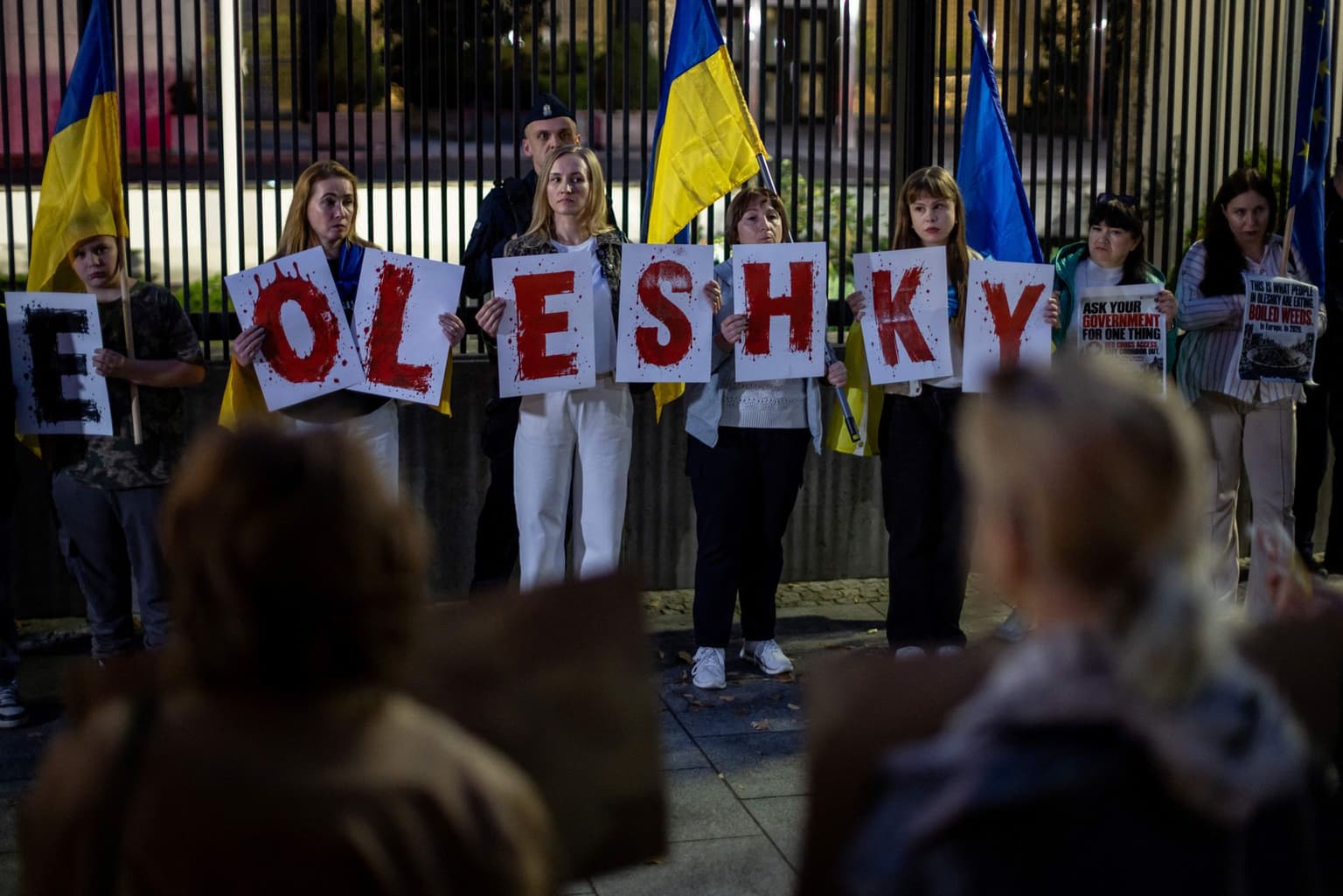
Russia prepares a disinformation campaign involving staged interviews with residents of the Russian-occupied front-line town of Oleshky, Ukraine's Security Service (SBU) said on Oct. 7.
According to the SBU, Russian forces ordered one of their units to produce a series of videos featuring residents of the occupied city. The operation is planned for October and early November.
The interviews are intended to blame Ukrainian forces for air attacks and blockading Oleshky, discredit Ukraine's leadership, and portray Russian troops positively, the agency said.
"(Russia) is failing on the battlefield and is therefore attempting by any means possible to undermine the psychological and emotional well-being of Ukrainians and destabilize the situation within our country," the SBU said.

Oleshky in the occupied part of Kherson Oblast has been under Russian occupation since the early days of the full-scale invasion. Ukraine's Foreign Ministry said that around 2,000 people, including nearly 50 children, remained in the occupied town.
Residents face severe shortages of food, water, and electricity, while mined roads, constant drone attacks, and interrogations by Russian troops at checkpoints make it almost impossible to evacuate safely.
While Russian troops occupy Oleshky and the eastern bank of the Dnipro River, the Ukrainian military controls the western bank. Russian troops use towns and villages on the eastern bank to launch attacks across the river, including on the liberated city of Kherson.
Russian forces are preventing Ukraine and international humanitarian organizations from accessing the occupied territories to provide aid.
In September, only 12 people reached Ukraine-controlled territory from Oleshky, the local military administration head told the Kyiv Independent on Oct. 6.
Russia's new three-year federal budget maintains funding for occupied Ukraine
Russia plans to allocate more than 865 billion rubles ($10 billion) to a state program covering Russian-occupied parts of Donetsk, Luhansk, Zaporizhzhia, and Kherson oblasts over the next three years, according to the draft federal budget.
The Russian government submitted its proposed 2027-2029 budget to the State Duma on Sept. 30, Russian news agency Prime reported, citing the explanatory note accompanying the draft.
The proposed allocation totals 293.8 billion rubles ($3.4 billion) for 2027, 290.1 billion rubles ($3.4 billion) for 2028, and 281.7 billion rubles ($3.3 billion) for 2029. The figures were also published by the Russian-installed administration of occupied Kherson Oblast in its Oct. 6 report.
Moscow says the funding is intended to restore infrastructure and support socioeconomic development in the four occupied regions. The state program was established to oversee their reconstruction and development under Russian control.
"The relatively stable federal budget allocations... suggest that Russia continues to view investment in the occupation as a lucrative and necessary federal priority because it facilitates the forced integration of occupied territories into Russia," the Institute for the Study of War said on Oct. 8.
Ukrainian troops struck Russian drone sites, command posts in occupied territories
Ukraine's military struck Russian drone launch sites, command posts, communications infrastructure, and supply depots in Russian-occupied parts of Donetsk, Luhansk, Zaporizhzhia, and Kherson oblasts between Oct. 4 and Oct. 8, Ukraine's General Staff reported.
Donetsk Oblast
Ukrainian forces struck a Russian site near occupied Donetsk used to store, prepare, and launch attack drones on Oct. 7 and overnight on Oct. 8. They also hit a telecommunications hub near the regional capital of Donetsk, command and observation posts, command posts, and military supply depots elsewhere. Russian troop concentrations near Burlatske were also targeted, according to the General Staff's Oct. 8, Oct. 7, and Oct. 6 reports.
Luhansk Oblast
The strikes targeted Russian command posts near Prydorozhnie, a drone depot near Siverskodonetsk, and an ammunition depot near Khrustalnyi. Ukrainian forces also hit a military supply depot and a fuel and lubricants depot, and targeted Russian troop concentrations, the General Staff said in its Oct. 5, Oct. 6, and Oct. 7 reports.
Zaporizhzhia Oblast
Ukrainian forces struck Russian command posts near Bilotserkivka and Kamianka, a drone depot and command post near the city of Berdiansk, and a military repair unit and Russian troop concentrations elsewhere, according to Oct. 5 and Oct. 7 reports.
Kherson Oblast
Ukrainian forces struck a Russian command post near Shchaslyvtseve in occupied Kherson Oblast on Oct. 5 and overnight into Oct. 6, the General Staff said in its Oct. 6 report.
The strikes are part of a series of attacks on Russian military infrastructure in occupied Ukrainian territories.

Human rights activists document 64 elderly political prisoners from Crimea
At least 64 people over the age of 60 have been subjected to political persecution in Russian-occupied Crimea, including 49 men and 15 women, the Crimean Tatar Resource Center said in a report published on Oct. 8.
The report documents cases of older people targeted by Russian occupation authorities. According to the organization, 44 of those documented have been sentenced, while 20 others are being held in pretrial detention.
The charges include alleged treason, espionage, sabotage, and links to religious or political groups banned in Russia. Some people have also been accused of financing Ukraine's military or involvement in the Noman Celebicihan Crimean Tatar volunteer battalion.
The oldest man documented is 77-year-old Volodymyr Ananiev, for whom Russian prosecutors are seeking a 22-year prison sentence. The oldest woman is 71-year-old Halyna Dovhopola, the group said.
The Kyiv Independent's September 2026 investigation showed that Russia turned the system of political persecution it had been building in Crimea since 2014 into a hub for the unlawful detention of Ukrainian civilians, primarily from Kherson and Zaporizhzhia oblasts, after its full-scale invasion.
Residents in occupied Luhansk Oblast given less than two weeks to vacate apartments ahead of demolition
Russian occupation authorities in Siverskodonetsk, Luhansk Oblast, have set deadlines for residents of two apartment buildings to remove their belongings before the buildings are demolished.
According to notices published by the occupation administration in October, residents of a building at 30 Soviet Avenue must clear their apartments by Oct. 15, while those at 17 Budivelnykiv Highway have until Oct. 20, 2026.
Both buildings, which were damaged during fighting, have been included in the occupation authorities' demolition program.
A September 2026 investigation published by ZMINA found a surge in building demolitions in the city, as by 2026 Russia had demolished only a few high-rise buildings there. But this summer, at least 79 buildings were added to the demolition plan.
The demolition of apartment buildings in occupied Siverskodonetsk reflects a broader Russian policy across occupied Ukrainian territories, including Mariupol, where authorities have designated residential buildings for demolition, often declaring them unsafe.
ZMINA concluded that the practice can deprive Ukrainians of their property and make it harder for displaced residents to reclaim their homes.
Some properties are declared "ownerless" if residents cannot meet the Russian occupation authorities' requirements, allowing the authorities to take control of them. The demolitions and property seizures can also facilitate the redevelopment of occupied cities and strengthen Russia's control over these territories, ZMINA reported.
Ukraine evacuates teen detained by Russia on suspicion of 'terrorism' over pro-Ukrainian views, 25 children from occupied territories
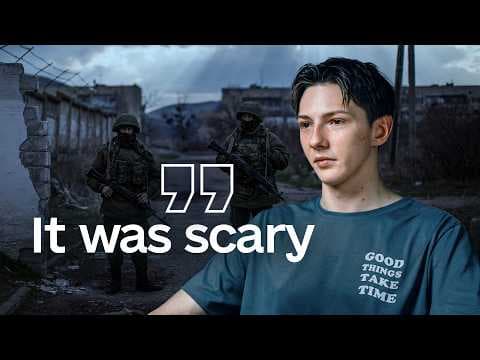
Ukraine has evacuated a teenager from Russian-occupied territory who was detained by Russian forces over his pro-Ukrainian views and suspected of "terrorism," Ukrainian Commissioner for Human Rights Dmytro Lubinets said on Oct. 7.
Lubinets didn't specify when and from which region the teenager was rescued.
The teenager was evacuated using the Volyn humanitarian corridor at the border between Belarus and Ukraine. Lubinets said this corridor was established as part of negotiations with Russia and has been operational since 2025. Borders with Russia and Belarus in other areas are closed.
He added that leaving occupied territories remains extremely difficult for many residents.
Over the past week, Ukraine also brought back 25 children and teenagers from Russian-occupied territories to areas under its control, according to Save Ukraine, a Ukrainian humanitarian NGO, Oct. 2 statement.
Lubinets said on Sept. 25 that around 1.6 million Ukrainian children may still be living in the occupied territories.
"They are issued with Russian documents, placed with Russian families, subjected to propaganda, and stripped of their Ukrainian identity. They are forcibly displaced," Lubinets said.
Russia is forcibly militarizing childhood, as in schools, Ukrainian children are forced to undergo military training, while thousands of young Ukrainians are being conscripted into the Russian army.
"The Russian leadership has a single aim: to continue the war against Ukraine using others' hands. To train a new generation of soldiers," Lubinets said.