The Kyiv Independent Live in London:

Military intelligence: Russia fails nuclear-capable ballistic missile tests
 on Google
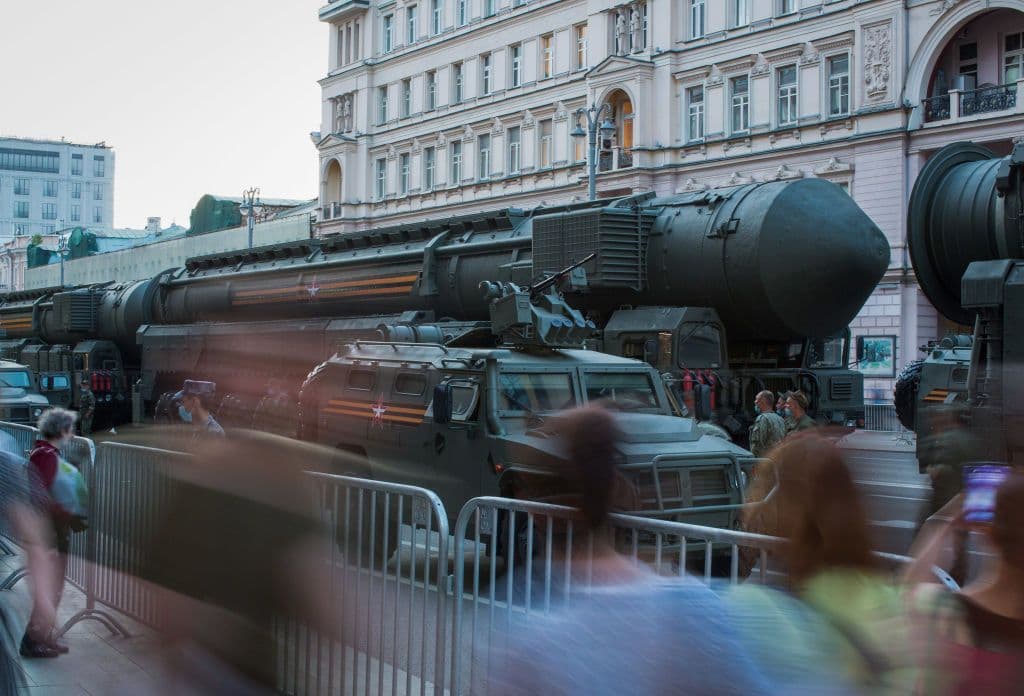
Russia recently carried out unsuccessful tests of its Yars and Bulava nuclear-capable ballistic missiles, pointing to serious issues with Moscow's nuclear weapons delivery capabilities, Ukraine's military intelligence (HUR) said on Nov. 4.
During an RS-24 Yars missile launch test on Nov. 1, the projectile launched from a cosmodrome in Arkhangelsk Oblast toward Kamchatka went off course, the HUR said.
According to military intelligence, an earlier test of Yars on Oct. 25, presented by Moscow as successful, encountered similar problems.
The intercontinental ballistic missile (ICBM) Yars, with a range of up to 12,000 kilometers and capable of carrying several warheads, represent the main ground component of Russia's strategic nuclear forces.
The Oct. 25 test launch of an RSM-56 Bulava missile, which has a range of up to 10,000 kilometers, from a submarine was also unsuccessful, the HUR said, without elaborating on the nature of the reported failure.

The intelligence drew attention to repeated delays in the adoption of Sarmat, an ICBM with a reported range of up to 18,000 kilometers, which was adopted into service this year.
The HUR's analysis pointed out Sarmat's deficiencies in overcoming anti-missile defenses in comparison to its predecessor, ICBM RS-20 Voyevoda.
Russia also reportedly encountered challenges in modernizing the air-based component of its nuclear forces. The introduction of a new Tu-160M2, planned for 2023, has been postponed to a later date due to engine production issues, the HUR said.
The military intelligence concluded that Russia's difficulties in modernizing its nuclear capabilities stem from Western sanctions and shortcomings of the country's scientific, technological, and industrial capabilities.
The Kyiv Independent cannot verify these claims.
Earlier this week, Russia fully withdrew from the Comprehensive Nuclear-Test-Ban Treaty (CTBT), reportedly to gain "equal footing" with the U.S., which has signed but not ratified the document.
The Kremlin and Russian state media often use veiled or overt threats of a nuclear strike against rival nations, including Ukraine or Western countries.