Ukraine strikes major Russian oil refinery, terminals, 18 vessels, General Staff confirms
 on Google
Ukrainian forces struck a major Russian oil refinery, oil terminals, and other military-linked targets overnight on July 10, Ukraine's General Staff confirmed.
The strikes targeted the Ilsky Oil Refinery in Russia's Krasnodar Krai, the Kurgannefteprodukt oil terminal in Taganrog, the Azovnefteprodukt oil depot in Azov, and the NOVATEK-Ust-Luga oil-processing complex in Leningrad Oblast, according to the General Staff.
Ukraine's military also said that 18 Russian vessels — 13 tankers, three dry cargo ships, a ferry, and an auxiliary vessel — were hit in the attacks.
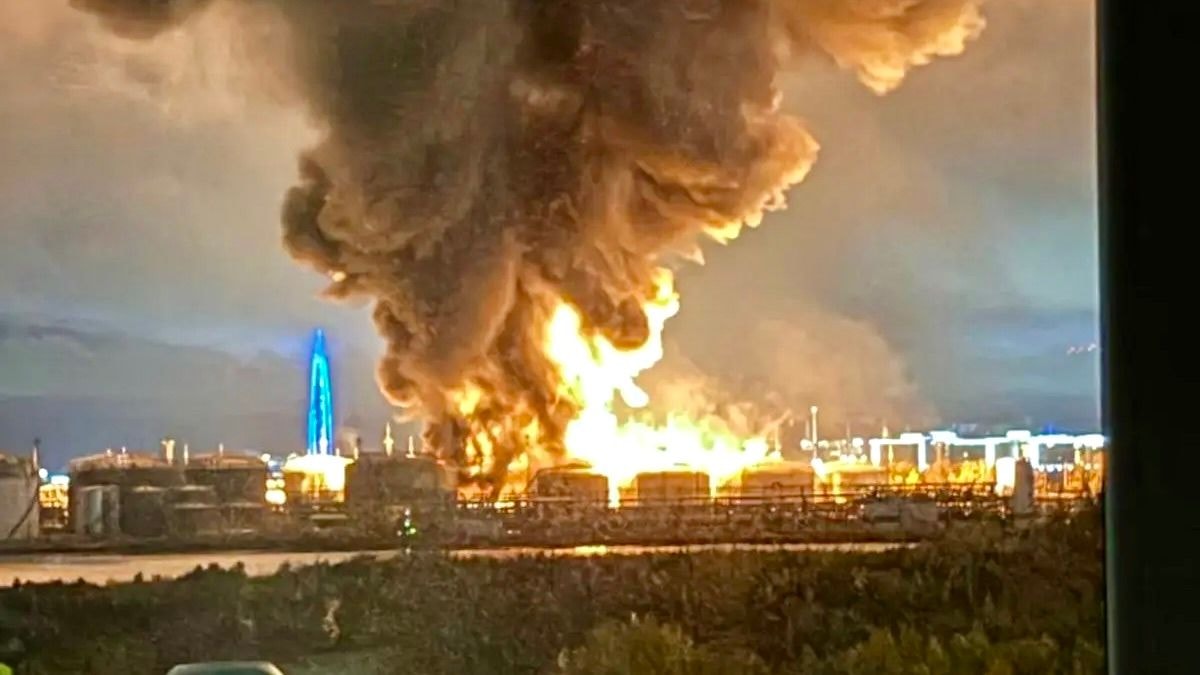
Photos and videos posted to social media by local residents purport to show large, glowing flames rising from the Ilsky Oil Refinery.
The General Staff said explosions followed by a fire were recorded on the territory of the facility. The extent of the damage and the results of the strike are still being assessed.
Located roughly 500 kilometers (310 miles) from Ukrainian-controlled territory in Krasnodar Krai, the refinery is among the largest in southern Russia, producing nearly 6.6 million tons of fuel annually.
The latest reported strike marks at least the 17th time the refinery has been targeted by Ukrainian strikes. The last time the refinery was targeted was on June 2, according to Ukraine's General Staff.
Although it was not immediately confirmed as to what weapons were used in the reported strike, Ukrainian drones were reported flying over the region around the time of the strike.
Later in the morning hours, Russia's Rostov Oblast was targeted in a wide-ranging attack on the region's oil infrastructure.
Massive clouds of smoke were purportedly seen billowing over the western city of Taganrog, which sits along southern Russia's Azov Sea coast, amid reports of a strike on the city port's oil terminal.
Flames were also reported rising from an oil depot in the nearby town of Azov in Rostov Oblast.

The extent of the damage caused was not immediately clear.
In addition, Ukrainian forces struck a Russian fuel and lubricants depot near Rozivka in the occupied part of Zaporizhzhia Oblast.
Kyiv considers energy facilities to be valid military targets, as the energy sites provide fuel and funding for the Kremlin's war machine.
Ukraine has been waging an increasingly successful deep strike campaign against Russian oil infrastructure, striking oil depots, disrupting production at major facilities, and in some cases halting operations indefinitely.
Overnight strikes on oil depots on July 9 led to a prolonged fire in the city of Tver, as well as a local state of emergency declared in the Stavropol Krai region.
Ukraine's refinery attacks have mounted pressure on the Kremlin by aggravating a domestic fuel supply crisis that has already caused export bans, price hikes, and sales restrictions across Russia.
The Russian government announced on July 8 that it would ban the export of diesel fuel until at least the end of the month, after weeks of Ukraine successfully pummeling energy infrastructure.