Kyiv faces growing risk of a water crisis this winter
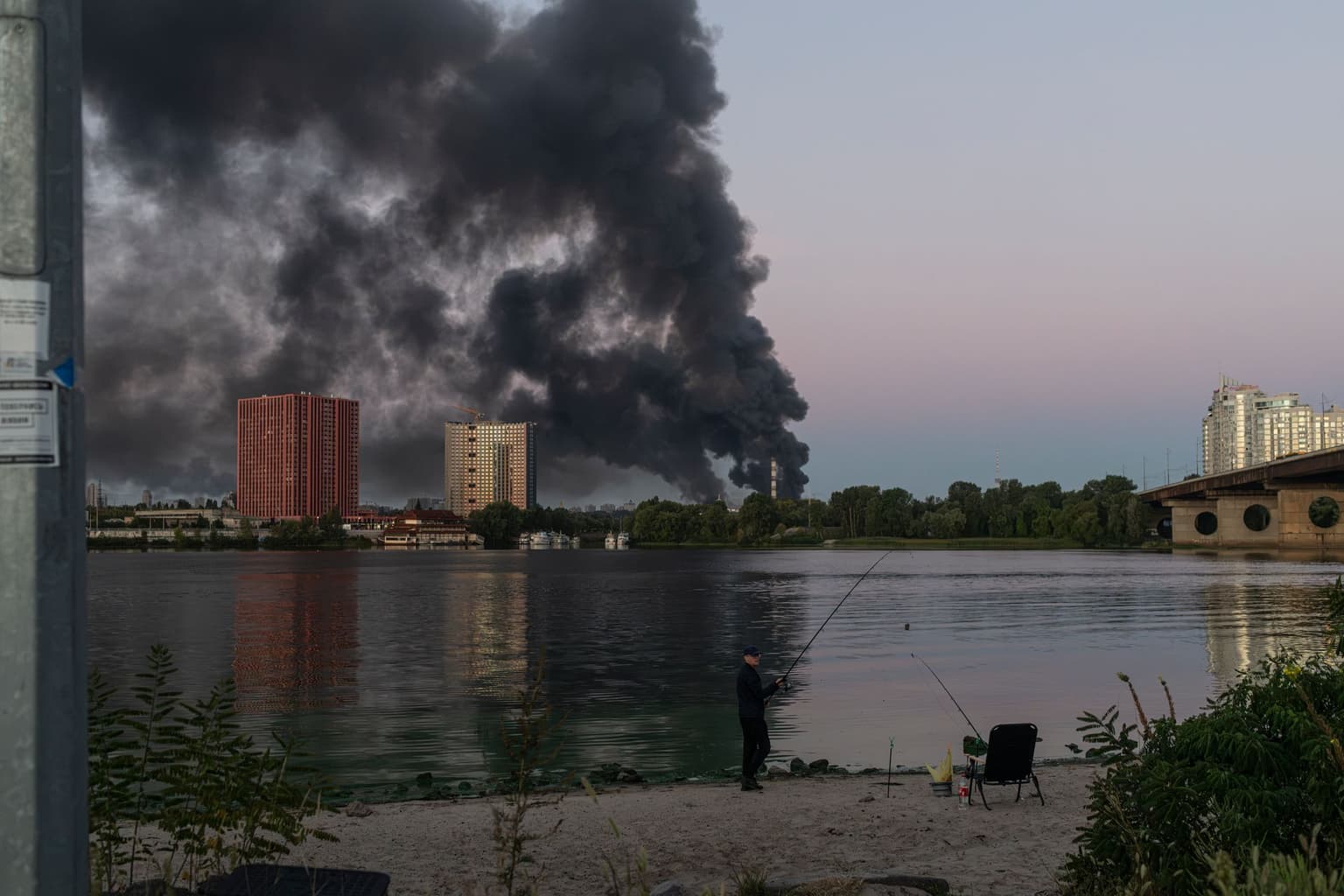
A man fishes from the shore of the Dnipro River as smoke rises over a residential area following Russian strikes in Kyiv, Ukraine, on Sept. 8, 2026. (Viktor Fridshon / Global Images Ukraine via Getty Images)
 on Google
As regular Russian strikes on energy facilities leave parts of Kyiv without running water, fears are mounting that further power outages could spark a serious humanitarian and public health crisis in a city whose water and sewage system depends entirely on electricity.
Kyiv’s water system is one of the city’s biggest power consumers, requiring huge amounts of electricity to draw water from the Dnipro river and pump around 700 million liters of clean water daily to households and businesses.
It is also extremely reliant on the central energy grid, making it vulnerable to Russia’s bombing campaign targeting energy facilities.
While some residents have stockpiles of clean water in their homes, water industry experts warn that the main threat comes from the failure of the wastewater system, which needs electricity to transport sewage to wastewater plants.
If left untreated, sewage could flood the city and pose a serious health and environmental hazard.
"Transporting and treating wastewater is a major challenge for utility companies. Equipment is aging, and a lack of electricity for pumping can have serious consequences," Oleksandr Skhin, director of Ukraine’s Association of Water Utilities, told the Kyiv Independent.

Vulnerabilities
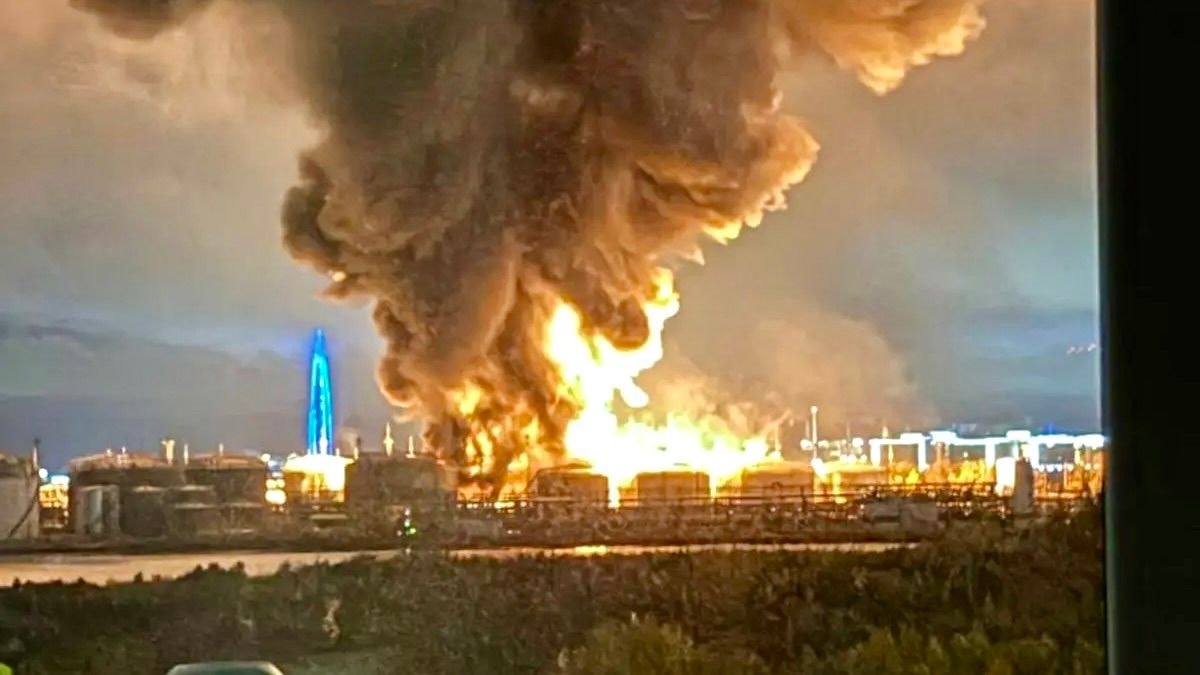
While Ukraine’s government has said the country is well prepared for the winter, Kyiv’s residents are growing increasingly skeptical, particularly after Moscow launched one its biggest ever attacks on the capital’s substations on Oct. 14, leaving many households without water and power.
As the Kyiv Independent previously reported, the capital has not prepared sufficiently for the heating season, leaving the city without enough backup power generation. Consequently, recent attacks have not only caused emergency blackouts in the city, but forced the capital to return to scheduled power outages, which haven’t been imposed since the spring.
With the constant voltage fluctuations, Kyiv’s aged electric water utility system simply "burns out," Serhii Horkutsenko, deputy head of Kyivvodokanal, the capital's state-owned water supply company, told Ukrainian media Ekonomichna Pravda in an interview published on Oct. 12.
Moreover, Russia has increased the intensity of its attacks on Ukraine’s energy system fivefold since 2024, Olena Pavlenko, head of the Kyiv-based energy think tank Dixi Group, told the Kyiv Independent. As a result, Kyiv’s energy system is in a more critical state than in previous years, while Russia continues to escalate attacks and deploy new tactics.
A weaker, worn-out energy grid also puts the water system at greater risk because it makes it harder to meet the electricity demands of pumping stations, Oleksii Andriiashchenko, sales manager at Grundfos Ukraine, a major water pump producer, told the Kyiv Independent.

He expects that parts of Kyiv will be left without electricity and water for weeks this winter. In the worst-case scenario, the water system could collapse, leading to overflowing sewage tanks that flood the city.
At the same time, Russia has also directly targeted Kyiv’s only sewage plant — the Bortnychi plant — with drones and missiles on several occasions, Mykhailo Yatsuk, director of the Institute of Water Problems and Land Reclamation, told the Kyiv Independent.
"The destruction of the Bortnychi plant poses the greatest threat. Furthermore, there is a risk of damage to sewage pumping stations. This could create problems for the integrated system and cause significant environmental damage," Yatsuk said.
Preparations
According to Yatsuk, Kyiv’s authorities are much better prepared than previous years and have emergency plans for different scenarios, despite the public perception that the city is not ready.
Authorities have also stockpiled equipment and materials needed to repair damaged water infrastructure, he added.
Ahead of the winter, Kyivvodokanal is already operating 103 generators across its network and is expecting the delivery of more high-capacity generator systems currently being manufactured abroad, Kyiv’s mayor Vitalii Klitschko said on Oct.13. But generators cannot replace the main energy grid, nor can they work continuously, Klitschko said.
What's more, generators can only power smaller pumping stations, not larger, more critical ones, said Andriiashchenko. And Kyiv still needs to construct new high-capacity power generation facilities, like co-generation plants, to fully back up the main water system, Petro Panteleev, first deputy head of the Kyiv City State Administration, said in a public statement.

At the same time, Horkutsenko said that Kyivvodokanal is struggling with staffing and funding shortages. One person is doing the work of four, he stressed. Nonetheless, he promised that the agency would deliver drinking water to residents by truck during severe outages.
But even then, trucking in water deliveries won’t be enough to cover the city’s sanitation and hygiene needs, since the average household consumes 100 liters of water per person per day, according to Skhin.
The lack of water for hygiene and cleaning has been a problem for several Ukrainian cities throughout the war, said Skhin. In Chernihiv, the director of the local water utility could only distribute enough water for drinking to residents from his tractor during a monthlong outage at the start of the full-scale war, he said.
"People had to find their own ways to meet sanitation and hygiene needs, including collecting water from rivers or melting snow," Skhin said.
"It was an extremely unpleasant experience."