Is Europe finally ready to play hardball with Putin?
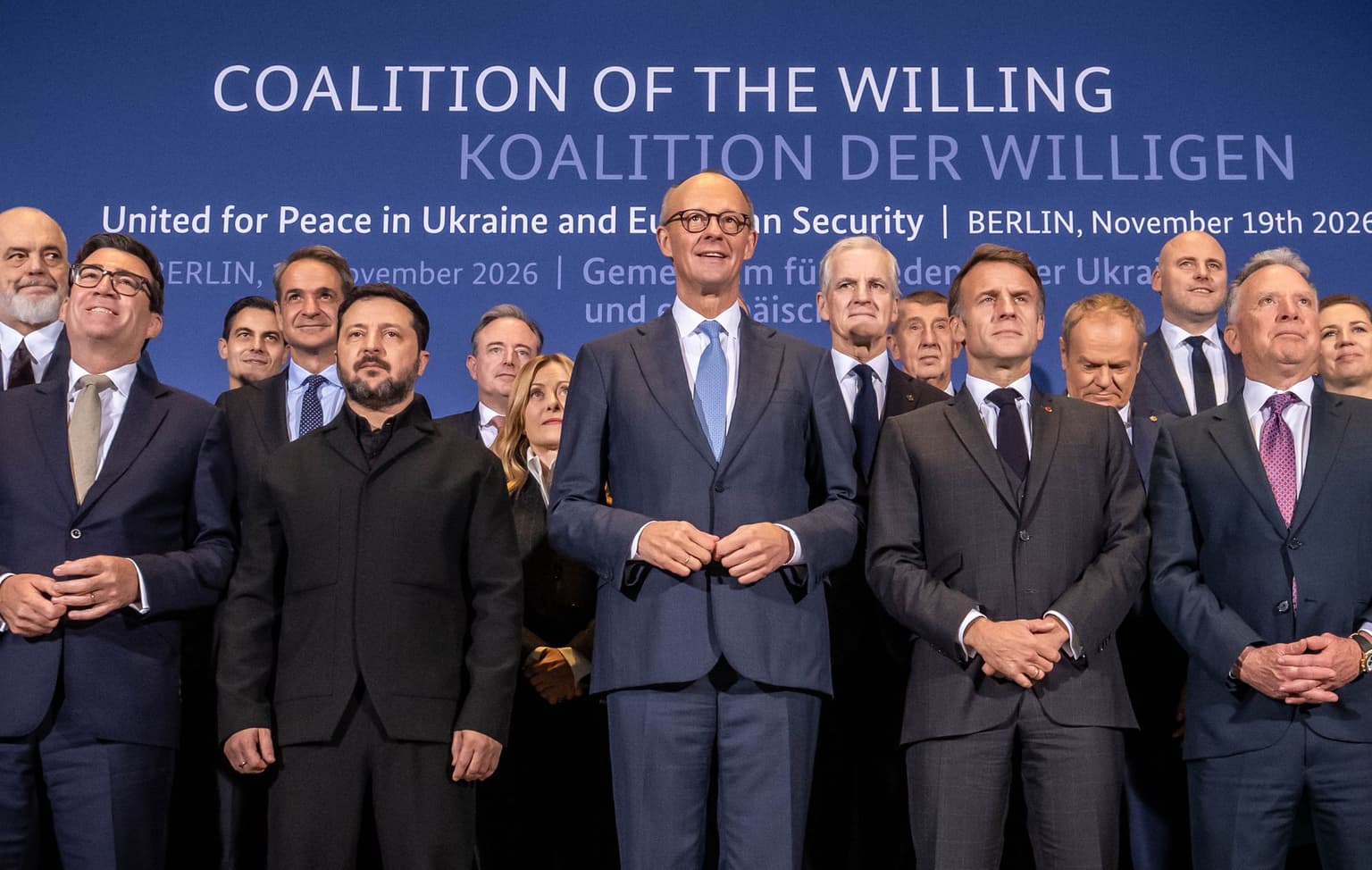
German Chancellor Friedrich Merz, Ukrainian President Volodymyr Zelensky, French President Emmanuel Macron, UK Prime Minister Andy Burnham and U.S. envoy Steve Witkoff pose for a group photo during the Coalition of the Willing meeting in Berlin, Germany, on Nov. 19, 2026. (Michael Kappeler/picture alliance via Getty Images)
 on Google

Aliona Hlivco
CEO of St. James's Foreign Policy Group
Europe is finally ready to step into negotiations with Russia.
Following this week's meeting of the Coalition of the Willing in Berlin, European countries are set to be represented at the negotiating table alongside Ukraine, Russia and the United States.
The continent will be represented by the E5 — Germany, France, the U.K., Italy and Poland — together with NATO and the EU representation.
Crucially, they will need to speak with one voice. This is particularly important given the recent dig directed at Europeans by President Trump's son-in-law and chief negotiator Jared Kushner during the talks in Abu Dhabi, where the European representatives were relegated to the sidelines.
The date and format of the next "quad" meeting have yet to be confirmed, but securing Europe's seat at the table is progress, particularly as Russia continues to demand a fundamental redrawing of the European security architecture.
Future negotiations will have to build on the modest achievements of the earlier talks in Saudi Arabia and subsequent diplomatic exchanges of American envoys with the Russians.
Whether Moscow has demonstrated any genuine willingness to compromise is yet to be seen.
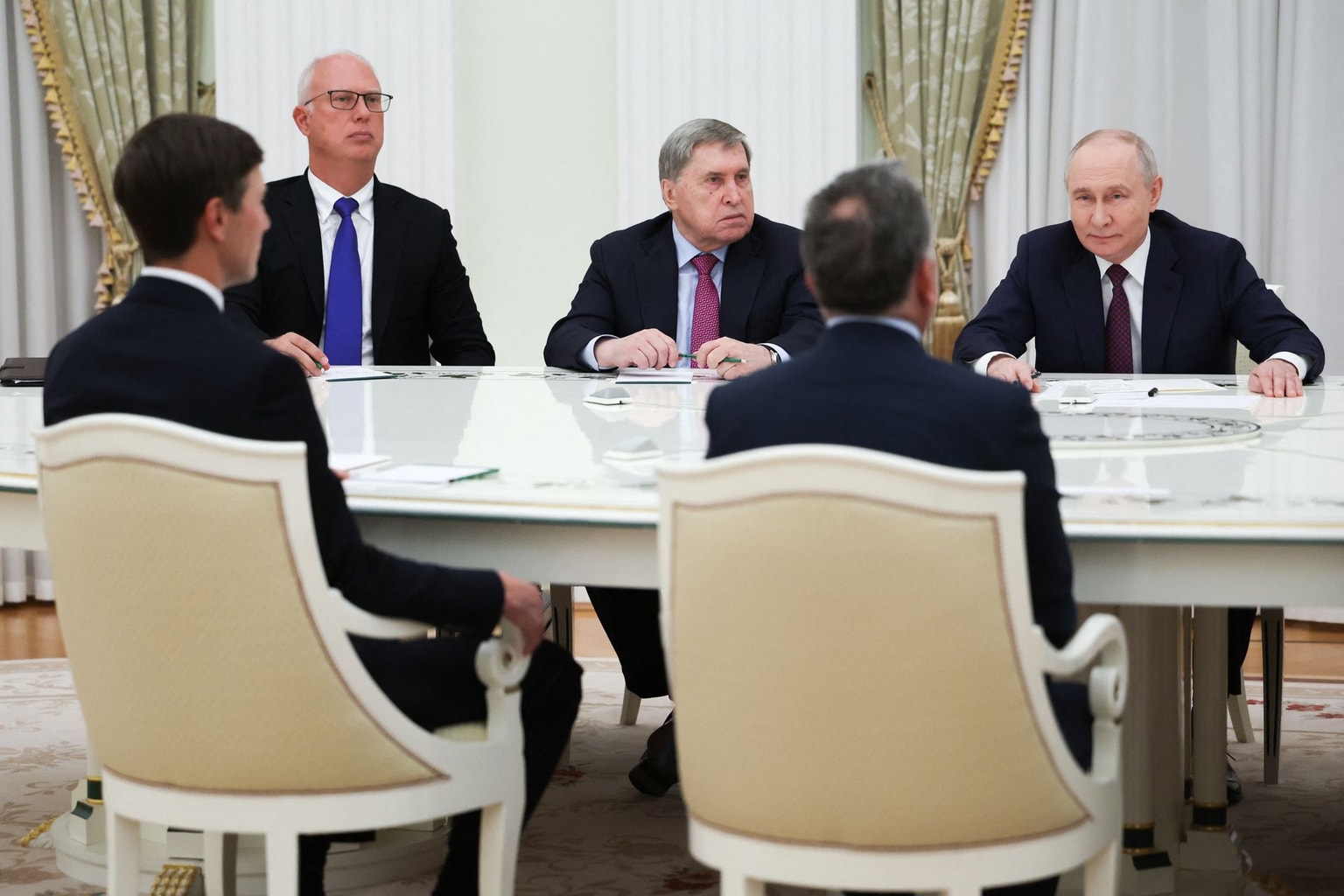
The exact outcomes of Steve Witkoff's and Jared Kushner's visit to Moscow on Nov. 12 remain unknown, as do the details of what they have conveyed to President Volodymyr Zelensky in Dublin. But just hearing the snippets of the meeting in the Kremlin that have almost certainly been deliberately made public makes it clear that Putin has not moved an inch away from his maximalist demands.
The set of demands made during the Istanbul negotiations in March 2022 remains unchanged: no foreign troops, the disarmament of Ukraine, neutral status and full exposure to Russian occupation with no external interference.
In November 2026, the negotiations have come full circle.
It's not surprising that Zelensky insists that Russia is not ready for peace. Moreover, as the Russian saying goes, "the appetite comes during the meal."
One can argue that Putin did not just return to his demands from the first months of the invasion; he went back to the ones he made to former U.S. President Joe Biden in 2021.

Putting the issue of "European security architecture" on the negotiating table — especially as Europeans themselves are not at said table — only proves the point Ukraine has been trying to make for almost five years of full-scale invasion: if you don't stop Putin in Ukraine, he will go for Europe.
Undoubtedly, it is Europe's strong resolve to support Ukraine, while the United States has stepped back from providing military and financial aid, that has caused an allergic reaction in the Kremlin.
Moreover, Europe's newfound determination to enhance its own defense and deterrence capabilities has sent Russia a strong signal — and, importantly, it's time for Europe to accelerate, not stop right now.
“We are back in the world of predators.”
Many important steps have already been taken: Europe is no longer critically dependent on Russian oil and gas, nor is it willing to put business ahead of its security.
Having witnessed Russia’s brutal war against Ukraine for almost five years, and faced with uncertainty over the once unquestionably reliable transatlantic alliance, the EU has made a fundamental shift — from being primarily an economic community to one with a geopolitical agency and defense readiness as one of its key priorities.
"We are back in the world of predators," as the former long-serving Secretary-General of the European Parliament and now advisor to the EU Defense Commissioner, Klaus Welle, put it. Europe has realized that it needs to become stronger to survive in this world.
Brussels has started actively discussing the future of European security architecture with Ukraine at its center, and ways to operationalize Article 42.7 of the Treaty on European Union – the EU's own mutual assistance clause similar to NATO's Article 5.
It has also boosted its defense spending in the Multiannual Financial Framework, established a dedicated Security and Defense Committee in the European Parliament, and is trying to better align national defense industries to enhance interoperability, thus translating industrial capacity into joint capability planning.
Separately, to move away from a paralyzing veto power and towards a qualified majority vote in decision-making (think Hungary), Europe is looking towards creating a brand new intergovernmental arrangement parallel to the EU, like a European Defense Union with a European Security Council as its governing body.
Ukraine is being discussed as one of its most critical members who will be shaping a new military doctrine for the European pillar of NATO.

Naturally, these gradual but unprecedented moves in the EU have ruffled some feathers in the Kremlin, prompting it to put the issue of the European security architecture up for discussion.
The Europeans, realizing that they must reestablish their agency in securing an acceptable end to the war on their continent, are now seeking broader representation in negotiations with Russia.
The fact that the EU has now taken on a greater share of financial support for Ukraine gives it a valid argument with the Americans, and $300 billion in Russian sovereign assets held in Belgium adds some leverage over Russians.
There are even talks about appointing a permanent EU envoy to Russia. A clear mandate for the position, as well as the candidacy itself, has not been drawn up yet, with many names being thrown in the ring, but the willingness to take more initiative is reassuring.
Europe should get involved in ceasefire negotiations in Ukraine, as it will be European troops observing that ceasefire.
British, French, and other European troops have been preparing for that mission, including through exercises in Poland. But even more so, Ukraine has now become an indispensable part of the European community.
This realization has finally become irreversible, not just in Kyiv but also in Brussels.
As Ukraine progresses towards its formal accession to the EU, many talks in Brussels focus on how to bring Ukraine closer sooner.
"Ukraine’s perception is shifting from being a recipient of aid to the continent’s net security provider."
There have been several attempts to float the idea of associate membership, which understandably caused a painful reaction in Ukraine, with fears of being trumped — in all the new senses of the word — but behind closed doors European officials are reassuring that this, on the contrary, is a way to bring the country at war into European structures sooner.
Others are suggesting replacing the word "associate" with "progressive" membership.
Such wordplay may seem negligible to the outsider, but within the EU corridors they can significantly shift the dynamic for an aspiring member.

Regardless, Ukraine's perception is shifting from being a recipient of aid to the continent's net security provider.
Europe has now accepted the fact that the best chance it has for strategic self-sufficiency in defense is by building on Ukraine's acquired battlefield experience and defense innovation.
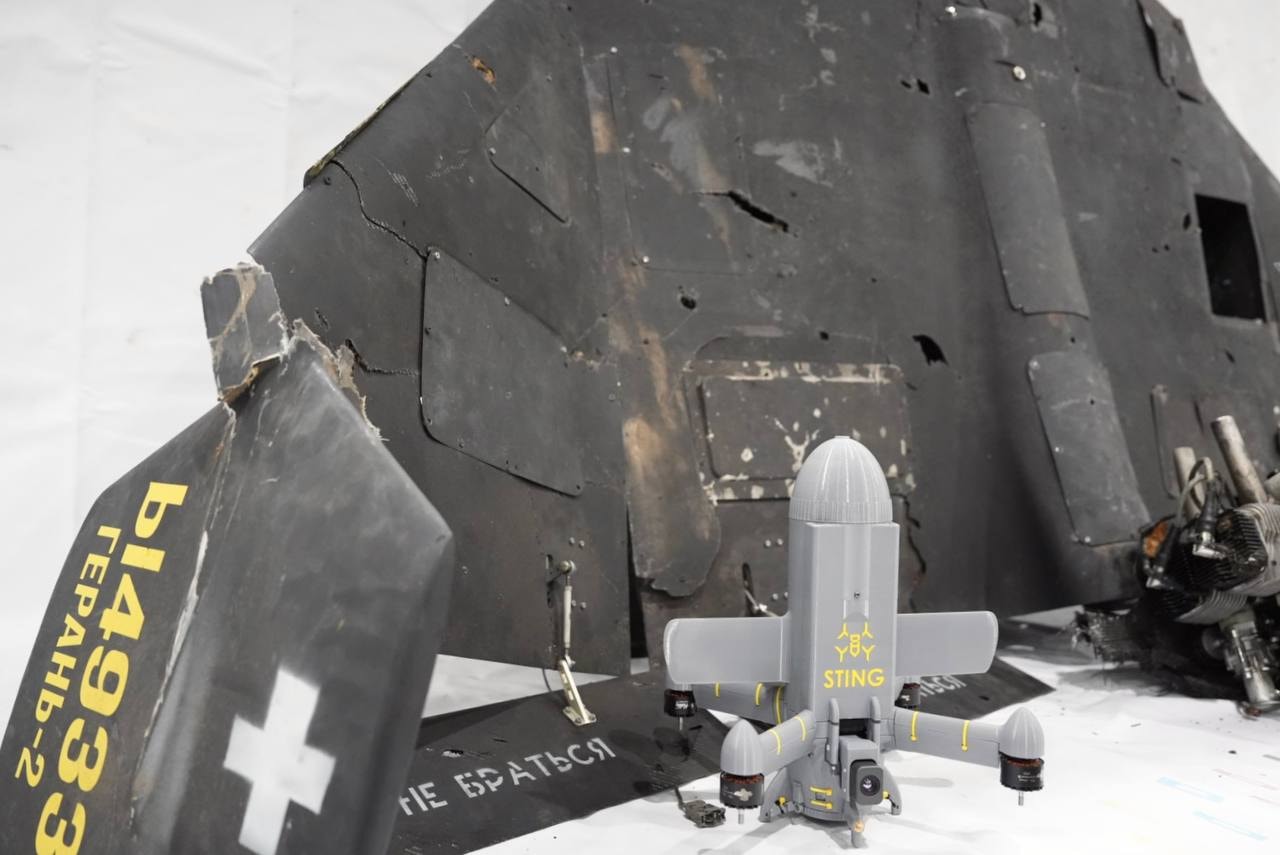
Naturally, Ukrainian drone innovation takes center stage, but perhaps even more valuable is the new military doctrine taking shape in Ukraine. It is not only about cheaper, more agile hardware but the smart and sophisticated ways of deploying it — a panoply of terrain navigation, electronic warfare, the application of AI-driven C4ISR, anticipation of Russia's next move, and denial of action — ultimately, the most successful operationalization of data on the battlefield in modern history.
Ukraine’s value lies in the Tactics, Techniques and Procedures (TTPs) that it has developed rather than the hardware itself.
Once a sustainable ceasefire is in place, experienced Ukrainian units could contribute to a future European Defense Force or serve alongside NATO's high-readiness forces. Current proposals discuss Ukraine contributing up to 50,000 of its combat-tested troops alongside another 50,000 personnel from other European contingents to, effectively, form a new European army.
All this demonstrates how increasingly reliant the European pillar of NATO will become on Ukraine.
And while transatlantic relations are unlikely to return to what they were before Trump 2.0 — with Europe’s diminished trust in Washington and America's aggressive insistence that Europe pulls its weight — Ukraine will be a decisive factor in shaping both sides of this evolving relationship and, potentially, of the whole NATO 3.0.
Editor's note: The opinions expressed in the op-ed section are those of the authors and do not purport to reflect the views of the Kyiv Independent.