Interview: Move fast to secure Kyiv's future, Brussels economy chief tells Ukraine, EU countries
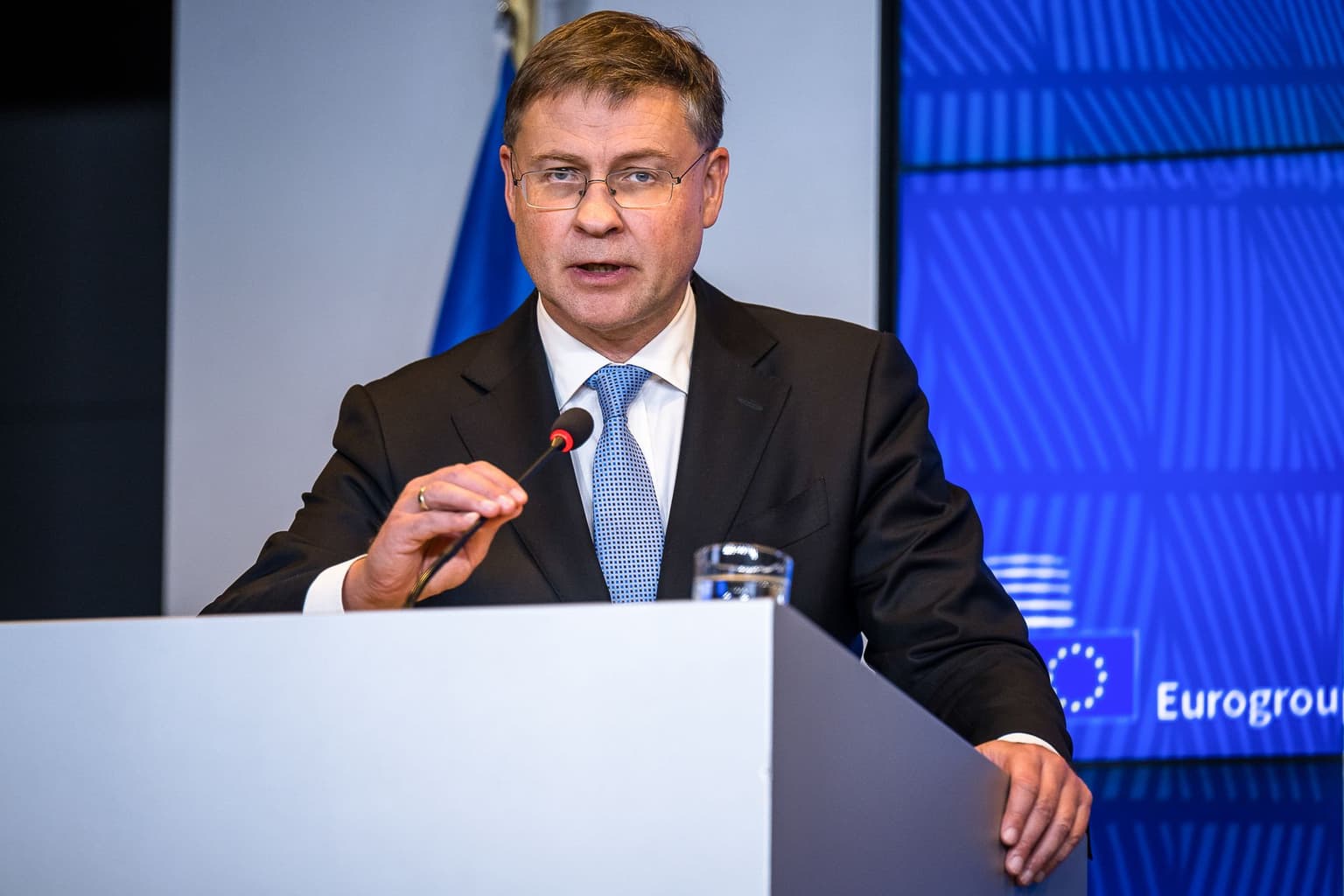
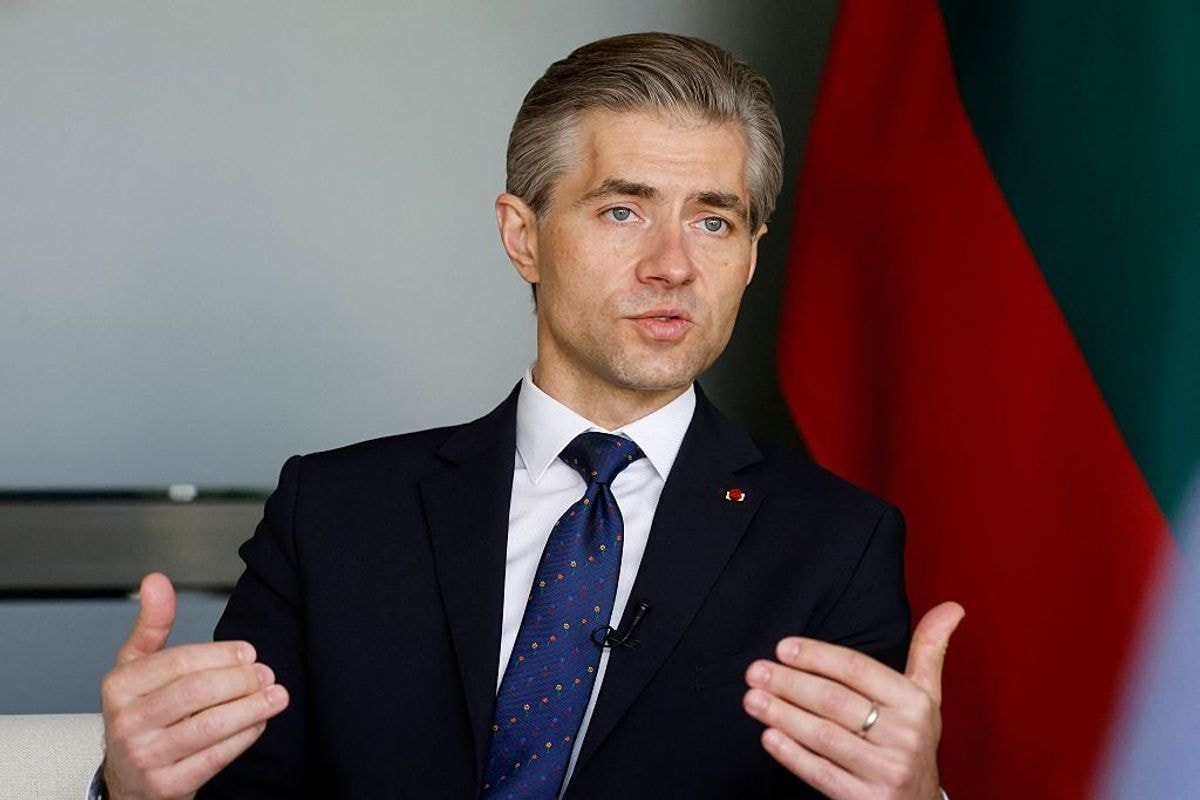
Valdis Dombrovskis, European Union commissioner for economy and productivity, speaks during a news conference following a Eurogroup meeting in Luxembourg on Oct. 8, 2026. (Wiktor Dabkowski/Bloomberg via Getty Images)
 on Google
BRUSSELS, Belgium — EU countries and Ukraine need to respond quickly and decisively to a new financing proposal for Kyiv, the EU's Economy Commissioner Valdis Dombrovskis told the Kyiv Independent in an interview on Nov. 18.
Dombrovskis spoke just after the European Commission published a proposal to give Ukraine an additional 45 billion euro ($49 billion) loan in 2027, with additional measures to solicit third-country contributions, as first reported by the Kyiv Independent.
"We need conceptual decisions rather soon, by December," Dombrovskis said.
That month, the International Monetary Fund (IMF) is due to meet, and it will not be able to continue its support for Ukraine without assurances that Kyiv's 2027 budget is covered.
The new Commission proposal aims to cover two-thirds of a 70 billion euro ($77 billion) gap in Ukraine's budget for next year, identified by President Volodymyr Zelensky in October.
Dombrovskis also explained that the proposal, as it stands, assumes all EU countries will participate, amid speculation that some countries will opt out of financially supporting Ukraine, just as Hungary, Czechia, and Slovakia did for the previously passed 90 billion euro ($99 billion) loan.
"We are proposing a regulation … to be covered by all 27 member states," Dombrovskis said.
"That would be the logical way forward, because it's not only a mechanism of solidarity for Ukraine, but it's also important for our own security," Dombrovskis explained.
He also said EU countries will have to address questions around how much money to provide for Ukraine in the next multiannual budget (the MFF) — which runs from 2028 until 2034 — and whether covering the interest rate payments on these loans for Ukraine will be on top of the money earmarked for Ukraine, or come out of that sum.
The Commission proposed 100 billion euros ($110 billion) for Ukraine in the MFF, but EU countries' negotiations have already reduced that amount to 89 billion euros ($98 billion), which, even without considering interest payments on the loan, is insufficient to cover Ukraine's needs for even one year.
"We are not prescribing" what member states should do, Dombrovskis said.
"Certainly I would advocate for providing this interest rate subsidy and providing it on top of this 100 billion euros which are already there," he said.
Ukraine should move fast too
Once approved, Europe's economy commissioner is also hoping to get the money delivered to Kyiv as early in the year as possible.
Dombrovskis explained that it has already been agreed that defense funding to Ukraine, earmarked for 2027, would be "frontloaded" to earlier in the year.
He said the other funds that are conditional on implementing reforms could also be disbursed sooner in the year rather than later, but that it depends on Kyiv.
"We may frontload this support … we are frontloading the military support part, but that also means the need for Ukraine to frontload certain reforms."

Dombrovskis said that discussions with the government are ongoing about the specific payment schedule for the planned 45 billion euro loan, but when asked which reforms he thought Ukraine should prioritize, he mentioned laws that relate to a "simplified tax regime," and to combating "tax evasion," which could also help the government increase its tax income.
As far as Ukraine's financial reforms are concerned, Dombrovskis considers Ukraine "broadly on track" after approving more than 4 billion euros ($4.9 billion) in support on Nov. 5.
For future payments, he is hopeful for a smooth approval process.
How Russia's assets fit into the plan
So long as Russia is at war with Ukraine and is not paying reparations, Kyiv will not have to make any repayments to the EU for the loans being issued.
Just as with the previously approved 90 billion euro loan, Dombrovskis emphasized that "the EU is reserving the right to use the immobilized Russian sovereign assets to repay those loans."
Seizing the assets, over 200 billion euros ($219 billion) of which have been stuck in European bank accounts since 2022, has been eyed by Ukraine, several EU countries, and members of the European Parliament as a quick fix to ensure Kyiv has the money it needs.
But several countries have told the Kyiv Independent that the idea remains a non-starter, and it would require all 27 EU countries to unanimously agree for it to proceed.

When asked by the Kyiv Independent at a press conference the same day if now is the right time to reopen the discussion on directly using Russia's assets, European Commission President Ursula von der Leyen mentioned only one possible use case, which already exists: supporting Ukraine with the windfall profits that the invested assets generate.
In 2024, G7 countries created a $50 billion loan for Ukraine, to be paid using the interest accumulated by Russia's invested assets.
The Commission proposal includes a legal tweak to make possible a second round of such loans.
And for Dombrovskis, any discussion of the fate of Russia's assets would come up "in the context of the peace process" and would depend on what Moscow pays Ukraine in reparations.
Until then, EU countries need to agree to adopt the Commission proposal, and how they will finance Ukraine for the long haul.
EU leaders will have an informal chance to discuss the proposal already at a meeting of the Coalition of the Willing in Berlin on Nov. 19, and at a leaders summit in Brussels on Nov. 26-27.