Zelensky can kick Kachka out of Ukraine, but not his reforms
 on Google
The EU is set to tie billions of euros in financial support to Kyiv's ability to complete the so-called Kachka-Kos plan for rule-of-law reforms, after months of inertia in Ukraine's parliament and a recent government reshuffle interpreted by some as another attempt to avoid making those changes.
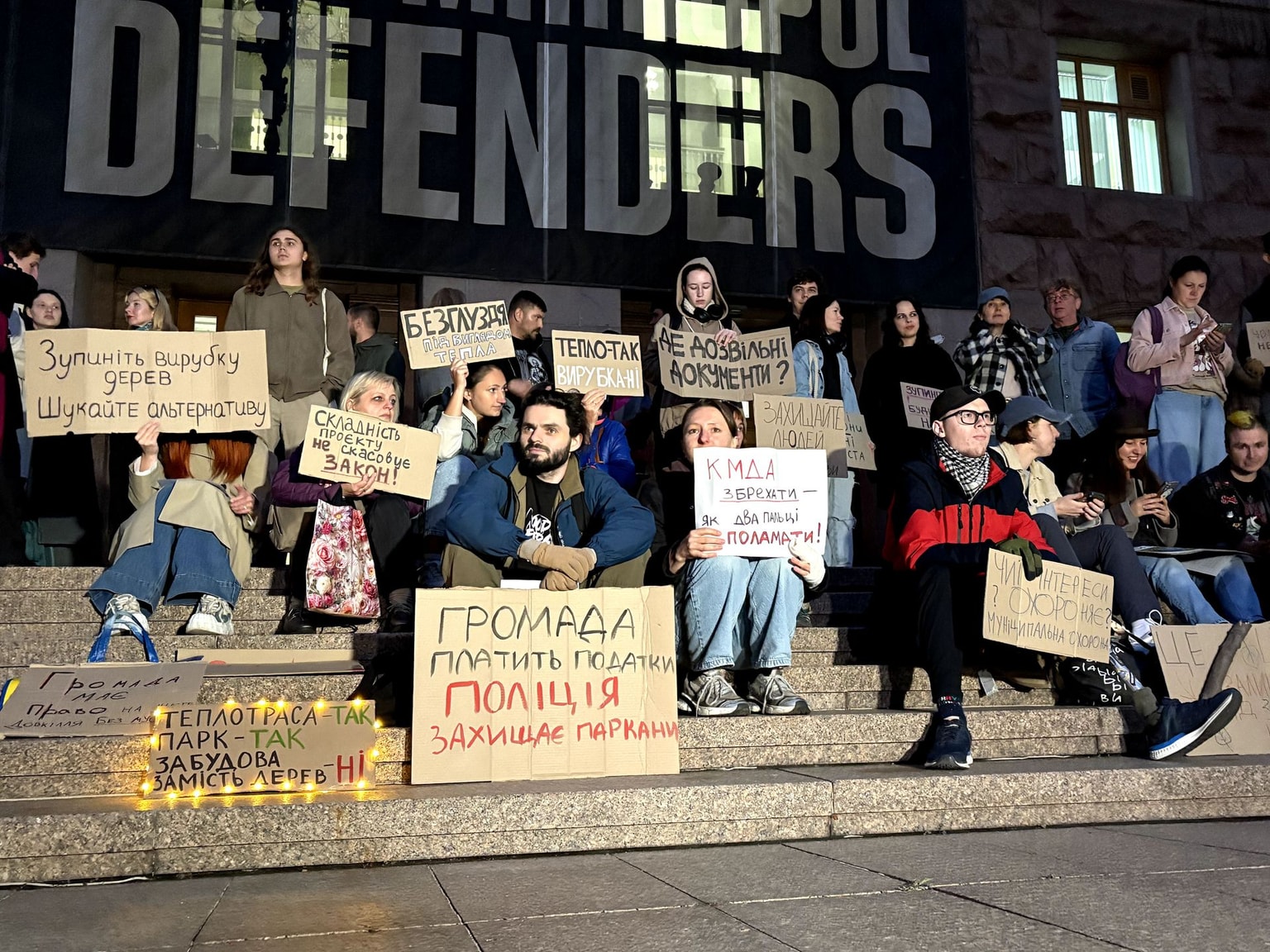
President Volodymyr Zelensky decided on July 12 to reshuffle the country's government, a controversial move that has led to consecutive days of protests over the dismissal of Defense Minister Mykhailo Fedorov.
Though not front of mind for protestors, Zelensky's decision to swap Ukraine's Deputy Prime Minister for European Integration Taras Kachka with Kyiv's EU ambassador and career diplomat Vsevolod Chentsov has similarly raised eyebrows, questions, and doubts among those with an eye on the Brussels-Kyiv relationship.
Chentsov knows the EU well, having worked in Brussels or on EU integration for the bulk of his career. He will be among the first to realize that there is no question of bargaining with Europe, but whether or not Kyiv follows what the EU always calls its "merit-based process."
The bargaining will be with Kyiv, the government, and the factions in the Verkhovna Rada, where the reasons preventing reforms remain largely the same.
Kachka, for his part, will be welcomed in Brussels as the new ambassador.
One national diplomat told the Kyiv Independent that he might even be a better fit for the role because he is sociable, "an important skill often overlooked for doing diplomacy in Brussels."
And a senior EU official who has worked extensively with Kachka praised him as "super professional," and "super important" across the range of EU-Ukraine agreements struck up in his one-year post.
That same official also favorably recalled Kachka's grasp of intricate details, recounting anecdotes of when he deployed his agricultural knowledge from having worked on the topic over a decade earlier, his fluency in Polish at a time of cooled Warsaw-Kyiv relations, and his memory — "he remembers everything."
Those experiences working with Kachka directly contradict the reasoning outlined in Zelensky's tweet justifying Kachka's ouster from the ministerial role.
"Important progress has been made, and now we need to develop more sectoral, meticulous work to advance through the clusters already opened in Ukraine's EU accession negotiations, as well as focus on engagement both with the EU institutions and with the national governments of EU member states to open the next clusters," Zelensky wrote.
EU is taking no chances
To open those next clusters, essentially the to-do lists of reforms Ukraine must push through to become an EU country, the existing 27 members have to vote unanimously in support every step of the way.
Both for doing the technical work and assuaging concerns of the 27, Kyiv has no choice but to travel down the road of improving democracy and the rule of law, and winning the fight against corruption.
The Kachka-Kos plan was intended to commit Kyiv, with a bit of publicly expressed political pressure, to make significant progress by the end of 2026.
But it has not worked.

As of June, when Kyiv opened the first EU accession cluster, which covers the rule of law, EU officials estimated that only 15% of the plan had been addressed.
Of the plan's ten points, not one has been done and finalized, an EU official told the Kyiv Independent.
Now, the EU is putting the Kachka-Kos plan on a more enduring basis by taking a carrot-and-stick approach.
First, when Kyiv unlocked the first accession cluster, it was presented with a list of interim benchmarks that must be fulfilled before any of the 33 chapters spread across the EU's six enlargement clusters can be marked as completed.
The Kachka-Kos reforms have been folded into those interim benchmarks.
Concretely, that means Ukraine cannot advance its EU membership bid until it, for example, significantly strengthens its anti-corruption agencies — the National Anti-Corruption Bureau and Specialized Anti-Corruption Prosecutor's Office — appoints prosecutors transparently and via a merit-based process; no longer leaves judges' seats unfilled for long periods; and ensures that government spending can be properly audited.
If EU membership ends up too long-term and too abstract an incentive, the European Commission has also proposed tying the so-called Kachka reforms to billions of euros in financial support.
In April, the EU approved a 90 billion euro ($103 billion) loan for Ukraine, half to be disbursed in 2026 and half in 2027. Two-thirds of the total — 60 billion euros ($68 billion) — is earmarked for defense spending.
The remaining third is for general budgetary support. Part of that money, 8.35 billion euros ($9.53 billion), will be paid this year via a mechanism called the Ukraine Facility, which greenlights transfers based on Ukraine's fulfillment of a so-called Ukraine Plan, essentially a timetable for when Kyiv will carry out the reforms required for EU membership.
On July 22, EU ambassadors are expected to vote through an amendment to the Ukraine Plan, which would embed items from the Kachka-Kos plan as actions to be implemented by the end of the year.
With Kachka gone, the job of coaxing Kyiv into carrying out those reforms now falls to Chentsov.
Failure to do so risks leaving up to 5 billion euros ($5.7 billion) on the table.