Death is a master from Russia
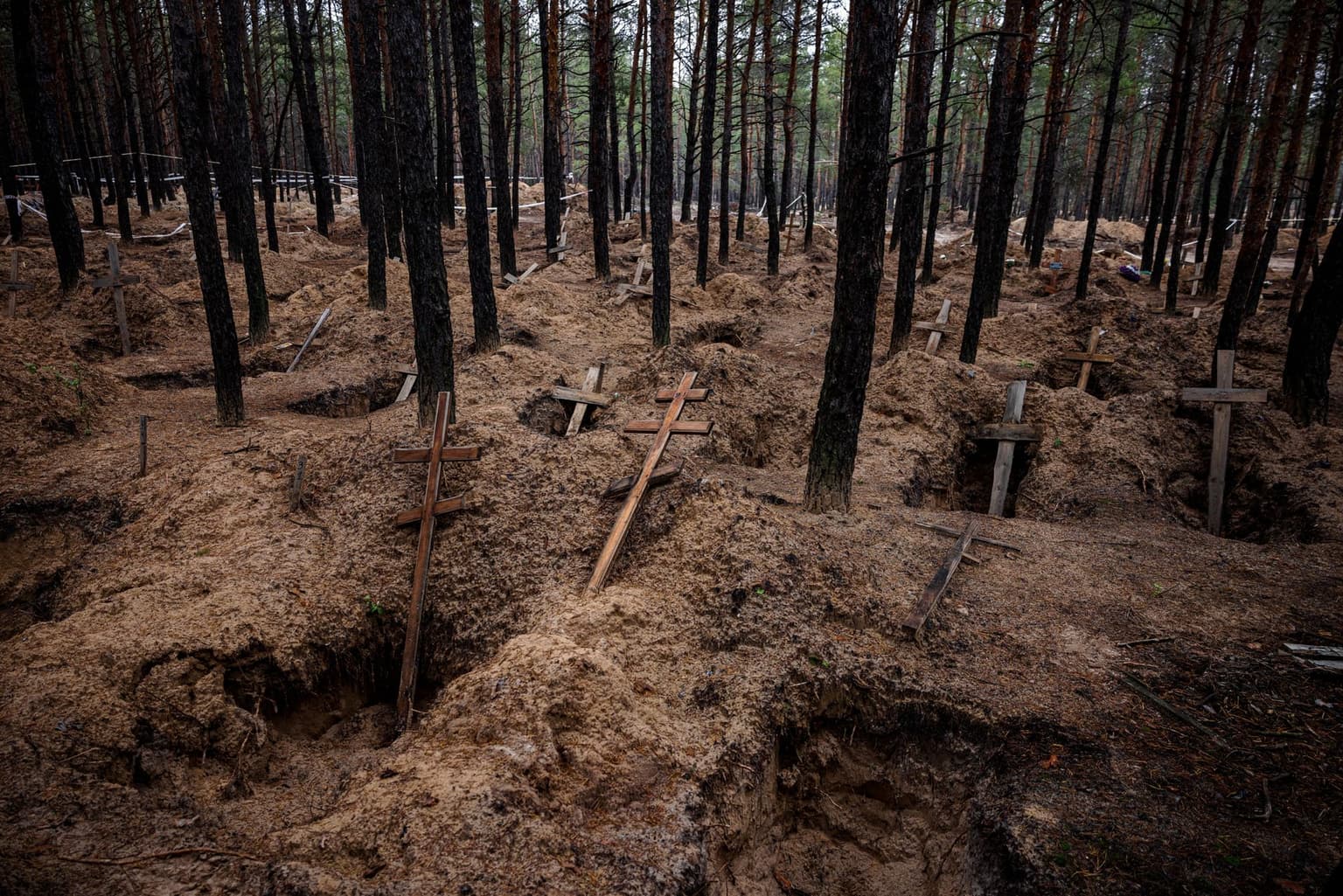
Empty graves are seen after the exhumation of bodies from mass burial sites in Izium, Kharkiv Oblast, Ukraine, on Nov. 4, 2022, following the city's liberation from Russian occupation. (Dimitar Dilkoff/AFP via Getty Images)
 on Google

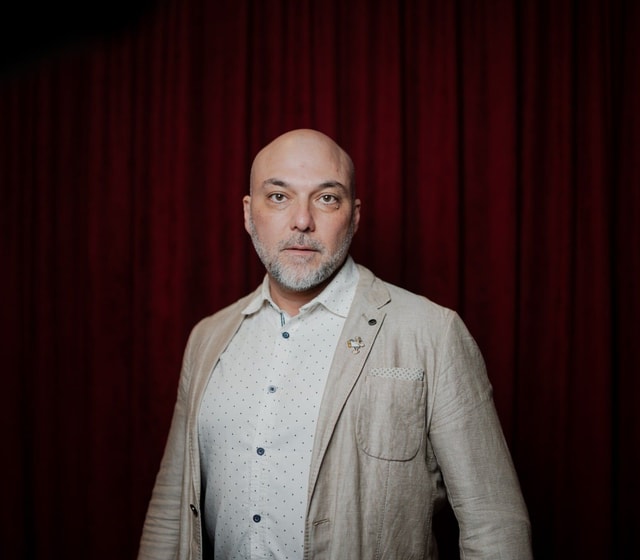
Vakhtang Kebuladze
Ukrainian philosopher
At the beginning of Russia's full-scale invasion of Ukraine in 2022, while in my hometown of Kyiv, I wrote an essay in German for a German website titled "Russia Dehumanizes the World."
The Ukrainian translation of this text, published under the title "The Dehumanization of the World," was included in my new book, "Сплески" ("Splashes"). The essay ends as follows:
"War. The Russians are near. Death is near. Death is a master from Russia.
We are still here.
We, Ukrainians. We, human beings.
We, Ukrainians. We, human beings."
This passage paraphrases a line from Paul Celan's haunting surrealist poem "Death Fugue": "Tod – Meister aus Deutschland" ("Death is a master from Germany").
Paul Celan survived World War II and the Holocaust, in which the German Nazis murdered almost all his loved ones. But he could not survive the trauma of violence and loss. At the height of his fame and success, he took his own life by throwing himself from a Parisian bridge into the Seine. He drowned, drowning his inexhaustible pain…
At the beginning of the Russian invasion, my greatest fear was the occupation of Kyiv. We did not yet know what would happen in Bucha and many other Ukrainian cities. We had not yet seen the horrific photographs of Ukrainian men and women tortured and murdered by the Russians. But I knew that the Russian occupation brought torture and death.

Death is a master from Russia.
It has always been this way, going back to time immemorial. History repeats itself.
The first attempt to establish a state on the territory of present-day Russia began in the 12th century with Andrei Bogolyubsky's sacking of Kyiv in 1169. This happened before the Mongol invasion.
Ever since, waves of violence have rolled relentlessly over our lands from the east. And since the Tsardom of Muscovy established its dominion on the blood of the peoples it conquered and subjugated, this threat has never disappeared.
The attempt to establish the Hetmanate, the first modern state on the territory of present-day Ukraine, ended with the Russian destruction of its Cossack capital, Baturyn, and the mass murder of its inhabitants in 1708.
At the beginning of the 20th century, the Russian Bolsheviks drowned Kyiv in blood when Kyiv briefly became the capital of the Ukrainian People's Republic. Our ancestors then lost their struggle for our freedom and independence to the Russian Bolshevik Empire, and our lands once again fell under Russian occupation, bringing enslavement and death.
The Russian Bolsheviks inflicted the Holodomor, carried out mass repression, and persecuted the Ukrainian language and culture.

Death is a master from Russia.
After the collapse of yet another incarnation of the Russian empire, the Soviet Union, Ukraine finally gained independence.
It seemed that we might free ourselves from Russia's destructive imperial influence peacefully and build our own independent democratic republic.
But when, in 2013, the Ukrainian people rose up against President Viktor Yanukovych's criminal gang, directed from the Kremlin, to secure a European future for our country, the Russians attacked us once again.
In 2014, they seized Crimea and the southeastern part of our country, and in 2022, they tried to subjugate all of Ukraine. We repelled the Russian invaders, and so far, they have failed.
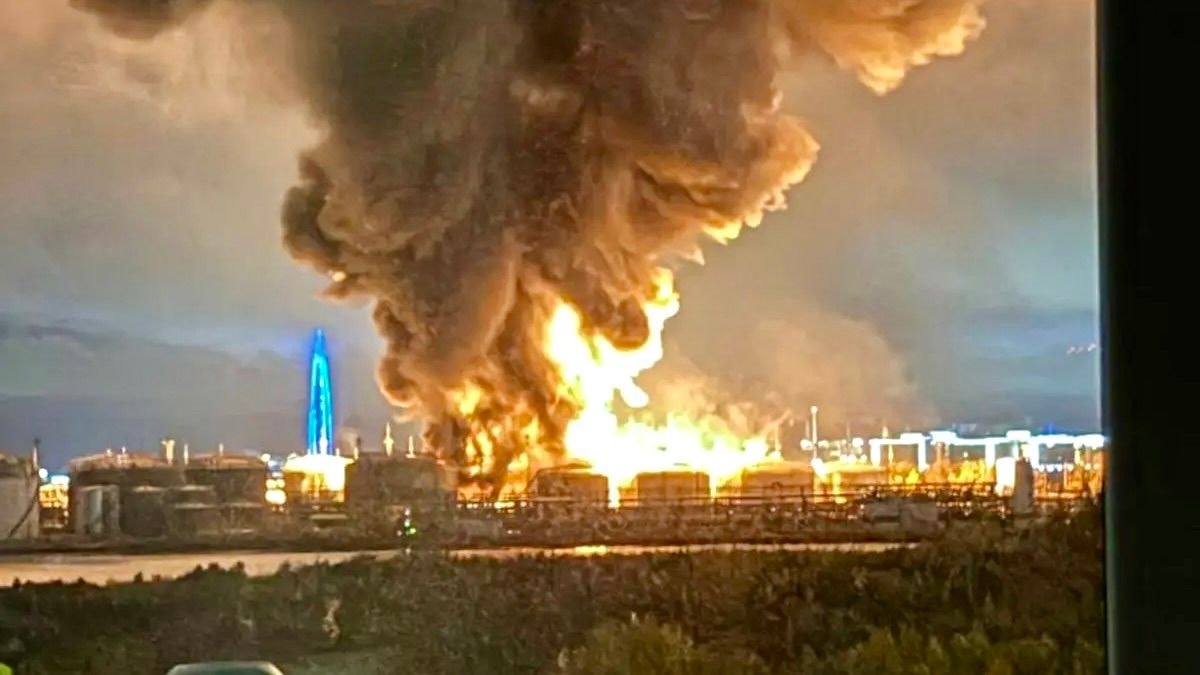
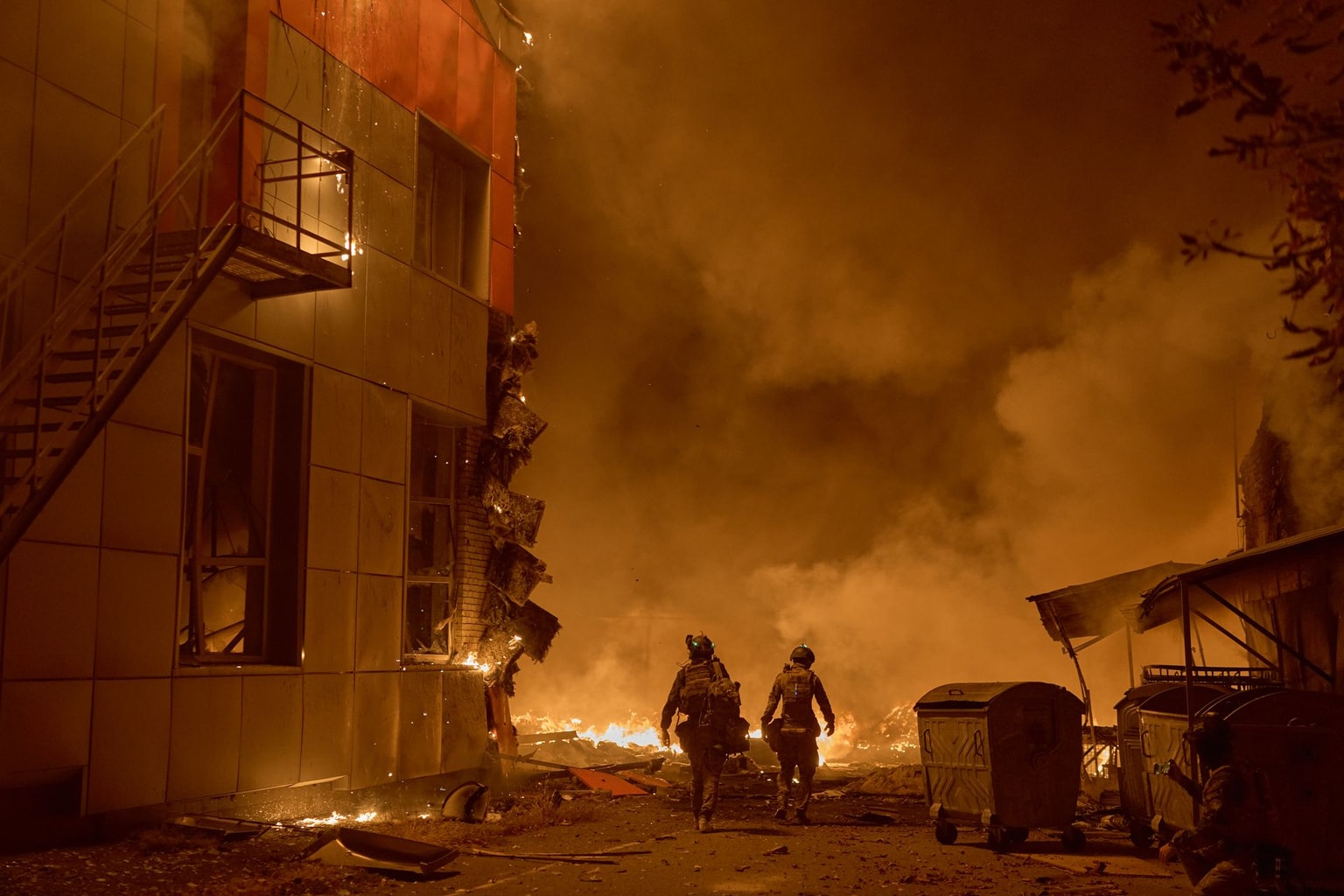
Now they have adopted a different tactic. The Russians are destroying our cities with drone and missile attacks, trying to make normal life in them impossible, killing civilians and sowing fear and death. They are intensifying the shelling of peaceful Ukrainian cities. Every day, dozens of Russian missiles and hundreds of drones attack Ukrainian residential buildings, hospitals, railway stations, and other civilian targets.
As we fall asleep at night, we do not know which of us will wake up alive, and which of us will be killed by the Russians. The Russian missile genocide continues.

Death is a master from Russia.
Tonight, like most Kyiv residents, I barely slept. The Russians bombarded Kyiv with missiles and drones. The noise was deafening.
This morning, there is no water or electricity. The Russians have once again struck critical infrastructure. I washed myself with the few drops left in the tap and went downstairs to the coffee shop in my building. It has a power generator, so there is electricity: I can wash my hands with hot water, drink a good cup of coffee, and work.
Finishing this text here, I hope that in a few hours, Kyiv's heroic electricity workers, risking their lives under Russian bombardment, will restore power, allowing me to conduct my philosophical anthropology seminars remotely from home for students at Taras Shevchenko National University of Kyiv.
Not all my students can connect: the electricity and internet connection keep cutting out.
As soon as an air raid alert sounds, I must interrupt the seminar and let everyone go to a shelter.
And I have begun to worry about a question: Is what I am doing appropriate at a time like this? Does it make sense to discuss the nature of the human being, human freedom and dignity, the value of human life and life itself with my students when Russian shelling could cut short any one of our lives?

Death is a master from Russia.
Yet this is exactly what the Russians are trying to achieve by shelling Ukraine's peaceful cities.
They are trying to make ordinary, peaceful life in our cities impossible, hoping that this will force us to capitulate. But I know all too well what it means to live under Russian rule: repression, torture, death.

Death is a master from Russia.
So we have no choice. Our military must continue to resist on the front line, while civilians must sustain ordinary life in the rear, as far as possible. Through extraordinary effort and at the cost of the lives of so many Ukrainian heroes and heroines, Ukraine's Armed Forces managed to drive the Russian onslaught back from Kyiv.
The Russian missile terror continues. But I believe it will not force us to surrender, because defeat would mean either forced emigration or captivity and death for us. Victory, by contrast, will make a free and dignified life in Ukraine possible.
An independent, democratic, prosperous Ukraine is the guarantee of a peaceful and free life for all the peoples of Europe. If we succeed in stopping the Russian imperial onslaught here, Russian imperialism will no longer threaten other peoples in Europe and around the world.
Editor's note: The opinions expressed in the op-ed section are those of the authors and do not purport to reflect the views of the Kyiv Independent.