Baltic States unite to demand more EU aid, say solidarity 'not enough' amid Russian threat
 on Google
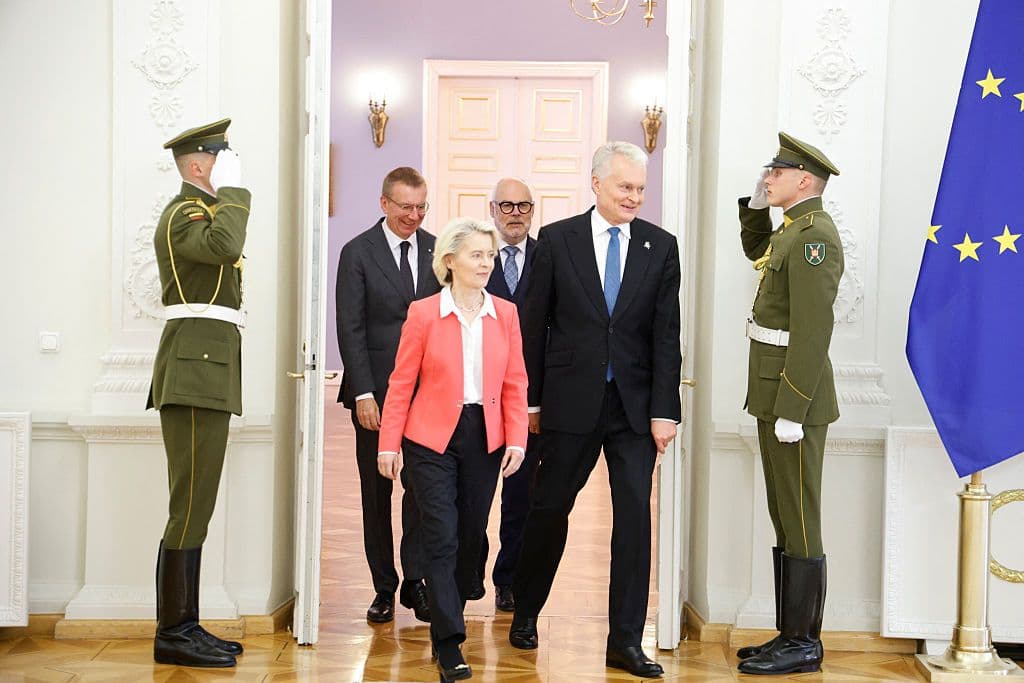
The Presidents of Latvia, Lithuania, and Estonia called on the European Union to provide more financial assistance at a press conference with European Commission President Ursula von der Leyen in Vilnius on May 26, saying solidarity is "not enough" amid Russia's growing threat.
The three countries have been victims in recent weeks of Russian GPS jamming that has pushed Ukrainian drones into their airspace, as well as threats by Moscow to take both military and legal action on the false accusation that they are allowing Ukrainian drones to transit their territory to attack Russia.
"We appreciate the European Commission's shown solidarity with the Baltic States. However, today's solidarity is not enough," Lithuanian President Gitanas Nauseda told journalists.
He and his Estonian and Latvian counterparts all requested more funding to protect their skies.
"The urgent priority is strengthened multilayered drone detection and air defense capabilities. European defense projects of common interest, especially the Eastern Flank Watch, need to become a reality much faster," said Estonian President Alar Karis.
"We count on increased EU support for this," he added.
Latvia's President Edgars Rinkevics said that the support provided needs to go beyond the immediate defense needs for those living on the border.
"We also need to develop some more instruments to encourage life there," Rinkevics said.
Responding to those financial needs, the Commission President ran through a list of initiatives on the table to provide support: 12 billion euros in SAFE defense loans for the Baltic States; 1.5 billion euros in regional development funds, which have been opened up to defense expenditure for the first time; and a 28 billion investment fund specifically for Eastern flank countries.
"This is all available. Important now is to implement it, to let the money work," von der Leyen told reporters.
EU countries are also increasingly considering the bloc's next seven-year budget, which European ministers were discussing in Brussels the same day and will run from 2028 onwards.
The negotiations usually pit net donor and net recipient countries against one another, and against the proposals made by the European Commission, until a consensus can be reached.
"The needs of the Eastern flank must also be reflected in the next European long-term budget," Karis said.
The Commission's draft budget includes many proposed increases that would benefit the Baltic States: three times as much investment in border management, five times more on defense, and a tenfold spending boost for military mobility, von der Leyen explained.