Ukraine turns up heat on Lukashenko despite limited signs of new military threat

Russian President Vladimir Putin (R) and Belarusian President Alexander Lukashenko (L) attend the Victory Day military parade in Moscow, Russia, on May 9, 2026. (Igor Ivanko / AFP / Getty Images)
 on Google
Over four years into an all-out war with Russia, President Volodymyr Zelensky welcomed Belarusian opposition leader Sviatlana Tsikhanouskaya in Kyiv in an official capacity on May 25.
In the weeks prior to the visit, Zelensky has been increasingly vocal regarding a deeper involvement of Alexander Lukashenko's Belarus in Russia's war against Ukraine.
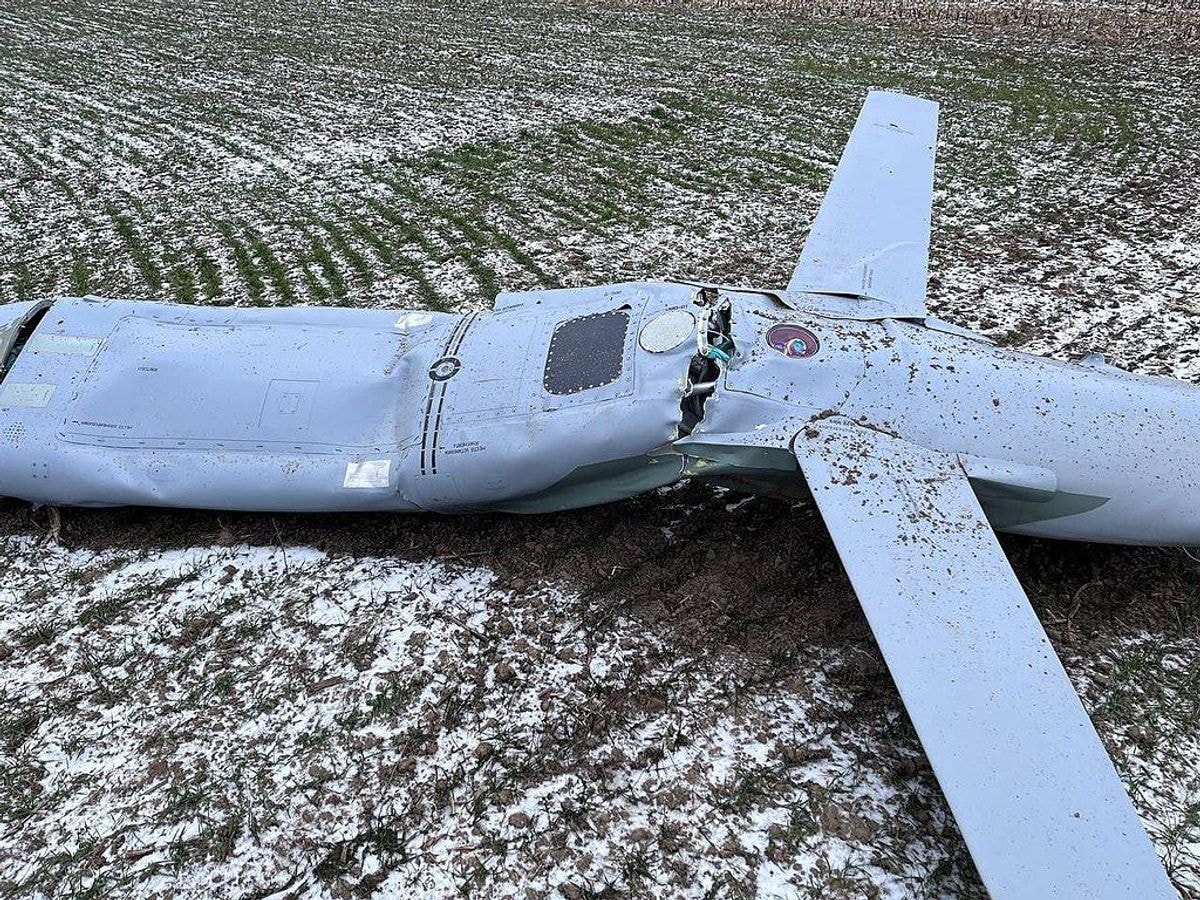
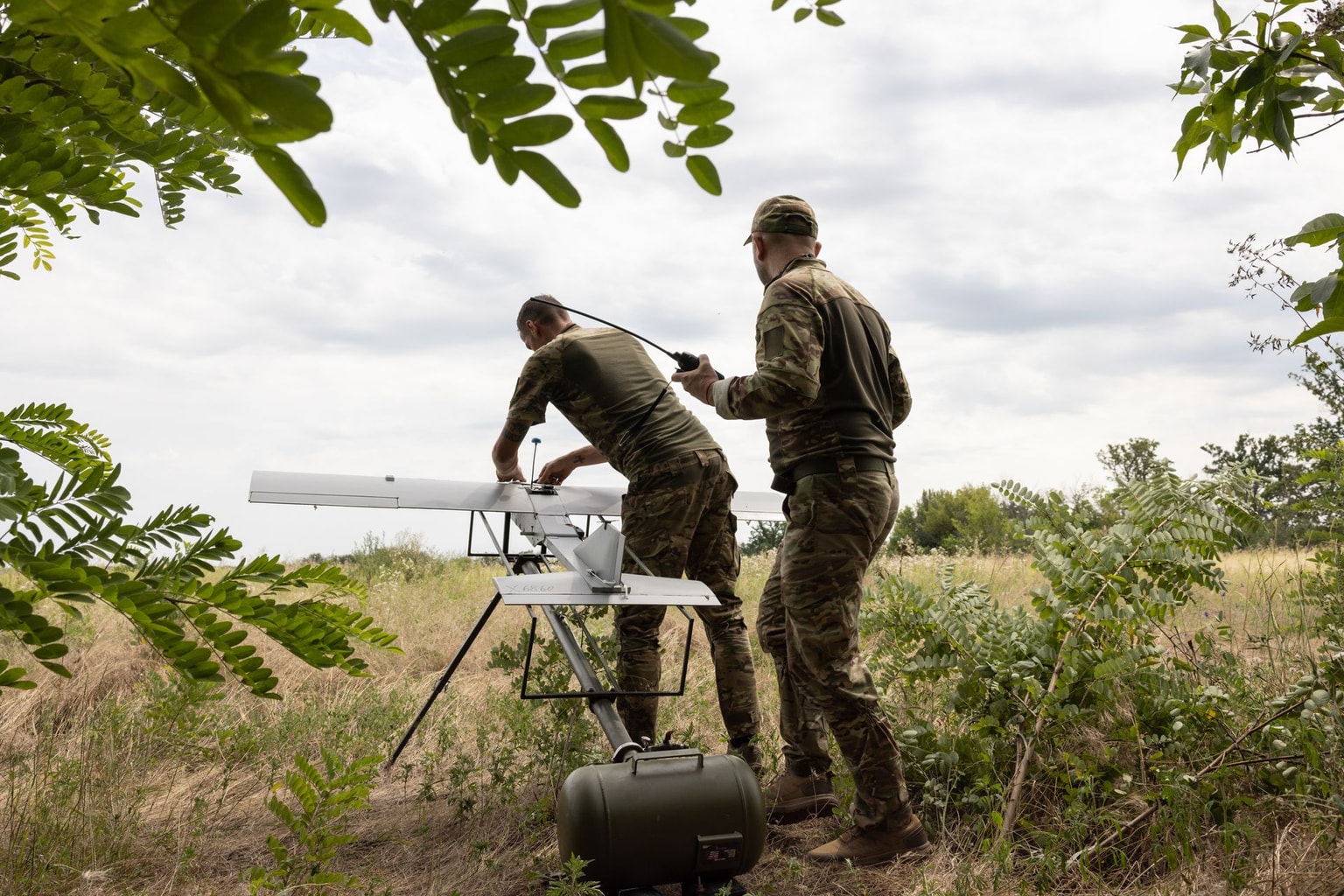
According to Zelensky, Russia is plotting major attacks on both Ukraine and NATO utilizing Belarusian territory, and plans to deploy additional signal repeaters in the country to guide its combat drones.
While Belarus served as a launchpad for Russia's 2022 full-scale invasion, it stopped short of committing its own troops to the battlefield. Instead, Minsk has functioned as Russia's rear base — helping to circumvent sanctions, manufacturing military supplies in an area shielded from Ukrainian drone strikes, and transferring its own stockpiles of Soviet-era weaponry to Moscow.
Last week, Belarus's participation in Russian-led tactical nuclear drills further fueled Kyiv's concerns.
Minsk has so far remained largely silent on the allegations as Lukashenko prepares for a critical round of negotiations with Washington scheduled for the coming weeks. An upcoming visit by a U.S. delegation could help Lukashenko achieve a long-term economic goal: restoring the transit of sanctioned Belarusian potash to the global market.
Ultimately, while Belarus is engaged in a slow-burning overhaul of its legal framework and infrastructure that could pose a future threat, military experts view the immediate situation on the ground as largely unchanged.
For now, Kyiv is moving to leverage the moment politically, according to them.
Mythologized military threat
"With regard to the de facto leadership of Belarus, which must stay on its toes — that is, clearly understand that there will be consequences if aggressive actions against Ukraine, against our people, are taken."
President Volodymyr Zelensky issued this warning on May 21 during a visit to Slavutych – a northern Ukrainian town that briefly fell under occupation when Russian forces launched their thwarted 2022 assault on Kyiv from Belarusian territory.
Messages concerning threats from Belarus have averaged two statements per month on Zelensky's official Telegram channel over the last six months — a sharp uptick compared to just one or two mentions per year in 2023-2024.
Since December 2025, Kyiv has repeatedly reported that Russia is utilizing civilian cell towers and deploying signal repeaters in Belarus to guide drone strikes against Ukrainian targets.
However, on Feb. 7, Ukraine announced it had found a way to "neutralize" some of these repeaters and disrupt the navigation network supporting Russian drones. Looking ahead, President Zelensky warned that Russia plans to expand its footprint by deploying ground control stations across Belarusian territory.
"In Belarus, as elsewhere, civilian infrastructure is very often used for military purposes," said Uladzimir Zhyhar, a member of Belpol, a Belarusian opposition group launched by former law enforcement that focuses on monitoring military developments in Belarus. The Belpol group has previously reported on Russia-funded military infrastructure built in Belarus.
Meanwhile, Belarusian security think tank iSANS, which monitors military activity in Belarus, says the observed data doesn't allow definitive conclusions to be drawn.
"We cannot confirm or definitively rule out the existence or absence of infrastructure that could facilitate Russian drone strikes on Ukraine," iSANS said in a written response to the Kyiv Independent on May 21. "Aside from statements by Ukrainian officials, no other compelling evidence has been presented in the public domain."
This caution extends to ground developments as well: In April, Zelensky claimed that roads and artillery positions are being built along the Belarusian border with Ukraine, calling them clear signs of preparations for an escalation. However, military experts maintain that road construction in southern Belarus falls within normal, non-threatening infrastructure plans.

According to iSANS, only two sites in the area could even be classified as artillery positions: anti-aircraft missile emplacements near the Mazyr Oil Refinery — established in spring 2024 amid a rise in drone flights over Belarus — and a strongpoint near the village of Kalinino in the Homiel region, which was set up in 2023 for military exercises.
"We cannot claim that the military situation in Belarus has changed dramatically over the past six months," iSANS said.
The one exception the organization acknowledges is the placement of Oreshnik missile system elements in the eastern Mahiliou region. While stressing that no launchers have been confirmed, it noted that another Russian military facility in Belarus creates additional security risks.

The ongoing joint nuclear drills unexpectedly announced this week neither create a new threat nor serve as proof of a nuclear warhead deployment, according to experts.
"Russia conducts these exercises fairly regularly," said Artyom Shraibman, a nonresident scholar at the Carnegie Russia Eurasia Center. "Given that the Russian government claims it has already deployed nuclear weapons in Belarus, it's clear that the Belarusian component will now be included in Russian nuclear force exercises.
Belpol's Zhyhar agrees.
"Previous exercises involving tactical nuclear weapons on Belarusian territory revealed that Belarusian troops were unprepared to handle this type of weaponry. That's why these exercises are being conducted now," Zhyhar told the Kyiv Independent.
"Even though the Belarusian army won't have operational control over the weapons, it still has to participate in deployment, preparation, and support maneuvers, which require additional training," Zhyhar said.
Despite years of regular snap inspections, military drills, and exercises, the Belarusian military still lacks combat experience, and its ammunition stocks have been depleted by Russia, making the commitment of Belarusian troops unlikely, argues Yevhen Magda, Ukrainian political analyst and director of the Institute of World Politics.
"The Belarusian military threat has been mythologized," Magda told the Kyiv Independent.
Staying out of direct involvement in the fighting is also a matter of self-preservation for Belarusian dictator Lukashenko, who still remembers the massive protests and would be wary of distributing weapons to the people who rallied against him, the expert says.
Political component
Despite the shifting rhetoric, some analysts emphasize that the fundamental strategic dynamic between Moscow and Minsk remains static.
"Belarus was — and remains — a territory that will fulfill its function whenever Russia needs it," Shraibman argued, pointing to the political dimension in Kyiv's intensified attention to Belarus.
"So from that standpoint, little has changed. That doesn't mean there's no threat, but the threat level, it seems to me, is the same as it was a year ago."
In contrast, there has been a definitive shift in the dynamics between the Belarusian opposition in exile and Kyiv. After years of careful balancing, Zelensky met Tsikhanouskaya for the first time in January, extending an official invitation for her to visit Kyiv.
Tsikhanouskaya arrived in Kyiv on May 25 and is set to hold talks with Zelensky, Foreign Minister Andrii Sybiha, and a number of top-level officials, underscoring the detail Ukraine has placed on the talks.

Further cementing this diplomatic rupture with official Minsk, Kyiv imposed personal sanctions on Lukashenko in February, followed by additional sanctions targeting his sons in April.
Three factors have driven this strategic shift, according to Pavlo Rad, an analyst with the Russian and Belarusian Studies Program at the Foreign Policy Council "Ukrainian Prism." These include a change in leadership within Zelensky's office, ongoing negotiations between Washington and Minsk, and a calculated pivot toward a more proactive stance modeled after Poland and Lithuania – both of which have long supported the Belarusian opposition while maintaining a hawkish line against the Lukashenko regime.
"Lukashenko's regime has made significant progress, prompting Kyiv to pay closer attention to the Belarusian issue," Rad told the Kyiv Independent. "Belarusian-U.S. consultations are beginning to extend beyond the scope of bilateral relations."
Starting as backchannel communication in 2024, the talks between Washington and Minsk became public by mid-2025. They have resulted in the release of roughly 500 political prisoners held in Belarusian jails in exchange for partial relief of U.S. sanctions.
Now, negotiations between Washington and Minsk are reaching a critical turning point.
With a U.S. delegation visit imminent, Lithuania and Ukraine are reportedly facing mounting pressure to allow the transit of Belarusian potash — which remains heavily sanctioned by Europe — to regional seaports, effectively restoring Minsk's access to the global market.
According to RFE/RL, the U.S. asked that Poland, Lithuania and Ukraine open their territories for the transit of Belarusian potash.
"Ukraine is trying to show that it's keeping its finger on the pulse," Magda said. "It's an effort to demonstrate to several key players what's going on."
In his view, this intensified focus on Belarus sends a dual message: first to the U.S., which is currently promoting sanctions relief for Minsk, and second to Ukraine's partners in the Lublin Triangle — Poland and Lithuania — who hold the highest stakes in regional dealings with Belarus.
Tsikhanouskaya's visit to Kyiv may well be a tactical maneuver to pressure Lukashenko, though analysts see little room for true substance. Ultimately, relations between Ukraine and the exiled Belarusian opposition remain constrained by a stark imbalance in political weight.
However, according to Rad, the Belarusian opposition might be a useful conduit for Kyiv for delivering messages to Belarusian society — a channel of soft power.
Beyond Ukraine's desire to prevent Lukashenko from being legitimized through his negotiations with Washington, Shraibman outlines two other possible reasons.
The first suggests that Ukraine views Belarus as militarily vulnerable — even with Russian backing — and may simply feel empowered to drop its previous diplomatic restraint toward Minsk. The second holds that if Moscow begins pressuring Lukashenko to enter the war directly, Kyiv intends to make the price of such a decision painfully clear beforehand.
The longer view
According to Shraibman, a serious military escalation against NATO would require two prerequisites: a U.S. withdrawal from Europe and a ceasefire that frees up Russia's operational forces.
The primary indicator of an imminent invasion remains a major regrouping of troops — a movement that is not currently being observed. However, even without a formal troop deployment, actions designed to test Ukraine's patience, resources, defenses, and capabilities could occur at any moment, independent of the broader geopolitical landscape.
Looking ahead, military concerns over Belarus are shifting toward the near future. Zhyhar notes that the country is aggressively militarizing by adapting its legal framework and building military infrastructure unnecessary for peacetime. To fully gauge the threat, he argues that these overt actions must be weighed alongside more subtle, underlying factors.
Belpol claims that leaked documents obtained by the organization indicate that local executive committees are procuring bulletproof vests for territorial defense, that local legal acts are being drafted to regulate civilian debris clearing during peacetime, and that amendments are being made to allow the enlistment of non-Belarusian citizens into military service as non-commissioned officers.
"At a given moment, individuals wearing the uniforms of the Armed Forces of the Republic of Belarus may not be citizens of Belarus," Zhyhar told the Kyiv Independent. "All of this should be viewed as a series of steps — preparations."
Meanwhile, enterprises in Belarus's industrial complex that supply Russia's war machine are scheduled to reach full capacity by 2027-2028, according to Belpol.