'Hanging by a thread' — Kyiv under psychological siege amid ceaseless strikes
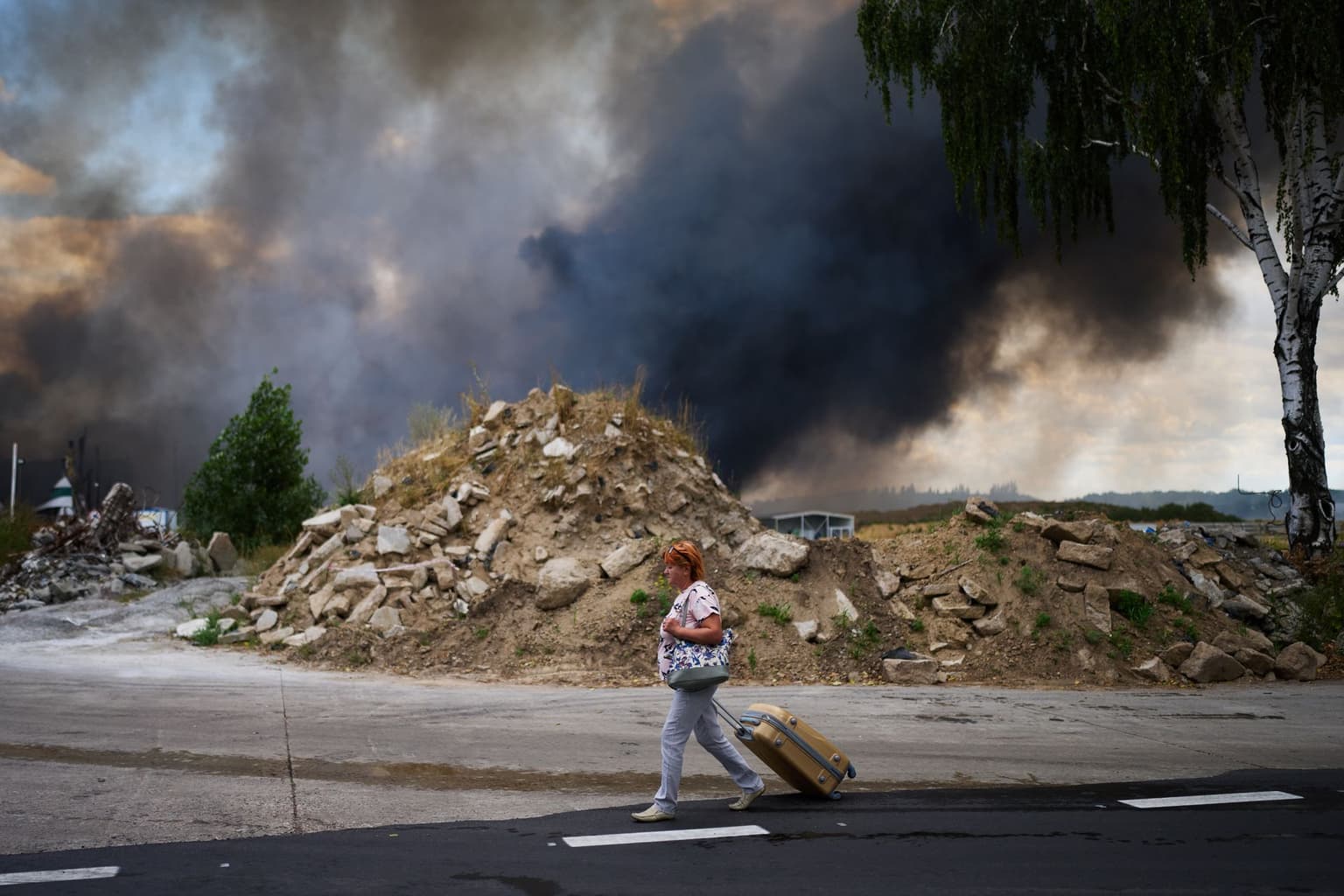
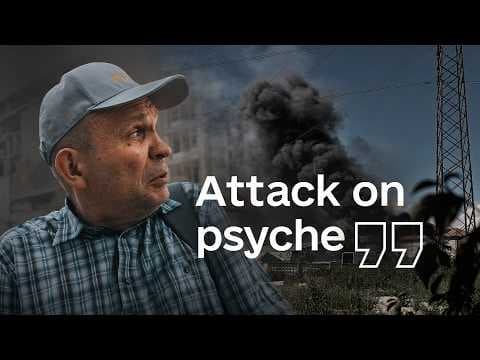
A woman walks along a road as smoke rises from a destroyed warehouse after a Russian drone attack on the outskirts of Kyiv, Ukraine, on Aug. 27, 2026. (Francisco Seco / AP)
 on Google
After more than a week of relentless Russian strikes and near-constant air raid alerts, some Kyiv residents are being pushed to the brink of mental exhaustion.
In the capital, every day since Aug. 27 has brought hours of sirens, sleepless nights, and the anticipation of another attack — a sustained pressure the experts say is Russia's deliberate tactic of terror.
"This past week, with all the constant anxiety, my mental health has been hanging by a thread," said Kateryna Soniuk, a Kyiv resident.
Kyiv recorded 13 air raid sirens on Aug. 27, breaking the previous record set in the early days of the full-scale war in March 2022. The siren sounded 70 more times by Sept. 3, and the city endured an average of nine hours of air alerts daily.
Between the start of this latest aerial campaign against Kyiv and the night of Sept. 3-4, 53 people have been killed and 98 injured in the city and the surrounding region. Countless more are grappling with the psychological impact of the attacks.
Russia knows what it's doing
Experts who spoke to the Kyiv Independent describe the mental pressure not as a side effect but as an intentional part of Russia's strategy.
"As a medical psychologist and public health specialist, I see this as terror and deliberate psychological pressure on the civilian population," Olena Yelizarova, a researcher at the Marzieiev Institute for Public Health of the National Academy of Medical Sciences of Ukraine, told the Kyiv Independent.
"I am convinced that those attacking Kyiv understand this very well."
Yelizarova explained that although the sound of air raid alerts is nothing new for Ukrainians by now, it is not without harm. The loud blare warning people of an imminent danger can become a source of stress itself.

And in addition to sirens, the expert continues, the people are also facing "explosions, interrupted sleep, the anticipation of the next attack, and the inability to plan one's life normally."
This tactic is not entirely new in the history of warfare, Anna Vashchuk, head of the Mental Health and Psychosocial Support Department at the UA Mental Help organization, told the Kyiv Independent.
"Historically, in wars, the destruction of critical infrastructure, housing, medical facilities, food supplies, or other resources has been used not only to physically weaken the other side, but also to demoralize the population and create a sense that there is no safe place," she said.
After a week of near non-stop alerts, Russian attacks are taking their toll on Ukrainians.
Kateryna describes this past week as an "out-of-body experience."
"The uncertainty is what's most frustrating. There are so many unresolved issues (as a result of the attacks), and this fear of 'what if I can't handle this?'" she said.

Young victims with lifelong effects
The Ukrainian school year started on Sep.1, with many first-graders holding welcome ceremonies in shelters instead of classrooms. Kyiv authorities asked schools to prepare for teaching in shelters or online as part of the hybrid teaching regime.
"It should have been a great start to this school year, which I waited for with excitement," said Masha, 14, whose school switched to remote learning, but lessons are still being canceled during air raid alerts.

The alerts accompanying the latest drone campaign are affecting students' ability to concentrate in class, socialize, and gain hands-on experience. Instead of focusing on studies, many are thinking about the perpetual threat.
All Masha wants to do, she said, is "see her friends and teachers in real life," rather than on a laptop screen or not at all.
Yelizarova's study about the impact of air raid sirens on stress levels of school-age children found that 31.9% of them experienced moderate stress during air raid alerts, while 13.9% experienced high levels of stress and anxiety.
The expert notes, however, that these results may not reflect the ongoing aerial terror campaign that recently entered its second week.
"Children develop behavioral patterns that will stay with them for the rest of their lives and will either help or hinder them in building relationships, working, learning, and simply living," Yelizarova said.

According to the expert, children face an added burden because they are also sensitive to how the adults around them react.
Another psychiatrist, Lidiia Ivanchenko, shared that her 7-year-old son "sleeps soundly at night because he knows his parents will take care of him when it's time to go to the shelter."
Yet children's reactions vary from case to case. In her experience as a psychoanalyst, Ivanchenko says she has seen higher levels of anxiety and stress in children with pre-existing psychological conditions.
Yelizarova's study supports this, seeing a greater sensitivity to sounds, like air raid alerts, in children with chronic illnesses or symptoms of anxiety and depression.
Kyiv adapts
The human body is not designed to remain in a prolonged state of alert triggered by air raid sirens, experts say.
As the attacks persist, Ukrainian officials are implementing changes to ease the pressure on the paralyzed city.
A new alert system will introduce a distinct sound for each threat level, with the "yellow" alert indicating an incoming drone threat and the "red" alert indicating a missile threat. Kyiv's public transport will see alterations, rather than a complete halt, during yellow alerts.
However, these changes cannot erase the underlying problem.
"Several days of almost nonstop air raid alerts: that's already acute stress," said Yelizarova, adding that "adaptation is not armor."

Some Ukrainian officials predict that the ongoing drone attack may continue until Russia's parliamentary elections on Sept. 18-20.
Kyiv residents, who spend hours in shelters, unable to do ordinary tasks, do not know how long they will have to endure these endless air raid alerts. One thing is for certain, though, said Ivanchenko.
"There is no logic to Russia's actions other than a desire for destruction and our suffering, but we must not let them succeed; good must prevail, even if evil has more weapons."