Kyiv warns of new Russian northern offensive — could it happen?
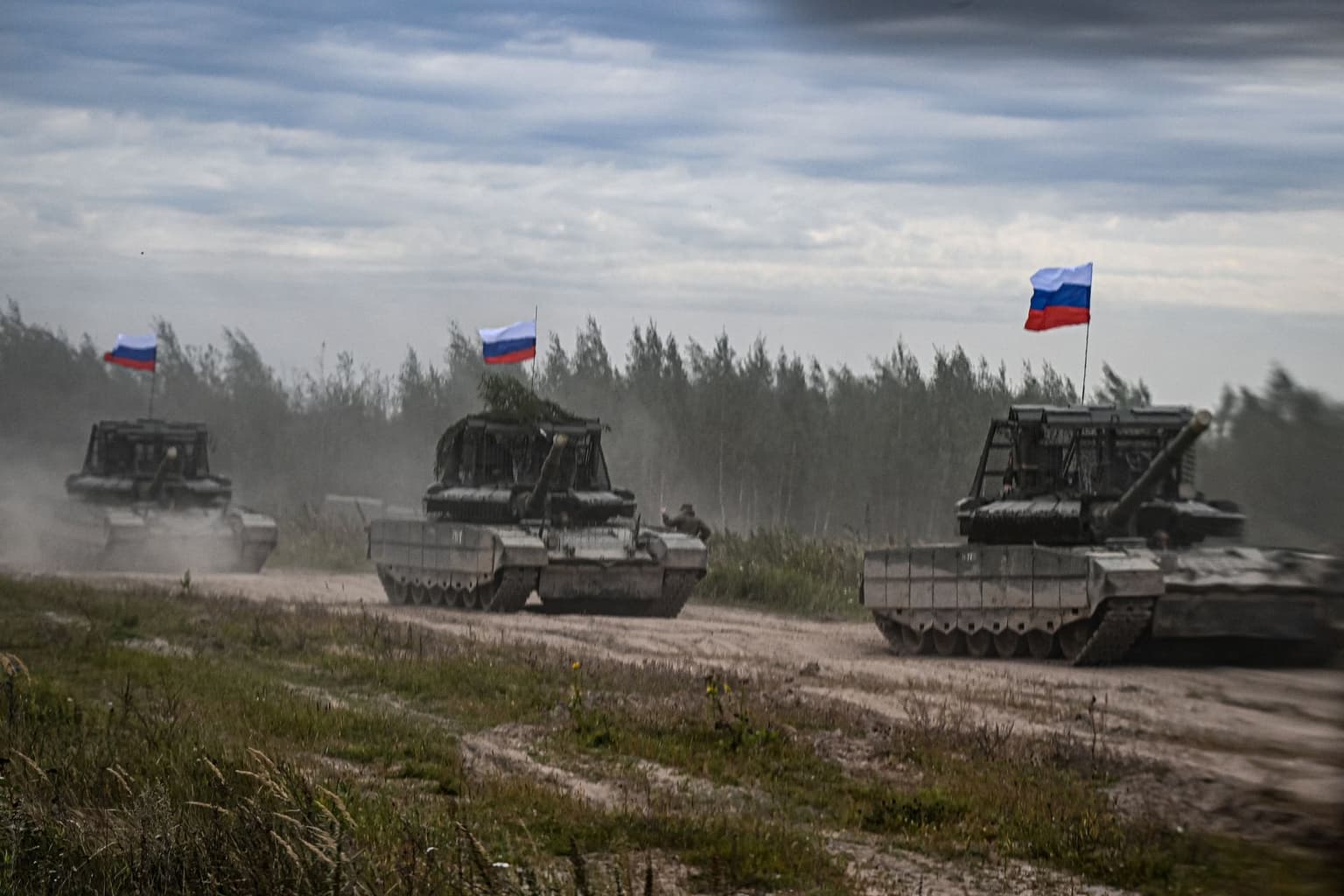
Russian tanks move during the "Zapad-2025" (West-2025) joint Russian-Belarusian military drills at a training ground near Borisov, east of Minsk, Belarus, on Sept. 15, 2025. (Olesya Kurpyayeva / AFP via Getty Images)
 on Google
Four-and-a-half years after Russian troops poured across the Belarusian border in a failed attempt to seize Kyiv, Ukrainian officials are warning it could happen again.
Russia's political leadership has tasked its military with preparing several possible scenarios for an operation toward Kyiv and Chernihiv, Ukraine's Presidential Office said on Aug. 28. It comes after Belarus' exiled opposition warned in June that Minsk was preparing to enter the war.
But while neither Ukrainian officials nor soldiers say they currently see worrying military activity on the ground, analysts say the possibility of a renewed northern offensive in the near future cannot be dismissed.

Why would Russia try again in the north?
Russia tried and failed to take Kyiv in 2022 with a professional army and, on paper at least, its best equipment.
After more than four years of war, much of Russia's army is made up of poorly trained troops rushed in to replace staggering losses, and much of that equipment has been destroyed.
But a new buildup of troops could serve another purpose other than a renewed invasion of northern Ukraine.
"The threat of a reopened northern front is intended to stretch Ukrainian forces, pulling units from their current positions along the front line," Michael Kofman, a senior fellow at the D.C.-based Carnegie Endowment for International Peace, told the Kyiv Independent.
What would Russia need to do this?
Above all, soldiers.
Kofman said opening an entirely new axis is currently "implausible" without Russia generating additional forces.
"Given Russia's own manpower constraints, it would either need to conduct another partial mobilization or redeploy significant forces from where they currently are to open a new axis," Kofman told the Kyiv Independent.

The redeployment option appears unlikely for now, according to Tetiana Trach, a Russia researcher at the Institute for the Study of War, as Moscow remains focused on the current front, particularly in Donetsk Oblast.
"Russia, however, remains committed to continuing its offensives in Donbas and northeastern and southern Ukraine — with the Kremlin reportedly demanding that the Russian command seize the remaining 19% of Donetsk Oblast by Dec. 31," Trach said.
"The Kremlin likely seeks to avoid redeploying units that are currently engaged in this main effort."
Ukraine says Russia's General Staff has prepared a scenario to mobilize another 600,000 people — 300,000 in 2026 and another 300,000 in 2027.

Russia's growing manpower shortfall — with losses increasingly outpacing recruitment in 2026 — could potentially be offset by a new mobilization.
While Moscow has denied plans for another mobilization, Ukraine says Russia's General Staff has prepared a scenario to mobilize another 600,000 people — 300,000 in 2026 and another 300,000 in 2027.
Ukrainian officials have warned that a decision could come after Russia's Sept. 18–20 State Duma elections.
Even then, additional manpower would be only the first step.
"Russia would also need to restructure its current areas of responsibility for its major grouping of forces, train new recruits, and establish new logistics. Such efforts would generate observable indicators," Trach said.
How long would it take for Russia to build up forces?
At the moment, there are no signs of any buildup of troops.
"At present, we are not observing any unusual enemy activity within our brigade's area of responsibility," Major Serhii Dibrov, spokesperson for the 21st Separate Mechanized Brigade, told the Kyiv Independent.
A source in Ukraine's defense sector familiar with the matter told the Kyiv Independent that Russia would need roughly two to three months to assemble the forces required for such an operation.

Why Belarus matters
Belarus is central to any renewed threat to northern Ukraine.
Russia used Belarusian territory to launch its failed offensive on Kyiv in 2022 and continues to use the country for military logistics and attacks on Ukraine, though Belarusian troops have not directly entered the war.
Concerns have grown this year as Minsk increased military spending and recruitment, changed its military doctrine, and expanded military and railway infrastructure near Ukraine.
For now, however, there is no evidence that Russia is assembling a strike force in Belarus.
"Such a scenario would likely also require Russia to redeploy Russian troops and equipment to Belarus. There is no open-source evidence that Russian forces are engaging in such deployments, however," Trach said.