Lithuania allocates 600,000 euros to bring home Ukrainian children abducted by Russia
 on Google
Lithuania has pledged funding for seven initiatives to return Ukrainian children abducted by Russia and to enhance accountability for the crimes committed against them, organizers of the "Children First: Protection of Ukraine's Future" project told the Kyiv Independent during a recognition ceremony on Aug. 23.
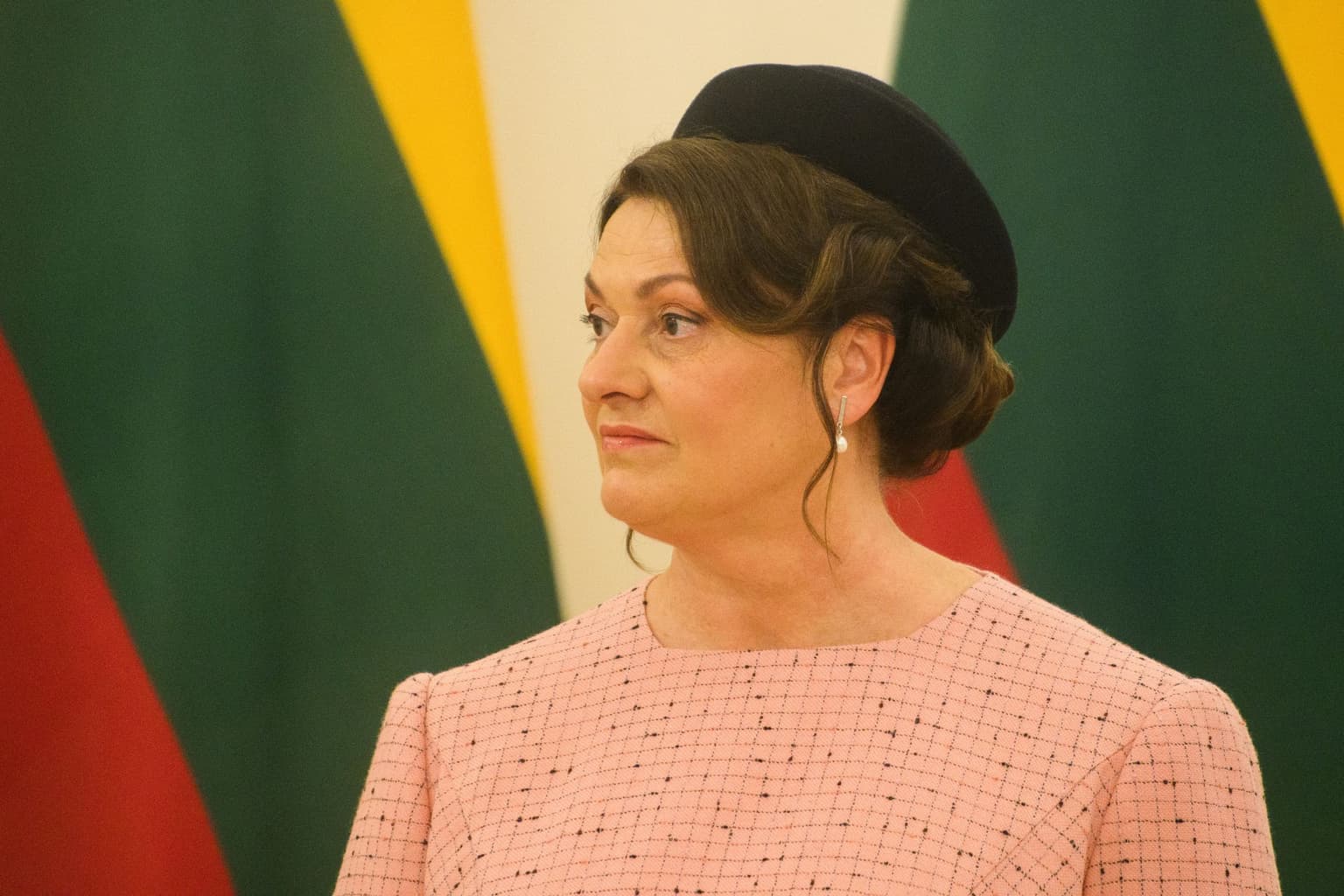
"Сhildren cannot be used as instruments of war or occupation," First Lady of Lithuania, Diana Nausediene, said during the ceremony.
"Their identity cannot be rewritten by force. Their family ties cannot be treated as an inconvenience. And their future does not belong to an occupying power. This is a principle Lithuania will continue to defend without hesitation and without compromise," Nausediene said.
Lithuania allocated 600,000 euros ($700,000) to Ukrainian non-governmental organizations that work for the return of Ukrainian children, such as the Regional Center for Human Rights, Truth Hounds, Humanity, Charitable Foundation Save Ukraine, Anti-Discrimination Center Memorial Brussels, Civil Association Ukrainian Child Rights Network, and Charity Foundation East-SOS.
Nausediene said that Lithuania addressed a child's entire journey through rehabilitation with the chosen projects, as finding and returning an abducted child "is not enough."
While the key principles are "return, recovery, and justice," the projects create practical solutions to problems that Ukrainian children and their families face while returning from Russia and the occupied territories.
Some projects will also address war crimes committed against children.
Maryna Slobodyanyuk, a representative of Truth Hounds, said that Lithuanian support will allow the organization to "put more names, more individual stories, more evidence before the accountability mechanism, and to make it harder for these children to simply disappear behind the statistics."
Regional Center for Human Rights expert Kateryna Rashevska said their goal is to narrow the gap between accountability efforts and documentation work.
"Children should not be held accountable for the decisions they didn't have the opportunity to take," Rashevska added.
The projects are funded by the Lithuanian government and implemented with support from the Lithuanian International Partnership Center.
"We hope the selected projects will contribute to real mechanisms that can actually help bring children home. The task is extremely difficult, but the direction must remain clear: toward home and toward justice," Sarunas Radvilavicius, head of the Branch of the Lithuanian Central Project Management Agency in Kyiv, said.
According to Ukraine's national Children of War database, at least 20,000 Ukrainian children have been abducted from Russian-occupied territories and taken to Russia or Russian-controlled areas since February 2022.
Ukrainian officials estimate the actual figure of abducted children could be far higher. Ombudsman Dmytro Lubinets puts the number at up to 150,000, while Presidential Commissioner for Children's Rights Daria Herasymchuk has given a range of 200,000–300,000.
Some 1.6 million Ukrainian children live under Russian occupation, according to Bring Kids Back UA.
Lithuania was the first country to refer the situation in Ukraine to the International Criminal Court.
In 2023, the International Criminal Court issued arrest warrants for Russian President Vladimir Putin and Russia's Commissioner for Children's Rights Maria Lvova-Belova for their alleged role in the unlawful deportation and transfer of Ukrainian children from occupied areas of Ukraine to Russia.