As old allies leave US Congress, Ukraine must find new champions
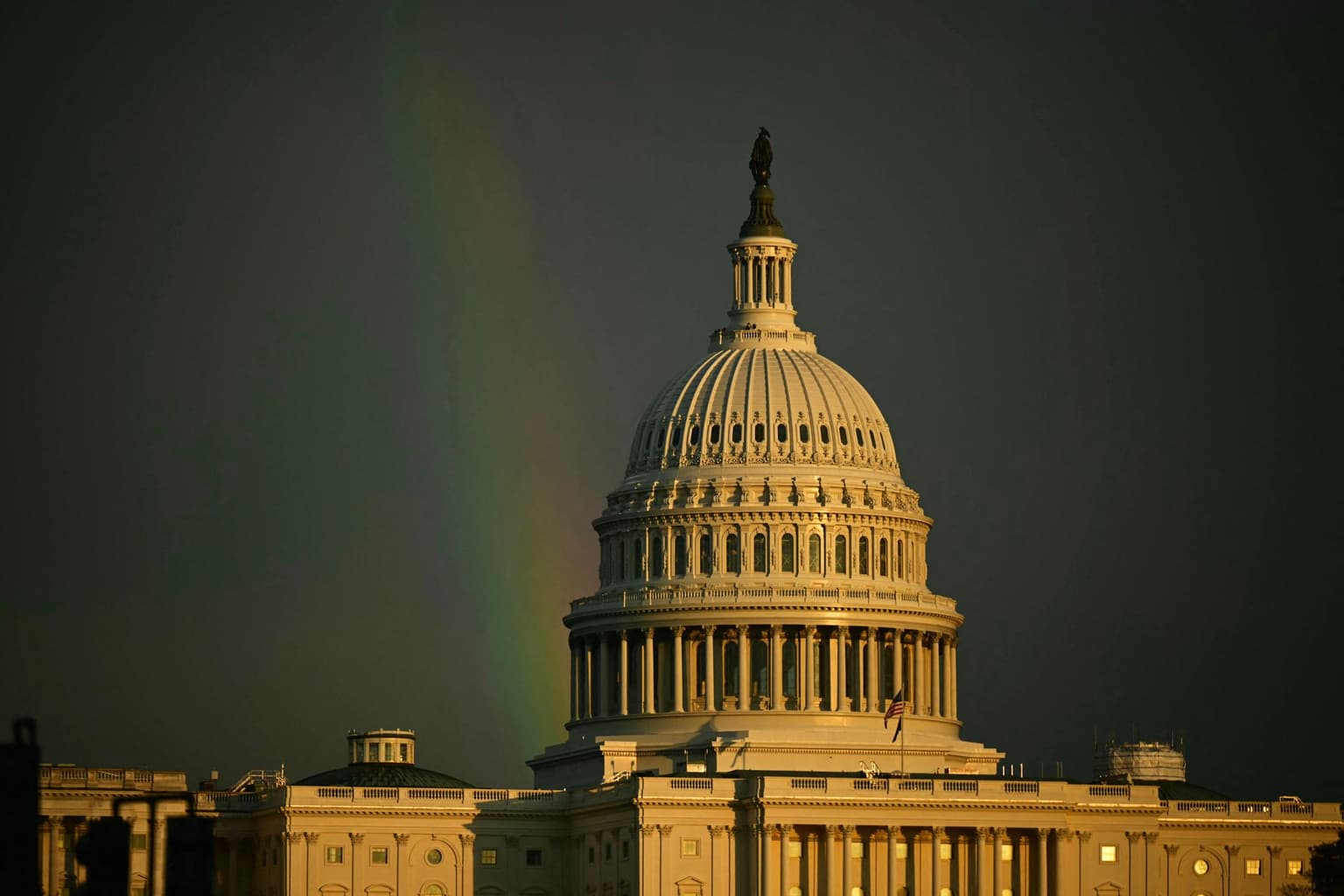
A rainbow arches across the sky behind the U.S. Capitol in Washington, DC, U.S., on Nov. 6, 2026. (Drew Angerer / AFP via Getty Images)
 on Google

Ostap Yarysh
Ukrainian journalist based in Washington
With headlines about the blue wave in the U.S. midterm elections still dominating front pages a week later, Washington's shifting political mood is creating new challenges for Ukrainian advocates on the Hill.
The elections swept away many moderate Republicans who had long served as pillars of bipartisan support for Ukraine in Congress. There will also be changes on the Democratic side of the pro-Ukraine coalition, as some lawmakers are set to leave office in January.
The new political climate presents Ukraine with at least three challenges that require immediate attention.
Engaging with progressives
It may be tempting to assume that, with a significant majority in both chambers, Democratic votes alone will be enough to enact pro-Ukraine legislation, yet relying on that assumption would be a misstep.
The new Congress will include more democratic socialists, with around 20 expected in the House of Representatives. Ukraine is unlikely to rank high on their agenda. And while progressives generally express solidarity with Kyiv, many remain skeptical about providing military assistance or imposing sectoral sanctions on Russia.

Last weekend, Washington hosted Crooked Con, a political conference that brought together progressive influencers and policymakers.
Foreign policy panels covered Iran, Israel, Palestine, Latin American countries, and even Serbia, but Ukraine was not mentioned even once. Speakers also called for broad cuts to defense spending and foreign military assistance, with more funding redirected toward domestic social programs.
Over the past several years, Ukraine has devoted considerable effort to engaging conservatives while paying relatively little attention to progressives.
That imbalance carries risk: Kyiv should not assume that all Democrats in the new Congress will support pro-Ukraine initiatives by default.
Navigating the veto threat
Even if Democrats secure enough votes to pass legislation, they would still need the president's signature for a bill to become law.
U.S. President Donald Trump has already vowed to become "Mr. Veto." Stephen Miller's appointment as new Chief of Staff further signals that the White House is bracing for confrontation.
Democrats will therefore face two options: negotiate compromises with the president or seek Republican support to secure the veto-proof supermajority.

For now, they show little appetite for compromise. The party's leadership has made clear that investigating the Trump administration will be a top priority. And with the next presidential campaign already looming, Democrats are likely to seize every opportunity to weaken the president and his team.
Overriding a presidential veto requires a two-thirds majority in both chambers — 290 votes in the House and 67 in the Senate. Ukraine remains one of the few issues still capable of bringing Republicans and Democrats on Capitol Hill together. But even with a sizable Democratic majority, assembling the necessary votes will be a difficult task.
Finding new Republican champions
Much of the effort to build bipartisan support for Ukraine has been led by members of the Congressional Ukraine Caucus.
Their offices have played a key role in drafting pro-Ukraine legislation and whipping votes across the aisle.
The new Congress will have fewer pro-Ukraine champions in both chambers. The biggest losses will come in the House, particularly among Republicans.
Of the 18 Republicans who broke with their party in June to support the bipartisan Ukraine Support Act, only eight will return to Congress in January. Some are retiring, including Representatives Don Bacon, Michael McCaul, and Dan Newhouse. Others, including Representatives Brian Fitzpatrick, Mike Lawler, and Mike Turner, lost their reelection bids.
The departure of these lawmakers will leave a significant gap. To fill it, Ukraine will need to find real champions willing to do the heavy lifting.
Some of the new leaders could emerge from the eight Republicans who survived the blue tsunami.

Alongside Rep. Joe Wilson, who already co-chairs the Congressional Ukraine Caucus, key potential allies include Representatives Jeff Hurd, Carlos Gimenez, and Andrew Garbarino.
Representatives Rich McCormick, Chris Smith, and French Hill could also become part of this coalition.
While none voted for the Ukraine Support Act, all three have co-sponsored other pro-Ukraine initiatives and serve on some relevant committees, including Armed Services, Foreign Affairs, and Intelligence.
Building support among pro-Ukraine Republicans in the Senate may prove somewhat easier.
Alongside veteran lawmakers, a number of other senators are showing a growing interest in Ukraine.
Among them are Montana Senator Tim Sheehy, Utah Senator John Curtis, and Alabama Senator Katie Britt — particularly given her interest in the issue of abducted Ukrainian children.
In the months ahead, Ukrainian diplomats and advocates in Washington will have to address several challenges at once: reaching out to progressives, strengthening support among Republicans, and working with President Trump.
Yet this new political landscape also presents an opportunity: the incoming Congress appears to have the political will for change. Turning that goodwill into concrete policy outcomes will largely depend on the ability to forge new alliances on Capitol Hill. And for Ukraine, that work cannot wait.
Editor's note: The opinions expressed in the op-ed section are those of the authors and do not purport to reflect the views of the Kyiv Independent.
read also