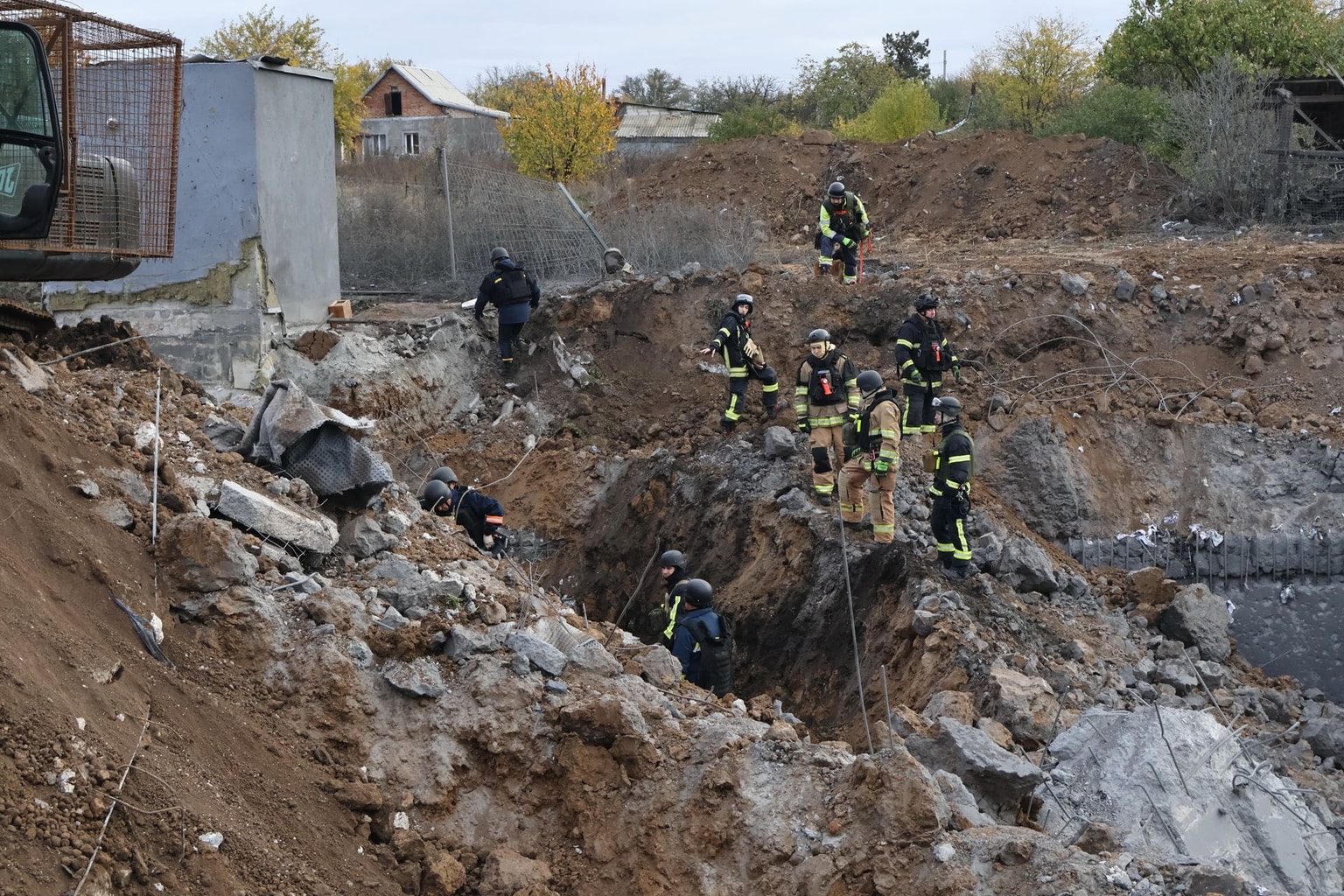
Winter is Russia's weapon
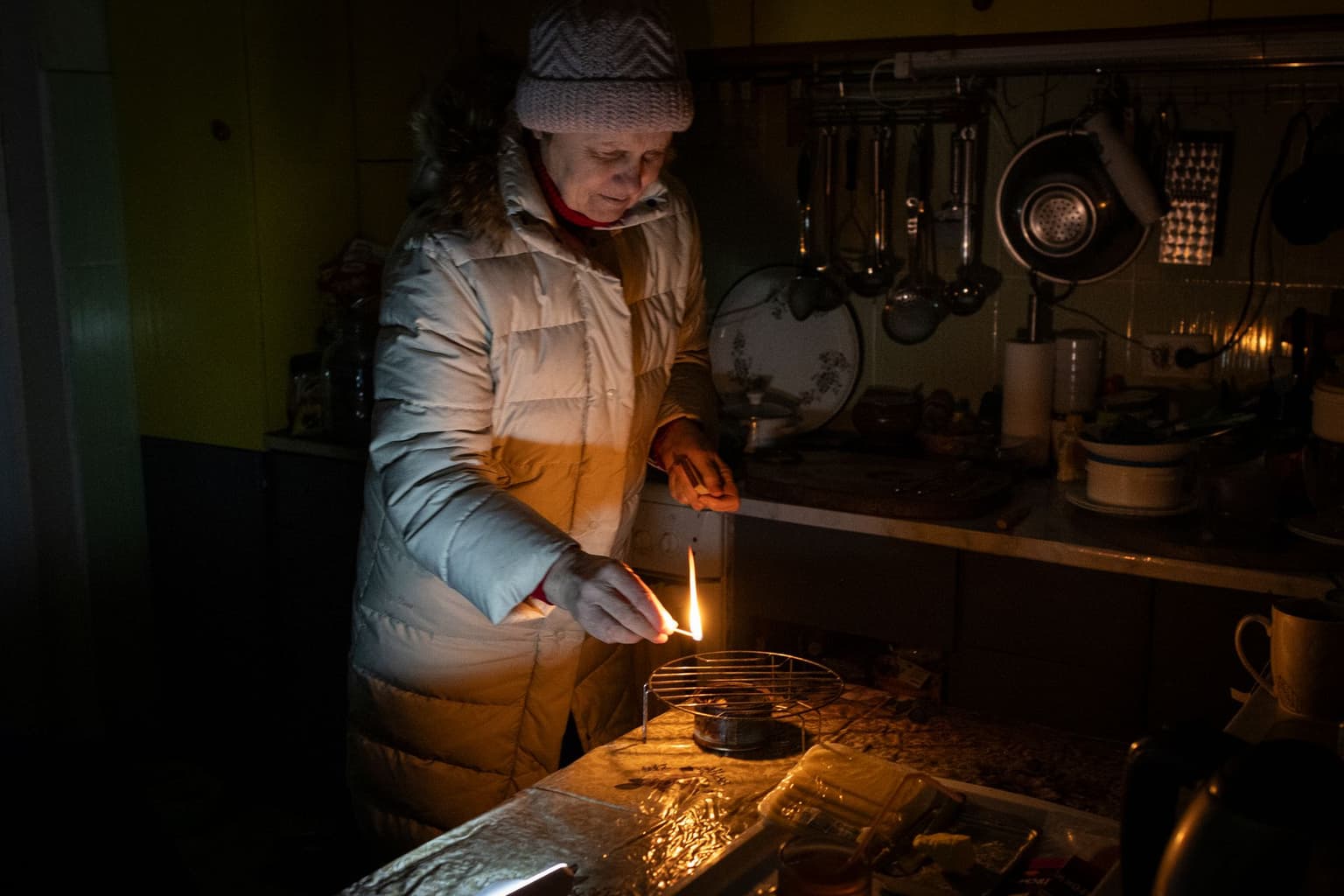
Raisa Donbekirova, 65, lights an alcohol trench candle, the only source of heat in her apartment, which was left without water, electricity and heating following Russian shelling of critical infrastructure in Kyiv, Ukraine, on Jan. 10, 2026. (Andriy Dubchak / Frontliner / Getty Images)
 on Google

Andriy Lyubka
Writer and soldier of the Armed Forces of Ukraine
Winter began this year in August, once again confirming that the wisest person in my family was my grandfather Stepan.
He taught me that summer ends on Aug. 2, the feast day of Saint Elijah, according to the old church calendar. From his lessons, I learned that after that day, it is no longer advisable to swim in rivers and lakes because the water in their underwater channels becomes icy cold.
"Elijah pissed in the water," goes a Ukrainian folk saying. Ever since childhood, Elijah has held a special place in my imagination, because you truly have to be a saint to piss cold.
But there are advantages, too: when the weather turns cold, snakes burrow into the ground to hibernate, making it safer to go mushroom picking.
In the Donbas posadkas — the treeline areas where not just acacias, ash, and wild apricot trees grow, but also broad-canopied oaks — my instincts from the Carpathians had me peering under leaves and into the brush all summer, always on the lookout for mushrooms.
This summer, no mushrooms grew in the tree lines near the front because an unprecedented drought had taken hold.
There was a shortage not only of rain but also of the dew that forms before dawn. During the day, even in the shade, it was so hot that your head would spin. Under layers of uniform and body armor, your body heated up from within to the point where you felt sleepy all the time.
"And although the Donbas saw little rain this year, fire kept falling from the sky without pause."
There were no mushrooms, but the hornets made up for their absence. You have to be just as wary of their nests as you are of enemy weapons.
Posadkas, those narrow strips of woodland running through the fields, are a defining feature of the Donbas. They were planted on a massive scale after World War II to protect arable land from hot, dry winds and erosion.
A few rows of trees, barely thirty feet wide, were meant to transform the nature of the steppe. After 2014, they transformed the nature of warfare, too: they became defensive lines, shelters, places where tree canopies give people a chance to survive shelling.
The prophet Elijah is a fitting figure for this year's drought, which plagued all of Europe but exhausted Ukrainian soldiers in the east more than anyone else.

According to the Bible, the prophet lived in the wilderness and ate what ravens brought him. After carrying out God's instructions, he prayed for rain, and eventually a downpour began, accompanied by thunder and lightning.
In Eastern Christianity, Elijah is known as the thunder-wielder who rides across the heavens in a chariot and hurls fiery arrows. And although the Donbas saw little rain this year, fire kept falling from the sky without pause.
It is astonishing how the most modern and technologically advanced war on the planet ultimately depends on nature.
Every drone, from the smallest to the largest, is first and foremost a bird, subject to the laws of aerodynamics and the wind. If the wind is too gusty or too strong, a drone loses its effectiveness or cannot fly at all. Every military shift begins with checking the weather forecast. It is not enough to wet your finger and figure out which way the wind is blowing. You need to know its speed at 100 meters (328 feet) and above.
"We have drones, satellite communications, live video feeds, and artificial intelligence, yet war still comes down to the rhythm of natural cycles."
Cloudy weather reduces the effectiveness of aerial reconnaissance, allowing greater freedom of movement on the ground.
Low fog provides cover for enemy infantry infiltration, but it also allows us to evacuate wounded soldiers quickly.
Mud underfoot makes it impossible for vehicles to move, while freezing temperatures critically affect launch mechanisms and battery life.
A camera may have extraordinarily high sensitivity and still simply fog up because of the temperature change after a drone takes off. Propellers coated with moisture from the fog ice over at altitude.
We have drones, satellite communications, live video feeds, and artificial intelligence, yet war still comes down to the rhythm of natural cycles.
The full-scale invasion probably began on Feb. 24 for two reasons: immediately after the Winter Olympics in Beijing ended, so as not to antagonize China, and to ensure there was enough time before the spring thaw. After all, tanks and heavy armored vehicles, now symbols of a bygone era of warfare because of their failures, needed to cross hard, frozen ground.
Now, on the eve of the fifth winter of the war, the latest technological developments and deadliest weapons are once again being deployed to amplify nature's effects.
At the front, the weather can be an ally or an enemy, a factor that must be taken into account. But behind the lines, Russia is trying to make it part of its own strategy.

When missiles and drones deliberately destroy energy infrastructure, the cold becomes an extension of the attack, one that does not end with the explosion. It lingers in homes, hospitals, and apartments where people try to keep their children warm.
This pushes exhausted civilians toward surrender because the soldiers at the front are not giving up.
On a subconscious level, Russia has always been associated in my mind with winter, snow, and cold.
Winter is Russia's weapon; cold is its immanent essence. Unable to achieve success on the front line, Putin seeks to turn Ukraine's rear into a terrifying winter wasteland. Cut off electricity, water, and heating, and, by this diabolical means, if nothing else, turn Ukraine into the Siberian taiga over the coming months.
"He wants exhausted people, stripped of hope, to finally say: enough already, let's surrender. We no longer have the strength to endure these constant ordeals."
In the hands of this Satan, winter becomes a means of psychological occupation.
What does winter look like in a city that is bombed every day, with power plants, water pumping stations, and heating pipelines deliberately targeted for destruction? An apartment, even the finest one, turns into the Lascaux cave.

Without electricity or gas, the only way to heat it may be to light a fire in the middle of the room. Without running water, living on the 12th floor means you cannot even wash your face, let alone use the toilet.
Imagine what life under these conditions would be like, especially for children and older people.
The terror inflicted on the civilian population of Ukrainian cities is such an obvious war crime by Putin that it is shameful to see people who, at the same time, are willing to shake his hand, lift sanctions, or sign agreements with him.
I am not talking only about real estate brokers and businesspeople across the ocean. There is a whole line of people in Europe waiting their turn, too, hands outstretched.
Every new war crime strengthens their political positions because it instills fear in voters and fuels their desire to escape this reality by hiding behind deceptive populist slogans.

Enough! That word marks the end of summer and the turn toward winter. Enough movement, enough work in the fields. Go back to your warm house and settle into hibernation, nature tells us. Putin listens carefully, taking the warmth away from people's homes. He wants exhausted people, stripped of hope, to finally say: enough already, let's surrender. We no longer have the strength to endure these constant ordeals.
The fifth winter of the great war in Europe once again confronts us with the same question. Unable to achieve decisive victories on the front, Russia is trying to turn life itself into a weapon: warmth, water, electricity, the ability to keep a child warm, and make it to morning in one's own apartment.
The Kremlin is counting on the cold to make Ukrainians more willing to compromise and to convince Europeans that peace at any price is better than resistance. It hopes that the darkness in our cities will become darkness in European politics, and that war fatigue will turn into acceptance of Russian demands.
Yet, something I was told by my grandfather and Saint Elijah is ironically helpful when thinking about what's next and all of the grand geopolitics:
Yes, Russia can turn winter into a weapon, but it cannot make winter last forever.
Editor's note: The opinions expressed in the op-ed section are those of the authors and do not purport to reflect the views of the Kyiv Independent.