Who will work Ukraine's farms as the workforce shortage deepens?
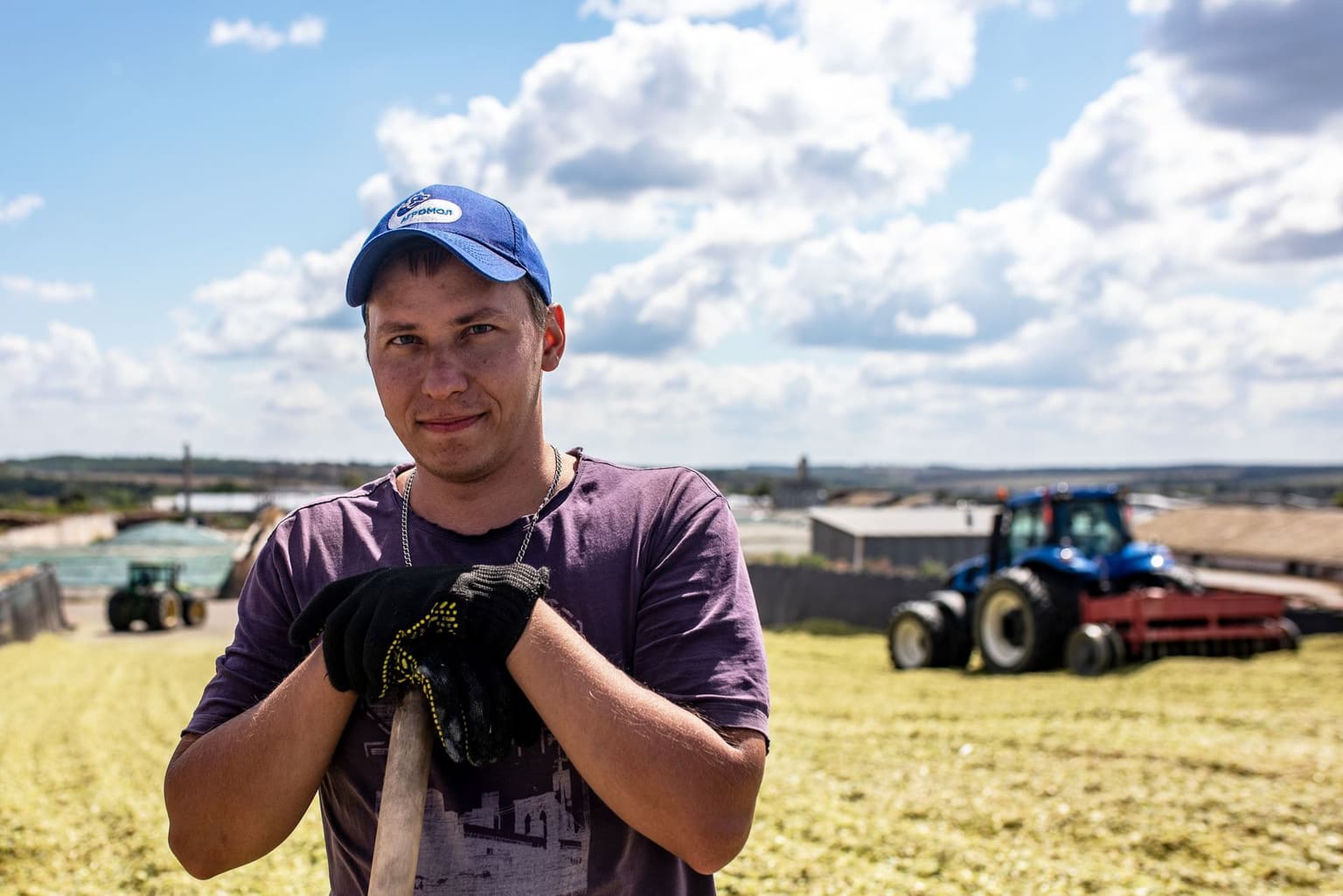
A farm worker poses for a portrait at a dairy and livestock farm heavily damaged by Russian attacks in Kharkiv Oblast, Ukraine, on Aug. 16, 2024. (Gian Marco Benedetto / Anadolu via Getty Images)
 on Google

Robert Haidari
American technology entrepreneur and educator
On my way back to Kyiv in October after visiting my partners in eastern Ukraine, I had to get off the train in the middle of the night because Russian drones were headed our way.
The foundation I chair teaches displaced Ukrainian women to operate farm machinery through accredited schools, and lately I have been asking myself whether that work makes sense right now.
Mobilization and emigration have pulled many of the men who drove tractors and combines out of the fields, and in May, Taras Vysotskyi, now the country's agriculture minister, called finding workers the sector's number-one problem.
Even when the war ends, the men who left the fields will not all come back. Some have died defending the country, while others have retrained or built new lives abroad. Farms will have to rethink who they consider for these jobs.
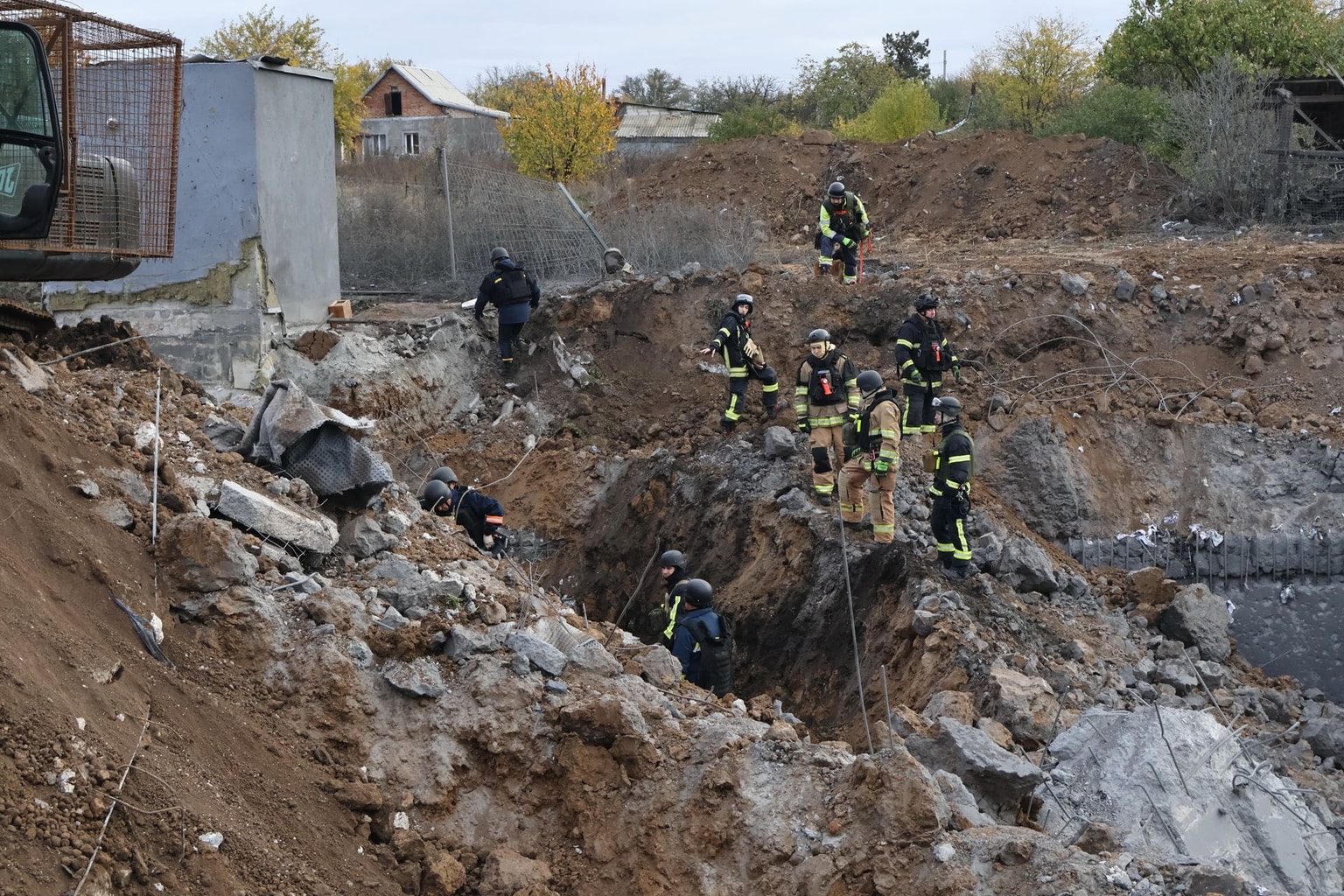
Russian strikes on ships and terminals have left the Black Sea ports barely working, and rail, river, and road carried less than half of what Ukraine needed to export as of late October 2026.
Russia has also been targeting Ukraine's railways.
More than 600 locomotives have been damaged or destroyed since 2022. With so much grain trapped in the country, farm-gate prices for wheat and barley fell below production costs this summer, and farms that can't sell what they grow can't keep up with their bills, let alone hire.
Seed and fertilizer distributors here tell me they are already chasing this year's unpaid invoices, and few of them want to sell on credit again for spring.
Agroholdings have tried to make up for missing workers by buying wider implements that let one machine do the work of three or four.
Mid-size farms can't afford that, and even the big ones are finding that the technology doesn't always work here.
Since I arrived, the GPS on my phone has often been unstable due to jamming used to disrupt Russian drones and missiles, and farm machinery faces the same problem.

In Chernihiv and Sumy, regions close to the Russian border, the agroholding IMC is running some tillage without autopilot and fitting foam markers to its planters and sprayers so operators can line up passes by eye.
Even where farms have the money to hire, they are recruiting for jobs few young Ukrainians aspire to.
Only 1% of 13-to-16-year-olds say they want to work in agriculture, and the head of the Ukrainian Agribusiness Club lists the low prestige and physical demands of farm work, along with having to live in the countryside, among the main reasons the shortage tripled after the full-scale invasion.
Pay, meanwhile, has changed faster than the job's reputation. Median pay advertised for tractor drivers on Ukraine's ads and peer-to-peer marketplace, OLX, rose 45% in the year to July, reaching Hr 36,250 (about $800) a month.
Farms have to sell the work as it is now. On modern machinery, the job takes less strength than it used to and more skill. Power controls and climate-controlled cabs take much of the physical strain out of driving, and where jamming knocks out autopilot, the quality of the work depends on the person in the cab.
Agroholdings that pay well should put both the wages and the machinery in their job ads. Farms and their associations should also invite students and their parents to see the machines firsthand and hear what operators earn.
Changing how young people see agriculture is only part of the problem. Farms also need to reconsider who they recruit. Around 3 to 4 million Ukrainian women are outside the labor market. In a recent survey of women without regular paid employment, 73% said they wanted to work, and agriculture was among the sectors that interested them.
They name low pay in the jobs on offer and employer bias as the main obstacles, and women between 56 and 65 put age bias first. Nearly a third of mothers with young children need daycare before they can take a job.
Ukraine already prohibits employers from specifying age or gender in job ads, and the agency enforcing that ban has begun fining employers for violations. The agency should examine job ads for farm machinery operators, where hiring has traditionally focused on men.

A farm short of workers has little reason to rule out women or older applicants before they have even applied.
More than 1.4 million Ukrainians were registered as combat veterans by early 2026, and those discharged because of injury or age are already coming home. Kyiv should also spell out whether the State Employment Service's workplace-adaptation subsidies cover modifications to tractors and combines for veterans with disabilities. If they don't, the government should consider adding them to the list of eligible equipment.
Mid-size farms have fewer choices. Some cannot afford to hire anyone while their grain sits unsold, and those that can are competing with agroholdings offering higher wages.
Recruiting women, veterans or older workers won't make the jobs cheaper, and some applicants will need time to gain experience on the machines. Local employment offices could help farms identify people interested in these jobs before vacancies open up. Those able to hire could offer transport from nearby villages or more predictable hours outside sowing and harvest, particularly for parents of young children.
Last year, British International Investment invested $33.4 million in MHP as part of an $111.4 million financing package led by the EBRD.
The financing included support for bringing veterans into the workforce and improving employment practices for women. Other lenders financing large agricultural companies could do the same, asking them to report how many women, veterans, and older workers they hire and retain in field operations, including machinery jobs.
Ukrainian farmers sowed more than 5 million hectares of spring grain under daily drone strikes this year, and they will plant again in the spring.
Many cannot afford to hire more operators while their harvest sits unsold. But they can start finding out who in their communities might take those jobs, and what would make the work possible, before they can afford to hire again.
Editor's note: The opinions expressed in the op-ed section are those of the authors and do not purport to reflect the views of the Kyiv Independent.