Finland, Sweden launch first joint intercept of Russian jets over Gulf of Finland
 on Google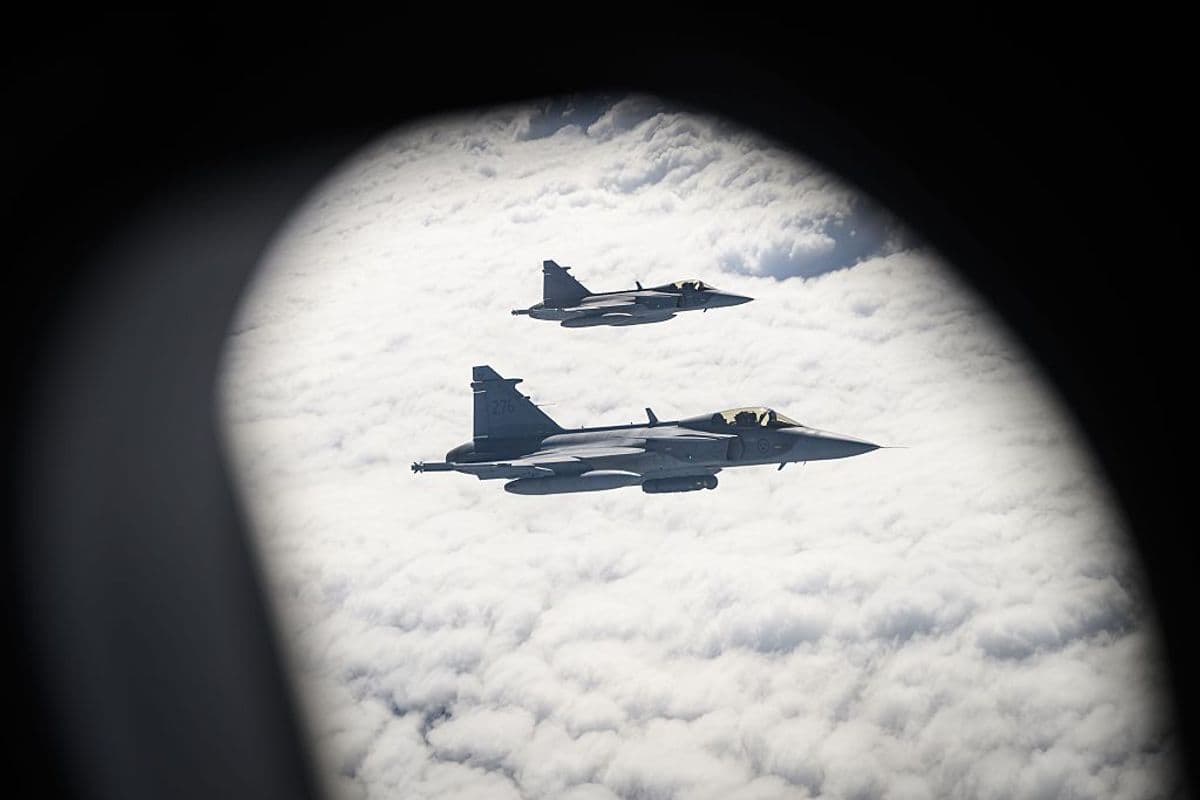
Finland and Sweden’s air forces carried out their first joint operation on Sept. 24, scrambling Finnish F/A-18 Hornets and Swedish JAS 39 Grimness to intercept and identify a Russian formation over the Gulf of Finland.
The Russian formation included Tu-134 transport aircraft, MiG-31 fighters, and Su-30 fighters, remaining in international airspace over the Gulf of Finland.
The Finnish Air Force says the enhanced cooperation now allows joint identification missions and Quick Reaction Alert (QRA) fighters to operate from each other’s air bases.
"This is what close cooperation looks like in practice," said General Jonas Wikman, Commander of the Swedish Air Force. "Built over years on trust and strong personal relationships, we can now operate seamlessly together – as air forces, as nations and as Allies."
Russian military aircraft regularly operate around the Baltic. Between Aug. 31 and Sept. 6 alone, NATO fighter jets were scrambled at least three times to intercept Russian aircraft near the Baltic states. These included multiple intercepts of Russian Il-20 reconnaissance planes flying without active transponders or filed flight plans, as well as an aerial border incursion into Estonian airspace.
The joint September mission follows a serious encounter on June 12, when Sweden was forced to scramble its Gripen jets twice in a single day to intercept Russian Su-24 Fencer and Su-34 Fullback strike aircraft operating aggressively close to Swedish airspace.
The operational mission marks the concrete implementation of the Nordic Air Power cooperation. Alongside Norway and Denmark, the newly expanded alliance is actively working to turn the Baltic Sea region into a highly synchronized defensive barrier on NATO's eastern flank.
NATO countries are experiencing increasing tension ramped up by a surge in Russian hybrid threats. Baltic governments have increasingly accused Moscow of launching cyberattacks, orchestrating regional sabotage, and attempting to destabilize public opinion.
Europe is on edge as Russia seemingly tests resolve and defensive response. From suspected sabotage at Germany's Leipzig Airport on Aug. 5, a Russian warship firing flares at a Danish military helicopter on Sept. 15, and Russian drone incursions into NATO airspace, Moscow is constantly probing the alliance.