The Russian commentators living in Europe who justify Moscow's war against Ukraine
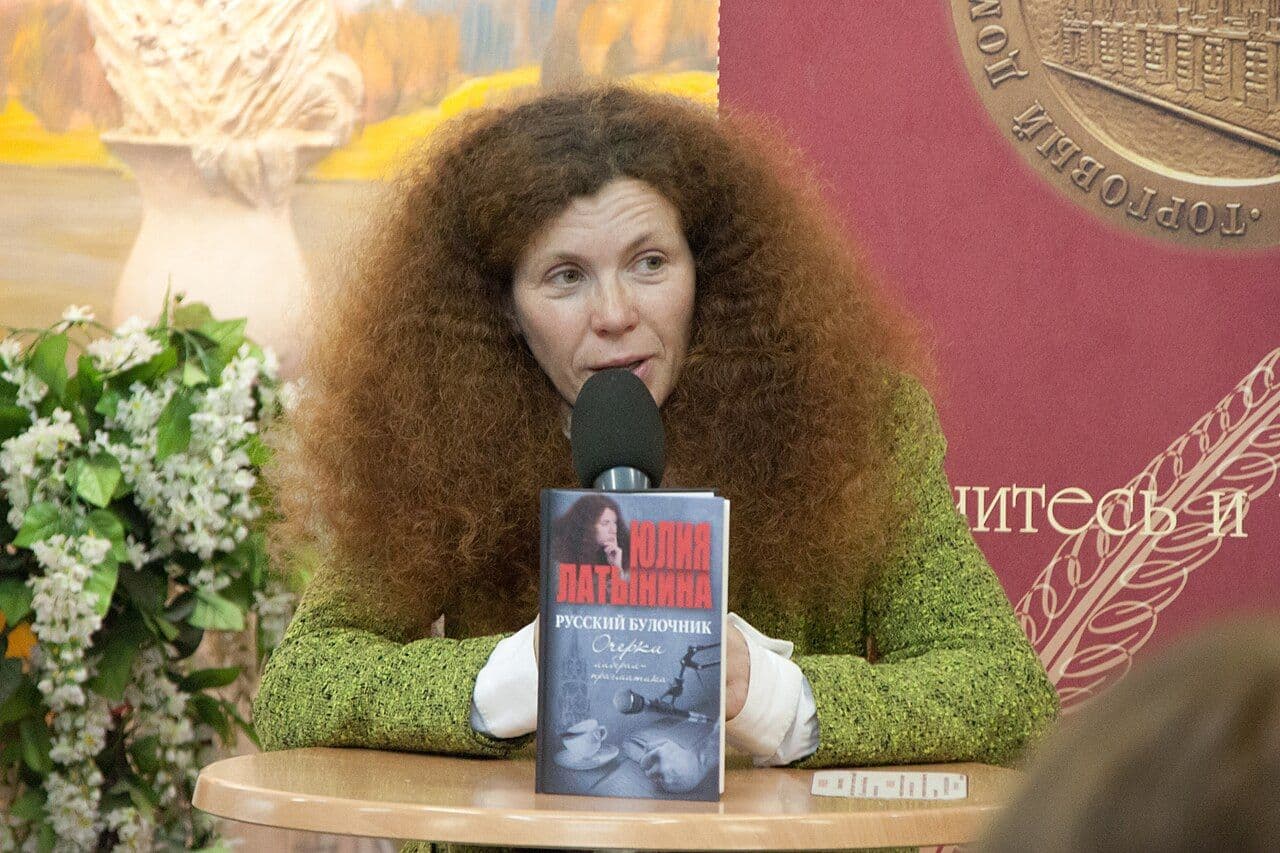
Yulia Latynina in an unnamed location, on Feb. 9, 2013. (Wikimedia Commons)
 on Google
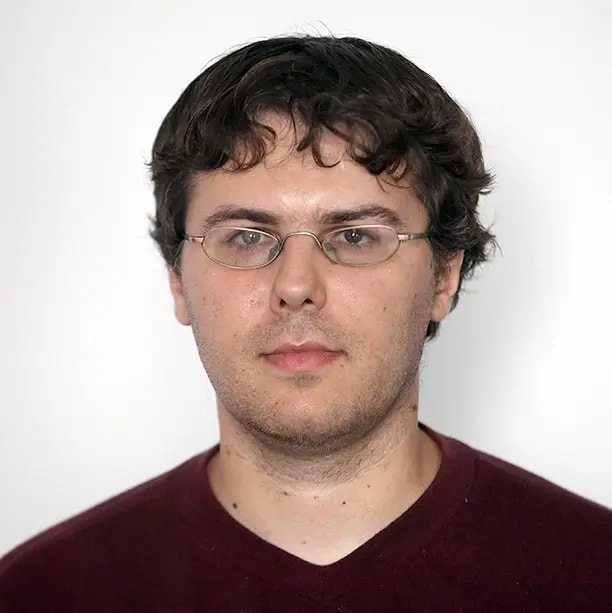
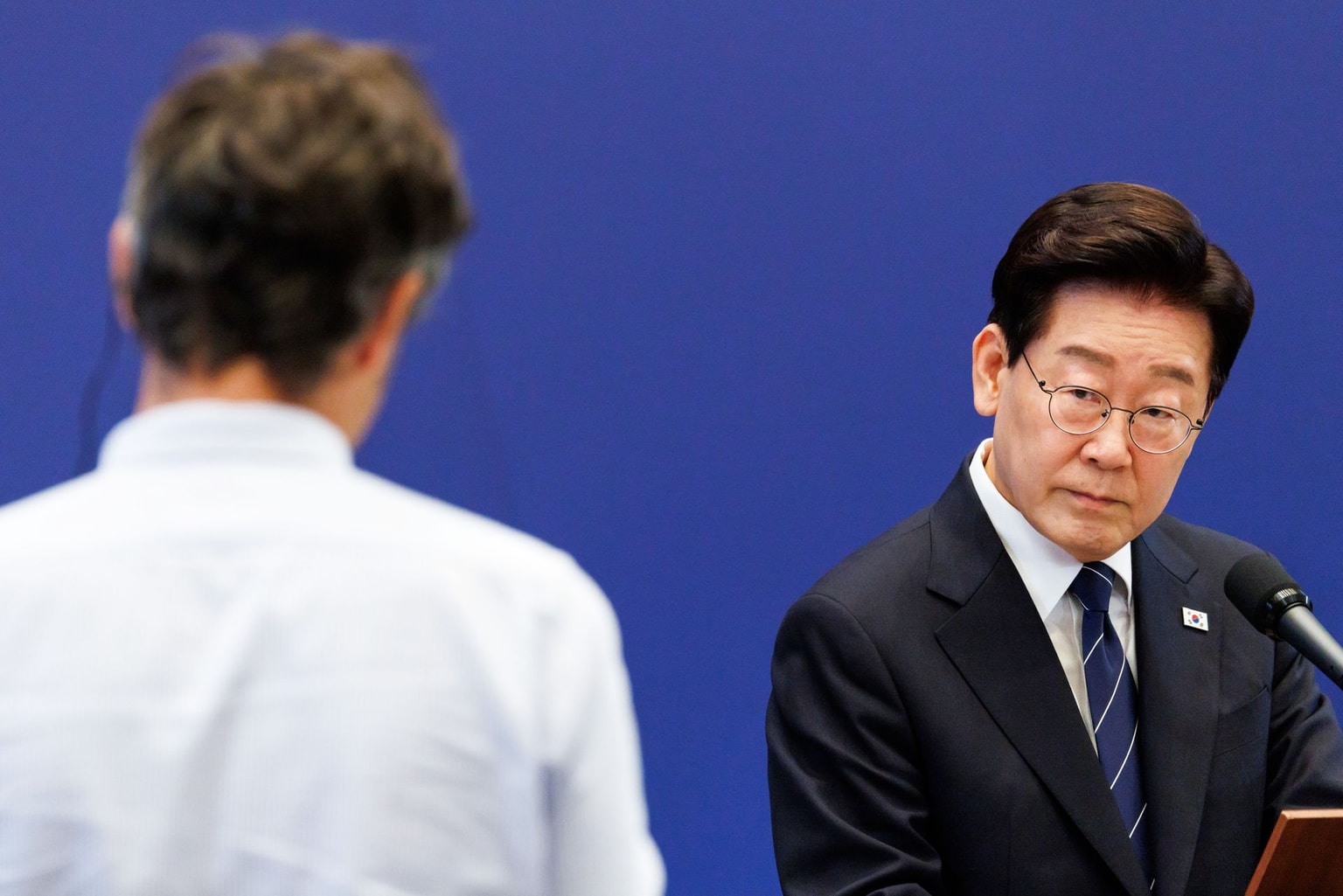
Latvia's decision last week to declare Russian-born journalist and blogger Leonid Ragozin persona non grata has drawn attention to a broader trend: Russians who once presented themselves as opponents of Vladimir Putin are now accused of echoing Kremlin narratives.
Some now live in Europe, taking advantage of the freedom and security that their adopted countries provide to broadcast their views.
Ironically, some of them blame the European Union for Russia’s war against Ukraine and most of the world's other problems while enjoying the liberties and safety provided by EU member states.
"Why are people who support Russia’s war or provide a justification for their country's actions welcomed in Europe?"
They span a wide spectrum, from self-styled impartial commentators who insist on hearing "both sides" to outspoken supporters of Russia’s war of aggression against Ukraine.
The Kyiv Independent has requested comment from Ragozin and will publish his response once it is received.
A subtle promoter of Kremlin narratives
One of these commentators, Ragozin, has worked as a journalist for various English-language and Russian-language publications, including BBC, Newsweek Russia, Al-Jazeera, Bloomberg, the Guardian, Politico, the New Republic, Time, and the Washington Post.
In 2013, Ragozin moved to Latvia.
According to data from a leaked database obtained by the Kyiv Independent, Ragozin regularly visited Russia between 2014 and 2022. He left Russia on Feb. 17, 2022 – before the full-scale invasion began on Feb. 24 – and then returned there during the invasion. He again left Russia on March 3, 2022.
Latvia's Foreign Ministry announced on Oct. 6 that it had declared a Russian citizen persona non grata, without naming the individual. On Oct. 14, Ragozin confirmed that Latvia had referred to him and said that he had been notified of his expulsion from Latvia.
Ragozin said he was facing "political persecution" and argued that this was "revenge by far-right politicians for my investigation into their links to Russian neo-Nazis who found refuge in Kyiv" and "a punishment for my commentary on the Russian aggression in Ukraine."

Unlike some other critics of Ukraine, Ragozin has taken a more nuanced and subtle approach. He has never explicitly supported Russian President Vladimir Putin.
However, he has been repeatedly accused of promoting Kremlin-friendly narratives. Ragozin has written mostly in English and targeted an important audience — right-wing and left-wing commentators in the West, as well as the "Global South."
In 2021, Ragozin effectively blamed Ukraine for "provoking" an escalation with Russia by seeking NATO membership. He argued that Russia’s troop buildup around Ukraine's borders was reactive rather than aggressive.
Instead of criticizing the Kremlin, Ragozin has focused on lambasting nationalists and "neo-Nazis" in Ukraine.
Ragozin has effectively blamed the West for the war, arguing that it pushed Kyiv into an unwinnable conflict.
He also argued that "the war can only end on Moscow's terms" and accused Ukraine and Europe of sabotaging peace talks by seeking a compromise.
In a September interview, Ragozin said that he doesn't "think Russia has a deliberate policy of targeting civilians, but that can change." Over the past week, at least 150 Ukrainian civilians were killed by Russia, with the Kremlin targeting public transport in Kramatorsk, and apartment buildings in Pryluky and Zaporizhzhia.

Russia executed civilians in Bucha in 2022 and has deliberately destroyed cities in Ukraine's east — Avdiivka, Bakhmut, Siverskodonetsk, Pokrovsk, and Druzhkivka — to name a few.
Konstantin Eggert, who headed the BBC's Moscow bureau in the 2000s and was part of the board that selected Ragozin for the position of producer, commented on him for the Kyiv Independent.
Eggert said that several times he "heard the opinion that Ragozin is de facto equating the aggressor (Russia) with the victim of aggression (Ukraine), denying or downplaying atrocities committed by the Russian forces and portraying the Baltic States to his audience as irresponsible warmongers."
"I agree with this view," he added. "I believe that Ragozin or anyone else is perfectly entitled to hold and broadcast such views. But they should not be surprised if others describe such positions as chiming in with the Kremlin narratives."
InformNapalm, a Ukrainian open-source intelligence outfit, told the Kyiv Independent that "his recurring arguments effectively reinforce the Kremlin's preferred narrative about the causes of the war and the terms on which it could end, particularly among Western audiences."
Ragozin denied the accusations against him on X on Oct. 14.
"My stance on the war in Ukraine remains unchanged," he said. "I condemn the Russian aggression and support Ukraine's sovereignty over occupied territories…. But I'll continue to criticize Western countries for mishandling this conflict and not acting in the best interests of the Ukrainian people."
A former liberal and pro-war propagandist
Yulia Latynina, a blogger, columnist, and writer, has gone much farther than Ragozin in the evolution of her views on Ukraine.
She used to be one of Russia’s most prominent anti-Kremlin liberal opinion leaders and called herself a "libertarian."
Latynina left Russia in 2017 following several attacks on her, as well as on her house and her car, that she blamed on people linked to the late Yevgeniy Prigozhin, then a trusted confidant of Putin.
According to media reports, since 2017 Latynina has been based alternately in Cyprus and Estonia. Her phone number is Cypriot, and several organizations founded by Latynina are based in Estonia.
Between 2014 and 2023, Latynina fully supported Ukraine and opposed Russia’s war.
But starting from 2024, she changed her views dramatically, turning into a harsh critic of Ukraine and the West. As Donald Trump was re-elected president of the U.S. in 2024, she increasingly aligned her views with the anti-Ukrainian rhetoric of Trump and his allies.
Now, Latynina fully supports Russia’s war of aggression against Ukraine.
"If the project of Ukraine as an 'anti-Russia' cannot be destroyed completely, then it should be weakened as much as possible."
Latynina believes that Ukraine represents a "strategic threat" to Russia and that Russia had a right to invade Ukraine to defend its "strategic interests." Her views on foreign policy are now similar to those of Russian imperialists Alexander Dugin, Alexander Prokhanov, and Eduard Limonov.
Latynina has argued that it is in Russia’s strategic interest to ensure that the boundary between the Russian and Ukrainian languages is "as far west as possible."

"If the project of Ukraine as an 'anti-Russia' cannot be destroyed completely, then it should be weakened as much as possible," Latynina said in a 2026 interview.
When asked in 2026 about the war’s negative impact on Russians' living standards, she said that strategic interests should override their concerns, and average Russians "will always live like shit" regardless of the war.
Asked why she has shed her libertarian credentials and embraced something resembling Dugin's Eurasianism, Latynina told the Kyiv Independent that she had not read Dugin and had been influenced by U.S. foreign-policy realists George Kennan, Pat Buchanan, and Jeffrey Sachs.
"Russia could not allow a territory that had taken shape as a result of the Russian Empire's and the Soviet Union's westward expansion... to suddenly turn into Halychyna stretching from the river to the sea," she said in a reference to Halychyna (Galicia), a historic region in western Ukraine that, according to Russian propaganda, is the core base of Ukrainian nationalism.
She has opposed ending the war on terms that she thinks are "unfavorable" to Russia — such as freezing the front line.
In her attempts to justify Russia’s war, Latynina has gone as far as to claim that states "have a right to aggression."
Asked how this reconciles with the libertarian principle of the non-initiation of force, Latynina cited the Roman historian Livy in a comment for the Kyiv Independent, saying that "war is just for those for whom it is necessary."

In 2025, Latynina also shocked the audience by publishing an article trying to justify Russia’s actions by drawing parallels with Nazi Germany. She argued that Nazi Germany's expansionism was a result of the mistreatment of ethnic Germans abroad — similarly to alleged violations of Russian speakers' rights in Ukraine.
Like Ragozin, Latynina has also blamed Ukraine and Europe for the lack of progress in peace negotiations and accused them of perpetuating the war. She has repeatedly criticized what she sees as a stagnant European bureaucracy mired in a deep crisis.
Asked why she lives in the EU despite hating it, Latynina told the Kyiv Independent that "it's up to the bots and the nationalist decolonization advocates to explain why Latynina should be persecuted in a free country for refusing to toe the party line."
She now presents the Russian opposition as puppets of the West, saying that they will sell out Russia’s interests if they come to power.
Latynina's increasingly pro-Kremlin and pro-war narratives have prompted speculation that she is either working for the Kremlin or contemplating a return to Russia.
She has denied working for the Kremlin. Latynina said in a 2026 interview that the status of a foreign agent was impeding the publication of her books in Russia, and that she was thinking of the possibility of being stripped of that status.
However, she told the Kyiv Independent she had not contacted the Russian authorities about the issue so far.
An ambiguous stance on Ukraine
Some other notable Russian commentators occupy a middle ground between Latynina and Ragozin.
Oleg Kashin, who had long been an independent journalist critical of the Kremlin, acknowledged that Russia’s annexation of Crimea in 2014 was illegal.

Despite this, he supported the annexation, arguing that it was a "restoration of historical justice."
"There is no doubt that it was annexed in violation of international law," Kashin, who is based in the U.K., told the Kyiv Independent. "But I don't believe that international law is taken seriously at all. There are simply no major players in world politics that genuinely abide by it… My Russian heart won't let me say that we should have made sure Crimea remained part of Ukraine."
Kashin also condemned the use of Russian troops in the Donbas in 2014. However, he blamed Ukraine for allegedly fueling tensions leading up to Russia’s invasion of eastern Ukraine.
On the eve of Russia’s full-scale invasion in 2022, Kashin wished "Russian soldiers good luck and strength" in a future military conflict in Ukraine.

However, he eventually became a critic of Russia’s full-scale invasion, saying that it was at odds with Russia’s national interests.
He attributed his initial support for Russian soldiers in 2022 to his belief that Russia would only invade the unoccupied part of the Donbas, not the whole of Ukraine.
"When I realized that what was actually happening was an insane and suicidal march on Kyiv, I naturally spoke out against it immediately," he told the Kyiv Independent.
He said, however, that he believes that a limited Russian invasion of the Donbas in 2022 "would have been far more beneficial than the criminal regimes that had been established in the Donbas with Russia’s support" in 2014.
For Ukraine and its supporters, the question that arises is clear — why are people who support Russia’s war or provide a justification for their country's actions welcomed in Europe?
"When assessing information influence, what matters is not just how someone describes themselves — as an opposition figure or a critic of Putin — but also the specific narratives they consistently promote to their audience," InformNapalm said.