EU reminds Ukraine of rule of law homework after parliament stalls reforms
 on Google
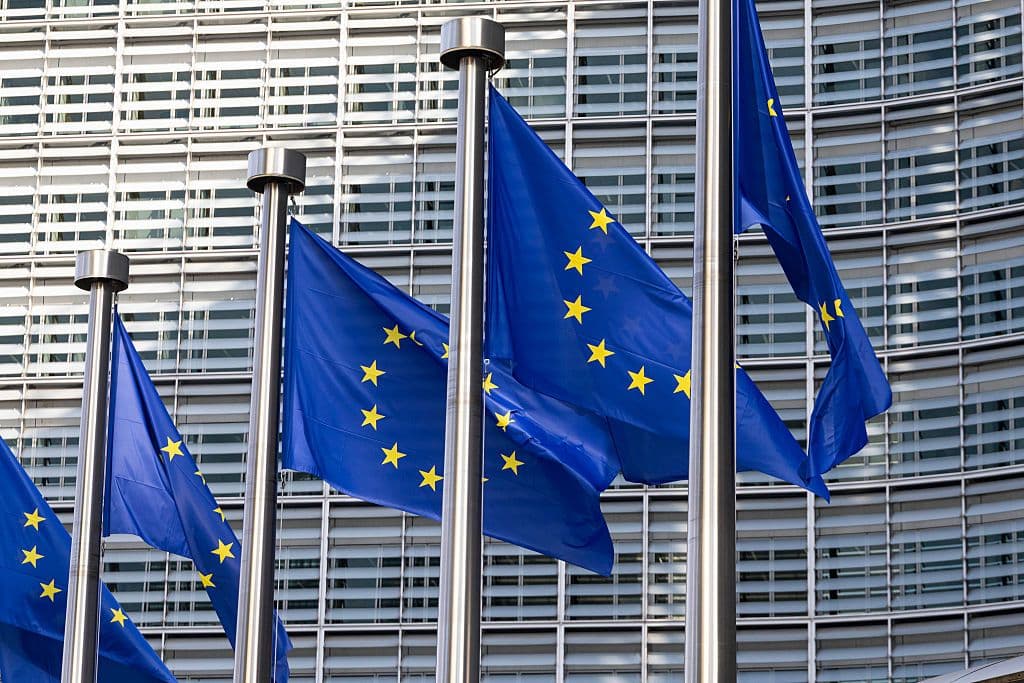
The European Commission on Aug. 25 reiterated that it is vital for Ukraine to continue advancing rule-of-law reforms and the fight against corruption if it is ever to join the bloc, days after the Ukrainian parliament blocked five key reforms.
Ukraine is required to strengthen its judiciary and anti-corruption bodies to eventually enter the EU. Implementing these reforms by the end of 2026 is also needed to unlock some 2.1 billion euros ($2.45 billion) in financial support.
But the parliament's law enforcement committee blocked five of those measures at its Aug. 19 meeting, prompting a firestorm of criticism from opposition politicians.
The reforms sought to expand anti-corruption agencies' authority, reform the Prosecutor General's Office and the State Investigation Bureau, and repeal legislation that impedes corruption cases.
"We are aware of the latest developments. We recall that rule of law and the fight against corruption is an essential element for any country to join the European Union," European Commission spokesperson Markus Lammert told the Kyiv Independent on Aug. 25.
"Ukraine has also committed to reforms in this field and in the context of the EU's Ukraine Plan."
The Ukraine Plan refers to the timetable and reforms required for Kyiv to unlock each tranche of payments from the EU's 90 billion euro loan ($105 billion), which was approved in April.
Kyiv agreed to both the timing of the expected payments and the reforms required in order to receive the money.
Lammert added that "Ukraine has agreed with the European Commission on 10 reform priorities that should be prioritized in order to strengthen the rule of law and the fight against corruption."
This refers to the Kachka-Kos plan, agreed by the former deputy prime minister for European integration, Taras Kachka, and European Commissioner for Enlargement Marta Kos, which was issued at the end of 2025 as an attempt to pressure the parliament to speed up the pace of reforms, with 10 specific priorities to be addressed by the end of 2026.
The parliament has not sped up work since then, and not one of the 10 reforms has been addressed.
The five reforms rejected on Aug. 19 would have partly fulfilled those requirements.
"It is for the Ukrainian authorities to carry out this work in a consistent and efficient manner," Lammert said.
The day before the parliament blocked the five reforms, Belgian Foreign Minister Maxime Prevot also spoke in favor of Ukraine passing those changes.
"An independent judiciary, solid democratic institutions, bodies effectively able to fight corruption, these are not just reforms designed to please Brussels," Prevot said during a press conference in Kyiv on Aug. 18.
These reforms are "designed to protect citizens, reinforce trust, and make your country more resilient," Prevot said.