Court relaxes restrictions on Zelensky's ex-chief of staff amid reports on his continued influence
 on Google
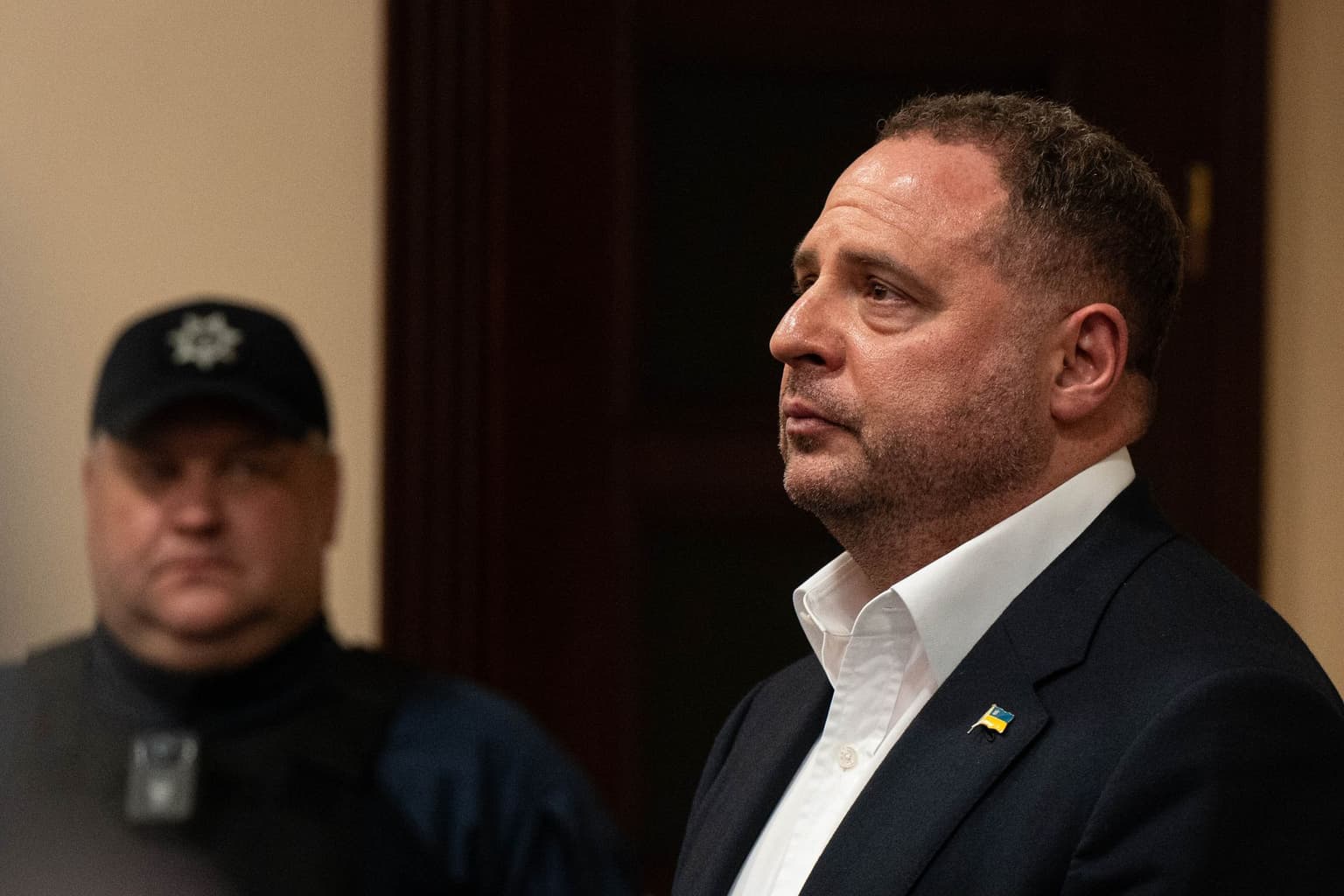
A Ukrainian court on Sept. 15 allowed Andriy Yermak, former head of the President’s Office, not to wear an electronic monitoring bracelet.
The ruling comes amid media reports that Yermak kept his political influence on President Volodymyr Zelensky after resigning in November amid a corruption investigation.
The move also followed an earlier court ruling that eased the restrictions on Yermak. Initially Yermak could not travel beyond Kyiv and Kyiv Oblast without investigators’ approval. But in August the court allowed him to travel to several other regions.
The decision on the electronic bracelet was made by the High Anti-Corruption Court on medical grounds. The court did not elaborate.
Medical conditions that could prevent someone from wearing an electronic bracelet include having a pacemaker, a risk of blood clots, and allergic reactions.
"Everyone here seems perfectly healthy until they become a suspect," Tetiana Shevchuk, a lawyer at the Anti-Corruption Action Center, quipped. "Then the stress of being under suspicion kicks in, and suddenly they get sick."
She told the Kyiv Independent that law enforcement agencies can still keep suspects without a bracelet under surveillance.
But the absence of a bracelet "makes their job more difficult, especially when suspects have private security or, as was already the case with Yermak, protection provided by the state security services," she said.
In November 2025, Yermak’s office was searched as part of a case into an alleged $100 million corruption scheme involving state nuclear power company Energoatom — the largest corruption investigation of Zelensky’s tenure. Yermak resigned as Zelensky’s chief of staff following the searches.
In May, he was charged with money laundering tied to the construction of a luxury residential compound outside Kyiv.
Suspects in the Energoatom case allegedly gave money to ex-Deputy Prime Minister Oleksiy Chernyshov for the construction of the compound, according to the National Anti-Corruption Bureau.
Yermak was released on Hr 140 million ($3.1 million) bail in May.
However, media reports suggest that he still wields some political influence.
Ukrainian news outlet Dzerkalo Tyzhnya reported in December 2025, citing its sources, that Yermak continued to communicate with Zelensky regularly and kept his political influence. Ukrainska Pravda reported in February that Yermak had met several top officials since his resignation.
Meanwhile, Yermak officially resumed his legal practice in January. He also became the head of a committee of Ukraine's National Association of Lawyers in March.
Yevhen Korniychuk, Ukraine's ambassador to Israel, and Yermak's lawyer Ihor Fomin flew from Chisinau to Tel Aviv in January, Ukrainska Pravda reported.
Fomin met Israeli lawyer Boris Lemper, who allegedly provides legal services to Timur Mindich, the alleged ringleader of the Energoatom scheme, according to footage published by Ukrainska Pravda.
Fomin told Ukrainska Pravda that he was acquainted with Lemper and confirmed that he visited Israel. He declined to comment on whom he met there.
In July Ukrainska Pravda also reported, citing its sources, that Yermak had lobbied for Defense Minister Mykhailo Fedorov's dismissal.
The Kyiv Independent has requested comment from Yermak and will publish his response once it is received. His lawyer Fomin declined to comment.
The National Association of Lawyers, where Yermak works, told the Kyiv Independent that the question on Yermak's continued political influence "does not relate to the functions of the National Association of Lawyers" or to his duties as committee chair "and therefore fall outside the (association's) competence."