Belarus builds railway near Ukraine capable of military transport, monitoring group says
 on Google
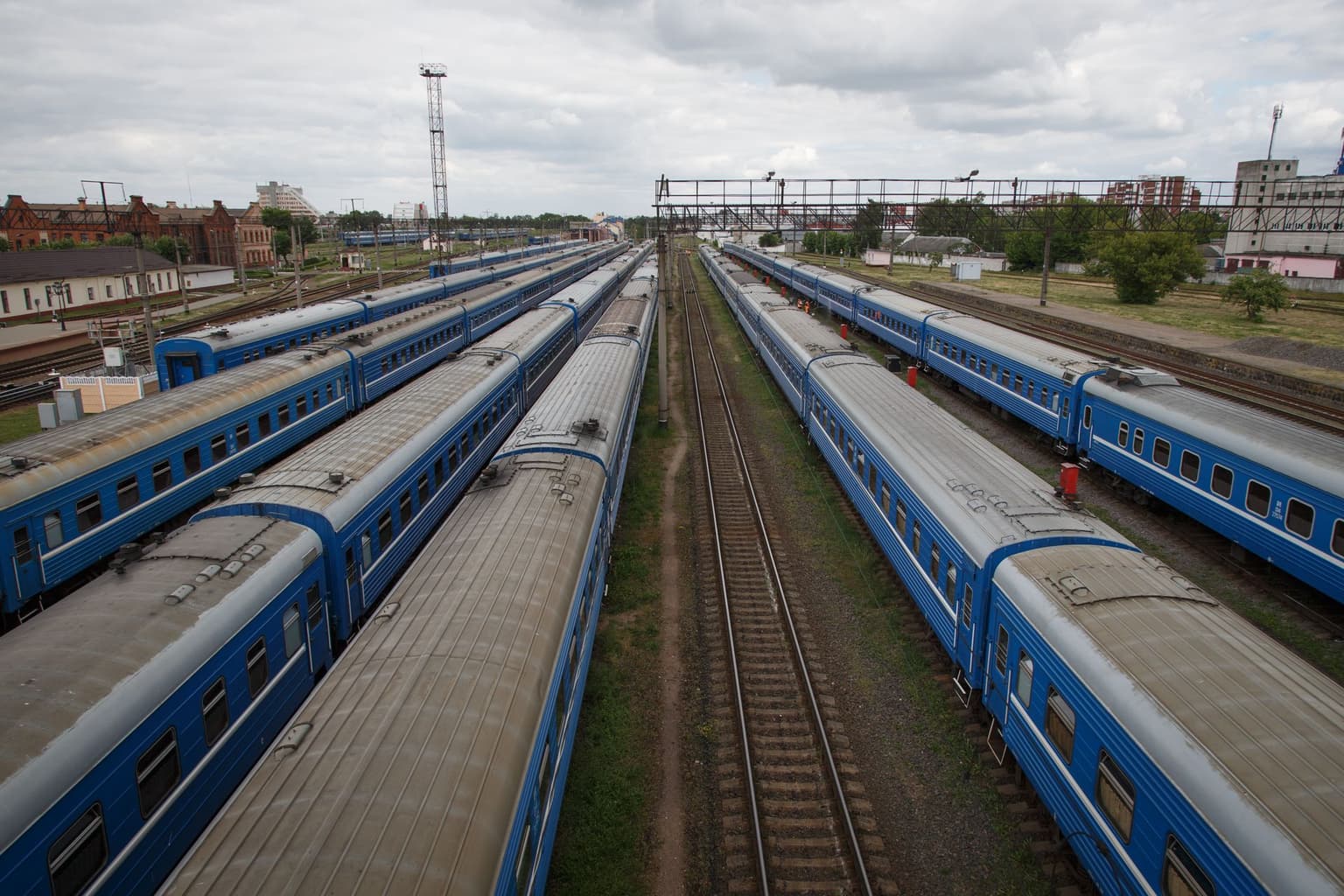
Belarus is building new railway infrastructure in the country's southern Gomel region that will be capable of receiving military trains carrying personnel and heavy equipment, the Belarusian Railway Workers' Community reported on Aug. 24.
The report comes amid a buildup of military infrastructure along the Belarus-Ukraine border, leading Kyiv to warn that Moscow may be planning to draw its closest ally deeper into the full-scale war.
Project documentation obtained by the independent Belarusian Railway Workers' Community shows that a separate railway siding is being constructed for a facility officially designated as "a training ground in Gomel Oblast" near the Yakimovka station. The station lies approximately 40 kilometers (25 miles) from the border with Ukraine.
The planned track will be able to accommodate up to 60 railcars, roughly comparable to a military train, and will include a high loading platform with ramps allowing wheeled and tracked vehicles to be unloaded directly inside the facility, according to the documents.
The project's customer is listed as Belarus' Institute Voenproekt, while earlier engineering documents named the Belarusian Armed Forces' capital construction administration, the monitoring group said.
Once completed, the railway would allow military trains to move directly from Belarus' national rail network onto the training ground, where personnel, weapons, vehicles, fuel, ammunition, and other supplies could potentially be unloaded without remaining for long periods on publicly accessible station tracks, according to the Belarusian Railway Workers' Community.
The group stressed that construction of the railway and training ground does not by itself indicate preparations for an offensive against Ukraine, but said the infrastructure would make it possible to rapidly reinforce a military grouping in the area if circumstances changed.
read also
Ukraine's State Border Guard Service said it has not observed increased military activity in the immediate vicinity of the Belarusian border.
"Belarus continues to develop its military infrastructure," State Border Guard Service spokesperson Andrii Demchenko told the Kyiv Independent, pointing to facilities for accommodating personnel, logistics infrastructure, and training grounds.
Demchenko noted that Belarus has repeatedly announced the creation of new military formations and regularly conducts exercises and combat-readiness checks, but cautioned that Minsk also frequently uses such activity to generate information pressure.
He added that Russia continues to view Belarusian territory as a potential direction from which it could expand its aggression against Ukraine, but said there are currently not enough Russian troops stationed in Belarus to form a significant strike grouping.
"Nevertheless, the border with Belarus, the direction from Belarusian territory, has remained a threat for Ukraine both before and now," Demchenko said.
For that reason, Ukraine continues strengthening defensive positions along its northern border, including engineering fortifications and mine barriers, he said.
Belarus allowed Russian forces to use its territory, airspace, and military infrastructure when Moscow launched its full-scale invasion of Ukraine in February 2022. Russian troops advanced toward Kyiv from Belarusian territory during the opening phase of the invasion, and Moscow has since used Belarusian territory and airspace to launch strikes against Ukraine.