Inside the 'Pavilion of (Dis)sense,' a fight against Russia's weaponization of culture
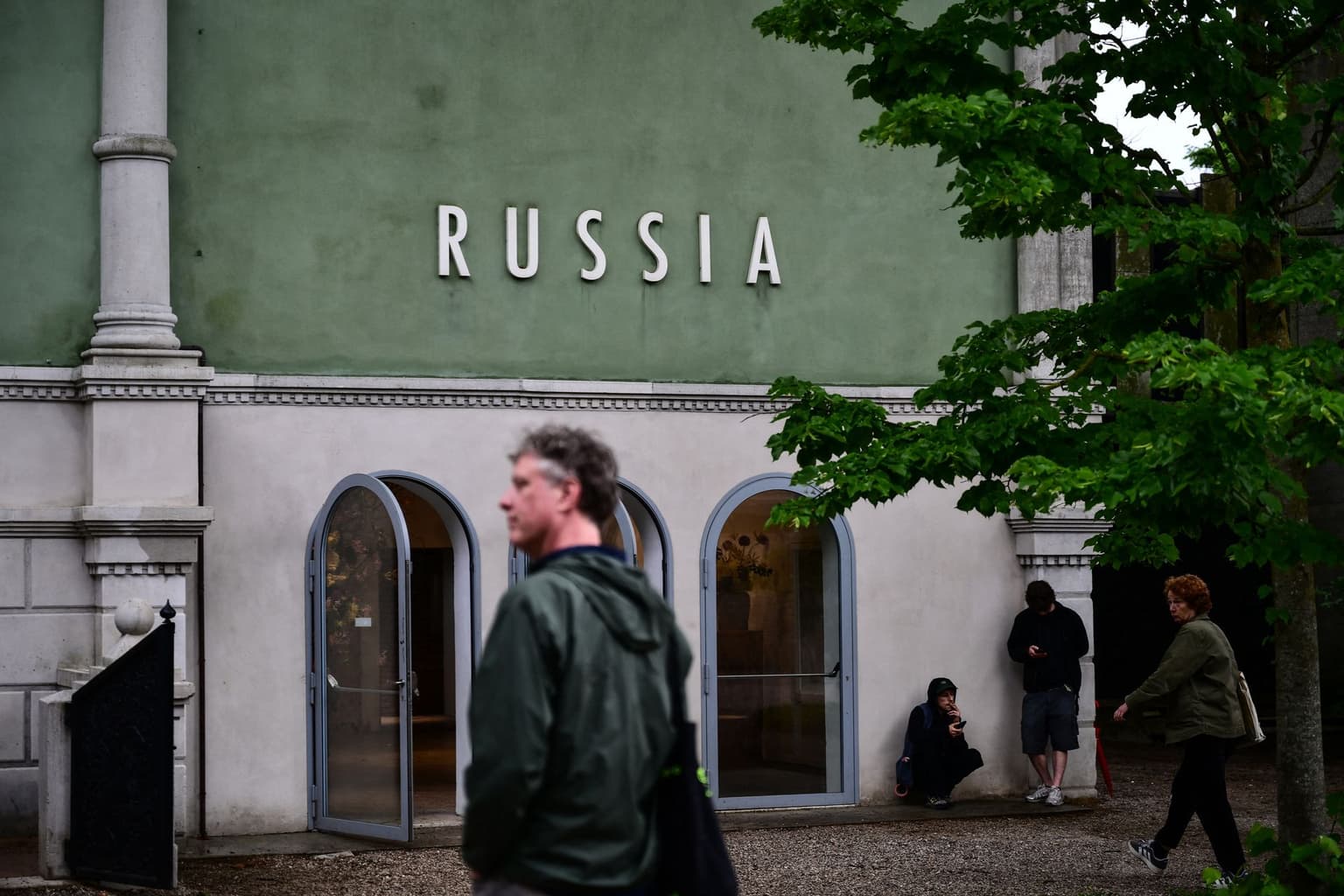
Visitors stand near the Russian pavilion during the pre-opening of the 61st Venice Biennale art show in Venice, Italy, on May 5, 2026. (Marco Bertorello / AFP via Getty Images)
 on Google
In the lead-up to the Venice Art Biennale, posters for imagined cultural events began appearing throughout the city, each one carrying the disclaimer: "Canceled because the artist was killed by Russia."
Conceived by exiled Russian artist Katia Margolis and curated by the Network Associazioni per Ucraina, the "Invisible Pavilion" was one of the most subtle yet striking protests against Russia's return to the Venice Art Biennale.
Now featured in the "Pavilion of (Dis)sense" — an exhibition curated by Margolis and organized by Memorial Italia and Arts Against Aggression — these posters are part of a larger, ongoing collective artistic response to the Russian government's attempts to weaponize culture in its war on Ukraine.
Originally slated to run from July 7 to Aug. 7 in the former Church of San Leonardo, "Pavilion of (Dis)sense," was extended for an additional month.
The exhibition title is a play on the 1977 Venice Biennale, which brought together anti-Soviet dissidents from across Eastern Europe — artists who had been censored, persecuted, or forced into exile — rather than those officially sanctioned by Soviet authorities and complicit in promoting its cultural myths.
"It was a radical affirmation that culture belongs not to governments but to free individuals, and that artistic freedom cannot be separated from civic freedom and human rights," Margolis told the Kyiv Independent.

"But the irony is that while the 1977 Biennale challenged Soviet cultural diplomacy, the 2026 Biennale made the opposite choice by re-admitting the official Russian Pavilion. Our Pavilion emerged as a civic and artistic response to that decision."
Russia had not taken part in the Venice Art Biennale since 2022, when the artists representing the country's pavilion quit in protest against the full-scale war in Ukraine.
Pietrangelo Buttafuoco, the right-wing president of the Venice Biennale, dismissed the outcry against Russia's return to the Venice Art Biennale as "censorship," insisting that it was a "neutral space" for art.

The Russian pavilion is overseen by the Russian government, and the pavilion's commissioner, Anastasia Karneeva, has ties to the Russian military-industrial complex. Under her direction, a number of pro-war artists were invited to be part of the pavilion.
For Margolis, a pro-democracy Russian artist and activist based in Venice, it was imperative to speak out against them.
That's because she believes that while artists aren't necessarily required to make political art, they do have a responsibility not to become instruments of those in power.
"(The responsibility of Russian artists during wartime) means recognizing that this is, first and foremost, a genocidal neo-colonial war against Ukraine, and that Ukrainian voices must remain central rather than once again being overshadowed by discussions about Russia. In other words, it means ceasing to be occupiers not only of territories but also of mental and cultural space," Margolis said.
In keeping with these convictions, the "Pavilion of (Dis)sense" brings together artwork that portrays the experiences not only of Russian political prisoners but also Ukrainian civilians, prisoners of war, members of Russia's indigenous communities, and activists involved in decolonial and independence movements.
Pussy Riot founder Nadya Tolokonnikova's "Resistance Imprisoned" brings together 50 artworks and personal accounts crafted on prison sheets, envelopes, notebook pages, and scraps of fabric by journalists, activists, scientists, teachers, Ukrainian POWs and civilians, and others imprisoned by Russia for anti-war actions or for challenging the Kremlin's narratives.
The pieces feature recurring motifs like barbed wire, prison bars, animals, suns, wings, and slogans, showing how art can become a lifeline amid the harsh realities of the Russian prison system.

Ukrainian artist Nadiia Skidan, who is from Russian-occupied Crimea, reimagines in "Home / Hope: The Red Corner" the traditional Ukrainian red corner — a sacred place of prayer, remembrance, and protection — as a portable altar after the destruction of her grandparents' home in a missile strike.
The work uses her own menstrual blood to mark a garment of the Virgin Mary, turning the body into a tool to reclaim agency over memory, belonging, and hope when a physical home can no longer offer protection.
Margolis' "Resilience to Remain" includes the participatory "Altar of Reciprocal Care," where visitors tend to seed beneath suspended bandages, turning acts of care and collective witnessing into gestures of hope and regeneration.

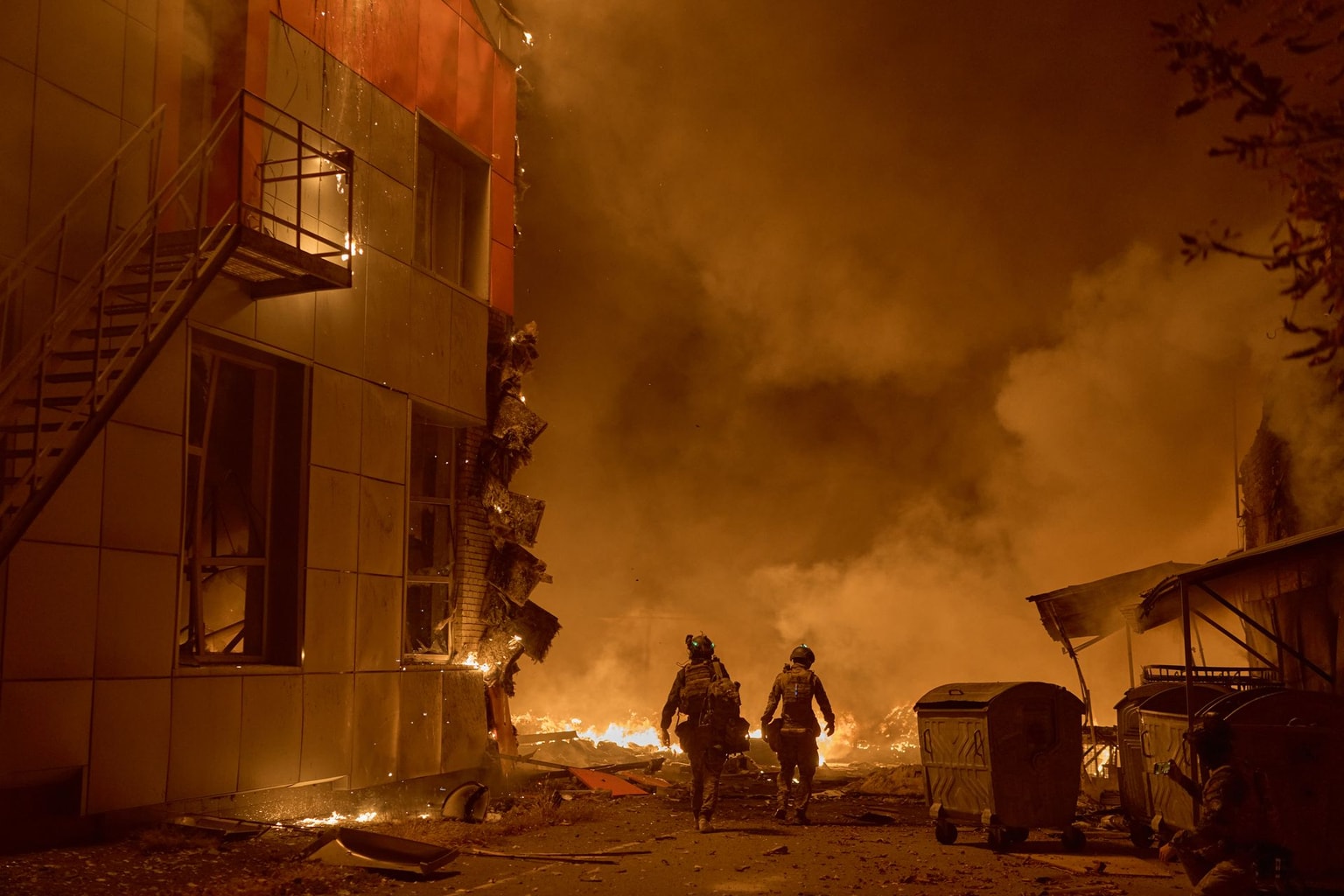
Irina Revina-Hoffman's "936 km to the War" brings Ukraine's suffering into Venice's physical space, with a floor banner marked with an arrow leading to a Ukrainian home on fire from a Russian missile strike.
Ultimately, the "Pavilion of (Dis)sense" is meant to be more than a protest against Russia's pavilion. It is a call for other Russian artists to confront the brutal realities of the full-scale war, center Ukrainian voices in ongoing conversations about suffering, and actively contribute to dismantling the narratives that enable oppression.
"Authoritarianism ultimately seeks to control not only what we say, but what we see and how we interpret it," Margolis said.
"Art outlives the regimes that try to prescribe what art — and reality — should look like. As we should preserve our freedom to see things with our own eyes."
Note from the author:
Hi, this is Kate Tsurkan, thanks for reading this article. While my primary focus is and always will be to elevate Ukrainian culture, I also try my best to help readers establish what their standard should be for judging anything related to Russian culture. Katia Margolis does a lot of work to compel her fellow Russians to rethink the imperialistic tendencies of their cultural mindset, and for that I respect her a lot.
If you like reading about this sort of thing, please consider supporting The Kyiv Independent.