A $438,000 bet on Kyiv — Why open a restaurant ahead of a winter of blackouts?
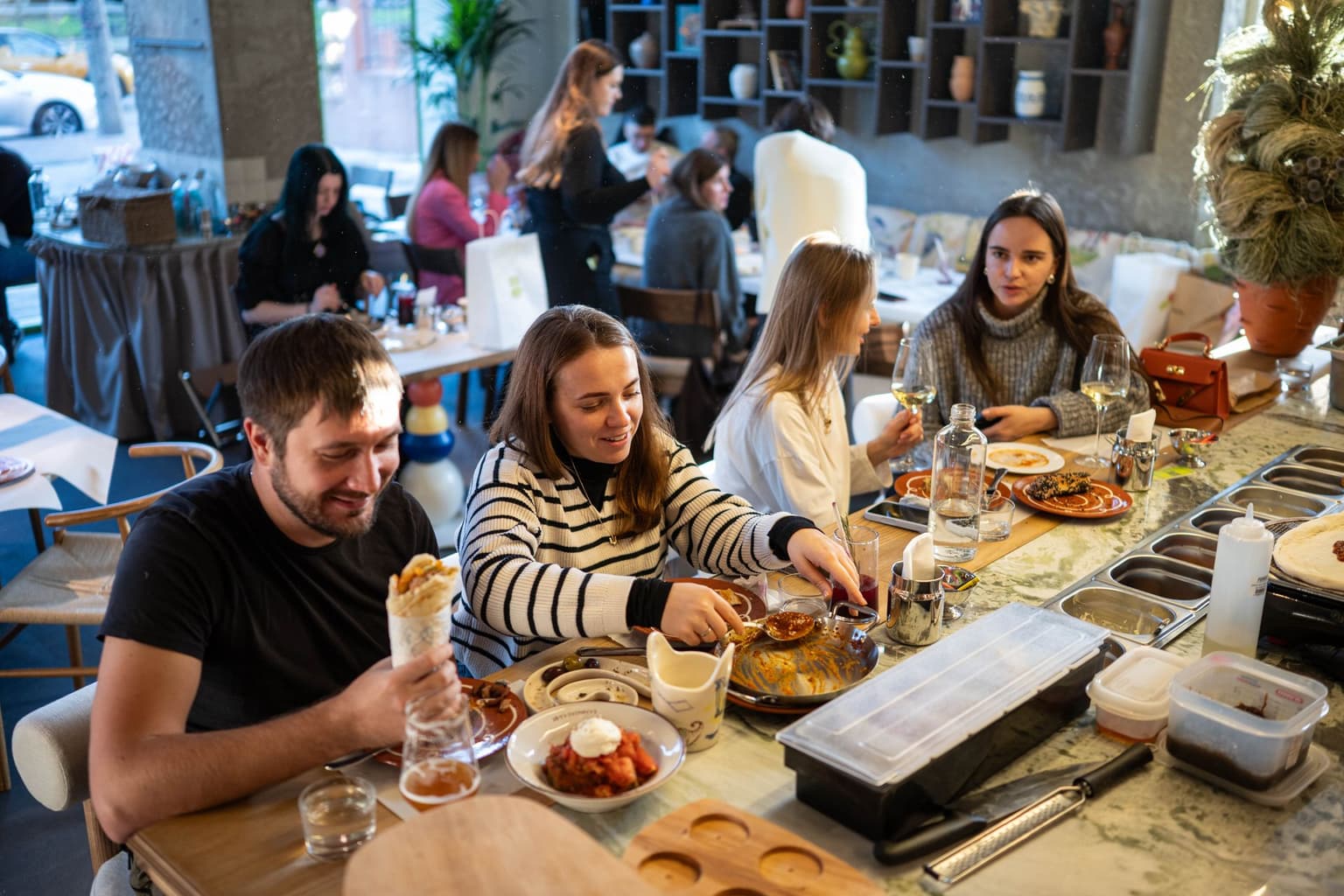
Guests enjoy food and wine at Lyra, a restaurant inspired by traditional Greek tavernas, as customers gather to celebrate its opening amid another difficult winter in Kyiv, Ukraine, on Nov. 15, 2026. (Danylo Antoniuk / The Kyiv Independent)
 on Google
On a sunny November Sunday in Kyiv's Podil District, a line of people stretches outside Lyra, a newly opened Greek restaurant. Throughout the day, customers wait to get inside, filling the space with the noise and chatter of a Greek taverna.
Some came because they missed Greek food, while others wanted to support a new business opening in their city.
"We came with the whole family to remind our children of their Greek roots," Olena Borymska, a 66-year-old art historian, told the Kyiv Independent. Her grandmother, born in 1903, had attended a Greek school in the same neighborhood.
A long line outside a restaurant is an unusual sight in a city at war preparing for another difficult winter. As Russia steps up attacks on Ukraine's energy infrastructure, Kyiv faces long power outages, rising costs, and an exodus of residents.
"We chose to stay in Ukraine all this time, and we don't want to put our lives on hold."
For Kyiv's restaurant industry, 2026 has been one of the hardest years in decades. Restaurants are closing much faster than new ones are opening.
According to restaurant expert Olha Nasonova, about 100 to 120 establishments close in Kyiv each month, while only 10 to 15 new ones open. She estimated that in October about 150 restaurants shut their doors for good.
Nasonova, who is also a co-founder of the National Restaurant Association of Ukraine, said she has not witnessed a year like it since entering the business in 1999.
Economic pressure began mounting in 2025, as Russia stepped up its attacks on Ukrainian businesses. In August 2026, Nasonova counted roughly 500 advertisements for hospitality businesses up for sale.
Despite the risks, founders Tetiana Melezhyk, 28, Oleksandr Melnyk, 31, and Viktoriia Chernova, 50, opened Lyra ahead of winter.

Against all odds
Just a day before opening, Lyra's founders were not sure they would be able to welcome their first guests.
After months of work, the restaurant was finally ready, but they faced a generator failure — the third before opening. Without backup power, the lights go out, and the kitchen stays cold during the long blackouts that strike Kyiv these days.
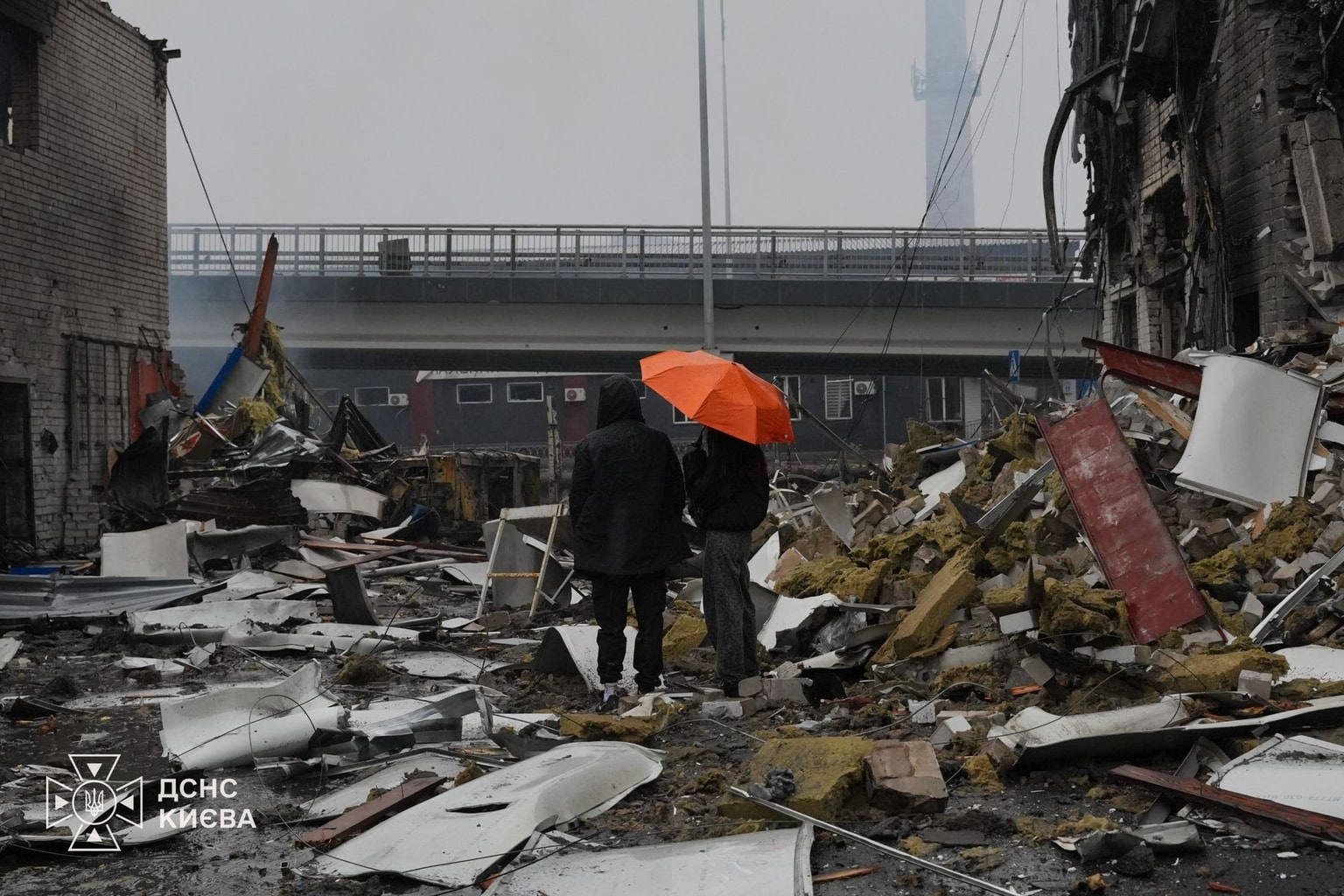
It was one of many problems that came with building a restaurant during the war. A Russian strike hit a supplier's warehouse, delaying delivery of equipment. A glass bathroom door arrived broken, and when it was sent back to the factory for replacement, a Russian missile struck the factory.

Nasonova said that opening a cafe or restaurant in Kyiv can cost $50,000 to $100,000, with higher amounts considered medium- to large-sized investments.
Creating Lyra cost its founders $438,000, from design and equipment to staff salaries, legal fees, and a generator. Delays during the process alone cost them around $25,000 in rent, salaries, storage fees, and additional construction work.
Even after two preview events for friends, hospitality professionals, and Kyiv's Greek community, the founders were still making last-minute changes.
The day before the opening, some walls were still bare. Melnyk had a panic attack, overwhelmed by the unfinished work.
"He started telling me everything he didn't like," Melezhyk said. A friend's mother who is an artist helped them finish decorating the space with her paintings.

"Before and after that day the restaurant looked like two different places," Melezhyk said.
She had worried that few customers would come, as many people had already left Kyiv. Instead, Lyra welcomed 160 guests when it opened its doors to the public on Nov. 15.
"During the war, you have to enjoy things that bring you happiness and remind you of good times."
"I just sat in my car outside the restaurant, looking at the line, and started crying," Melezhyk said.
Why visit now?
Outside, Kira Tupota, a 21-year-old student, had already spent half an hour waiting to get in. She had followed the restaurant's development on social media and wanted to see the finished space for herself.
Stepping inside Lyra, visitors first encounter a colorful display of apples, potatoes, quinces, and jars of preserves — produce from Melezhyk's family farm in Kyiv Oblast.
The eye is drawn to sculptures and tools on the walls, handmade chandeliers, and a decorative panel inspired by an ancient fresco Melezhyk saw in a Greek museum. Even the bathrooms feature paintings by a Kyiv artist.

Almost all of the interior was handmade by Ukrainian craftspeople. Since Russia's war made foreign supply difficult, Ukrainian producers started to craft everything from tiles to tableware domestically, Melnyk said.
A handmade plate costs Lyra about Hr 500 (about $11), compared with Hr 120 (about $2.66) for a mass-produced one. But the founders say it's worth paying extra for something unique while supporting local businesses.
"We're all connected. In a way, we're feeding each other's families and keeping this economy running," Melezhyk said.
Nasonova said Lyra's colorful design, marketing, and Greek concept help explain the restaurant's popularity.
"Now, restaurants that succeed are either affordable or have a strong concept. Lyra has a strong concept, but its prices are right as well," Nasonova said.

Lyra's menu ranges from typical Greek street food to grilled fish, souvlaki, and steaks. Gyros — pita bread filled with meat or vegetables and fries, costs Hr 225 to Hr 325 ($5 to $7), while grilled dishes cost about Hr 285 to Hr 525 ($6 to $12). The restaurant also serves Greek-inspired desserts, wine, and cocktails.
Farther inside, a large table is occupied by guests celebrating a baptism. At another table, three women and two children have come to explore the family's Greek roots. Elsewhere, two friends celebrate meeting in Greece six months earlier.
"For us, this place brings back good memories," said Katya, a 26-year-old lawyer who came with her friend Khrystyna. "During the war, you have to enjoy things that bring you happiness and remind you of good times."
Why open now?
Before teaming up with Chernova to open Lyra, Melezhyk and Melnyk had worked at Budynok Velykoho Dyva (House of Great Wonder), a cafe co-owned by Chernova.
Melezhyk had entered the restaurant industry from a career in law with the single goal to open her own restaurant someday. At the cafe, she worked her way up to marketing director, alongside Melnyk, who managed operations.
"At some point, we started feeling like owners. We were taking responsibility and making decisions, just without earning like owners," Melezhyk said. "We wanted complete freedom."
"We're feeding each other's families and keeping this economy running."

They started dreaming of a restaurant in January 2022, a month before Russia's full-scale invasion began. While neither of them has Greek roots, Greek cuisine appealed to them because of its similarities to Ukrainian cuisine.
"In both cultures, food is about what grows locally and what's in season. You make the most of what you grow," she said. "And we wanted to bring something new to Kyiv, rather than open yet another Italian restaurant."
Turning that dream into reality took years, four potential lease agreements, and around $20,000 spent on a design for another restaurant that never opened.
As Russia's war dragged on, the economy weakened, and Russian attacks on the city intensified. Still, in January 2026, during what seemed like Kyiv's hardest winter of the war so far, they decided to try again. They signed a lease in May and began construction in June, hoping to open that summer.

"We chose to stay in Ukraine all this time, and we don't want to put our lives on hold," Melezhyk said. "We've learned that things can always get worse."
With few Greek restaurants left in Kyiv, Lyra has little competition. As other restaurants close, Lyra can find experienced workers and buy equipment at lower prices, which Melnyk sees as an advantage of opening now. Rising food prices and supply problems, however, still make running a restaurant expensive.
The timing may seem unlikely, but Nasonova said with few restaurant openings in Kyiv, an ambitious new project stands out.
"People are missing new experiences," she said.
The coming years
Despite the difficult past year, Nasonova believes the worst is over. Restaurants that survived have learned to deal with blackouts and supply problems, and many now have generators and backup suppliers, she said. Under current conditions, she expects no more than another 5 to 7% of establishments to close.

Lyra's founders estimate that running the generator would cost about Hr 146,000 (about $3,240) a month, excluding repairs, if electricity were unavailable for half their working hours.
What worries them more is losing customers and staff as people leave the city over winter. Russian attacks, such as those on Kyiv's Northern and Southern bridges, could also make the restaurant difficult to reach for those living on the city's left bank.
Lyra needs around 85 guests a day to break even, according to the founders. With 60 seats, they hope to serve two or three rounds of customers daily and build a community of regulars who will keep coming back throughout the winter.
"Then, next spring, we want to create a Greek island-style terrace with a fountain," Melezhyk said. "And in five years, we hope to grow our own produce, open a bakery, and launch small gyros kiosks."