Kyiv's housing market feels the chill as residents escape ahead of winter
 on Google

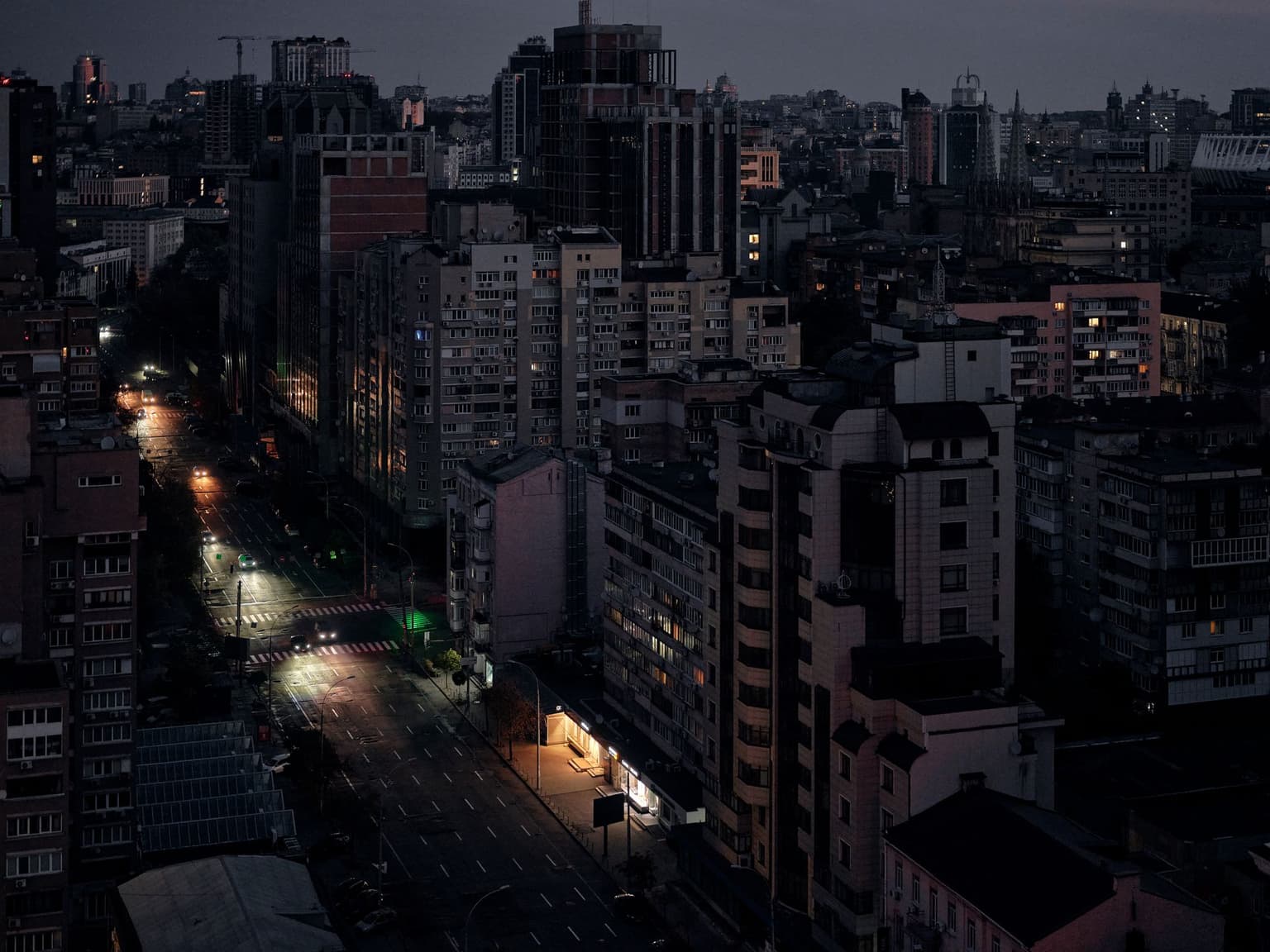
As temperatures are falling in Kyiv, so are rent prices, with residents leaving the capital to escape Russian bombardment and the prospect of a winter without heating and electricity.
Over the last two months, the number of long-term rentals listed on Kyiv's market shot up by 66%, Alona Babko, head of public relations at LUN, a leading real estate portal in Ukraine, told the Kyiv Independent.
The sharp rise in vacancies started in August, as Russia stepped up attacks on Kyiv, causing civilian casualties to increase. The trend has deepened with renewed strikes on energy facilities and fears that the capital will endure another winter without heating and electricity, prompting residents to pack their bags and look elsewhere.
With more housing options on the market, and the competition it brings, rental prices have been declining since July, falling by 6% in the last month to an average of 17,000 hryvnias ($377) per month for a one-bedroom apartment — the lowest in a year — Babko said.
"We’re now seeing a trend of more and more people vacating their apartments. A lot of people are moving to safer places. Some are going abroad, while others are choosing Ukraine’s western regions," Oleksandra, a realtor in Kyiv, told the Kyiv Independent.
"It’s not just individuals, either. Companies that had branches here are relocating them to places such as Lviv and Ivano-Frankivsk. Naturally, the people who work for those companies are moving there, too."

Oleksandra, as well as a landlord the Kyiv Independent spoke to for the story, declined to give their last names, citing security concerns that are not evident given the nature of the story. The request to remain anonymous may say more about the informal nature of Ukraine’s real estate sector.
Anna, a landlord who declined to provide her full name, hasn’t been able to rent out her empty apartment in central Kyiv for around a month. It used to only take her a week to find a new tenant, she told the Kyiv Independent.
Now, she is considering shaving $100 off her rent to attract renters, although she still hopes to find someone to pay the full price — $800.
read also
Unsurprisingly, rents are cheapest in parts of the city that frequently suffer attacks — usually the industrial neighborhoods on the eastern side of the Dnipro River. With Russia continuously targeting warehouses, factories, and power plants in these districts, demand is dropping as some residents relocate to the western side of the city.
The recent Russian strikes on Kyiv’s bridges connecting the western and eastern banks have also alarmed residents, Olena Haydamakha, president of Ukraine’s Association of Realtors, told the Kyiv Independent. After the first wave of strikes in early October, her colleagues in western Ukraine were flooded with calls from anxious Kyivans.
"Most people said they wanted to secure an apartment in advance. If the situation deteriorated, they would then move to that apartment," she said.
While Kyiv’s rents fall, prices in cities in western Ukraine are soaring, Babko said. Currently, rents in Lviv, Uzhhorod, and Ivano-Frankivsk have surpassed those in Kyiv — historically the country’s most expensive city — even rivaling prices in EU capitals, drawing criticism on social media.
"I read the news about the hard winter, the problems with power and heating, and decided to see how much it costs to rent housing in other Ukrainian cities. I found a one-room apartment in Uzhhorod for $1,500 a month. So if you decide to leave the capital, you’ll have to pay three to five times more for housing?" one Facebook user from Vyshhorod, Kyiv Oblast, wrote on Oct. 11.

But many Kyivans can’t afford to move away because rents are so high in other regions or because they cannot leave their jobs and families.
With no choice but to remain in the city, or because they are reluctant to leave, many are relocating to apartments on lower floors that are safer from drone attacks and easier to access when elevators don’t work during power outages.
Some apartment owners are also installing equipment like gas stoves and battery storage systems to make life more comfortable for renters during blackouts. Anna said she wants to install a $3,000 backup power unit in her apartment to help attract renters.
In online groups for renters, many landlords advertise power units in their properties as part of the deal.
LUN even launched an online map of Kyiv to show which housing units are best prepared for an energy crisis, covering information such as insulation work carried out and which services, if any, operate during power outages, including heating and water.
For now, most relocations from Kyiv are a temporary reaction to the coming winter, Babko said. When it comes to the property sales market, little has changed, indicating that residents aren’t yet willing to permanently give up their homes in the capital, she added.
Anna is optimistic that many people will continue to remain in Kyiv, even over the winter, where there are more job opportunities than in western Ukraine, and rents are cheaper.
"The city will continue to live, work, and function," she said.