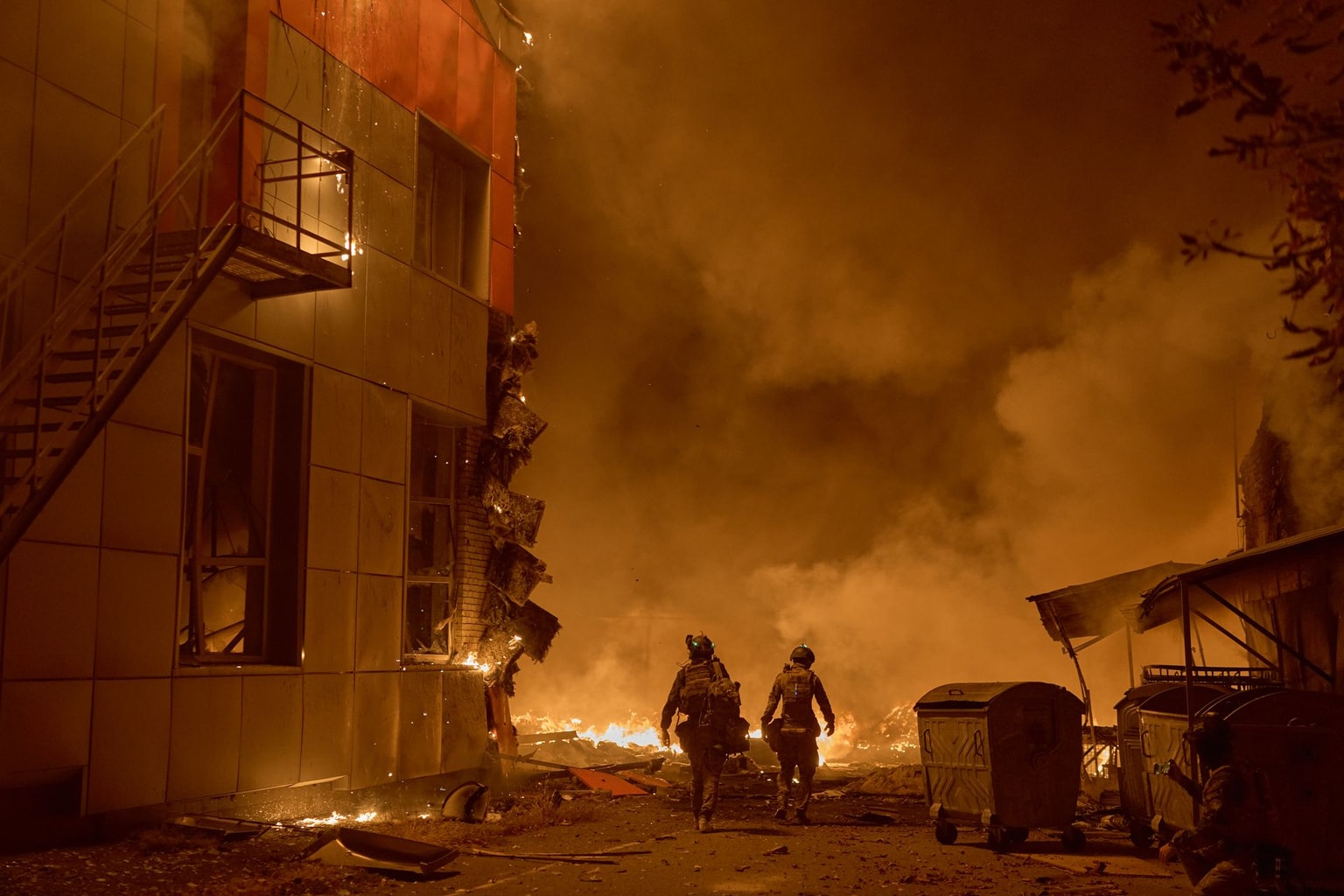
With Kyiv’s air defense crews as they race to keep up with Russia’s jet-powered drones
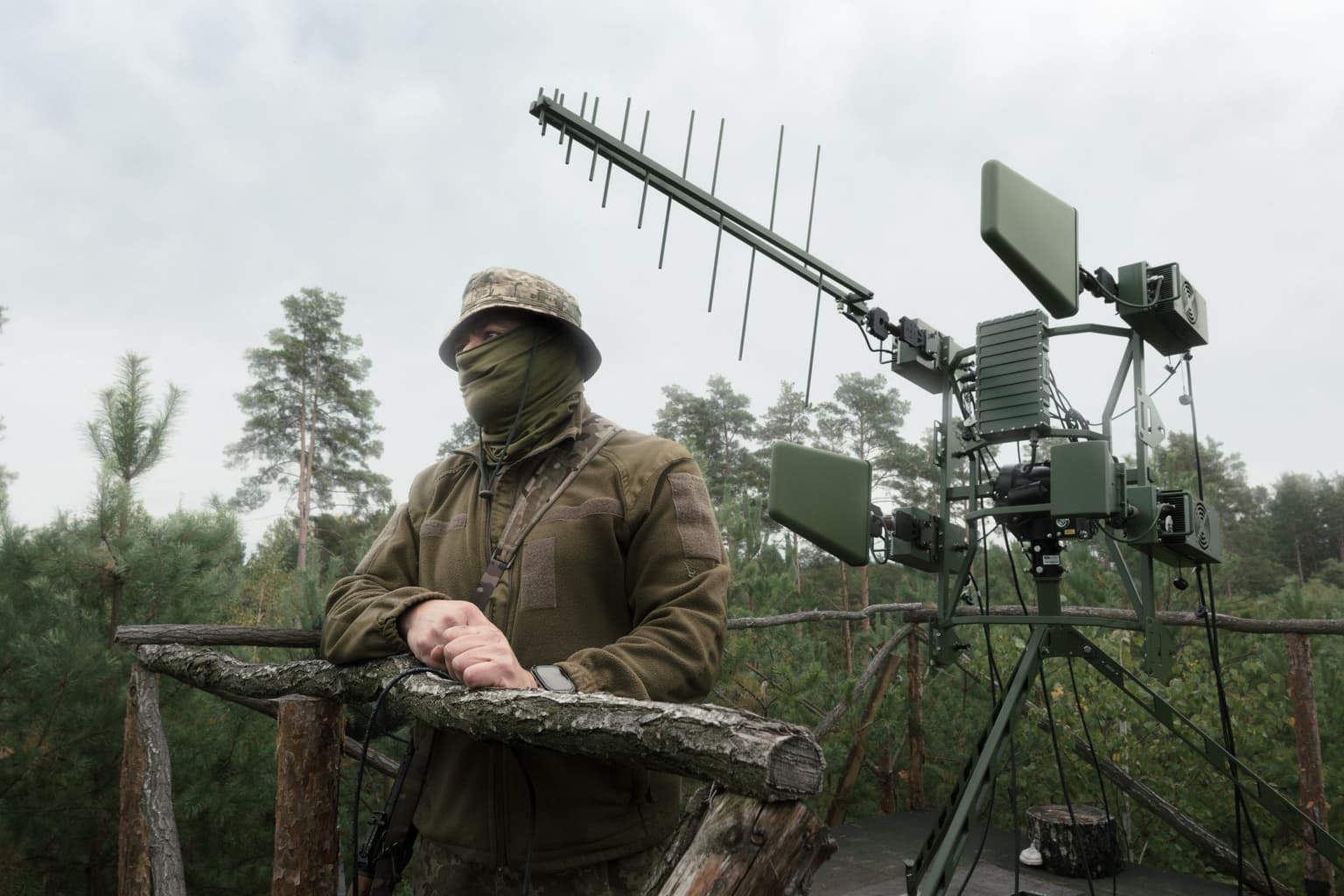
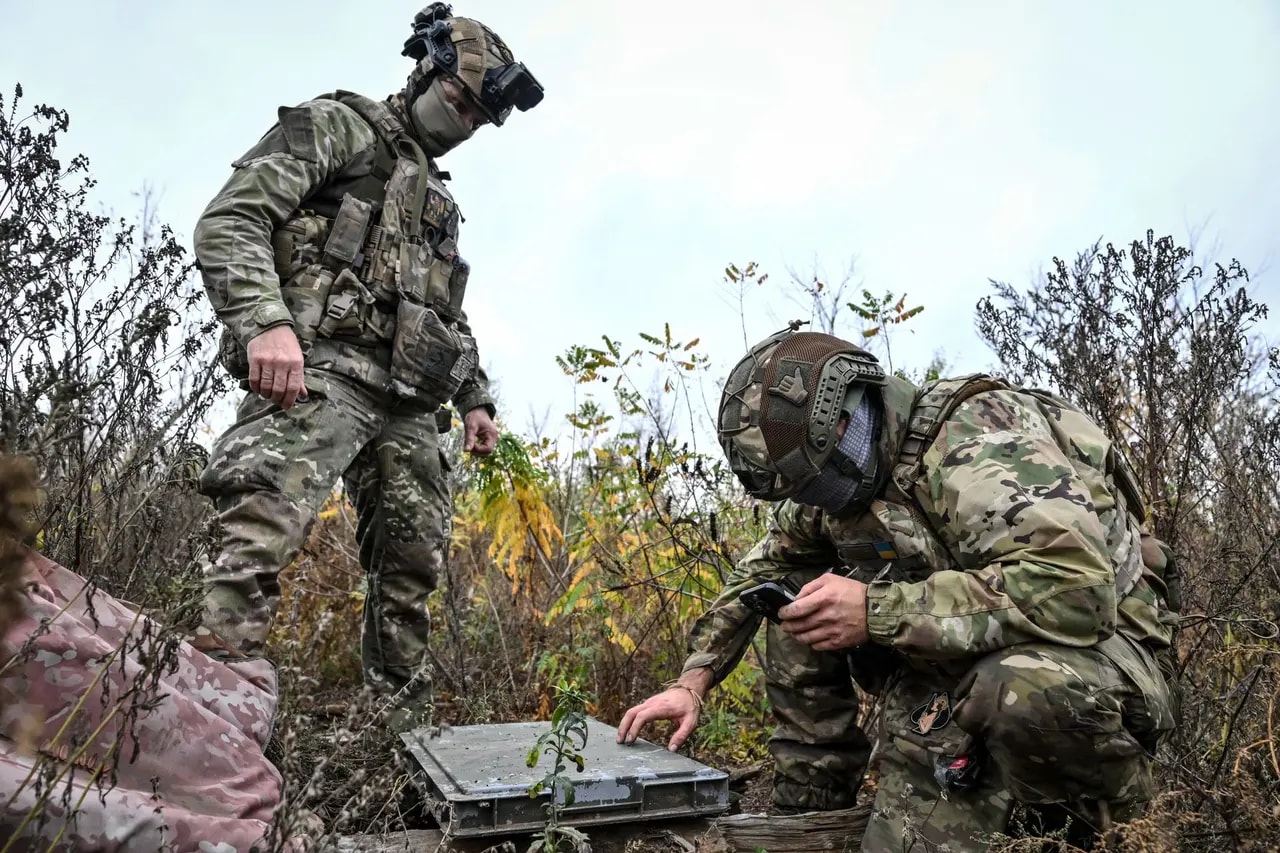
Anton, a soldier with Ukraine's 112th Separate Territorial Defense Brigade, stands beside an Oktava electronic warfare system outside Kyiv, Ukraine, on Oct. 13, 2026. (Jakub Laichter / The Kyiv Independent)
 on Google
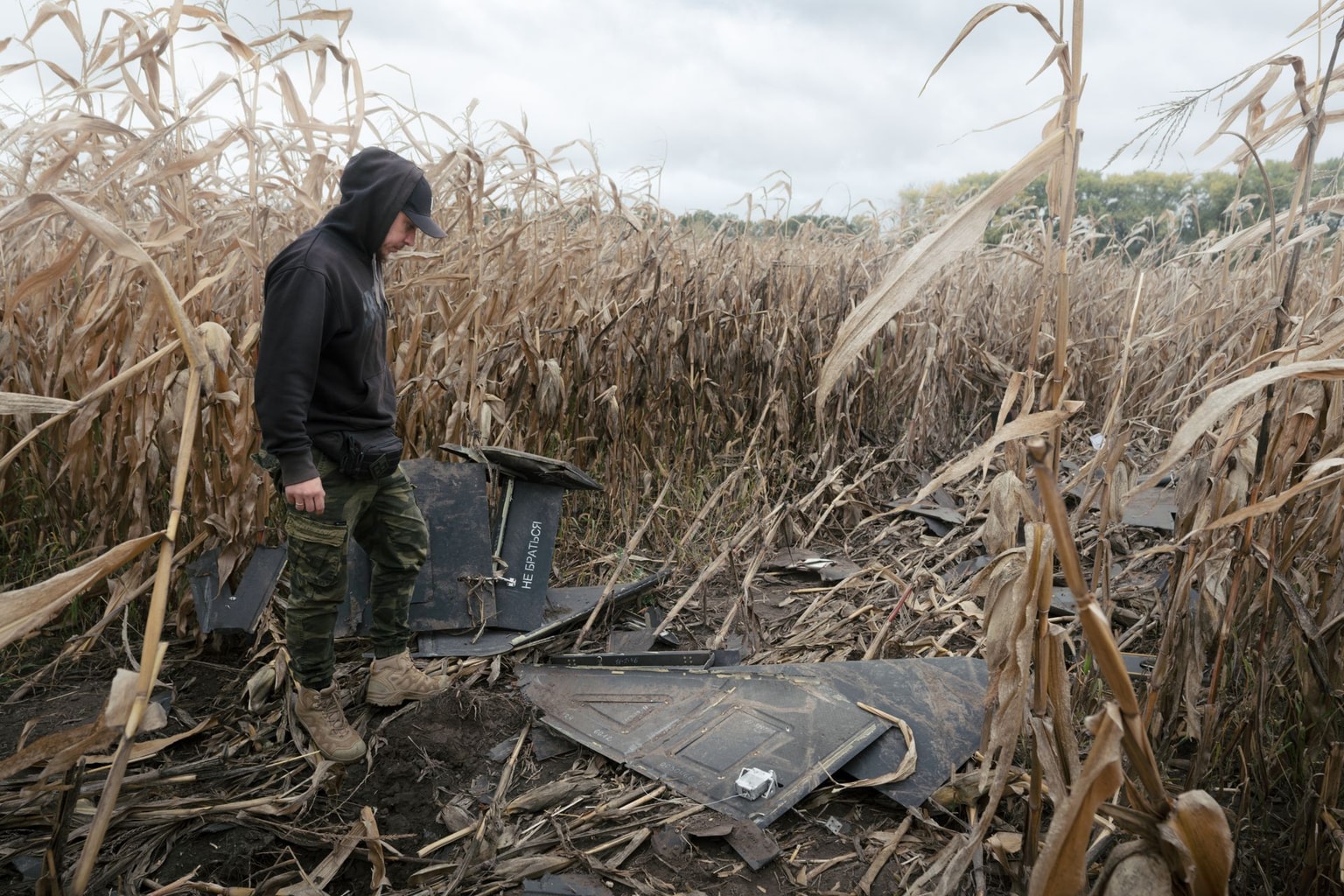
In a cornfield north of Kyiv, pieces of blackened metal are scattered among rows of dried stalks. They are all that remains of a Russian Geran attack drone, shot down by Ukrainian fighter jets as it flew toward the capital during one of Russia's mass aerial assaults.
"Last year we had so many of them," says Halyna Prykhodko, deputy director of the Branytsia division of the agricultural company Zemlya i Volya. "We found three, four, even five in the fields."
Above Prykhodko's land is one of the routes Russian drones take to approach Kyiv. Ukrainian forces try to intercept them over the countryside before they reach the capital and crash into homes and critical infrastructure.
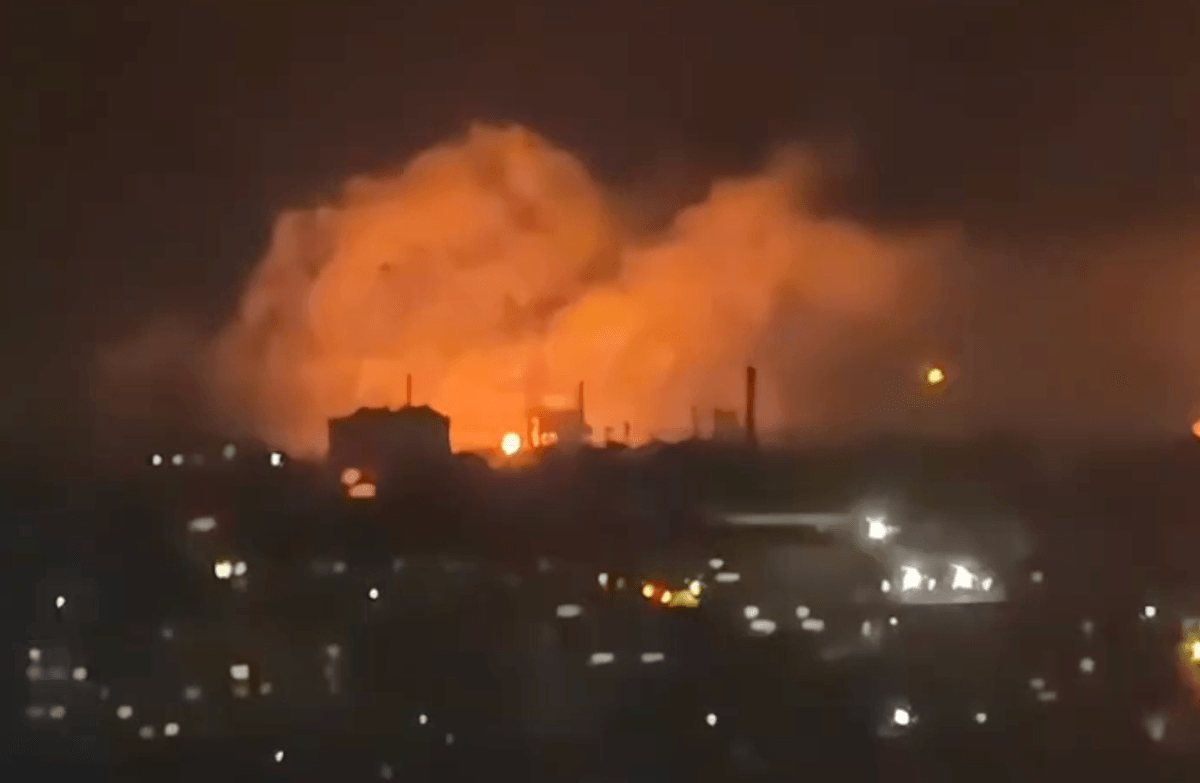
Since late summer, Russia has been terrorizing Kyiv and Kyiv Oblast with jet-powered drones, adding to the now-familiar threat posed by conventional Shahed-type drones and missiles. Between larger assaults, successive waves of jet-powered drones now arrive day and night.
Defending Kyiv requires a layered system of air defenses, from sophisticated missile systems and fighter jets, to mobile machine-gun and interceptor-drone units.
Over two days, the Kyiv Independent accompanied soldiers of the 112th Territorial Defense Brigade at several positions outside the capital, observing how their units hunt incoming Russian drones and adapt to Russia's evolving weapons and tactics.
A Coordinated Effort
Radar stations and other detection systems are the first link in a wider system coordinating Kyiv's air defenses. They track approaching Russian drones, relaying information through command posts that direct the response of individual units.
"Every unit is subordinate to its own combat command post," says Senior Sgt. Serhii, who leads a mobile fire group. His surname is withheld for security reasons. "It gathers all the information from higher commanders and other groups, and issues orders to each group."
His three-man mobile fire group is armed with a truck-mounted Browning M2HB heavy machine gun, a SkyLock targeting system, and thermal-imaging equipment.
One soldier mans the machine gun, another commands the group and operates observation equipment, and a third covers them with an assault rifle.
When a drone approaches their sector, the soldiers receive information about its direction, altitude, and distance. They must then locate it using their observation equipment, adjusting for discrepancies between the target's reported and actual positions.
The crews operate within designated firing sectors, limiting where they can engage targets to avoid endangering civilians or friendly aircraft.
The gunner must account for the target's speed, distance, and direction of travel, calculating how far ahead to fire so that the bullets and aircraft arrive at the same time at the same point.
"Firing isn't difficult. Making the calculations is."

"Firing isn't difficult. Making the calculations is," explains Volodymyr, a soldier in the mobile fire group.
Repeated practice and experience are essential, he says, until judging a target's movement and calculating the necessary lead become almost instinctive.
Weather conditions, altitude, and speed further determine whether a target can be engaged. Thermal-imaging equipment helps soldiers detect drones at night, but cloud cover can obscure them, and faster, higher-flying jet-powered drones present greater difficulties.
"Within five seconds I have to engage it as much as I possibly can," says Volodymyr.
It's his birthday when the Kyiv Independent visits the mobile fire group. He spends it at the group's position, surrounded by fields.
"Grand celebrations," he jokes when asked how he plans to mark the occasion. "I've got these wide fields. I can walk over there, walk over here. Not many options."
Other crews use shoulder-fired missiles to engage targets beyond the reach of machine guns.
"Bodya," another soldier, operates a Soviet-designed 9K38 Igla man-portable air-defense system, which uses a heat-seeking missile to pursue aerial targets. Even with a guided missile, soldiers have very little time to engage a fast-moving target.
With conventional propeller-driven Shahed-type drones, Bodya explains, the sound of the approaching engine can provide some warning. Jet-powered drones and cruise missiles, however, travel much faster, and by the time crews hear one, it can be almost on top of them. Some targets pass through his unit's engagement area in as little as 20 seconds, he says.

Ukraine primarily uses systems such as NASAMS and IRIS-T against Russian cruise missiles, aircraft, and other aerial threats, but to intercept ballistic missiles, Ukraine has to rely on its scarce arsenal of U.S.-made Patriot interceptors.
Interceptor drones have become another means of bringing down Russian targets, particularly conventional Shahed-type drones, without expending costly surface-to-air missiles.
A soldier with the call sign Gendalf shows the Kyiv Independent the Sting interceptor drones operated by his unit. Equipped with cameras, the interceptor drones transmit live video to operators who guide them toward incoming Russian drones.
But Russia's increasing use of jet-powered drones, some capable of flying at about 600 kilometers per hour, has created a problem for operators like Gendalf.
Reaching about 320 kilometers per hour at full throttle, the conventional rotary-wing interceptors available to his unit struggle to match the jet-powered drones' speed, he says.
Beyond these different means of kinetic interception, electronic warfare provides another layer of defense by targeting the signals Russian drones rely on.
At an electronic warfare unit, Maj. "Secret," the brigade's head of electronic warfare and electronic intelligence, demonstrates a sensitive spectrum analyzer developed within the brigade. The device allows soldiers to detect and analyze radio-frequency signals, including those transmitted by Russian drones.
"Here we see all the signals that are nearby," he says, pointing to a series of transmissions appearing on the screen.

"First, we have to detect the signals and understand what we need to jam," Secret explains. "What matters is that there's data exchange," he says. "I can see the flow of data in real time."
Electronic warfare can disrupt an incoming drone in two main ways. First, jamming interferes with the signals it relies on, potentially severing its connection to an operator. Second, spoofing feeds the aircraft false information, potentially misleading its navigation or diverting it from its intended course.
But disrupting a communication link does not necessarily stop an attack. Some drones can continue toward preprogrammed coordinates without further instructions, meaning electronic warfare can only complement kinetic interception.
The Race to Adapt
One of the most significant developments since late summer has been Russia's growing use of jet-powered Geran drones. Some variants fly at altitudes of 5 to 6 kilometers, beyond the effective range of mobile machine-gun crews.
Soldiers defending Kyiv also describe Russian drones changing their routes and maneuvering when Ukrainian interceptors approach. Some newer Geran variants carry cameras and mesh radios that allow operators to receive a live video feed and redirect the aircraft during flight.

Ukraine is adapting its interceptors in response.
On Oct. 18, Andrii Hrytseniuk, then head of Brave1, Ukraine's government-backed defense innovation initiative, said seven types of Ukrainian interceptors had already successfully intercepted jet-powered Russian drones. Twenty-two teams joined the effort to develop high-speed systems, including models powered by miniature jet engines.
The government had ordered more than 1,000 of these new interceptors, but production is still being expanded, he said.
A similar race is playing out in electronic warfare.
The electronic warfare unit studies the wreckage of drones brought down by Ukrainian forces and examines their electronics to understand how Russia is adapting its weapons.
"We dig around in these burned-out remains, looking at how everything is configured, what electronic components they use, which antennas, which parts," Secret says.
Russian forces continually modify the communications systems carried by their drones, forcing Ukrainian units to adapt the equipment used to detect and disrupt their signals, Secret says.
"They change the signal's form, and we adapt to that form," he says.
Equipment purchased just a year earlier may no longer be as effective against modified drones. But older systems cannot simply be discarded, since Russian forces can still use the technologies those systems were designed to counter.

Secret compares the process to constantly renovating an apartment without ever being able to remove the old wallpaper.
"Every six months, every three months, the fashion changes," he says. "And without stripping off the old wallpaper, you have to glue new wallpaper over it."
"And the wallpaper is, first of all, extremely expensive and very difficult to obtain," he adds.
Russia is also changing its tactics to overwhelm Ukrainian air defenses.
"They're coming in from all directions," one air defense officer says, describing a hypothetical attack involving 15 drones.
Most might be shot down, but a handful could get through. He believes Russian forces study the results to identify routes for subsequent strikes.
"They're probing, feeling things out," he says. "Then, yes, everything's clear, a mass attack."
Meanwhile, the pace of attacks is placing a growing strain on the soldiers defending Kyiv.
"The tactic is constant exhaustion, non-stop," says Serhii.
During particularly intense periods, he says, his men have worked 20-hour shifts, leaving just four hours for sleep. And during the hours spent on alert, some targets remain beyond their reach.
One machine gunner recalls a jet-powered Russian drone passing so high overhead that he could barely make it out.
"I couldn't even see it with my eyes," he says.
But he knows how to calculate the lead needed to hit a moving drone.
"I'd tear it apart if it were lower," he says.