'Manifestly unlawful' — Ukrainian court bans publication of investigative report on top official's brother
 on Google
Editor's note: The story has been updated, and a response from the Pechersk District Court has been added.
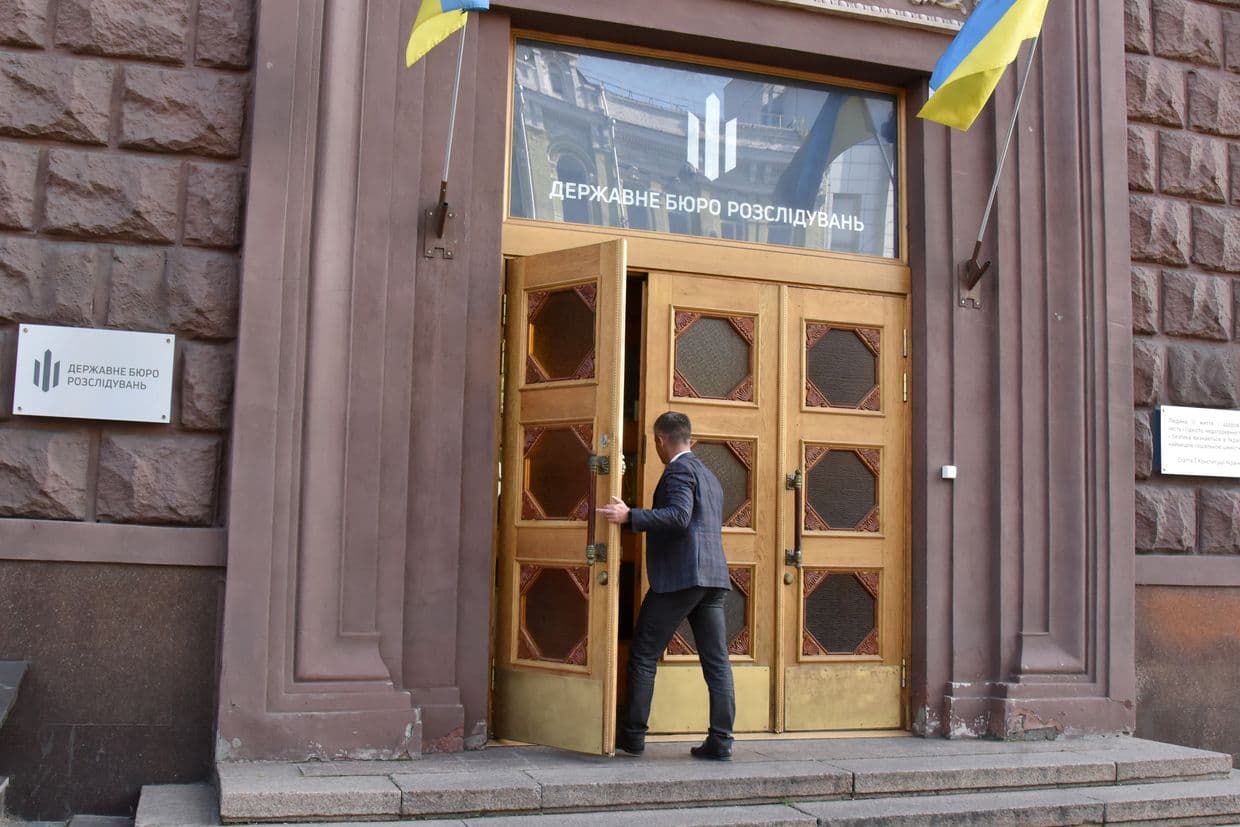
In what appears to be an unprecedented move, a Ukrainian court has banned journalists from publishing an investigative report on the brother of Oleksiy Sukhachov, head of the State Investigation Bureau.
Serhiy Vovk, a judge of Kyiv’s Pechersk District Court, on July 6 banned the Anti-Corruption Action Center, the media outlet Slidstvo.info and journalist Alina Stryzhak from publishing an investigation into 143 properties reportedly owned by Sukhachov’s brother Oleksandr, a Kharkiv-based businessman. The court ruling was published by the Anti-Corruption Action Center on July 7.
The State Investigation Bureau did not respond to a request for comment, while the Pechersk District Court denied the accusations of wrongdoing.
Although courts have previously upheld libel lawsuits against Ukrainian media, a ban on an investigative report before publication appears to be unprecedented.
The court decision comes amid accusations that the Ukrainian authorities have cracked down on opposition media and failed to investigate the assassinations of journalists. The EU has also urged Ukraine to abolish the wartime merger of TV channels, adopt legislation to fight the influence of vested interests on the media, ensure a competitive media market and introduce an independent regulator.
"The court's ruling is manifestly unlawful and violates the fundamental rights of journalists and the public to gather and disseminate information of public interest that is publicly available about the country's highest-ranking officials," Olena Shcherban, a deputy executive director at the Anti-Corruption Action Center, said. "It is a direct violation of Article 10 of the European Convention on Human Rights, Ukraine's Law on Information, and Ukraine's Law on Media. It also represents a continuation of the pressure being exerted on journalists and the Anti-Corruption Action Center."
The ruling was issued after Parkovy-2, a company allegedly linked to Oleksandr Sukhachov, filed a motion with the Pechersk Court. It is a pretrial injunction issued before a lawsuit is filed.
"In other words, the court has not yet considered the case on its merits because it has not even received the lawsuit yet — nor has the Anti-Corruption Action Center," the watchdog said.
According to the ruling, the plaintiff intends to file a lawsuit seeking to bar the Anti-Corruption Action Center and Slidstvo.info from collecting any information about either Parkovy-2 or Oleksandr Sukhachov.
Parkovy-2 claimed that the publication of the investigative report would cause significant damage to the company.
The company claimed that, unless it is banned, "it will become impossible to effectively protect the applicant's rights because, once confidential information — including personal data and information constituting a trade secret — is published online, it can no longer be completely removed from the Internet."
"This court ruling sets a highly dangerous precedent," Daria Kaleniuk, executive director of the Anti-Corruption Action Center (AntAC), said. "It amounts to a direct restriction on freedom of speech and a ban on publishing an investigation that is clearly in the public interest. We believe the authorities are simply using the AntAC and Slidstvo.Info as a test case to see whether they can use this mechanism to prevent journalists from exposing corruption. Failure to comply with the ruling could result in fines, potentially even criminal prosecution, as well as a range of other consequences. We will certainly appeal it."
Oleksiy Sukhachov, whose brother was the subject of the investigation, is highly controversial.
Since its creation in 2016, the State Investigation Bureau has faced the accusations of being a political tool of the President's Office. Sukhachov was appointed as the bureau's head in 2022 as a result of a non-transparent contest that anti-corruption activists described as fake and politicized.
The Khmelnytsky branch of the State Investigation Bureau also destroyed secret materials in several major criminal investigations immediately after Russia launched its all-out invasion, the Prosecutor General’s Office said in July 2022. The case files are linked to several pro-Kremlin politicians, and their alleged destruction prompted speculation that treason or corruption is involved.
Serhiy Vovk, the judge who issued the ruling banning the investigative report, is no less controversial.
He handed a four-year prison term to pro-Kremlin ex-President Viktor Yanukovych's opponent Yury Lutsenko in 2012 on abuse of power charges. The European Court of Human Rights has declared that Lutsenko’s prosecution was politically motivated.
Dejure, a judicial watchdog, has also criticized Vovk for unfreezing the assets of a Russian-owned company and burying a bribery case against President Volodymyr Zelensky’s Deputy Chief of Staff Oleh Tatarov by taking it away from the National Anti-Corruption Bureau (NABU).
In 2020 Serhiy Vovk issued a ruling to take away from the NABU a high-profile case against his namesake Pavlo Vovk, an ex-judge considered to be the symbol of judicial corruption in Ukraine.
Vovk has also repeatedly upheld controversial libel lawsuits filed by Andriy Portnov, Yanukovych's late deputy chief of staff.
In October Vovk extended the detention of NABU detective Ruslan Mahamedrasulov in a controversial case that anti-corruption activists believe to be a political vendetta.
Vovk has denied the accusations of wrongdoing.
"With regard to the widespread claims in the public sphere that the defendants are obstructing journalistic activity (through censorship or otherwise), it is important to understand that both international and domestic law recognize that the right to free speech may, in certain circumstances, be lawfully restricted by the state or by the courts," the Pechersk District Court told the Kyiv Independent. "During periods of martial law, such restrictions may extend further in certain respects."
The court said that the "interim measures are, by their nature, intended to temporarily restrict the exercise of certain rights, but only until the dispute has been resolved on the merits and the court's judgment becomes final." It also argued that "the law also provides safeguards to ensure a fair balance between the parties' rights."
"That does not mean, however, that the information can never be disclosed," the court said. "It simply means that it is premature to address that question before the dispute has been resolved on the merits, since the injunction is only temporary."