Inside Ukraine's world of naive art — and the Gunia aesthetic it inspired
 on Google
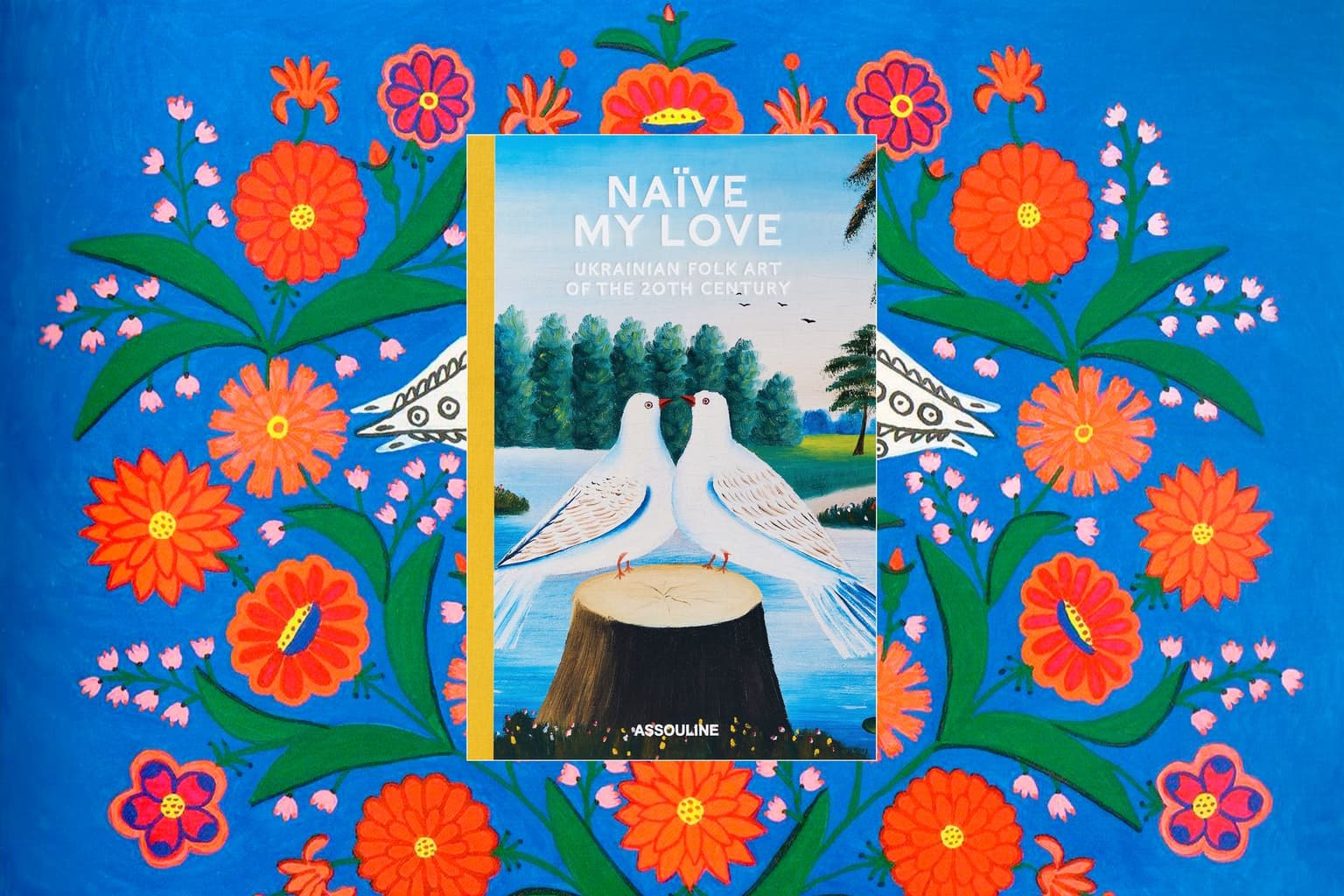
A cat's fur for a brush, crushed petals for paint, and an eye for beauty — as it turns out, that's all some Ukrainian artists needed to make some of the most distinctive paintings of the 20th century.
"Naive My Love," a new coffee table book by French publisher Assouline in collaboration with Ukrainian fashion and design brand Gunia Project, celebrates the bold colors, imaginative motifs, and deeply personal visual language of Ukrainian naive and folk art.
The book's visuals stand on their own, but they are accompanied by texts that trace the origins of naive and folk art, along with short biographies of about 40 self-taught Ukrainian painters and sculptors, featuring examples of their painting, embroidery, carving, and other decorative arts.
While naive and folk art overlap in themes, they differ in motivation and technique — folk art is rooted in communal traditions passed down through generations, while naive art is typically created by self-taught artists expressing a highly personal, individual vision.
As "Naive My Love" points out, these works — created by Ukrainians for their own enjoyment — stood in quiet defiance of socialist realism, the only form of art officially sanctioned in the Soviet Union for those hoping to build a career. Their personal, heartfelt creations offered an alternative to the state-prescribed aesthetic, expressing individuality and resistance through art.

The most famous of all the Ukrainian naive artists is Maria Prymachenko (1909-1997), whose storied life in Kyiv Oblast inspired much of her work: she walked with a cane after contracting polio as a child, survived the Holodomor, raised her son alone after his father died fighting in World War II, and lived through the Chornobyl nuclear disaster.
Her art is most memorable for its saturated colors and fantastical beasts. The book includes paintings such as "The Beast of War," a massive, snarling brown beast that takes up most of the canvas. However, beneath the beast is a red flower hiding in plain sight — a reminder that even when terrible events seem to dominate day-to-day life, beauty still finds a way to exist in the world.
Artist Polina Raiko's (1928-2004) work, which became more widely known through Russia’s full-scale war against Ukraine, is also featured in the book. At 69, Raiko began painting the walls inside her home in Oleshky to cope with a series of family hardships — the colorful doves and angels that adorned her walls represented her desire for inner peace.
"I was working in my garden, got tired, painted a dove, and rested. It was joyful. It was like I wasn't alone. I looked and looked at it — could I have really done that? No. But I did. I couldn't believe myself. And I was so, so joyful in my soul," Raiko said of her work, as quoted in the book.

The house soon attracted the attention of locals and people from across Ukraine, and it was eventually designated a national heritage site. However, Raiko's one-of-a-kind house was almost completely destroyed in the summer of 2023 after Russia blew up the Kakhovka Hydroelectric Power Plant dam, flooding Kherson Oblast and neighboring southern regions.
Oleshky has been under Russian occupation since the early days of the full-scale invasion. Residents face severe shortages of food, water, and electricity, while mined roads, constant drone attacks, and interrogations by Russian troops at checkpoints make it almost impossible to evacuate safely.
It was only a matter of time before Gunia, as a brand, released a book about art. As they describe in the book, objects such as a rushnyk — a traditional embroidered cloth that is personalized in every home — can shape and inspire new directions in product development. That's why expeditions are crucial for the brand's designers: they help them better understand and reinterpret Ukrainian folk art, giving age-old traditions a fresh, contemporary twist.