Ukraine war latest: Kyiv targets Moscow for second day in a row following record drone assault
 on Google
Key developments on June 19:
- Kyiv targets Moscow for second day in a row following record drone assault;
- Moscow Oil Refinery halts operations after largest-ever drone attack on Russian capital, General Staff says;
- US senators propose using frozen Russian assets to support Ukraine's military;
- Australia announces $70 million in arms funding for Ukraine through PURL initiative;
- Western allies pledge $4 billion in military aid for Ukraine at Ramstein summit.
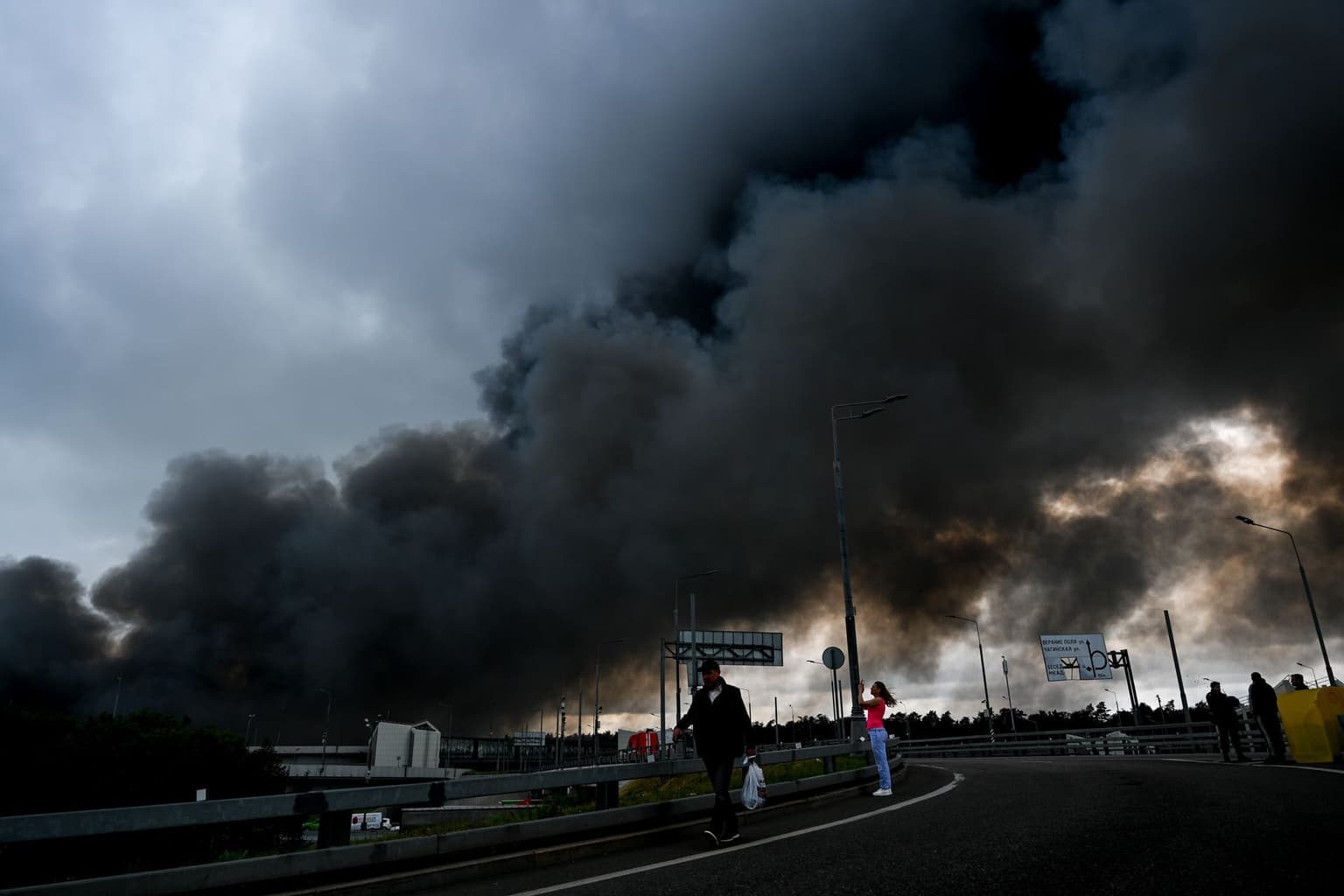
Moscow came under attack by Ukrainian drones for the second day in a row, with Mayor Sergey Sobyanin reporting 37 unmanned aerial vehicles (UAVs) shot down by the city's air defense the afternoon of June 19.
The mayor's report comes a day after the largest Ukrainian drone attack on the Russian capital since the full-scale invasion, with damage to the Moscow Oil Refinery clouding much of the city in dark smoke.
The daytime drones were intercepted over the span of two hours between 12:10 p.m. and 2:12 p.m. local time, according to Sobyanin, who relayed the news of each downed drone on his Telegram account.
Footage uploaded on Telegram channels purportedly showed drones in the air above Moscow, but no hits on ground targets were reported.
The total number of drones launched by Ukraine remains unclear, as Russia only reports drones it says were intercepted. Sobyanin reported a total of 37 intercepted drones during the afternoon strike.
Ukraine does not typically disclose the number of drones used in strikes on , but according to the Russian defense ministry's numbers, the figure now reaches the hundreds on a near-daily basis.
Moscow Oil Refinery halts operations after largest-ever drone attack on Russian capital, General Staff says
Ukraine's General Staff on June 19 confirmed damage to the Moscow Oil Refinery following a large-scale overnight drone attack on the Russian capital a day earlier, reporting that the facility had shut down operations indefinitely.
The military also reported that Ukrainian forces had struck railway bridges and other military targets in Russian-occupied territories, including Crimea.
Ukrainian forces struck the Moscow Oil Refinery in the Russian capital's Kapotnya district overnight on June 18, marking the largest drone attack on Moscow since start of Russia's full-scale invasion and the second attack on the facility in a week.
According to the General Staff, the June 18 strike damaged a combined oil processing unit, three RVS-10000 oil storage tanks, and one RVS-30000 tank at the Moscow Oil Refinery. The facility has suspended oil processing operations for "an indefinite period," the military said.
The Moscow Oil Refinery is one of the largest in Russia, supplying about 40% of the Moscow fuel market and the majority of the region's gasoline. It also provides aviation fuel to all four of Moscow's major airports and has a processing capacity of more than 12 million tons of crude oil per year.
The strikes on the refinery come amid Ukraine's broader campaign of strikes against Russia's oil infrastructure, which have contributed to fuel shortages and restrictions on gasoline sales throughout the country.
The General Staff on June 19 also confirmed recent Ukrainian strikes on targets in the occupied territories.
Ukrainian forces struck railway bridges near Rozdolne and Vladyslavivka in occupied Crimea overnight on June 18, the military confirmed.
Monitoring channels previously reported a drone strike and large fire at the bridge near Rozdolne, which crosses the North Crimean Canal and is located on the Kerch-Dzhankoi railway line.
Russian forces used the bridges for military transportation and logistical supply of occupation troops, the General Staff said.
US senators propose using frozen Russian assets to support Ukraine's military
A bipartisan group of U.S. senators introduced legislation on June 18 that would allow frozen Russian assets under U.S. control to be used for the purchase of military equipment for Ukraine.
The proposed Seized Assets for Battlefield Equipment and Readiness (SABER) Act would expand existing U.S. authorities, allowing Kyiv to use seized Russian assets to strengthen its military capabilities as Russia's full-scale war continues.
The initiative builds on the Rebuilding Economic Prosperity and Opportunity for Ukrainians (REPO) Act, adopted by the U.S. in April 2024. The law granted Washington legal authority to transfer Russian sovereign assets under U.S. jurisdiction to support Ukraine.
The SABER Act would broaden the list of uses, allowing seized assets to fund Ukraine's purchase of defense equipment and services to respond to Russian aggression.
"The REPO Act laid important groundwork for seizing and repurposing billions of dollars in frozen Russian assets to help the Ukrainian people defend their own sovereignty after Russia's unprovoked invasion of Ukraine," Republican Senator John Cornyn said.
"By extending the law's permissible use of funds to replenish Ukraine's arsenal, this legislation would go one step further to helping our ally defend against Russian aggression and force (Russian President Vladimir) Putin to foot the bill for arming Ukraine."
Australia announces $70 million in arms funding for Ukraine through PURL initiative
Australia will contribute 100 million AUD ($70 million) over the next 12 months to the Prioritized Ukraine Requirements List (PURL) initiative for funding the purchase of U.S.-made weapons for Kyiv, the Australian government said on June 19.
Two contributions of 50 million AUD ($35 million) each will be made, after Ukraine became one of the first non-NATO member states to fund the program in December 2025, according to a press release.
"What happens in Ukraine matters here in the Indo-Pacific, which is why it is so important for Australia to stay the course and continue to stand with Ukraine until they find peace on their terms," said Australian Defense Minister David Marles in the press release.
Signed by the U.S. and NATO in July 2025, the Prioritized Ukraine Requirements List (PURL) agreement lays out a mechanism for NATO member states and partners to purchase high-priority equipment for Ukraine.
Twenty-five countries, including two non-NATO member states Australia and New Zealand, have so far joined the initiative.
Western allies pledge $4 billion in military aid for Ukraine, Fedorov says following Ramstein summit
Ukraine's Western allies collectively pledged $4 billion in military aid to Ukraine, Defense Minister Mykhailo Fedorov said following the conclusion of the Ramstein-format meeting in Belgium on June 18.
The latest defense packages, which were announced throughout the day during the NATO defense ministers' meeting and Ukraine Defense Contact Group (UDCG) gathering, primarily consists of air defense missiles, drones, and artillery.
Fedorov said that nearly $1 billion will be directed through PURL to provide Ukraine with interceptor missiles for Patriot air defense systems — with Germany, Norway, Netherlands, and Sweden providing the bulk of the assistance. In total, nine countries confirmed their participation in the PURL initiative.
Ahead of the meeting, German Defense Minister Boris Pistorius said $200 million would be allocated for air defense ammunition and another $200 million for PAC-3 missiles for Patriot systems under the Jumpstart mechanism, a fast-track procurement framework.
Western allies also pledged over $1 billion in drones for Ukraine as Kyiv seeks to supplement its domestic production capabilities.
Earlier in the day, the British government announced it will provide Ukraine with 150,000 drones and more than 350 air defense missiles and radar systems under a new military aid package worth 752 million pounds ($1 billion). The Netherlands announced an additional 500 million euros ($573 million) in aid, including 250 million euros ($287 million) to strengthen Ukraine's drone capabilities.
Fedorov further added that Norway will contribute to the purchase of naval drones.
A total of $540 million was also pledged for long-range artillery ammunition from Norway, Denmark, Spain, Lithuania, and Luxembourg.