Russia's Lavrov claims start of 'real war' with Germany after Moscow accused of Leipzig Airport attack
 on Google
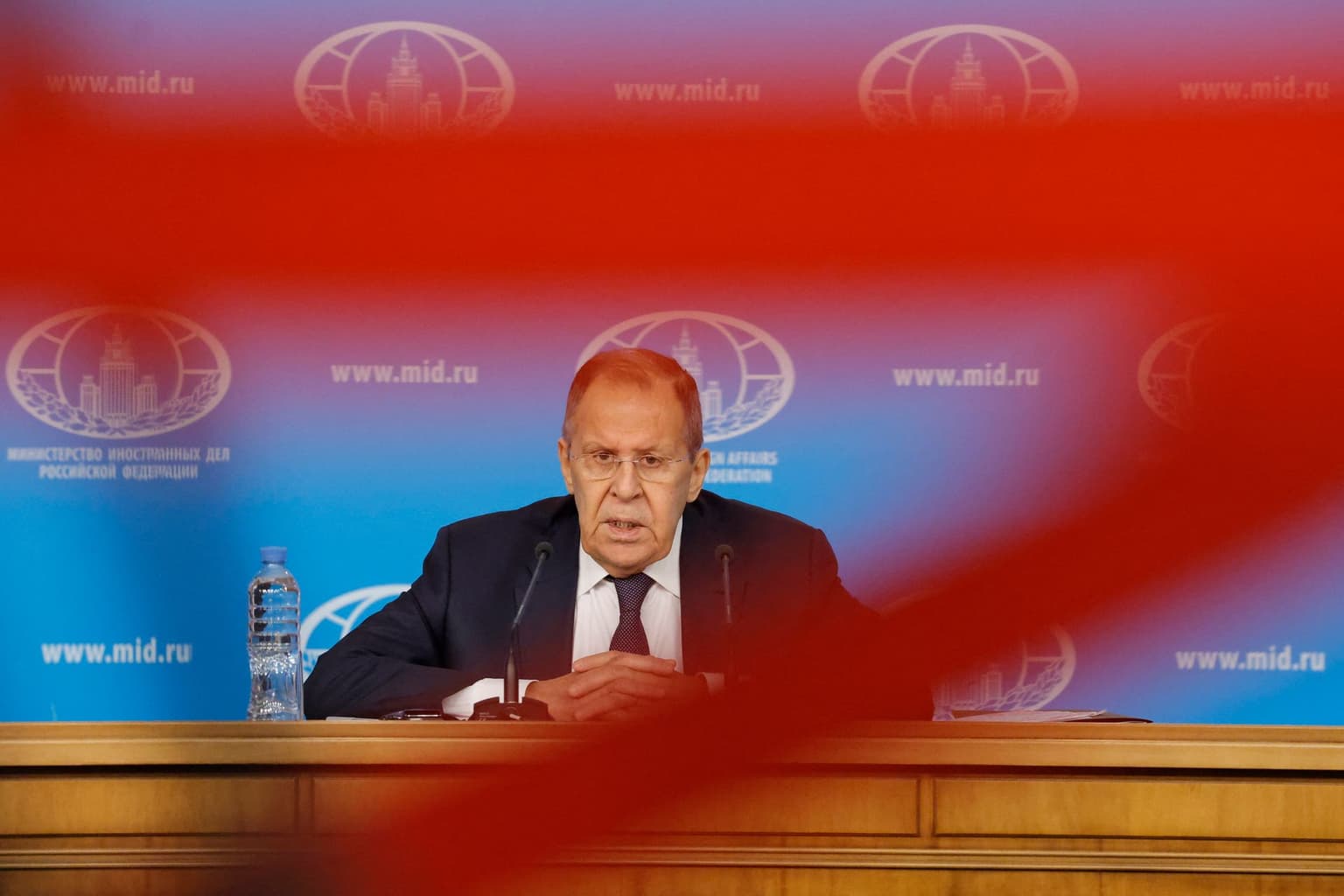
Germany is moving towards "a real war," Russian Foreign Minister Sergey Lavrov claimed in an interview with Kremlin propagandist Pavel Zarubin on Sept. 6 after Berling accused Moscow of a hybrid attack on German soil.
The German government on Sept. 1 named Russia as the culprit behind an attempted drone attack against Germany's Leipzig Airport in early August, the first time Berlin has done so.
Explosive-laden drones were discovered at the airport, with one having damaged a cargo plane. The physical materials discovered pointed to Russia as the attacker, as confirmed by the German government, U.S. intelligence, and media reports.
"Leipzig, the airport... They found some kind of drone there. They said it was a Russian drone, no one bothered to investigate," said Lavrov, after a month of German investigations into the incident, reports Russian pro-Kremlin media Interfax.
"This is, in general, by and large, the beginning of such a real war."
Meanwhile, Moscow forbids people from referring to its four-year full-scale war on Ukraine as a war, instead insisting on the euphemistic "special military operation."
Lavrov's rhetoric stood in stark contrast to the German government, which has been on the receiving end of Russian sabotage.
"We are not at war. But we are the target of hybrid warfare," said German Interior Minister Alexander Dobrindt on Sept. 1.
Lavrov also criticized some of Germany's countermeasures, attempting to equate the democratic Germany of today with the Nazis.
"They kicked the consulate general out of Bonn, announced that they had broken the agreement. The Russian House in Berlin is closing. I remember that before the outbreak of World War II, the Germans also closed their diplomatic missions."
However, some in Germany have mocked the government's response as being too weak or ineffectual.
The country's leading Friday night comedy TV show, "The Today Show" (Das Heute Show) led with a segment on the drone attack on Sept. 4. It suggested German Foreign Minister Johann Wadephul's intention to increase pressure on Russia's shadow fleet was essentially an empty threat.
The effects of Germany's preferred means of retaliation, such as sanctions and intelligence sharing with Ukraine, are less visible to the general public and take time to achieve their full force.
Wadephul's proposed additional EU sanctions, for example, will take a few more weeks to even be adopted. EU countries must reach unanimity on the listings to be included in the bloc's largest sanctions package to date, and the review process takes time.