News from occupied Ukraine: Evictions in Mariupol, more strikes on Crimea, stolen grain
 on Google

This weekly update from the Kyiv Independent aims to shed light on the situation facing Ukrainians living under Russian occupation and the ever-tightening control of information imposed by the Kremlin.
Key news as of May 2:
- Russia begins evictions from "ownerless" apartments in Russian-occupied Mariupol
- Belarus bars Russian conscripts from leaving country, raising risks for Ukrainians in occupied territories
- Ukraine hits Russian Iskander missile storage facility, oil depot in occupied Crimea
- Drone strike kills driver near occupied Zaporizhzhia nuclear plant, IAEA says
- Israel turns away ship with stolen Ukrainian grain in win for Kyiv
- Russian archaeologist freed in US-brokered prisoner exchange vows to return to occupied Crimea
- Melania Trump helped bring back 26 Ukrainian children taken by Russia, Ukraine's ombudsman says
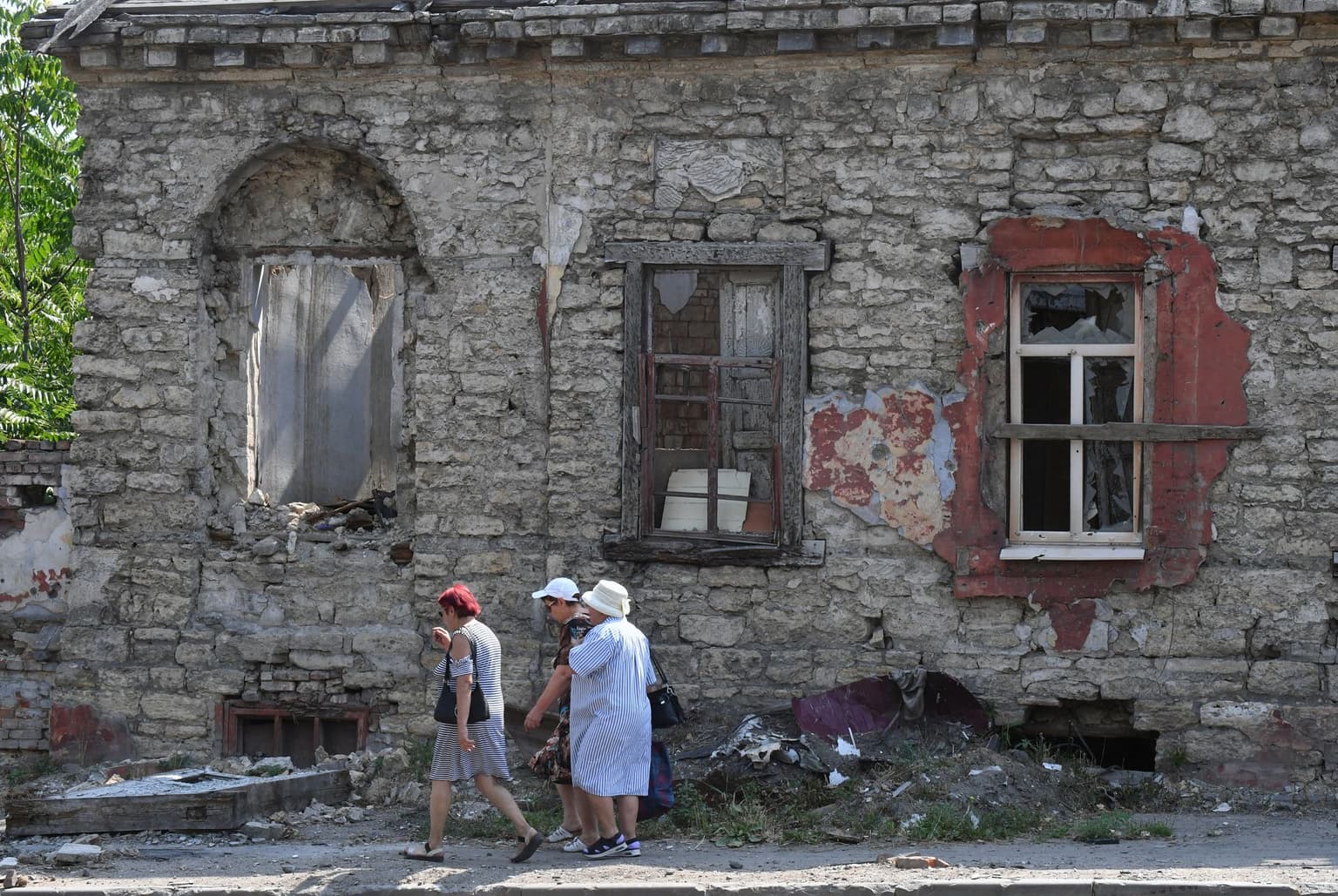
Russia has begun evictions from apartments deemed as "ownerless" in the Russian-occupied city of Mariupol, Petro Andriushchenko, former Mariupol mayoral advisor and head of the Center for the Study of Occupation, reported on April 28.
"As summer approaches, the process of state-sanctioned looting has accelerated," Andriushchenko said.
The housing situation in Mariupol and other occupied areas worsened further in December 2025, when Russian President Vladimir Putin effectively legalized property theft in Ukraine's occupied territories with a decree granting authorities the power to seize residential premises that "show signs of being ownerless."
In many cases, the Ukrainian owners of such properties either fled or were killed during Russia's full-scale invasion.
According to Andriushchenko, Russian-controlled city authorities plan to put most of Mariupol's apartments up for sale or allocate them as staff housing for public-sector employees by June 1.
Denis Pushilin, the head of the Russian illegal occupation administration in Donetsk Oblast, claimed on April 22 that the administration will seize the homes of Ukrainians who have left Mariupol.
On March 11, Ukraine's National Resistance Center reported that the occupation authorities in Mariupol were disconnecting apartments from utilities as part of a process to identify and confiscate housing.
Belarus bars Russian conscripts from leaving country, raising risks for Ukrainians in occupied territories
Belarusian authorities have confirmed that Russian citizens who have received draft notices will be barred from traveling abroad via Belarusian territory, as reported by the independent outlet Belsat on April 29.
According to the report, Belarus and Russia share conscription databases, giving Belarusian security services access to Russian records and allowing them to detain people listed in them.
The Belarusian State Border Committee replied to a Belsat correspondent that a man with Russian citizenship who has received a draft notice cannot leave either Russia or Belarus.
Denys Chystikov, deputy permanent representative of the president of Ukraine in Crimea, wrote on Facebook on April 28 that Ukrainian citizens living in Russian-occupied territories who plan to leave "should pay particular attention" to the development at the Belarusian border.
"While Belarus might have previously 'overlooked' Russian restrictions, the risk of being detained or turned back at the border has now significantly increased," Chystikov wrote.
"Possession of a Russian passport now automatically adds you to their military registries," he added.
The route out of the occupied territories often runs through the Belarusian border, as the only humanitarian corridor is located between the Ukrainian and Belarusian borders at the Mokrany-Domanove crossing.
In occupied territories, Ukrainians are forced to take Russian passports and register for military service, allowing Russia to draft them.
This is despite the fact that the mobilization of civilians violates the Geneva Convention on the Protection of Civilian Persons in Time of War and is regarded as a war crime under international humanitarian law.

Ukraine hit Russian Iskander missile storage facility, oil depot in occupied Crimea
Ukrainian drones struck the Iskander missile storage facility and the oil depot in Russian-occupied Crimea in the attacks on April 28 and 29.
On April 29, a Russian air defense system and oil depot in Crimea were struck overnight, the General Staff reported.
Other targets included an MR-10 radar station, an air defense command post, and a Patrol 4 ground-based radar interrogator on an airfield in Sevastopol, on the southern coast of occupied Crimea, according to the General Staff.
On April 28, an Iskander missile storage facility in Crimea was struck, as reported by Ukraine's Special Operations Forces (SOF).
The storage facility was located on the territory of a former missile base near the village of Ovrazhki, 40 kilometers (around 25 miles) from the city of Simferopol, SOF said.
From the base, Iskander missiles could reach the front lines or rear Ukrainian cities "in a matter of minutes," SOF said.
Drone strike kills driver near occupied Zaporizhzhia nuclear plant, IAEA says
A drone strike on a transport workshop near the Zaporizhzhia nuclear power plant in Russian-occupied Enerhodar killed a driver, the International Atomic Energy Agency (IAEA) said on April 27.
The Enerhodar facility, located in southeastern Ukraine, is Europe's largest nuclear power plant and it generated around 20% of Ukraine's electricity before Russia seized it in March 2022.
IAEA Director General Rafael Grossi warned that attacks near nuclear facilities pose serious risks. "Strikes on or near nuclear power plants can endanger nuclear safety and must not take place," Grossi said.
The IAEA team stationed at the site is investigating the incident and will continue to monitor the situation, the agency added.
Although its reactors are currently shut down, the plant still relies on external power to operate cooling systems necessary to prevent overheating and a potential nuclear accident.
The IAEA has repeatedly warned about the risks of military activity around the plant. Russian forces have stationed troops and equipment at the site, while shelling and drone strikes have been reported in the surrounding area throughout the full-scale war.
Russia claims ownership of the plant following its illegal annexation of Zaporizhzhia Oblast and is reportedly attempting to connect the facility to its own power grid. Ukraine and its partners reject the claim and consider the plant Ukrainian territory under occupation.
read also
Israel turns away ship with stolen Ukrainian grain in win for Kyiv
The Panormitis ship transporting grain stolen from Russian-occupied Ukrainian territories will not unload its shipment in Israel, Ukrainian Foreign Minister Andrii Sybiha said on April 30.
"This demonstrates that Ukraine's legal and diplomatic actions have been effective," Sybiha said on X, after the shipment sparked a diplomatic row between Kyiv and Israel.
The Panama-flagged bulk carrier Panormitis, allegedly transporting over 6,200 tons of wheat and 19,000 tons of barley looted by Russia in Ukraine, is departing the Haifa Bay and heading west, according to maritime traffic tracking services.
Between January and April, 25 vessels from the Russian grain fleet made 50 voyages from occupied Ukrainian ports to third countries, mostly carrying illegal grain shipments, according to Kyiv.
"During this period, over 850,000 tons of grain were exported from the occupied territories of Ukraine," Sybiha said on April 29.
The Ukrainian Foreign Ministry said on April 28 that other countries, including Turkey, Egypt, and Algeria, have accepted similar deliveries.
Read the full report here.
Russian archaeologist freed in US-brokered prisoner exchange vows to return to occupied Crimea
After being freed in a U.S.-brokered prisoner exchange, Russian archaeologist Alexander Butyagin told Russian state-controlled media in his first interview on April 30 that he'll "for sure" return to Crimea, where he conducted illegal excavations since 2014 with the support of occupation authorities.
Butyagin, who was traveling through Poland on his way to a conference, was arrested in December at Ukraine's request. His extradition to Ukraine was approved by a Polish court on March 18, but he was included in a five-for-five U.S.-brokered prisoner exchange on April 28.
"I've only been free for two days. But (I'll go to Crimea) in the summer for sure! Maybe I'll also go to a conference before that — I don't have information yet on whether it will take place this year. But I think I'll find out very soon. Of course, I'd really like to be there," Butyagin told Russian state-controlled media.
In his interview with Russian state-controlled media, Butyagin also thanked the Russian Federal Security Service (FSB) and other government bodies for their efforts to secure his release.
Ukraine decried the archaeologist's release soon after the news broke, declaring that it would continue to pursue all legal avenues to bring him to justice. According to Ukrainian authorities, Butyagin not only continued to conduct illegal archaeological excavations following the annexation of Crimea in 2014, but he also caused nearly $5 million in damages to Ukraine's cultural heritage.
read also
Melania Trump helped bring back 26 Ukrainian children taken by Russia, Ukraine's ombudsman says
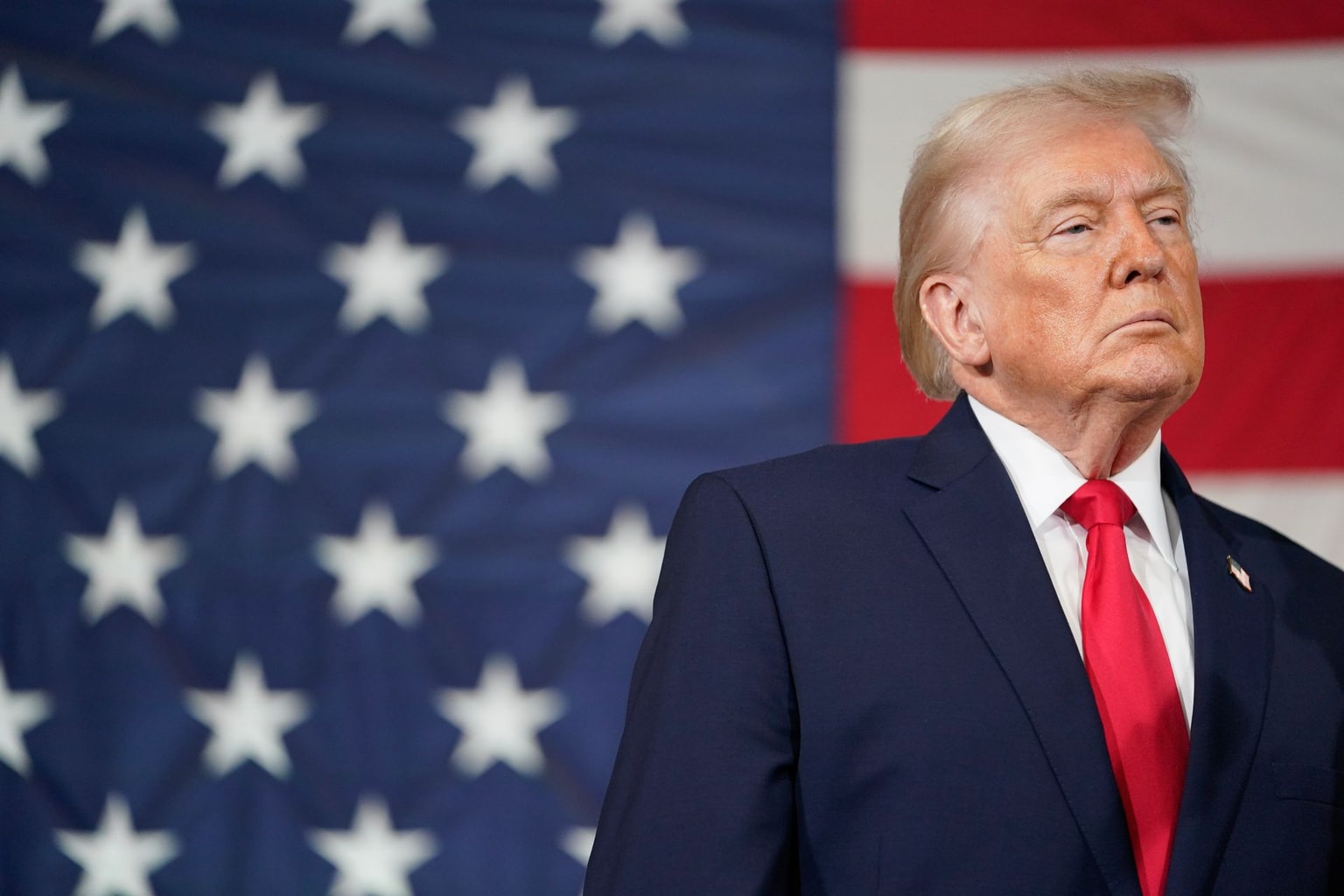
U.S. First Lady Melania Trump has helped to facilitate the return of 26 Ukrainian children abducted by Russia, Ukraine's Human Rights Ombudsman, Dmytro Lubinets, said on April 30.
Lubinets told reporters at the Civil Society and Expert Day event in Kyiv that the first lady has become a key partner in the process of negotiating with Russia to bring Ukrainian children back from Russia and the occupied territories.
"She helps us a lot... It is clear that the involvement of the first lady of the United States makes it (negotiating with Russia) easier for me in some sense," Lubinets said.
Lubinets said Russia "can't avoid" responding to Ukrainian requests when they are relayed through the U.S. He added that Ukraine holds weekly talks about the issue with the first lady.
Ukraine has successfully identified 20,570 children who have been taken by Russia since the start of the full-scale war, but Ukrainian officials estimate the real figure of abducted children could be far higher.
Lubinets puts the number at up to 150,000, while Presidential Commissioner for Children's Rights Daria Herasymchuk has given a range of 200,000-300,000.