Loss of specialists at occupied Zaporizhzhia nuclear plant 'not a major issue,' IAEA chief says
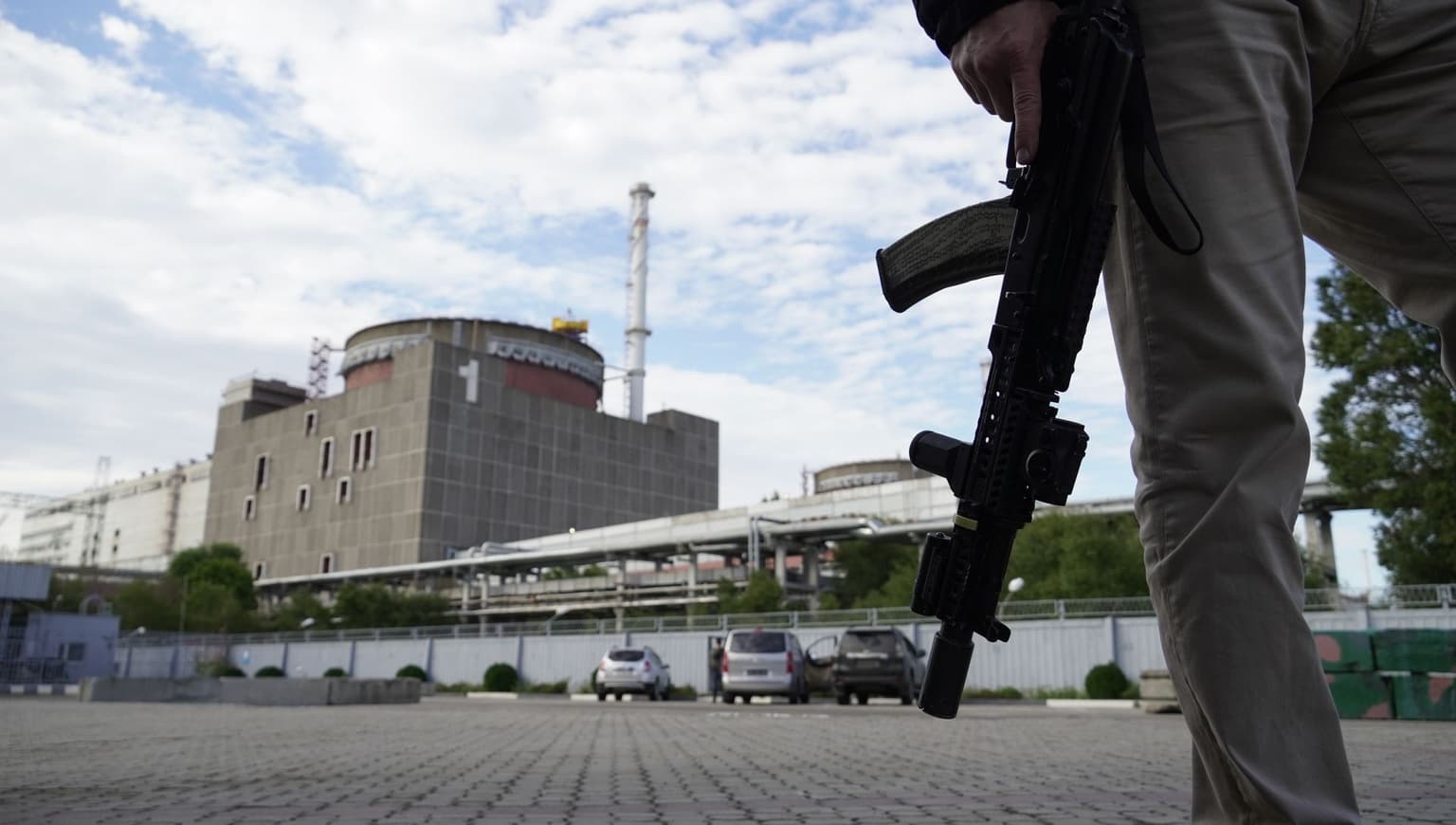
A view of the Zaporizhzhia nuclear power plant after operations were completely halted in Zaporizhzhia, Ukraine, on Sept. 11, 2022. (Stringer / Anadolu Agency)
 on Google
United Nations nuclear chief Rafael Grossi said that the Russian-occupied Zaporizhzhia nuclear power plant is adequately staffed for nuclear safety measures, despite a lack of licensed nuclear specialists at the site.
Grossi arrived in Ukraine earlier this week for his 14th visit to the country during the full-scale war where he signed an agreement with Kyiv to help restore and develop Ukraine’s nuclear energy sector, which makes up over 60% of Ukraine’s energy generation.
Since 2022, the UN’s International Atomic Energy Agency (IAEA) has established missions to oversee nuclear safety at Ukraine’s power plants, including the occupied Zaporizhzhia plant. Ukraine has repeatedly warned that the occupation of the plant poses one of the greatest threats during the war, not just to Ukraine, but worldwide.
Pre-full-scale war, the Zaporizhzhia plant employed 159 licensed specialists — the only people authorized to directly operate the plant’s six nuclear reactors — but now there are only 22 left. This number is far below safety levels, according to Ukraine’s state-run nuclear firm, Energoatom.
The company also said that Russia is illegally detaining, coercing, and torturing its employees at the plant.
When the Kyiv Independent raised the issue during a press briefing in Kyiv on April 26 — the 40 year anniversary of the Chornobyl nuclear disaster — Grossi said that the plant is "adequately staffed, considering it is in cold shutdown."
"I'm looking at the nuclear safety perspective. I'm not involving political considerations which are clear for everybody in terms of the situation there," he said.
"We have a permanent presence there, and in general, the staffing situation is not a major issue. There are other issues, but the staffing issue is not a major issue."

Since 2022, Russia has attempted to restart the plant under the illegal management of its state-run nuclear firm, Rosatom, and connect it to the Russian energy grid.
According to Energoatom, employees at the plant faced pressure, sometimes physically, to sign contracts with Rosatom. At least one employee was beaten to death in a police station after refusing to cooperate with the occupying authorities.
At least 78 Ukrainian power plant employees have been illegally detained and subject to torture and abuse, according to Truth Hounds, a Ukrainian NGO. Energoatom has documented 14 employees in long-term detention, with ten of them sentenced to Russian prison for five to 25 years.
Grossi, who has met with the Russian side several times during the war, including with Foreign Minister Sergey Lavrov last month, said that Kyiv has asked him on different occasions to raise the issue of the imprisoned Ukrainian workers with Moscow. But the results have been mixed.
"In some cases that has led to outcomes. In some cases not. Every time I have a request (from Ukraine), I raise the issue. But it depends on the cases."
Grossi stressed that the IAEA’s mission is to avoid an accident at the plant and to provide an "independent, impartial view" on the situation there. The Russians have made it clear they believe the Zaporizhzhia plant "belongs to them," in contrary to international law, he added.

Moscow has also not acknowledged that it is attacking nuclear power plants, Grossi said. That is despite Russia striking or shelling nuclear plants either directly or within the vicinity 25 times since 2022, according to Dixi Group, a Ukrainian energy think tank.
Last year, a Russian drone penetrated the New Safe Confinement surrounding Chornobyl’s radioactive Reactor Four, causing a fire that raged for three weeks. Experts have stressed that the confinement needs to be repaired by 2030 before the damage becomes irreversible and renders it defunct.
The IAEA is one of the partners involved in helping the repair efforts alongside the European Bank for Reconstruction and Development (EBRD), which is leading the fundraising effort.
Repair works have not yet started as the EBRD seeks to raise 500 million euros ($584 million), with the first tranche expected soon, according to Grossi. The funding was initially expected to be completed by 2027 with repair works starting in 2028, but that is too late, said Grossi.
"The repairs should start as soon as possible and leaving the situation as it is now is problematic. So there will have to be some form of arrangement to try to start earlier."
Grossi doesn’t doubt that the money will be raised as he hasn’t seen "any reluctance anywhere." Neither does he expect the repairs to be delayed or unfinished in time.
"It's impossible. I cannot imagine a situation where nobody would do (that)," he said.
"It is really critical and it has to be done."