Russia's defense giant quietly launches new cryptocurrency despite EU sanctions
 on Google

A cryptocurrency associated with Russia's sprawling state defense corporation has quietly launched just as the European Union targets Russian crypto markets with further sanctions.
Blockchain data reviewed by Kyiv Independent suggests that ruble token RubX, announced by Rostec last year, soft-launched on July 17. RubX later started offering swaps to the widely accepted dollar stablecoin Tether via Telegram on July 24.
Cryptocurrencies have emerged as a key conduit for Russian importers to make payments abroad, since Western sanctions and other measures have imperiled Russian access to the global banking system.
Cut off from SWIFT and correspondent banking, some Russian companies — including those in the defense sector — have shifted to dollar-based crypto tokens to make payments for international trade contracts, including those with China.
RubX joins A7A5, operated by Russia's Promsvyazbank (PSB), a key financial institution catering to the country's defense sector, as Russia's second ruble stablecoin. The stablecoin tokens are pegged 1:1 to ruble reserves.

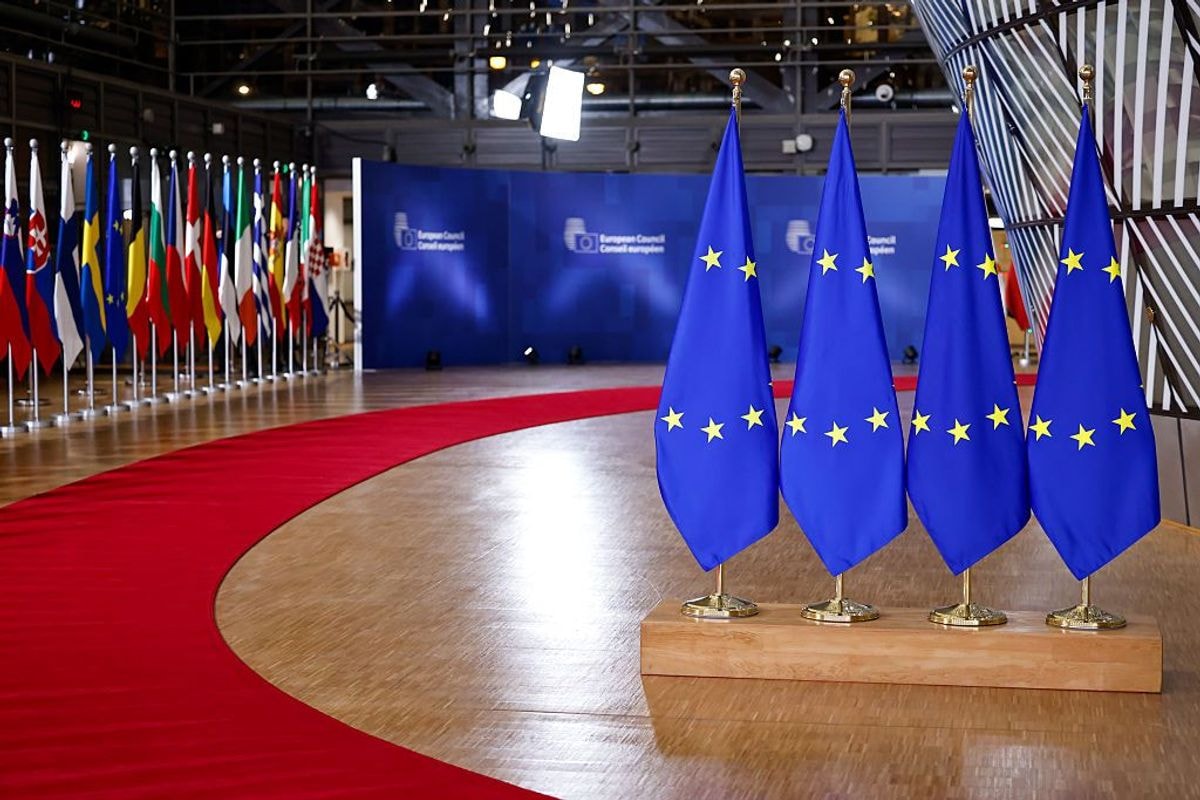
Yet even before RubX began trading earlier this month, the European Union sanctioned the token, as part of the bloc's broader targeting of Russian crypto infrastructure in April. This means that EU entities are prohibited from transacting with the token.
RubX shareholder Dmitry Shumaev told Russian state news agency TASS that it "was no surprise" the token had been sanctioned.
The sanctions listing of RubX "serves as a testament to its technological potential and strategic innovation," Shumaev said.
He claimed that RubX had built-in technical "safeguards against sanctions risk," but did not provide any details as to what they were.
Shumaev said that RubX was preparing to launch a system for making international payments later this year.
Russian legislation does not allow purchases to be made with cryptocurrencies inside the country, and few businesses outside Russia are interested in accepting ruble-denominated payments.
Blockchain expert Richard Sanders told Kyiv Independent that it was too early to analyze RubX trades, but that ruble tokens primarily serve as a payment channel to U.S. dollar stablecoins such as Tether (USDT).
"USDT is used for procurement and sanctions evasion at a mass scale," Sanders said.
"Projects like A7A5 or RubX are better thought of as just another capability in Russia's laundering arsenal. At the end of the day, USDT is still what is actually used. All A7A5 or RUBx changes are where in the process USDT is deployed," he continued.
In this system, a Russian user purchases a ruble token — via bank transfer or potentially other crypto — and then converts to a dollar token such as USDT.
Tether has previously said that it follows a "strict wallet-freezing policy to combat money laundering" and works in alignment with U.S. Treasury sanctions.
The U.S. has not yet imposed sanctions on Russian stablecoins — RubX.

The A7A5 token, part of Russia's A7 bank transfer payment system, has drawn scrutiny from blockchain analytics firms and Western governments over allegations that it has been used for sanctions evasion since its launch in January 2025.
The impact of Western sanctions, and a reported hack of the main crypto-exchange where A7A5 was swapped, has closed down trading routes for the token, rendering it almost dead, analysts note.
So far, RubX has been traded — at low volumes — on two platforms: the global crypto exchange BitMart and the financial services company Finzy. BitMart did not respond to requests for comment.
Currently, RubX's Telegram channel directs potential users to the Finzy Telegram app, where they can purchase RubX tokens via crypto or bank transfer and swap them for USDT.
There is little other information available about Finzy. According to Finzy's terms of service, the app is owned by a company of the same name incorporated in Costa Rica.
Blockchain expert Sanders identified a crypto wallet that may be associated with Finzy and shared it with the Kyiv Independent. That wallet, according to blockchain analysis tool Arkham, currently holds 8.88 billion RubX tokens, or approximately $110 million. Kyiv Independent contacted Finzy for comment but did not receive a response.
Another crypto wallet identified by Kyiv Independent is currently holding 91 billion RubX tokens, which could have a potential value of up to $1.13 billion.
Neither Rostec, nor RubX responded to requests for comment.