Russia alleges 'gross violations' in Armenia election after pro-Russian forces' defeat
 on Google


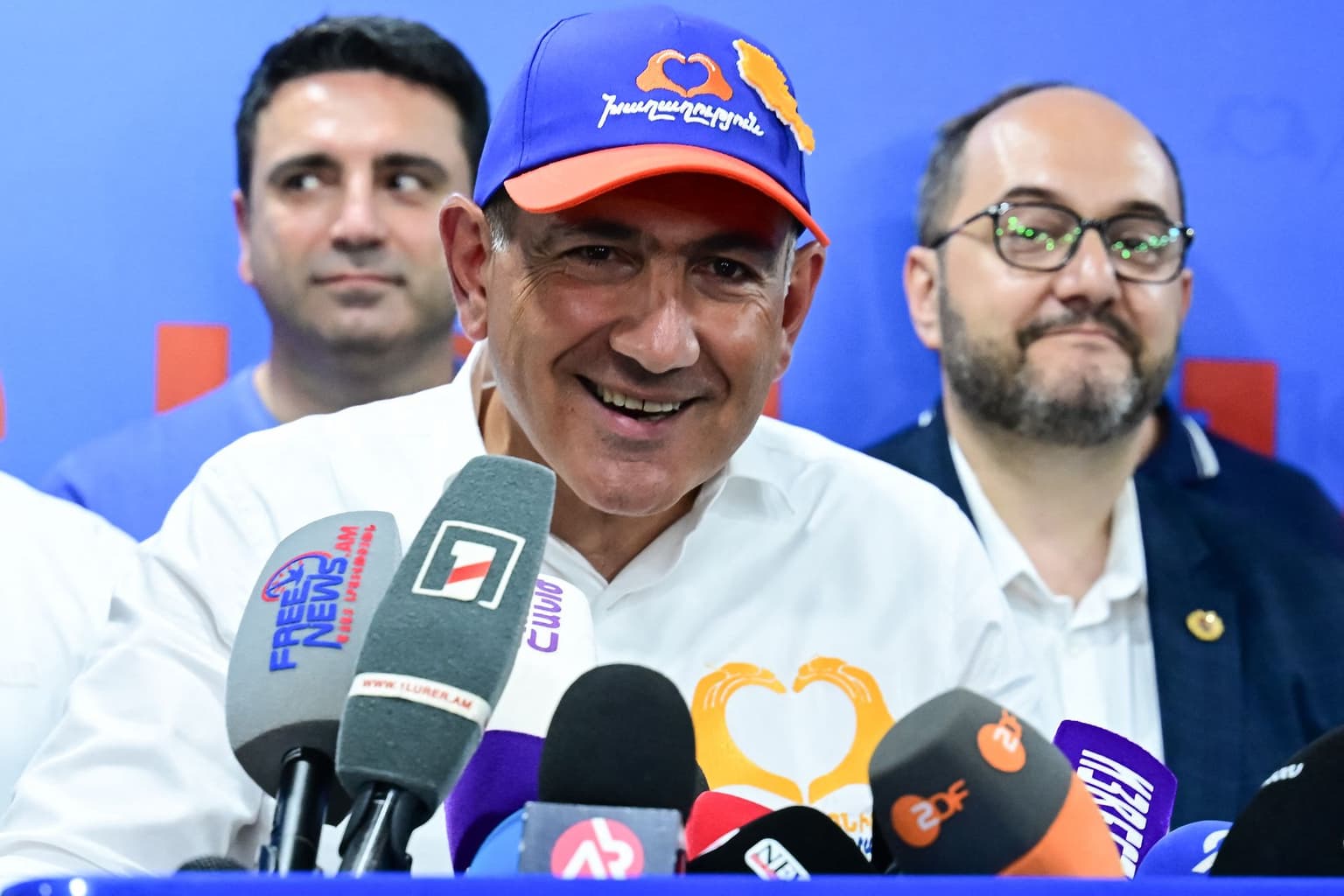
Armenian Prime Minister Nikol Pashinyan declared victory on June 8 in Armenia's parliamentary election, with his Civil Contract party winning nearly 50% of the vote.
The vote came at a turning point in Armenian politics, as Pashinyan's government has increasingly pulled Yerevan away from Russia, its traditional ally, and sought closer ties with the West.
The pro-Russian Strong Armenia party, led by Russian-Armenian billionaire and opposition figure Samvel Karapetyan, finished second with around 23% of the vote.
President Volodymyr Zelensky congratulated Pashinyan on the result, saying Ukraine is ready to deepen cooperation and urging the EU to provide stronger support to Armenia.
"Ukraine is ready to expand our cooperation, and now is precisely the time for the European Union to provide real support to Armenia and do everything necessary to ensure that people feel their lives are better thanks to their relationship with Europe," he wrote.
Following the poor showing of pro-Russian forces in the election, Russian Foreign Ministry spokesperson Maria Zakharova claimed the vote had taken place "amidst severe repression" and that democratic procedures were "grossly violated."
Independent election monitoring missions, however, have not substantiated those allegations.
While Russia has a longstanding military and economic partnership with Armenia, the strained relationship has deteriorated since Moscow failed to protect Armenia from Azerbaijan during the Nagorno-Karabakh crisis in 2024.
Disillusioned, Armenia "froze" its participation in the Moscow-led Collective Security Treaty Organization (CSTO), though it technically remains a member of the alliance.
In April 2025, Armenian President Vahagn Khachaturyan signed a law to formally begin Armenia's accession process to the European Union.
In his victory speech, Pashinyan said the win amounted to a "historic victory," vowing to crack down on the country's oligarchs.
European Commission President Ursula von der Leyen also welcomed the election's outcome.
"Armenia can count on us," she said.
Armenia's parliamentary election on June 7 saw the country's highest voter turnout since 2018, as citizens cast their ballots to determine the makeup of the National Assembly.
Since Armenia's pivot towards the West, the EU has stepped up financial support for Armenia, allocating 30 million euros ($35 million) to the Armenian Armed Forces and 270 million euros ($320 million) to the country's economy and European integration.
Yerevan has also recently signed strategic partnership declarations with the U.K. and France.
The first Armenia-EU summit was held in Yerevan on May 4-5. One of the guests was President Volodymyr Zelensky, marking his first official trip to the country, and sparking outrage in Moscow.
Pashinyan further snubbed Russia by refusing the Kremlin's invitation to attend May 9 Victory Day celebrations in Moscow.
Amid Pashinyan's westward tilt, Russian President Vladimir Putin threatened a "Ukrainian scenario" for Armenia if it continues building ties with the EU. The Kremlin has already pulled its ambassador from Yerevan and threatened to cancel a 2013 agreement guaranteeing duty-free exports of natural gas and petroleum products to Armenia.
Russia has also been accused of meddling in the Armenian election, with Reuters reporting that Moscow plans to bus thousands of Russian-Armenians back to the country to cast votes.
Disinformation narratives targeting Pashinyan have also spread via social media and various fake news websites. The campaigns accuse the prime minister of crime, corruption and even possessing an incurable disease.
Pashinyan has received support from U.S. President Donald Trump, who offered his "COMPLETE and TOTAL endorsement" to the incumbent prime minister on May 27.
Armenia's Independent Observer Mission said that as of 2 p.m. on election day, it had recorded 536 violations at 387 polling stations across the country.
The Armenian General Prosecutor's Office also said it has received and processed a total of 293 reports of alleged election-related criminal offenses since February 2026, resulting in 174 criminal investigations.
At the close of polls, Armenia's Interior Ministry said it documented dozens of violations and had detained 18 individuals. Further reports of alleged electoral violations are under review.