As Russia closes in on Sloviansk, this taxi driver keeps working

Oleksandr Richak behind the wheel of his work car, in Sloviansk, Donetsk Oblast, Ukraine, on Aug. 17, 2026. (Lisa Bukreyeva / The Kyiv Independent)
 on Google
SLOVIANSK, Donetsk Oblast — From a brick-walled garage that barely fits the blue car parked inside, Oleksandr Richak carefully backs his taxi cab out onto the narrow street.
The 42-year-old usually starts work around 8 a.m., once the early-morning rush hour of deadly Russian drone activity in the eastern front-line city subsides.
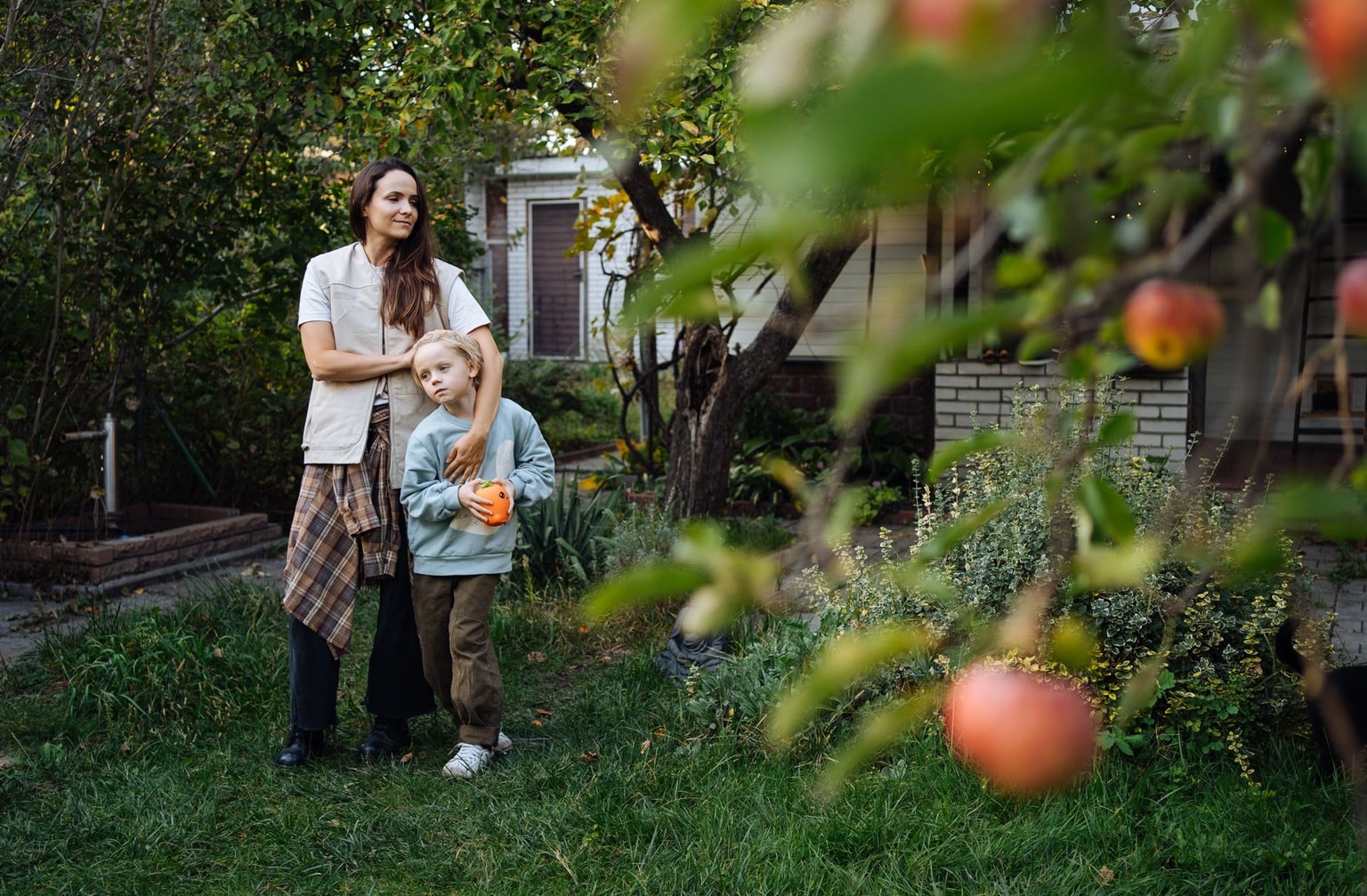
As he briefly parks the car outside a damaged one-story house, his wife, Nataliia, walks over and hands him a bottle of lemon-flavored water. Her worried eyes follow Richak as he drives off, watching until he disappears from view.
"Before it was fine, but now with the FPV (first-person view) drones hitting so many cars…" she says, unable to finish the sentence.
"Whenever I hear (a loud explosion), I immediately call him."

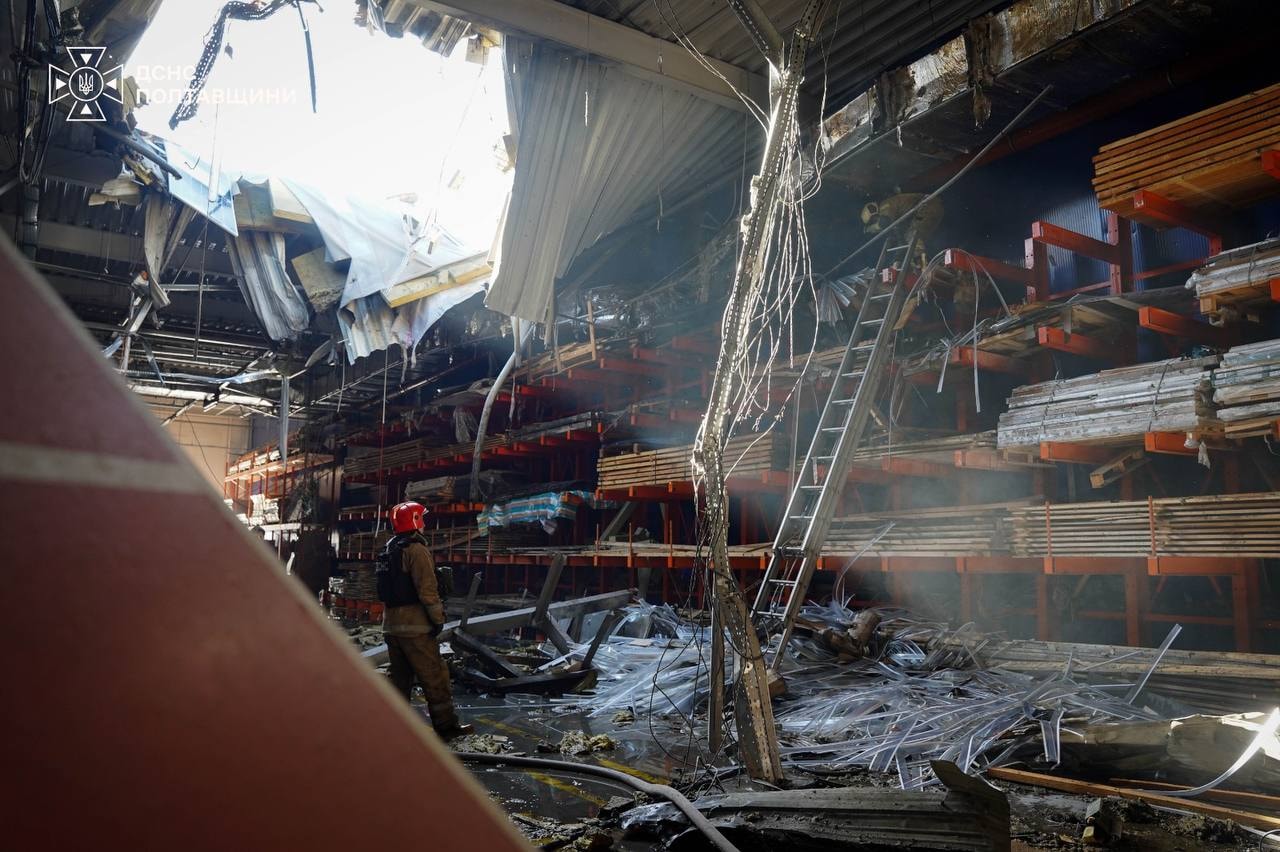
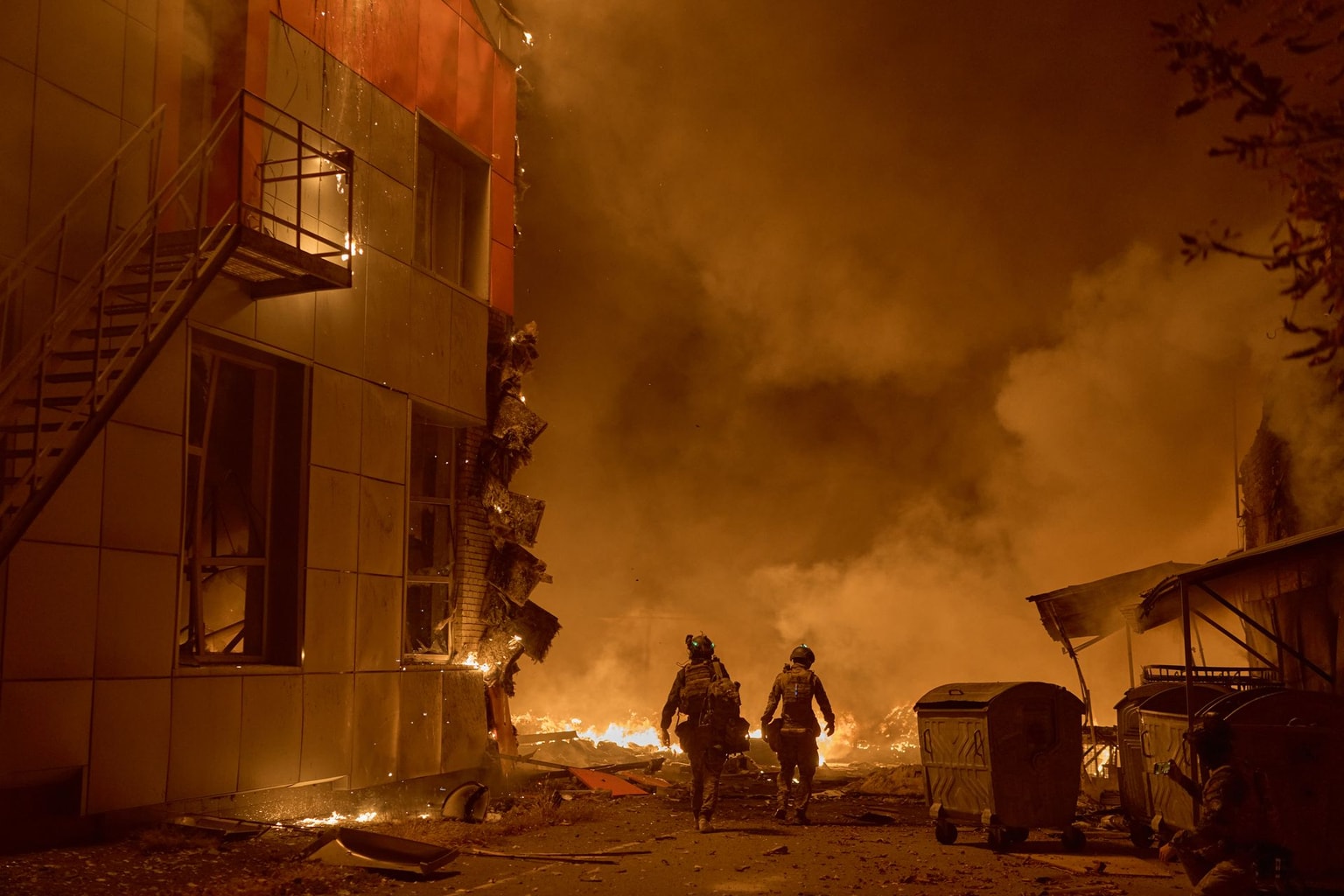
As Russian troops gradually advance toward Sloviansk, the security situation in what was once a relatively safe haven in the eastern Donbas region has significantly worsened this year. Now only around 10 kilometers (6 miles) from Russian troops, an intensifying barrage of glide bombs and FPV attacks is gradually destroying the city.
Many Sloviansk residents are now doing something that until recently, they had never contemplated — fleeing.
Every day brings more reminders of the potential cost of staying. Richak drives past new ruins, and the number of shops, cafes, and restaurants still opening their doors each morning is dwindling.
"Every night, something gets hit," Richak says, driving past a series of destroyed and damaged buildings.
Richak drives for five minutes before arriving at the eerily empty Sloviansk central bus station. Alongside a few other remaining Sloviansk taxi drivers, he waits for bookings, lighting up a cigarette and opening the OnTaxi app on his phone.
Another taxi arrives at the bus station, driven by 54-year-old Ruslan Kuzmenko. The two men greet each other on the station square.

Suddenly, they're interrupted by the unmistakable buzzing of an FPV drone.
"It is an interceptor drone," Kuzmenko says calmly, just seconds before a loud explosion blasts out from the direction of a nearby market.
"Turns out it's not," he says.
"It hits, and someone is just unlucky."
Richak and Nataliia both studied in Sloviansk when they were younger, and in 2006, after completing 18 months in the military, he returned to the city. Nataliia and their one-year-old daughter followed a year later. They added a son to the family in 2013 and bought their first home in 2018.
"There was such life here," he says fondly.
Before the full-scale war broke out in 2022, Richak drove a truck, delivering cakes and pastries from the local confectionery factory Valensiya all across the country. The war forced a change of career, and four years ago he swapped the truck for a taxi to supplement his main job as a gas repair worker.

His first booking comes in, and he jumps in the cab to pick up a 40-year-old soldier named Yurii, who needs to view a potential new apartment as its current tenant has decided to leave Sloviansk.
During the drive over, Yurii, who asked to disclose his first name only as his family still lives in Russian-occupied territories, mentions he is originally from the now-occupied town of Velyka Novosilka in Donetsk Oblast.
Richak's face lights up at the mention of a place he frequently visited for work before the war. They share memories of the town and discover they both know the same woman from there. Richak remembers her from the police academy.
"What a small world!" Yurii says, laughing as he hands cash to Richak and leaves the taxi.
Up until 2014, Richak worked in the police for 10 years. In a country strained by corruption, in need of Western reforms, and still under the strong influence of the Kremlin, he hoped he could make a small but positive contribution to his homeland.
The rest of his roughly 25-man police unit had other ideas. When Russia invaded Donbas in 2014 and its proxy troops occupied Sloviansk, all but two of them defected in what he believes was a prearranged plan.
"We were placed on alert, but I learned that my entire unit had gone over to the side of the (Russian proxy forces), including the commander," he says.
Richak was not surprised — he had heard their views during the 2013-2014 Euromaidan Revolution, and knew how they felt about Ukraine moving closer to Europe and away from Russia.

A week into the occupation, he walked out of the city to escape.
Pro-Russian sentiment persists among some Sloviansk residents, typically from the older generation who grew up in the Soviet Union. Even to this day, under constant Russian bombardment, there are occasionally clients who support Russian President Vladimir Putin, and blame President Volodymyr Zelensky for Moscow's war.
Richak says he encounters someone like this about once a month. Often, they will rant during the drive, insist that he speaks Russian, and, when he refuses, slam the door in anger when they leave.
His response as they exit his taxi is the same one he gives to everyone.
"Have a nice day."
Richak's second booking buzzes his phone into life. Fifty-nine-year-old retiree Lyudmila Hurkina rarely leaves her house these days. Her husband suffered a stroke in May, is bedridden, and she tries to leave him on his own as little as possible.

But she can't avoid errands like buying food or picking up his medicine, and a taxi allows her to get back home as quickly as possible.
She already knows what it's like to flee, forced to leave the city of Horlivka when it fell to Russian proxy forces in 2014. If she has to do it again, she doesn't know how she will afford it — two weeks of her husband's medicine costs UAH 3,000 (about $67), nearly the full amount of her pension.
"I might have to leave again and start all over," she says as they arrive at the hospital.
"But now I am 59. I don't know whether I can start over in a new place and build up a life."
The stories that are shared in taxis in Sloviansk are often understandably heavy, centered on survival in a city Russia seems determined to destroy.

Richak says he often feels like a therapist, listening to people's problems and giving them advice when he can. But it can also work the other way, with Richak hearing useful information about the situation in the city.
"We drive on the road, and there is the feeling of having known them for 10 years," Richak says.
A regular working day in Sloviansk will see Richak take around 15 bookings. He tries to wrap up and be home by 8 p.m., before the 9 p.m. curfew and the inevitable increase in Russian drones as night falls.
On a typical day, he'll take in around UAH 3,000 ($70), but after taxi app commission and expenses like fuel, he takes home around half.

His main job as a gas repair worker is no less dangerous than driving a taxi around a city constantly in the sights of Russian glide bombs and drones.
On 24-hour standby, he and his team rush to repair gas pipelines damaged in Russian attacks. The threat of double-tap strikes, a deliberate tactic Russia uses to target emergency workers, is ever-present.
On Aug. 19, a Russian Molniya drone exploded three meters away from him as he responded to a call. Though his team survived and he escaped with a concussion, the experience further heightened his anxiety.
"Next time it might hit me directly," he says. "These are weapons that can take life away from you at any moment."
Another booking comes in — three generations of one family, a grandmother, her daughter, and her granddaughter.
Seven-year-old Aliya is on her way to perform a song in church alongside some of the other remaining children in Sloviansk.
"The Russians stole their childhood."
"The children act as though they are okay, but it is still stressful for them," 52-year-old grandmother Oksana Mykhalchyk says.
"The Russians stole their childhood," Aliya's mother, Khrystyna, adds.

As the family exits the taxi, the sounds of air defense fire echo across the city. Richak parks his car under a tree in the courtyard of a residential building to wait out the danger.
After a while, he returns to the bus station. "There are very few taxi drivers today," he says.
Richak knows that as Russia further encroaches on the city, there will be less and less work for him. The once-bustling streets were packed with entertainment venues and hosted a Christmas market he recalls with fondness.
Despite growing up in Kharkiv Oblast, Sloviansk has always been his second home; he used to visit the city during school breaks and stay at his aunt's. Coming from a village, Richak saw Sloviansk as a big city, and he watched it grow as he built a family of his own.

He feels certain that Russia will reduce Sloviansk to rubble before the urban fighting begins, much like other cities in the Donbas.
"I don't think there is another scenario," Richak says. "We are mentally preparing for a time when we are not going to return to the city."
Shortly after spending the day with Richak, his wife and daughter left Sloviansk, joining their son in Kharkiv Oblast.
After his shifts, Richak has to return each day to an empty home — he can only leave Sloviansk if the gas service relocates him elsewhere.
Richak tries to distract himself from thoughts of fear with his work, talking to people and staying busy.
"You still think about it constantly anyway," Richak says. "Every day, it never leaves you."

All the taxi passengers interviewed in August for this story later told the Kyiv Independent they had since decided to leave Sloviansk due to near-misses amid ever-intensifying Russian drone and glide bomb attacks.
Richak remains, mentally adjusting to each passing day and the ever-present possibility of death.
"It hits, and someone is just unlucky," Richak says. "That is how we live."
A note from the author:
Hi, this is Asami, the author of this article. Thank you for reading it until the end. It was a completely different experience to head to Sloviansk and Kramatorsk this summer compared to most of my previous trips to the east since 2023, when those cities were still considered safe havens. But meeting local residents, such as Oleksandr, and hearing their stories of resilience reminded me why Donbas holds a special place in my heart. At the Kyiv Independent, we try to shed light on the reality of the war from a range of perspectives, including human-focused stories like this one and my usual front-line pieces.
Please consider supporting our reporting, which is available without a paywall thanks to the support of our members.