'I didn’t recognize myself' — For Ukrainian soldiers with facial wounds, US surgeons help restore dignity
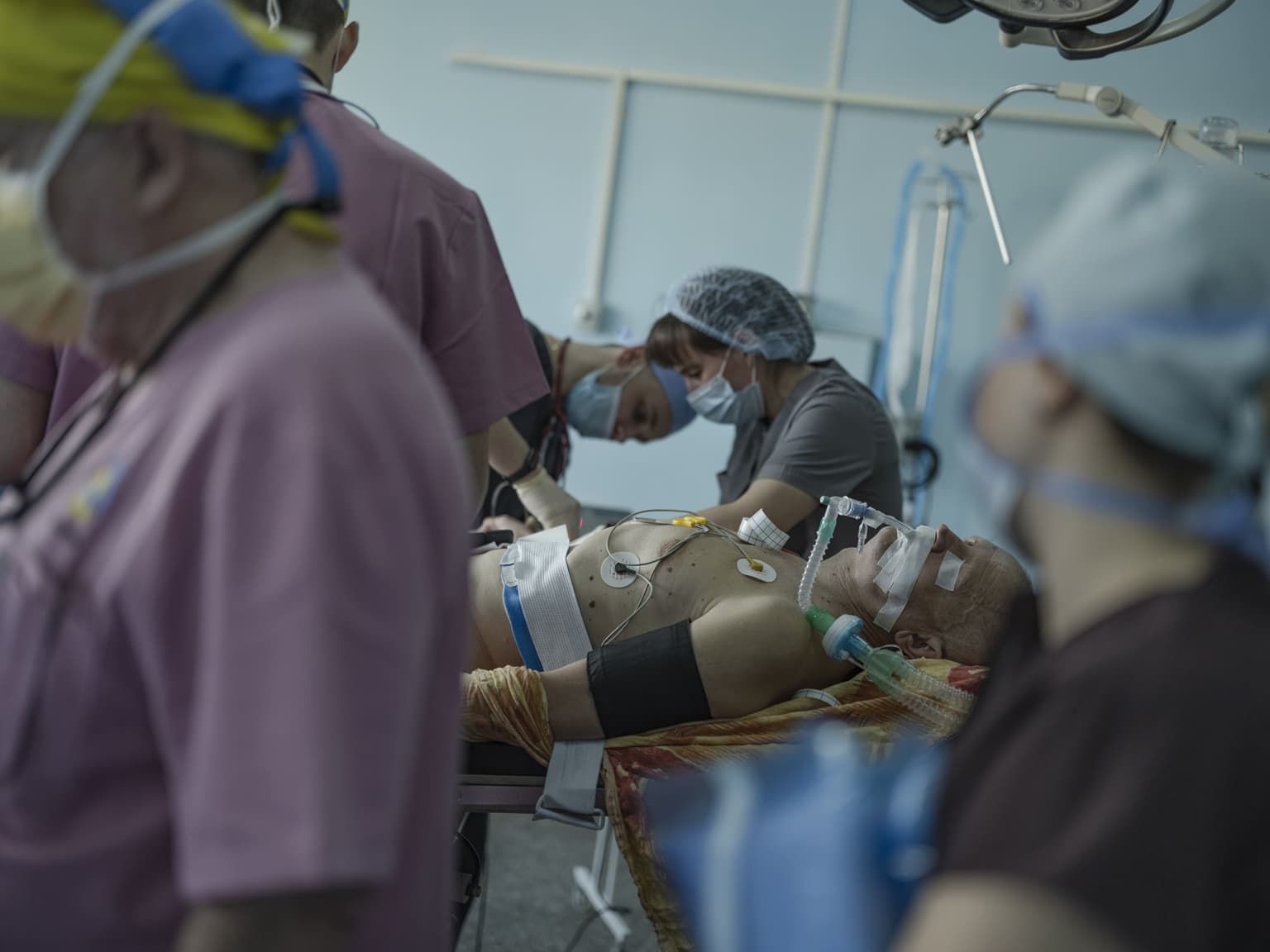
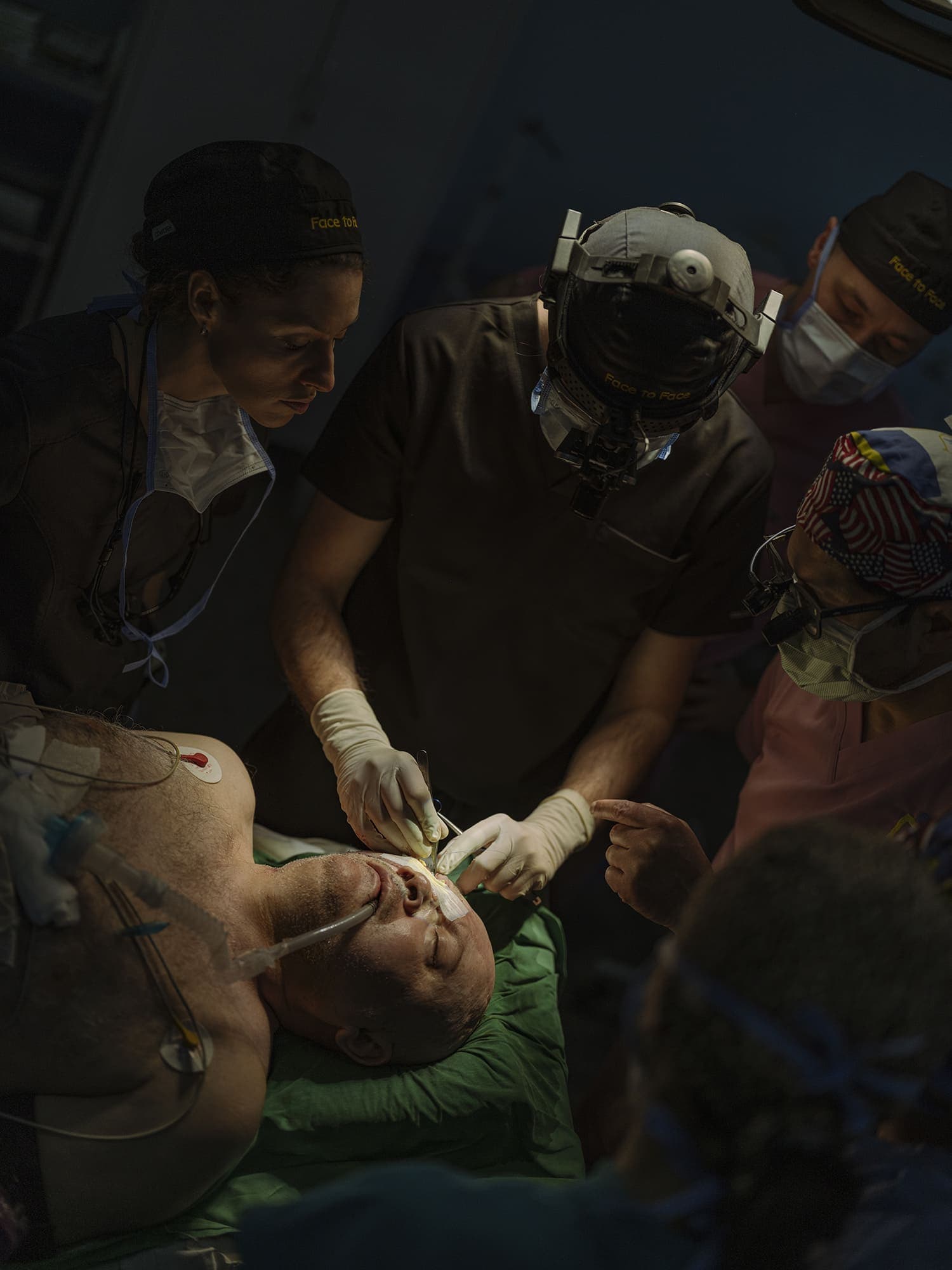
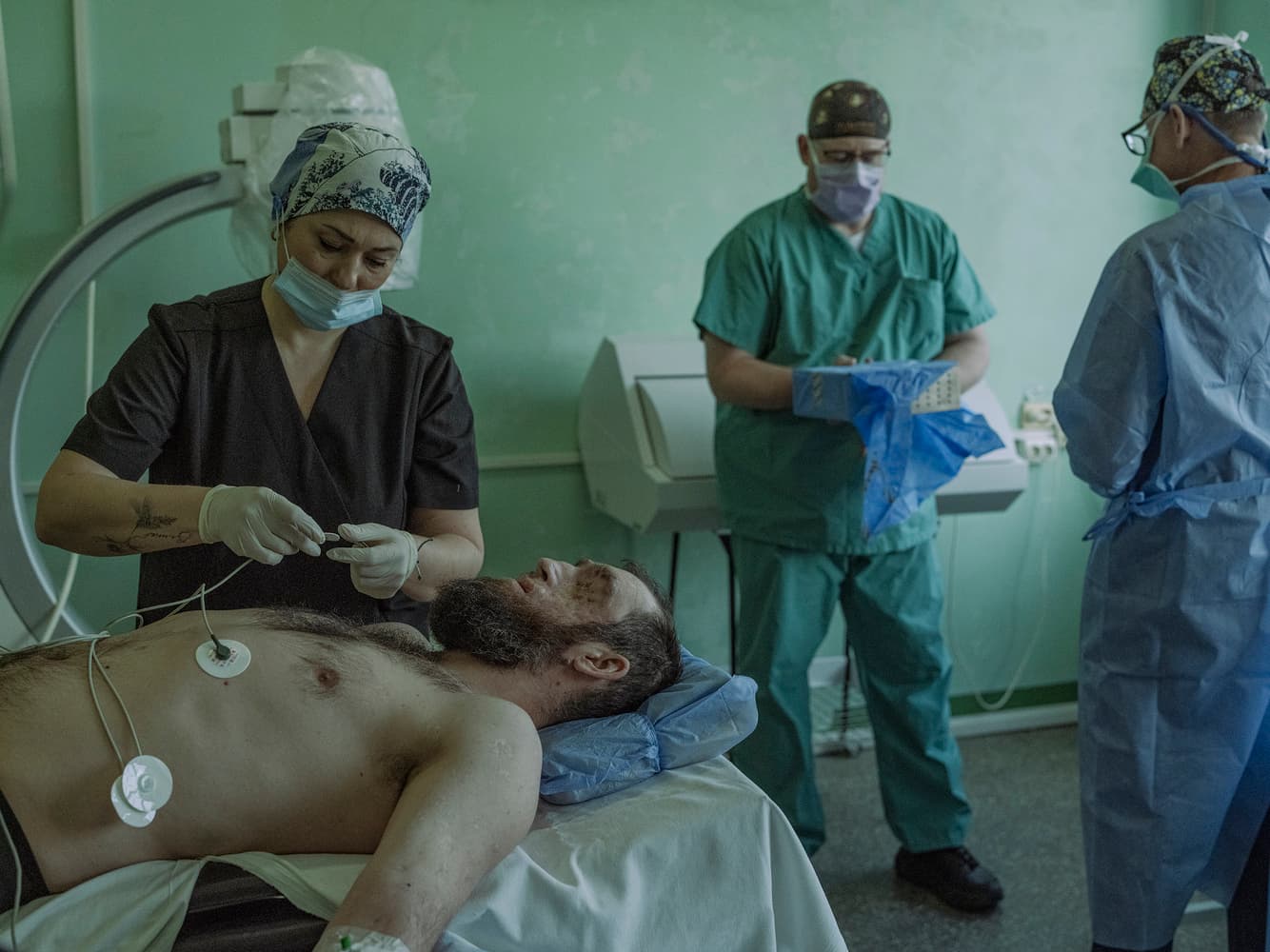
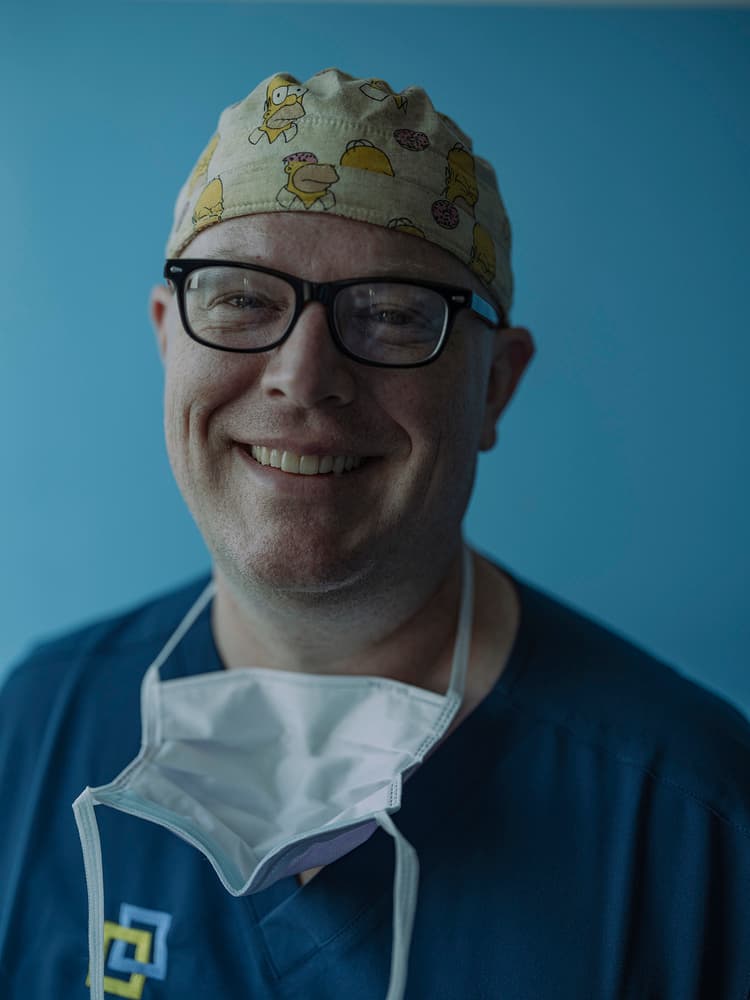
Western Ukraine — In a small, green-walled operating room that would look ordinary were it not for the surgical equipment, an American plastic surgeon uses scissors to carefully cut through the right side of a wounded Ukrainian soldier's face.
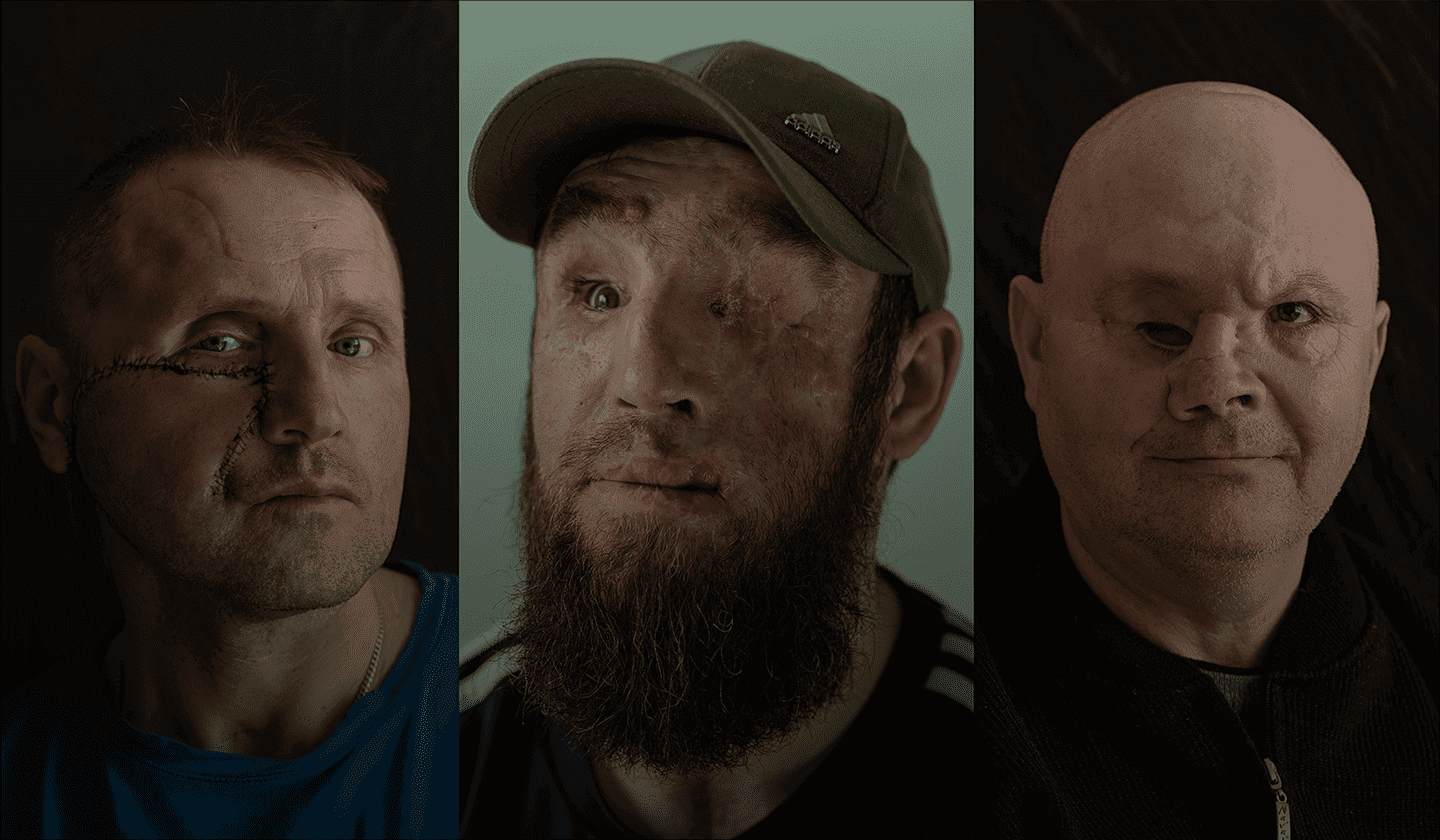
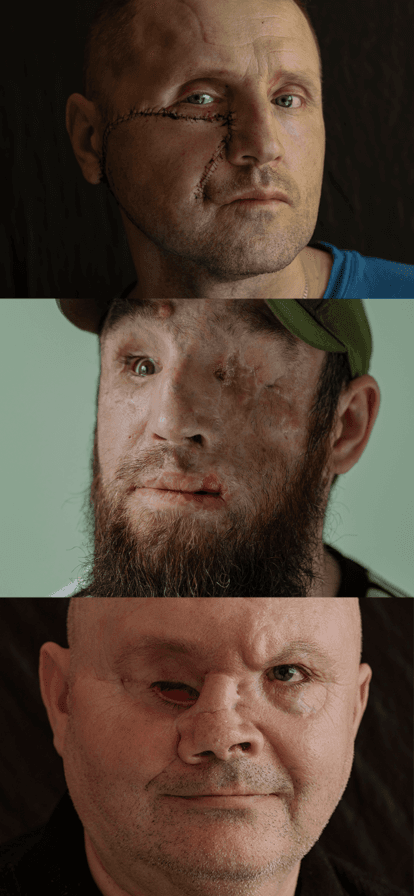
The 49-year-old patient, Vitaliy Yakovets, is sedated under anesthesia, with a urine drainage tube attached to him. Half a year after shrapnel from a first-person-view (FPV) drone attack cut into his face, the doctors are trying to make his permanent scars under his right eye less visible.
With a thin steel instrument that releases a wisp of smoke, a fellow American plastic surgeon works on the wounds before other medical professionals stitch up the opening, which cuts through his right ear to the nose and down to his mouth.
.png&w=1536&q=75)
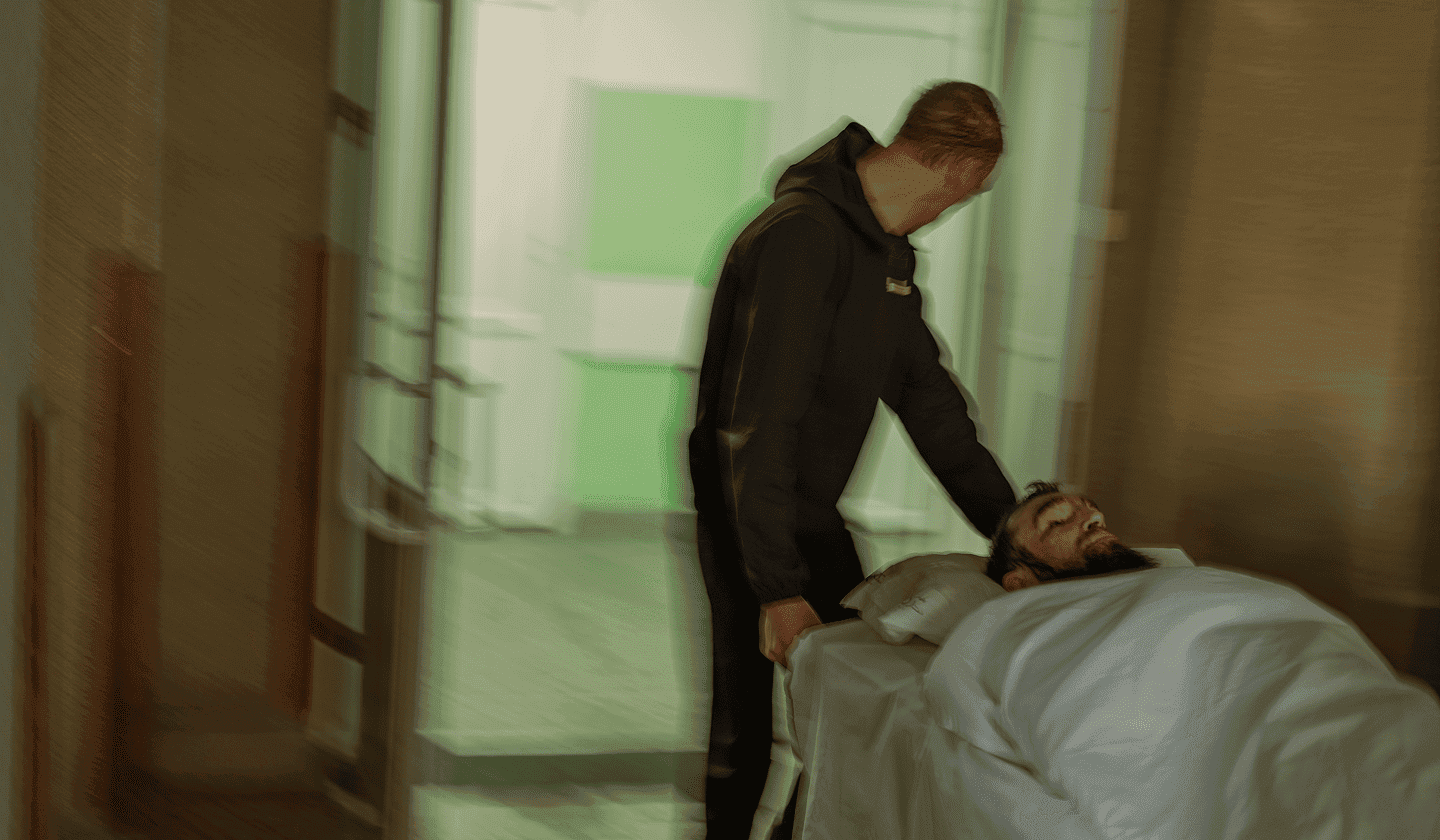
The room, initially filled with American and Ukrainian surgeons at the start of the roughly three-hour operation, gradually starts to empty. The anesthesiologist comes inside to wake Yakovets from sleep, gently removing his breathing tube once he slowly regains consciousness.
"Water…" Yakovets mumbles as he gets carried out on a stretcher to the corridor, starting to touch his face until the anesthesiologist quickly intervenes.
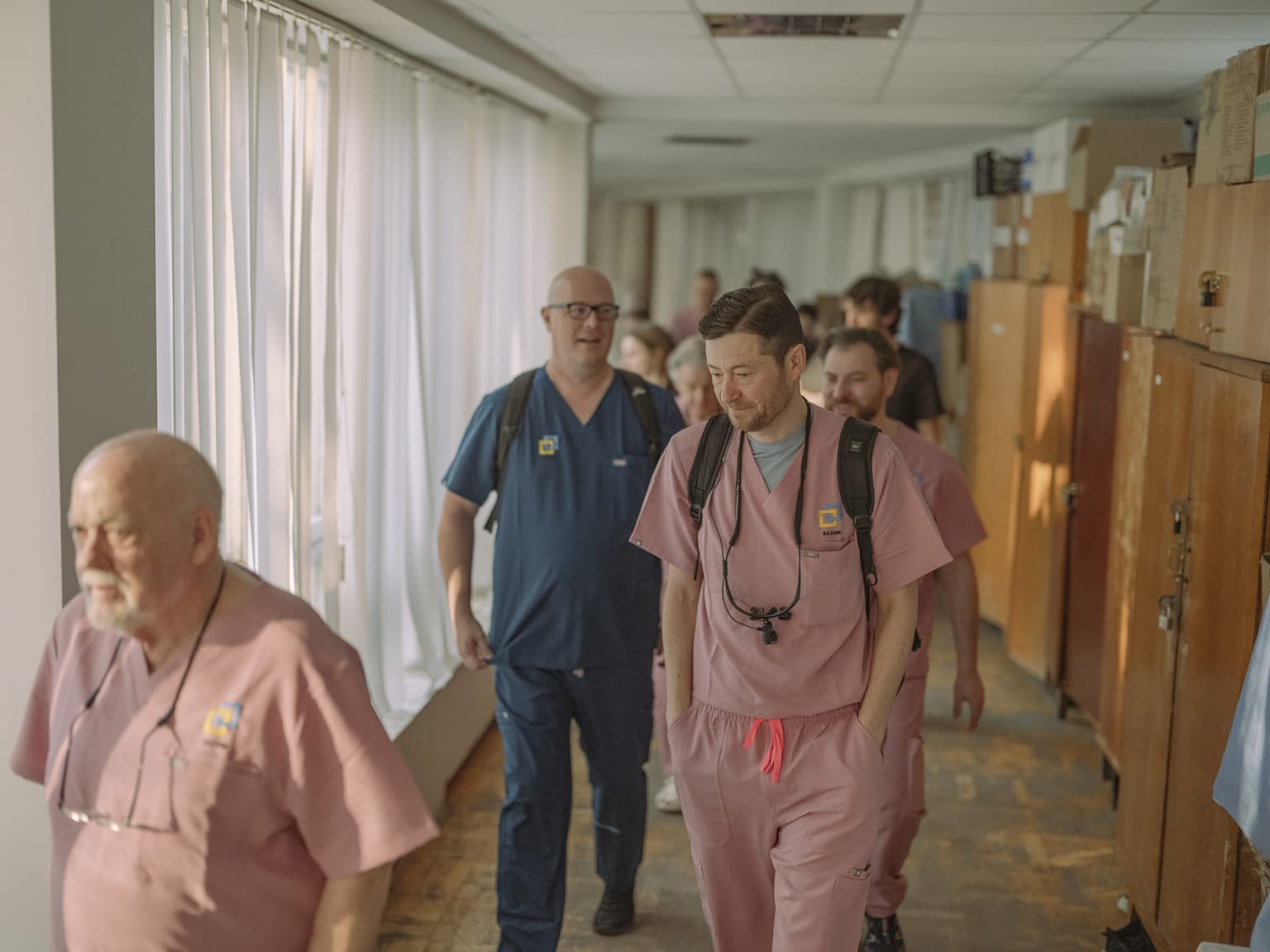
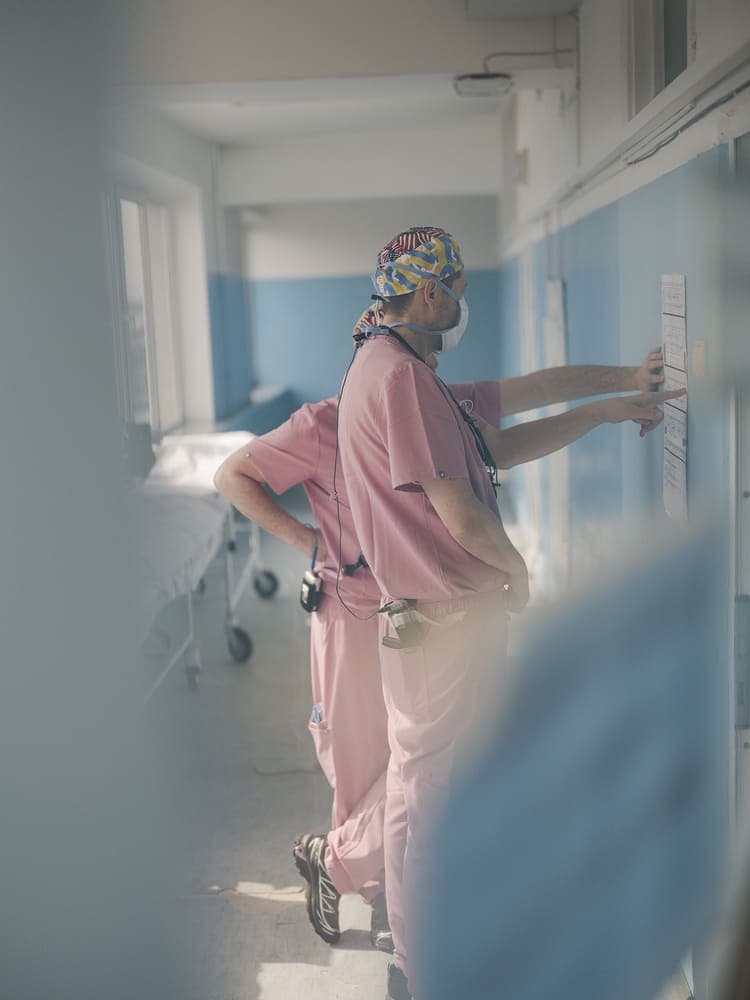
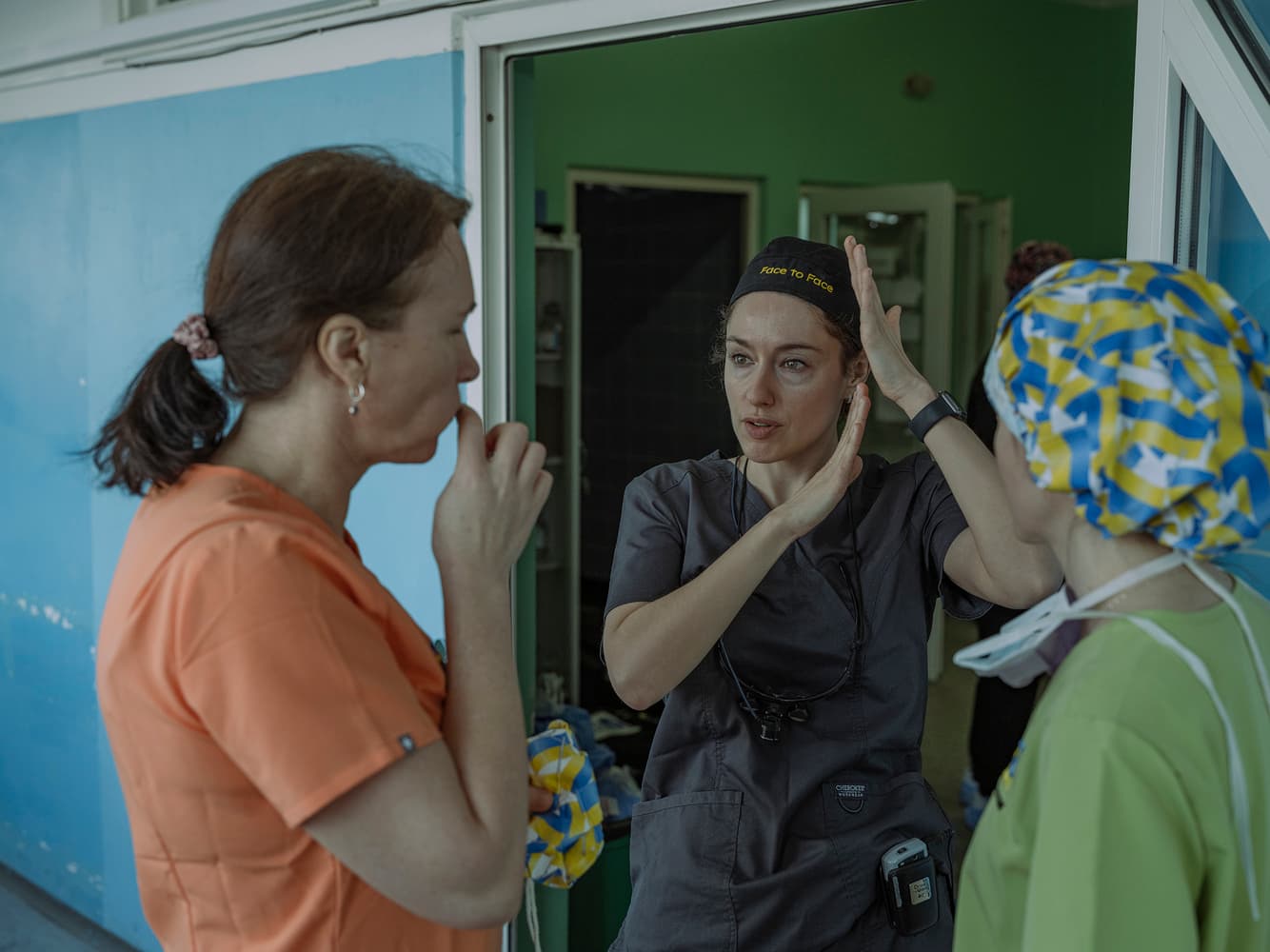
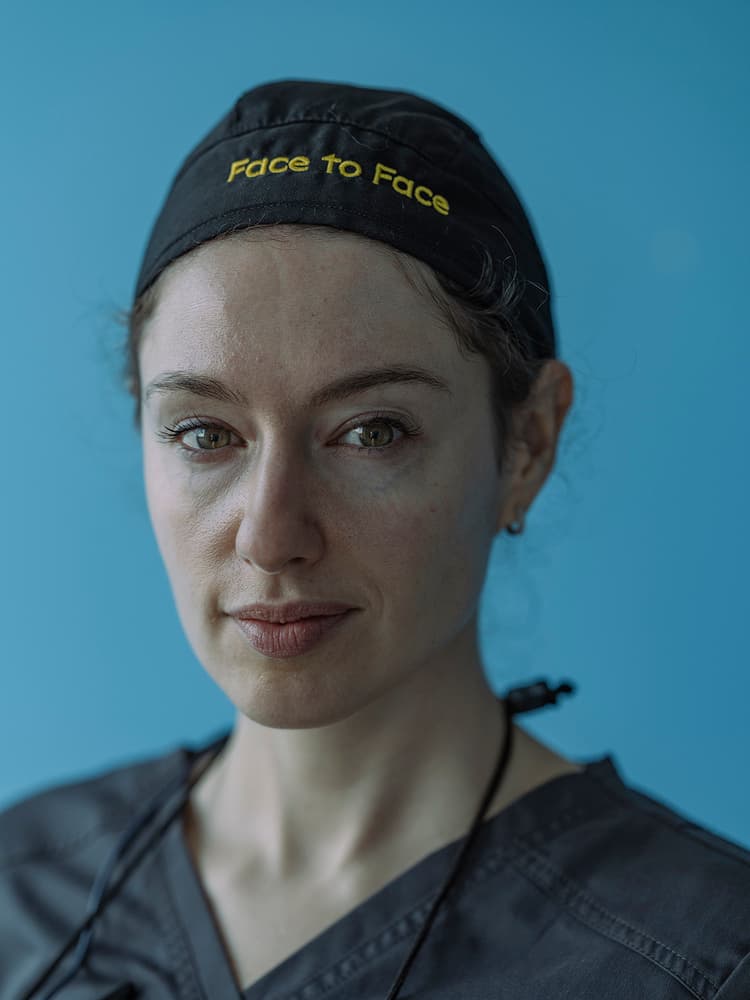
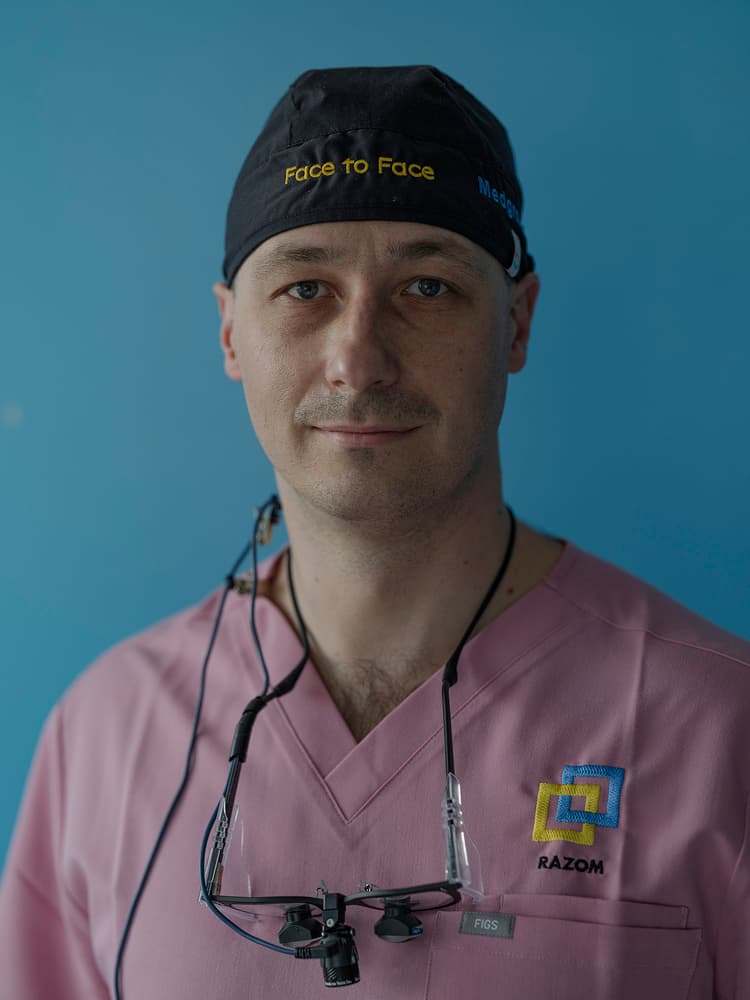
Yakovets is among the 40 patients with facial injuries treated by American surgeons who traveled to Ukraine as part of the "Face to Face" mission. Founded by U.S. and Ukraine-based organizations such as Razom for Ukraine, INgenius, and the American Academy of Facial Plastic and Reconstructive Surgery, the mission brings American doctors of various specialties to Ukraine to perform complex surgeries on people injured in the war.
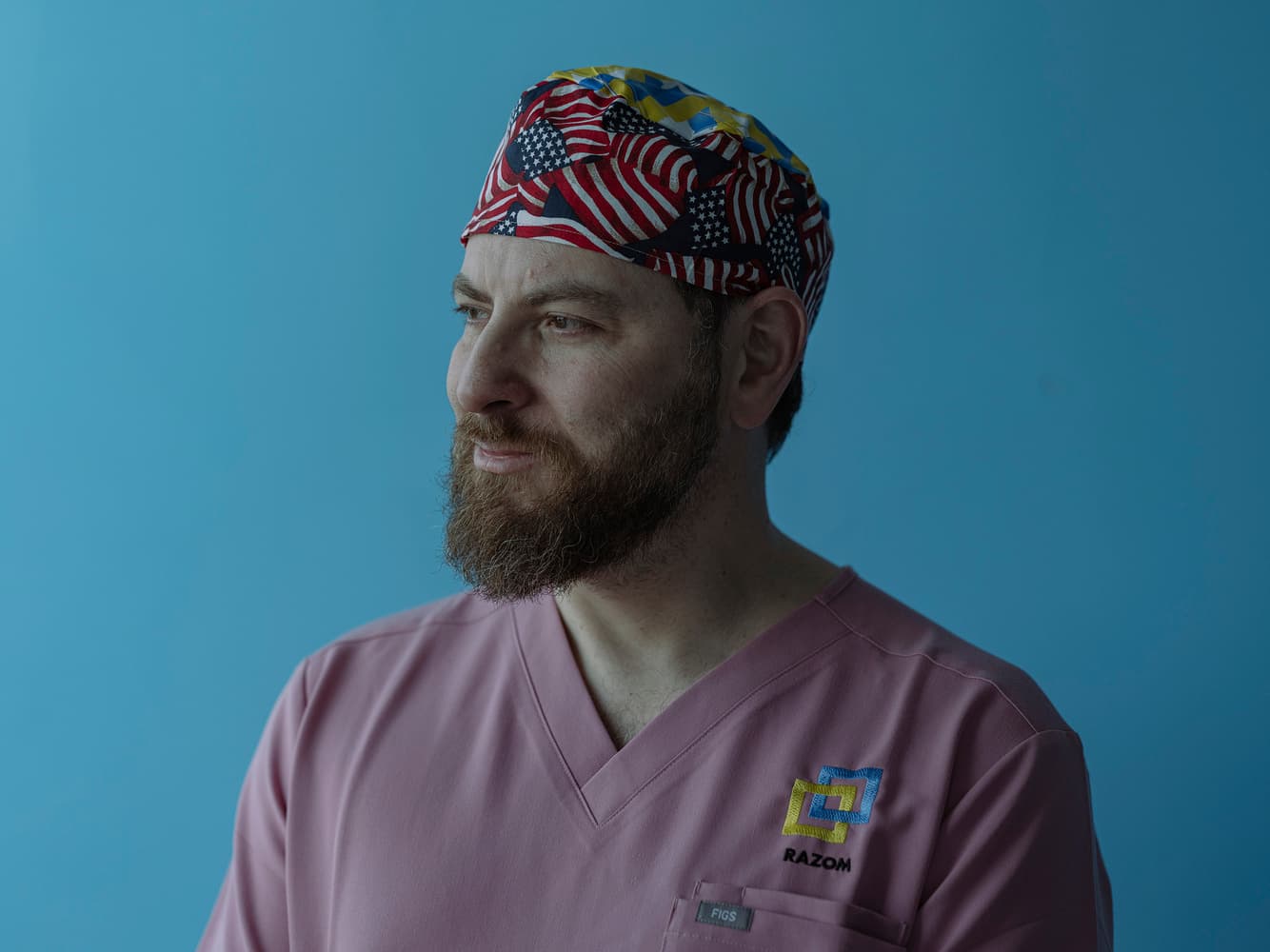
Professionalism allows doctors to think objectively in operating rooms, American oculoplastic surgeon Parag Gandhi said, but when they are confronted with the reality of war up close, "there are moments in between where definitely the emotions and human aspect take over." He stressed that the goal for every patient is to restore symmetry and function as much as possible, even if it takes multiple lengthy procedures, a process that can take years.
"A lot of it is just restoring their dignity and an opportunity to lead a more fulfilling life and be functional in a way that they're able to chew and speak and drink fluids normally."
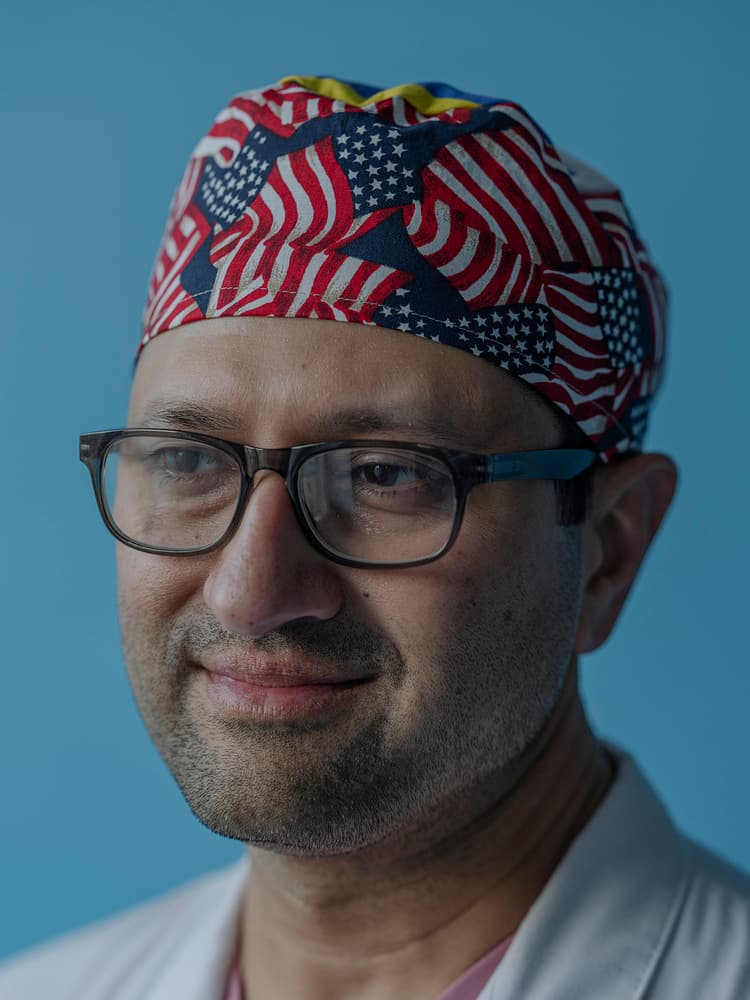
"A lot of it is just restoring their dignity and an opportunity to lead a more fulfilling life and be functional in a way that they're able to chew and speak and drink fluids normally," Gandhi told the Kyiv Independent outside the operating rooms in late March.
With the less powerful but more precise drones overtaking artillery's role in the war, the casualty situation has worsened, as has the severity of the injuries. In the drone-dominated battlefield, the weapon's accuracy results in a higher chance of suffering shrapnel injuries, most often to the limbs and the head, including the face, since they are unguarded by protection, according to medics on the ground.
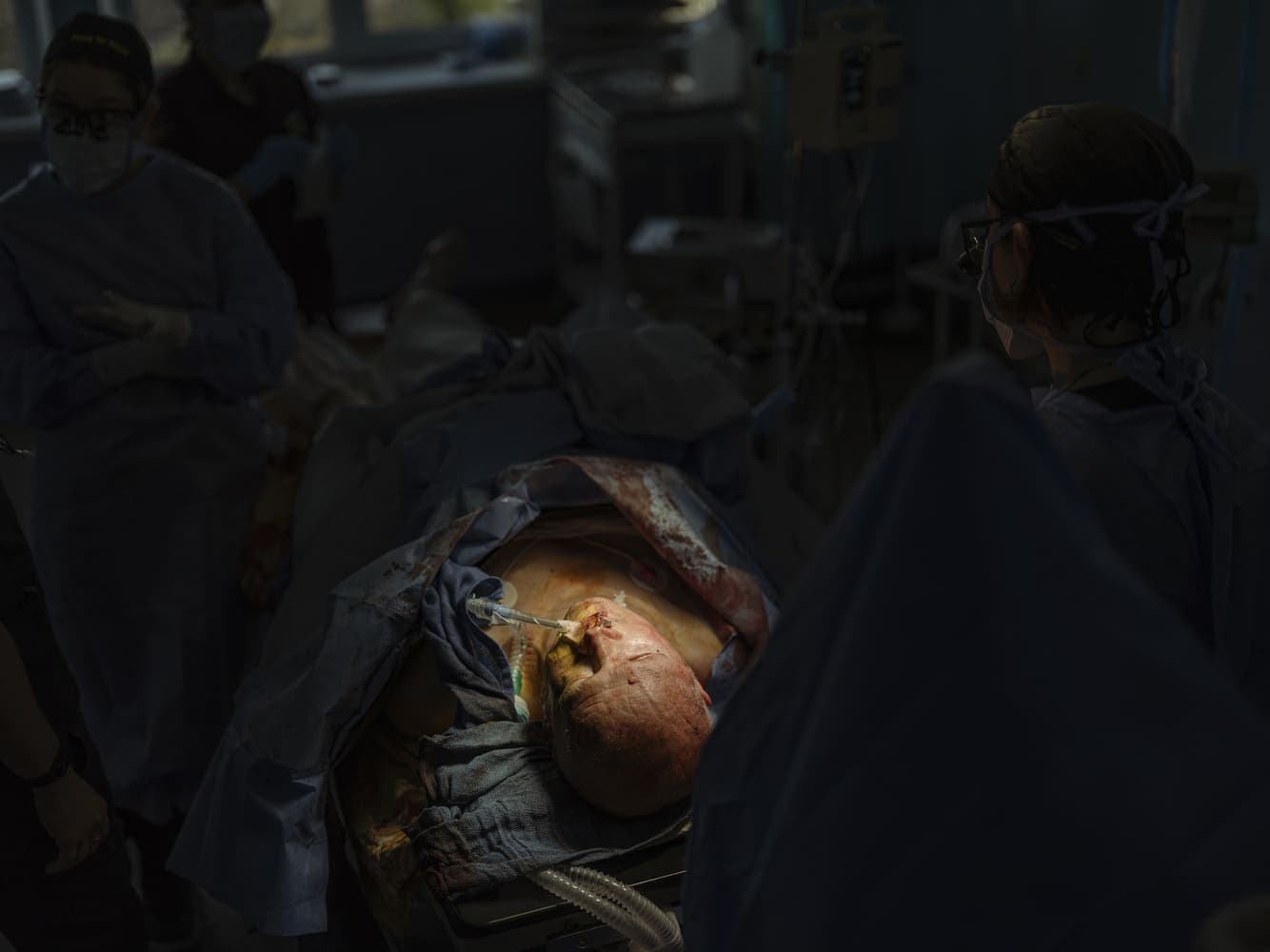
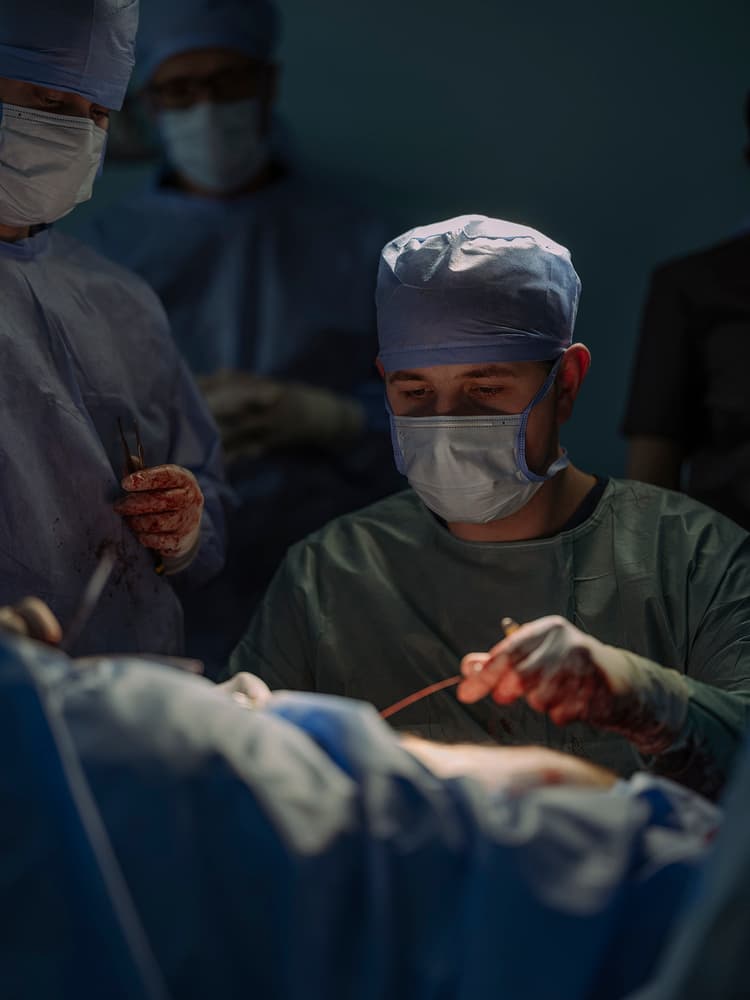
There is a relatively high number of nerves and vessels in the face, particularly in the eye areas, making the reconstruction surgeries difficult. Working with extremely thin sutures brought in from the U.S., the American and Ukrainian surgeons carefully sew delicate facial tissues, trying to avoid further damage to the patients' facial function.
The operations during the "Face to Face" mission lasted as short as an hour to as long as 10 hours, with surgeons using their extensive experience as a base to improvise when needed. Even when the surgery appears to be successful, it is the months that follow that often determine its true outcome. Antibiotic-resistant bacteria can make infections harder to treat and more likely to persist, while recovery varies from person to person, often determined by age and health habits.
"It's kind of a matter of risk and counseling," American facial plastic surgeon John Frodel said in between operations.
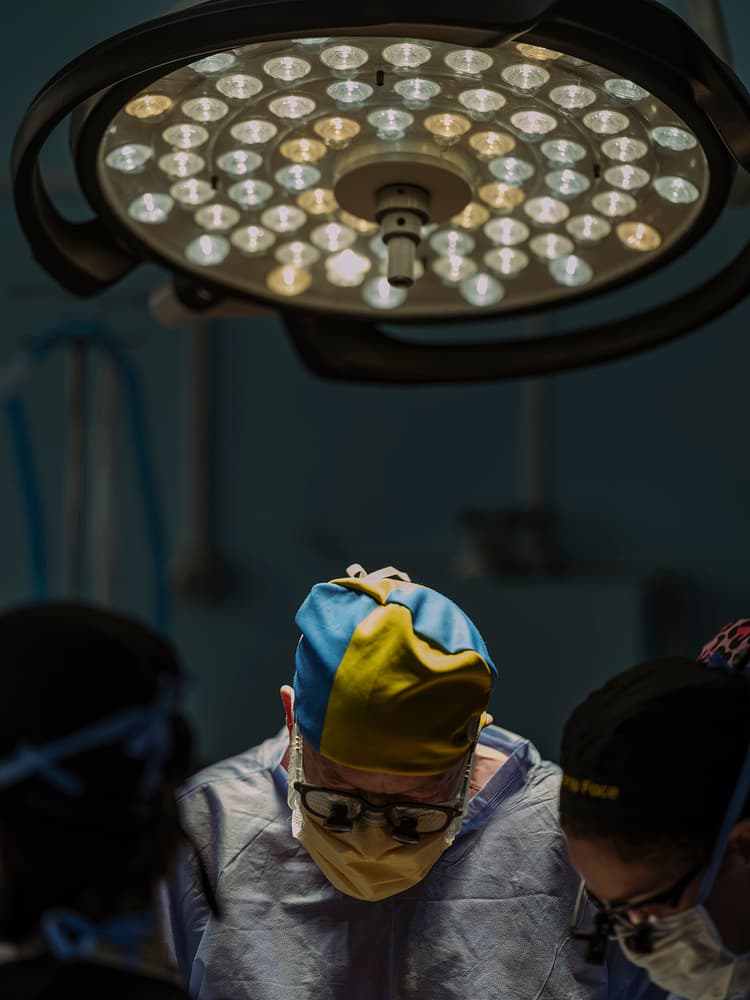
"The more deformed they are, realistically, we have to counsel them that we can only improve, but not fix (them) back to normal. Certainly, our goal is to get them back to normal, but usually it's not possible."
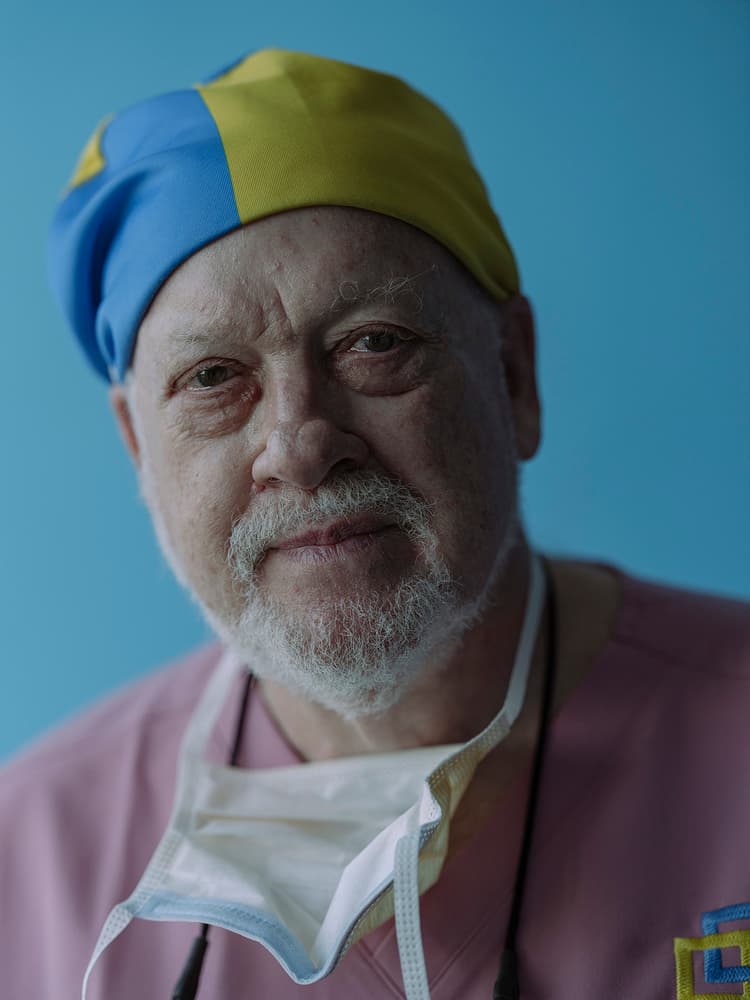
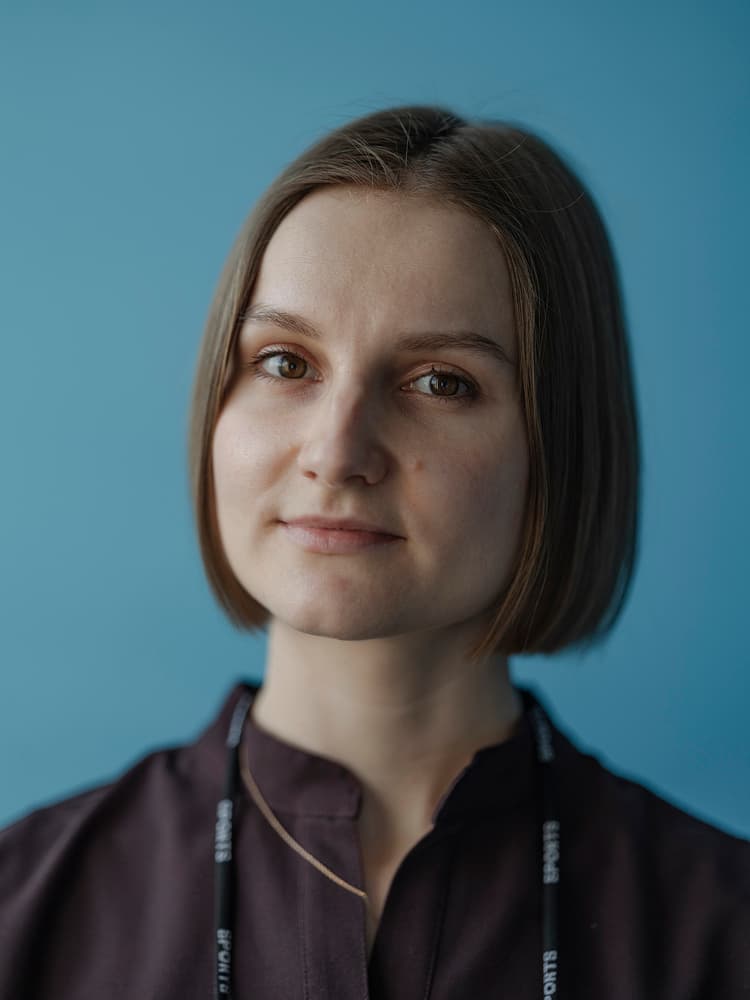
For patients and their families, making permanent facial wounds less visible is important because the face is often the first thing people notice about others, according to Ivanka Nebor, co-organizer of the "Face to Face" mission and an otolaryngology resident.
'Not to scare the kids'
For Yakovets, receiving high-quality facial reconstructive surgery was important so that his appearance would not frighten people, who, he says, tend to look away.
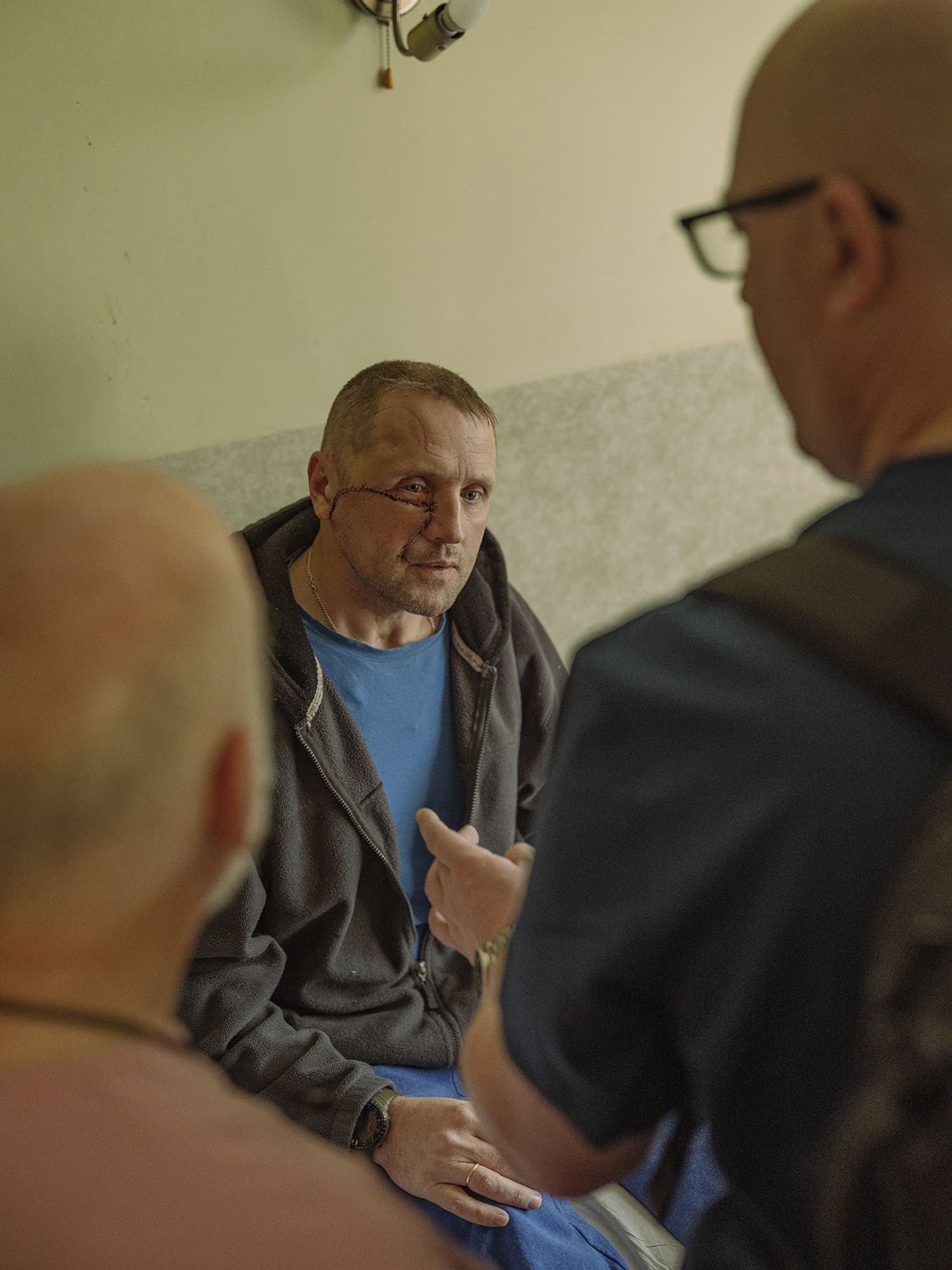
"It's scary for people to look at a deformed face, particularly children," Yakovets told the Kyiv Independent in his hospital room in western Ukraine, a day after his surgery.
"I try to turn away my face a little, not to scare the kids," he said, showing how he turns his head in the other direction.
Originally from northeastern Sumy Oblast, Yakovets enlisted in the army on the day Russia launched its full-scale invasion of Ukraine in February 2022. Russian troops occupied his hometown of Romny for about two weeks till mid-March, when they headed toward Kyiv.
Though formerly a woodworking factory worker in Czechia, Yakovets served in the infantry of the 117th Territorial Defense Brigade from his region until he received a service-ending injury in September 2025. He was then a rifle platoon commander, fighting near the contested town of Lyman in eastern Donetsk Oblast, where Russian troops have constantly launched offensives.
Yakovets had almost arrived at the position with five others in a pickup truck when the first FPV hit, sending shrapnel into his head. Another drone strike injured his leg. The rest were also injured in subsequent drone strikes.
Luckily for Yakovets, two soldiers braved the heavy Russian drone surveillance to drive through the forest and pick up the wounded soldiers within two hours. He suffered further injuries from Russian drone strikes and 120 mm mortar fire during the evacuation, but the group narrowly escaped death. Russian soldiers had already started to approach the position by the time the evacuation crew arrived.
"I try to turn away my face a little, not to scare the kids."
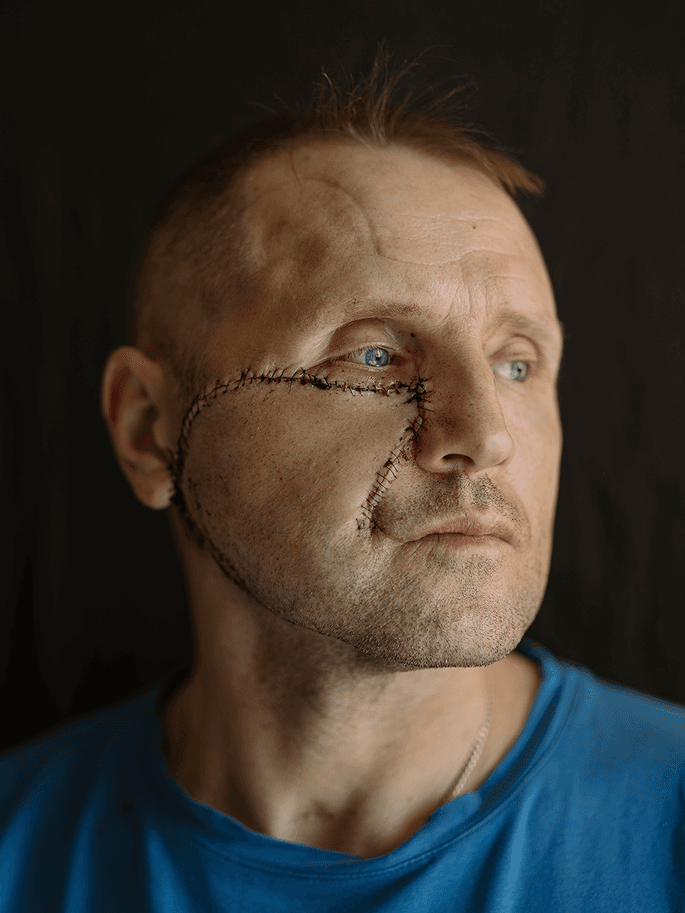
"They would have killed us," Yakovets, a father of a 21-year-old son and a 13-year-old daughter, said, his blue eyes looking into the distance.
Badly injured, Yakovets did not fully regain consciousness until a month later, in October 2025. He slowly began recalling what he had done the day before. His wife later told him that he constantly tried to get up from the hospital bed and leave, to the point that he had to be tied down.
"Maybe it was because I hadn't completed my combat mission and felt I still needed to go back and fight," Yakovets said, chuckling softly. "It was like a program running in my head, that I hadn't fulfilled my mission."
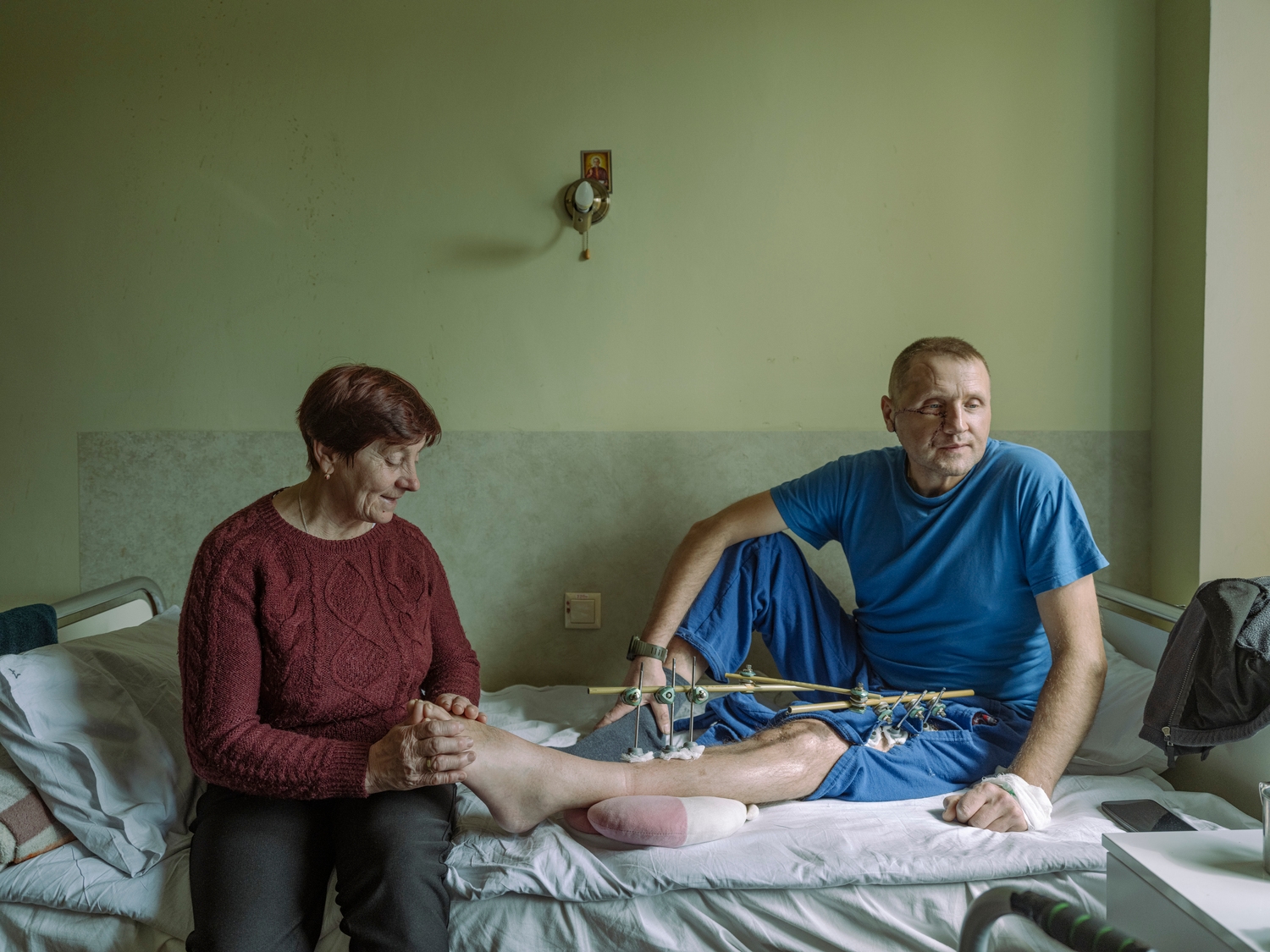
Due to the facial injury, Yakovets said he has been restricted to soft foods such as oats and soup because his mouth doesn't close fully, making chewing difficult and preventing him from eating meat. His movement is also limited due to the metal rod on his left leg, which he has to wear until the end of the year. He had lost 28 kilograms over the month and a half since his injury.
The latest facial plastic surgery has now allowed his right eye to close more fully and brought greater symmetry to his face. His "appearance is completely different," Yakovets said. He added that the surgery was surprisingly smooth, and that he felt no pain after the painkiller wore off, unlike in his five previous surgeries.
"I didn't recognize myself in the mirror," Yakovets said with a smile, recalling the moment when he looked at himself post-surgery. "I'm now more beautiful and photogenic."
The concussion he suffered in the 2025 attack has, however, noticeably slowed his reaction time and thinking, preventing him from making quick decisions that might be vital on the battlefield and upending his military service, Yakovets said. He said his stuttering also began then. He is currently at a hospital in his hometown, trying to distract himself with hobbies like coin collecting, and eagerly awaiting the day he can go fishing once the metal rod is removed from his leg.
To reassure loved ones
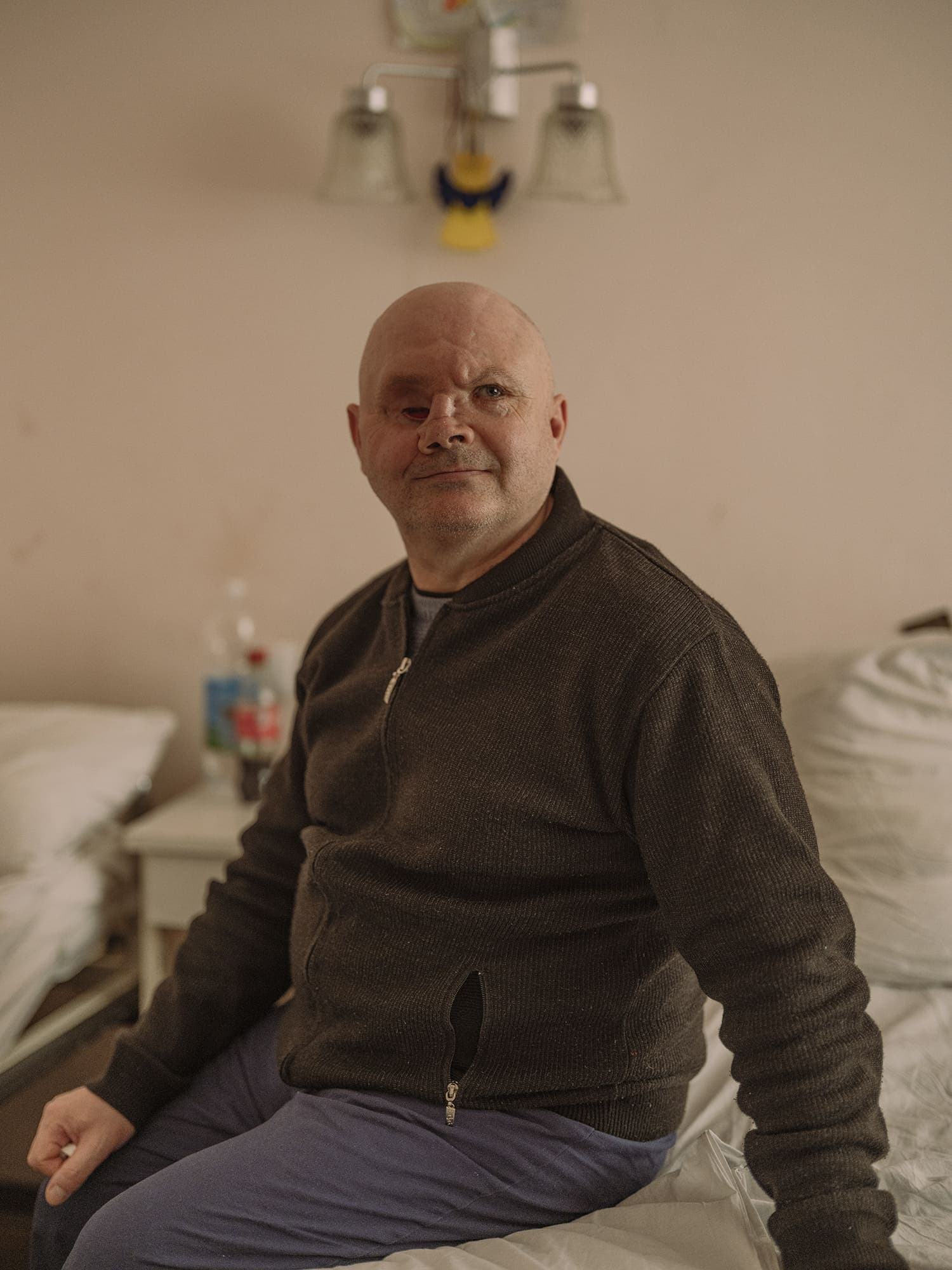
Another Ukrainian soldier, Ivan Semeniuk, said he sought to make his injury less noticeable for the sake of those close to him, especially his family, rather than for himself.
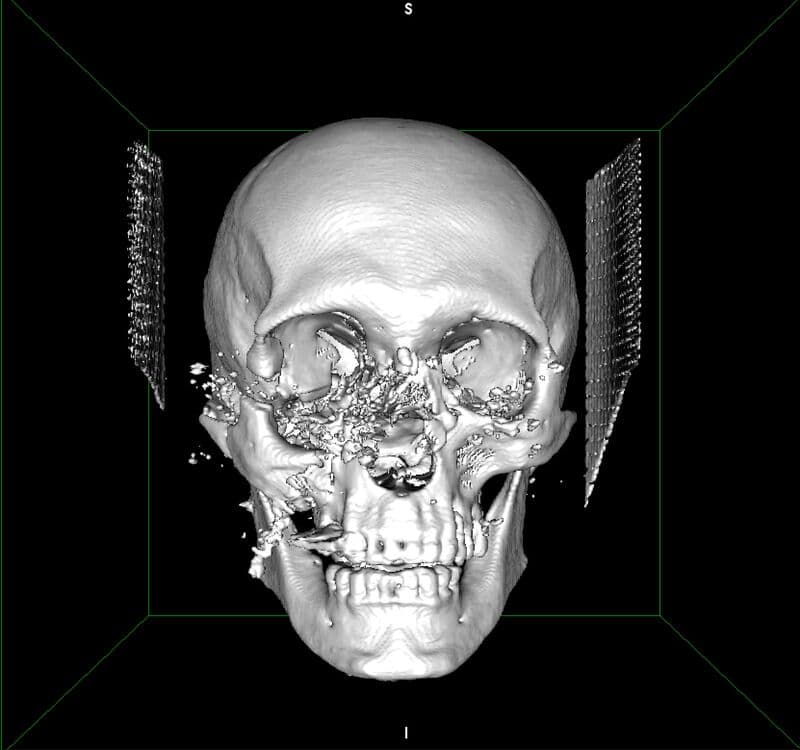
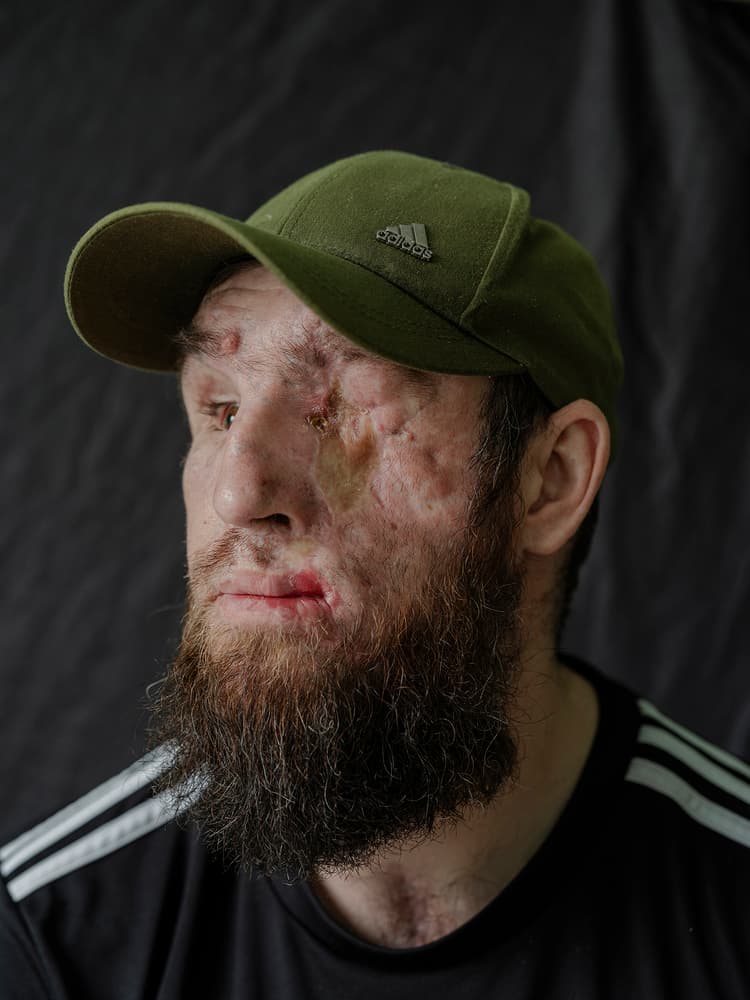
Semeniuk lost his right eye when he was wounded in July 2024 near the then-fiercely contested city of Pokrovsk in Donetsk Oblast. A large inward dent makes the injury noticeable, keeping the eyelid slightly open.
"It's because I see that they are worried about my appearance, no matter what they say, and it even traumatized them at first," the 54-year-old told the Kyiv Independent, sitting on his bed in the hospital room.
"It doesn't mean that they stopped loving me," Semeniuk says.
On that July day with the 151st Mechanized Brigade near Pokrovsk, Semeniuk was holding a position with three other soldiers, each covering a sector. He picked the sector with no dugout for himself, with only a large tree overhead, offering some protection from drones.
"As strange as it may sound, it ended up saving my life," Semeniuk, who was drafted at the beginning of that year and previously worked in metallurgy, said.
A group of Russian soldiers launched an assault in Semeniuk's direction; he could hear but not see them. They were only about 30 meters away when what was likely a bullet passed through his head, causing him to lose his right eye and leaving the wound exposed to the air. Concussed and beginning to lose consciousness, he said he could not clearly recall what happened afterward.
A soldier from the rear immediately came out to help Semeniuk evacuate from the front, he was later told. The three others held on to the position "for a long time," Semeniuk said, though he doesn't know for how long, until incoming fire, likely artillery, struck and killed them all.
"I didn't want to leave them," Semeniuk said, recounting what others told him about how he had been opposed to being evacuated from the front, as he couldn't remember himself.
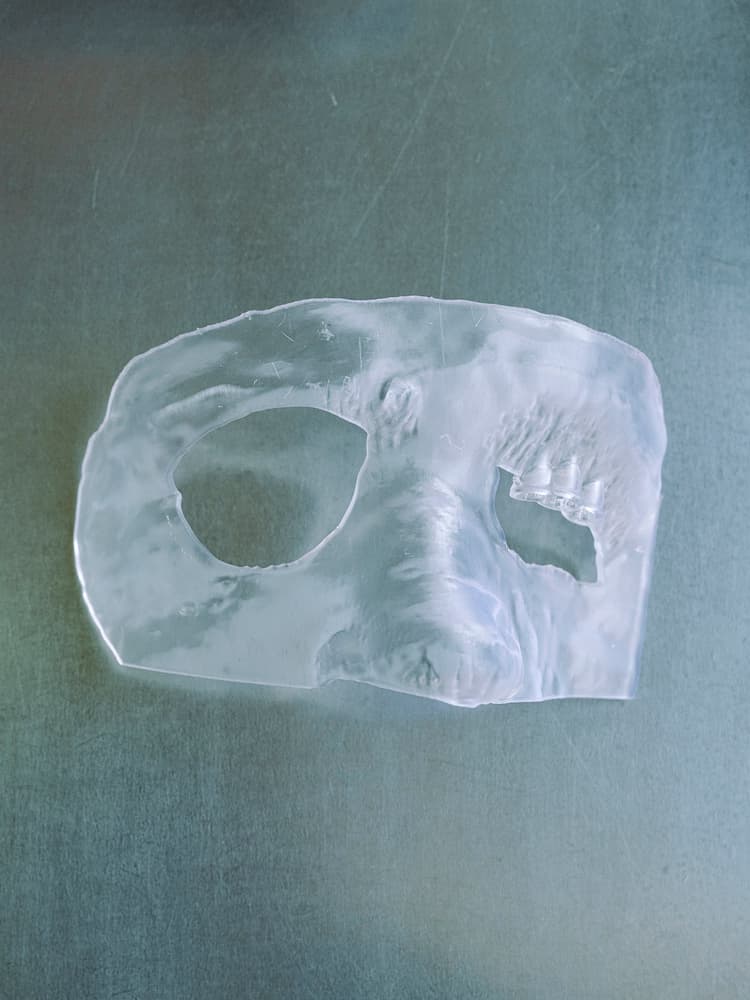
Nearly two years on, Semeniuk is still going through surgeries. His case was one of the two most complicated operations of the "Face to Face" mission in March, taking about 10 hours. The procedure began with face-flap surgery, in which surgeons removed a layer of thigh tissue and attached it to the head and neck area, borrowing fatty and fascial tissues, as well as some skin, to give "a lot of volume" back into the face, such as for the sagging eyelids, one of the American surgeons who operated on him, Grigoriy Mashkevich, said. He also received a magnetic eye prosthetic that matches his other eye during the mission.
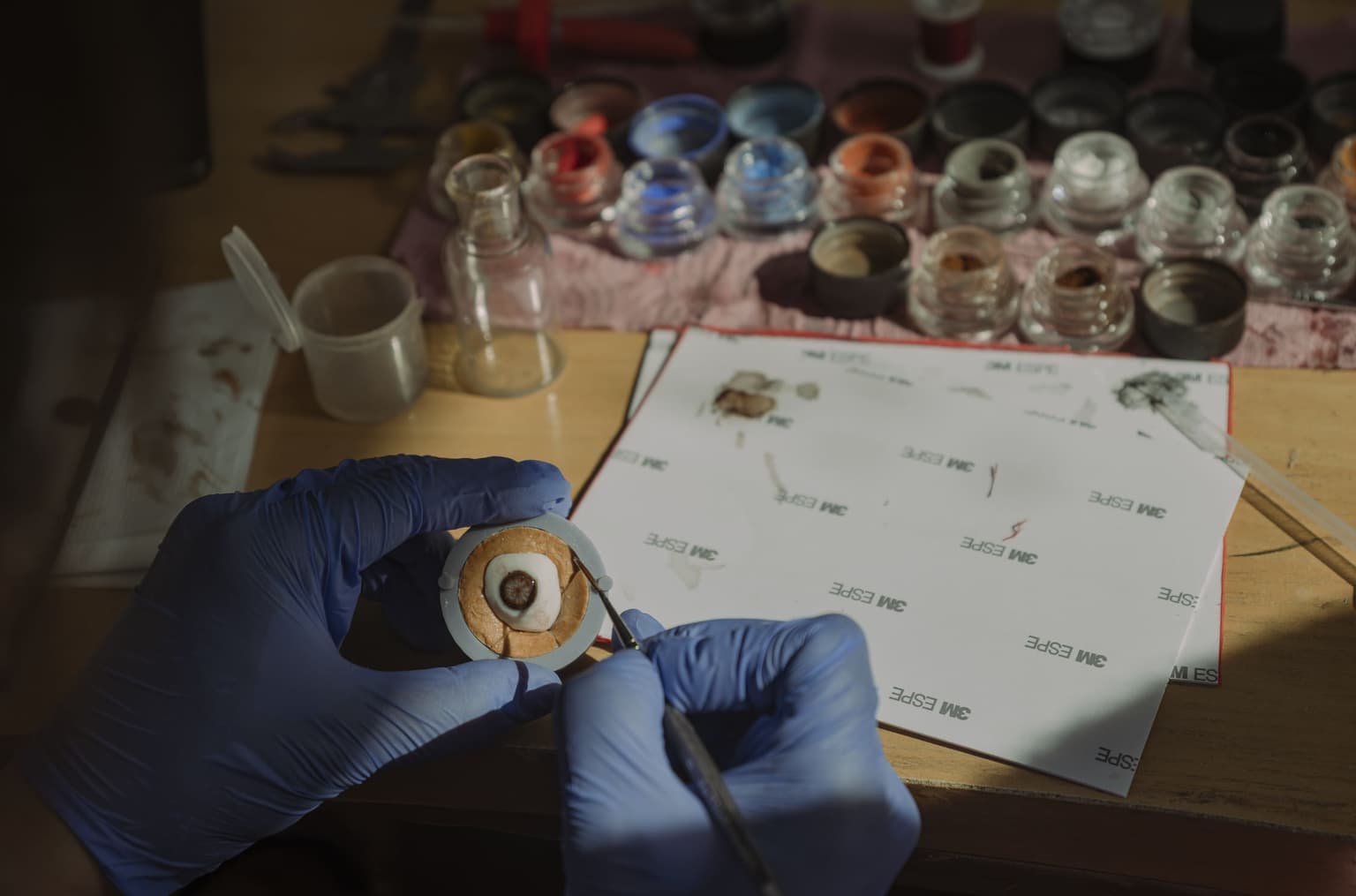
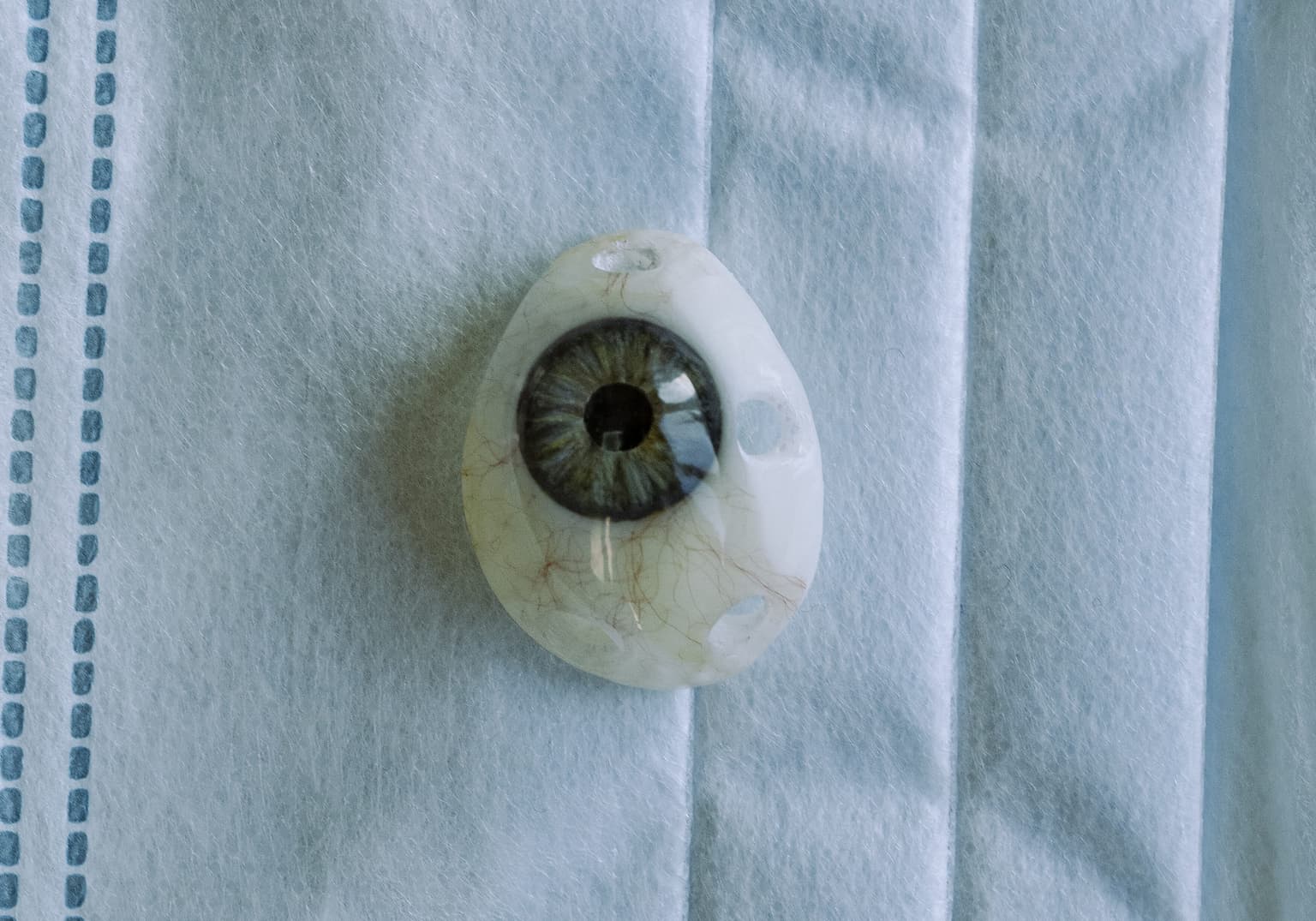
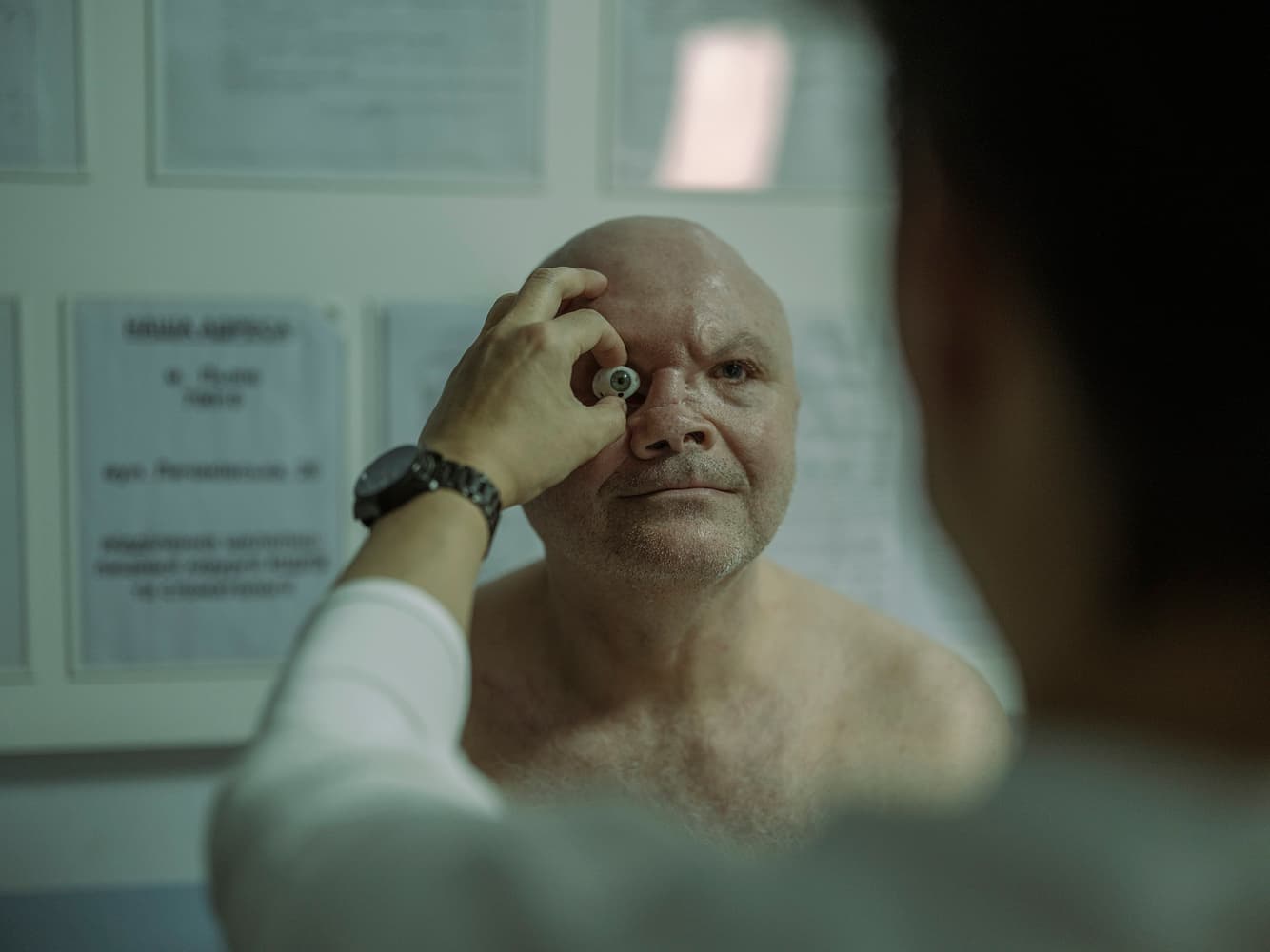
For many of the patients, the injuries themselves likely serve as a reminder of a tough day on the battlefield when they got wounded and may have lost their comrades, American surgeon Gandhi says.
"Their injuries take them back to that moment where they lost people they cared about," Gandhi said outside of the operating room during Semeniuk's surgery.
Semeniuk believes it's "impossible" to forget that July day on the battlefield, but he understands he must live on. He says he tries to distract himself with chores and everyday moments because he is convinced that dwelling on the pain is not the right way to cope with his grief.
Originally from the Russian-occupied town of Tokmak in southeastern Zaporizhzhia Oblast, Semeniuk, whose two kids are already grown, lives with his wife in Zaporizhzhia, not far from his hometown. He said he eventually would like to help veterans reintegrate more effectively into society by speaking with them, especially now that he can't return to his former occupation in metallurgy.
"Especially in my case, cosmetic intervention is hope, hope for a better, more fulfilling life, so to speak, and that's very important," Semeniuk said.
Practicality over aesthetics
From the moment Pavlo Martseniuk, a Ukrainian soldier with a severe facial blast injury, walked into the consultation room, he stressed one priority: practicality over aesthetics.
Escorted by a caregiver, Martseniuk took each step cautiously, using his walking stick to probe the floor ahead. American surgeons quickly gathered around the 35-year-old blind patient, each offering their own idea of what procedure could be performed to even make the smallest difference.
"Let's see what brings us as we go," American facial plastic surgeon Frodel told the group, as the doctors asked Martseniuk to open and close his mouth.
Having endured a devastating facial disfigurement in 2024, Martseniuk is hesitant about taking major steps and prefers to take them slowly, one by one. In the summer of 2024, Martseniuk, then an assault soldier with the 95th Air Assault Brigade, suffered a serious injury at a training ground in Donetsk Oblast when his instructor decided to jump on a TM-62 anti-tank mine. The blast tore the instructor's body in half, killing him and two other soldiers.
"My goal is to inspire and show the resilience of our Ukrainian spirit."
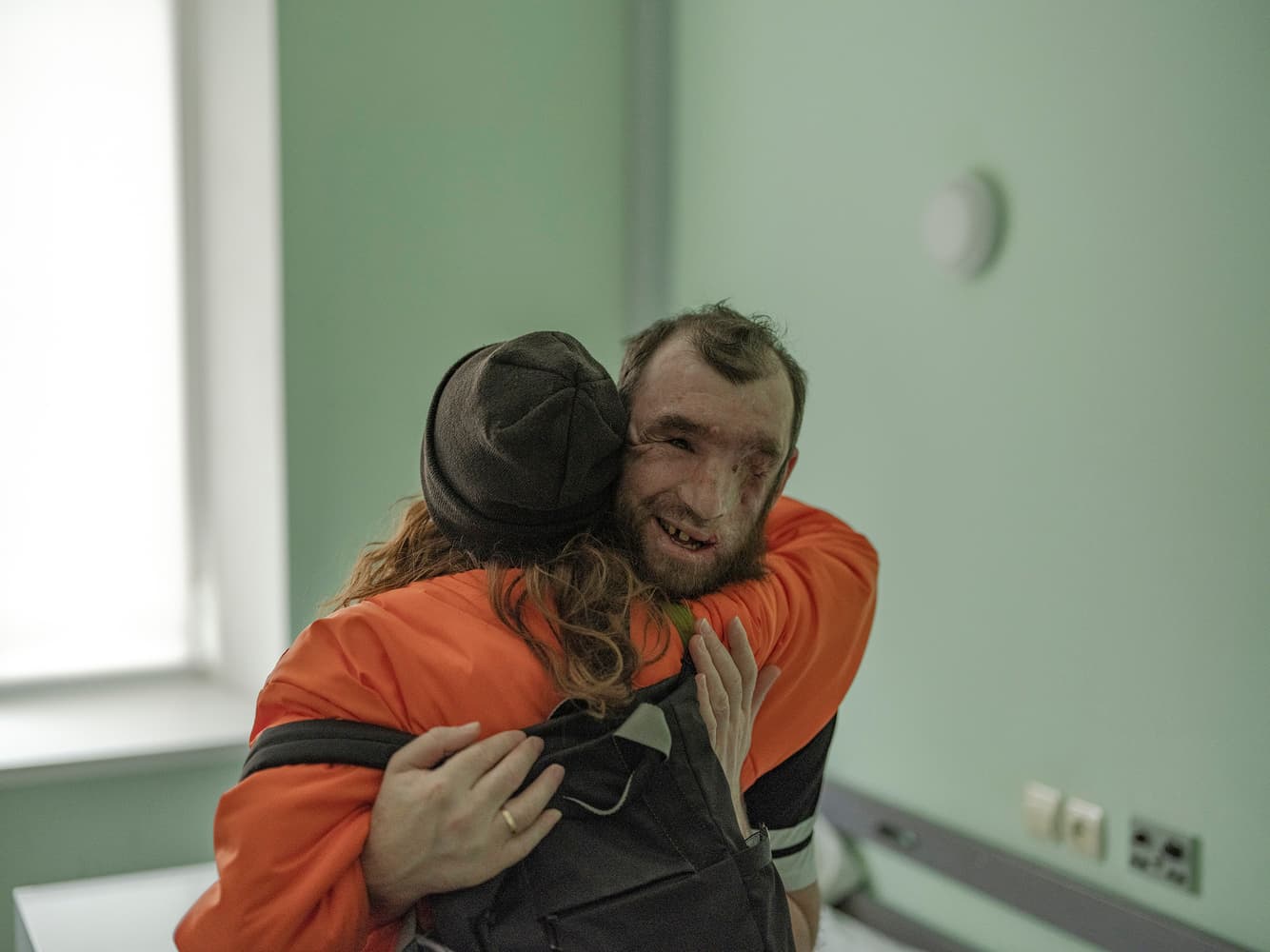
Standing only a few meters away from the mine, Martseniuk said he took the most severe injury among the survivors. There were several other anti-tank mines next to the one that detonated, but luckily, they didn't explode.
Though he struggles to understand why the instructor decided to jump on a mine, Martseniuk says he only feels sympathy for the instructor's family rather than anger over the mistake. He stressed that his only anger is directed toward Russia, which invaded Ukraine in the first place.
Originally having enlisted in the army in 2021, Martseniuk was immediately deployed to Donetsk Oblast as soon as the full-scale invasion began. Drawn to the adrenaline rush and intensity of assault operations, he eventually became an assault soldier in 2022.
The returning American surgeons who have traveled to Ukraine on multiple "Face to Face" missions say that they particularly remember Martseniuk because he suffered the worst facial injury of all patients. One of them, Ryan Winters, says that he is "an inspiring" case because he has significantly transformed, both physically and psychologically, since they first met him in 2024.
Martseniuk currently lives in Lviv in a supported living facility, where he is working to become as independent as possible before moving back in with his family. His children are his biggest motivation. He has two daughters, aged 13 and 6, and an 11-year-old son. Knowing they will look to him as they grow older, Martseniuk strives to be the best role model for them by showing his strength as he overcomes life-changing injuries.
"You are not just doing it for yourself when you go through the difficulties," Martseniuk said, adding that "You are also showing your children that you can go through anything in life, and that it is not worth giving up in the face of any difficulties."
"My goal is to inspire and show the resilience of our Ukrainian spirit."
Describing himself as a very emotional person, Martseniuk values the highs in his life and holds onto those moments for a long time. He said one such moment came recently, when he visited his hometown in western Khmelnytskyi Oblast to attend his youngest daughter's end-of-school-year event. As a present for her, he wore for the first time a pair of prosthetic glasses designed to conceal his facial injury. After failing to recognize her father for about 30 minutes during her performance, she jumped with excitement as soon as she realized who had come to surprise her.
"I was overwhelmed with emotions," Martseniuk said. "To be honest, I very often miss such feelings because such moments are very rare in our lives."
Despite having to navigate life with a lifelong disability, Martseniuk says his belief in life keeps him going, and that it has a lot more beautiful moments to offer in the future.
"Life doesn't end, even if you are blind. It's not the end as long as your body continues to feel," Martseniuk said.
"Life still continues. Parts of the body reached an end, but not you."
Author's note:
Hi, this is Asami Terajima, the author of this article.
Thank you for reading it till the end. Meeting Ukrainian soldiers with facial injuries and American surgeons flying in to conduct complicated surgeries in western Ukraine was a very wholesome experience, in a different way from my usual front-line reporting.
If you would like the Kyiv Independent to continue covering more human stories and the reality of the war from the ground, please consider becoming a member.