EU reveals details on 90 billion 'Ukraine Support Loan'
 on Google
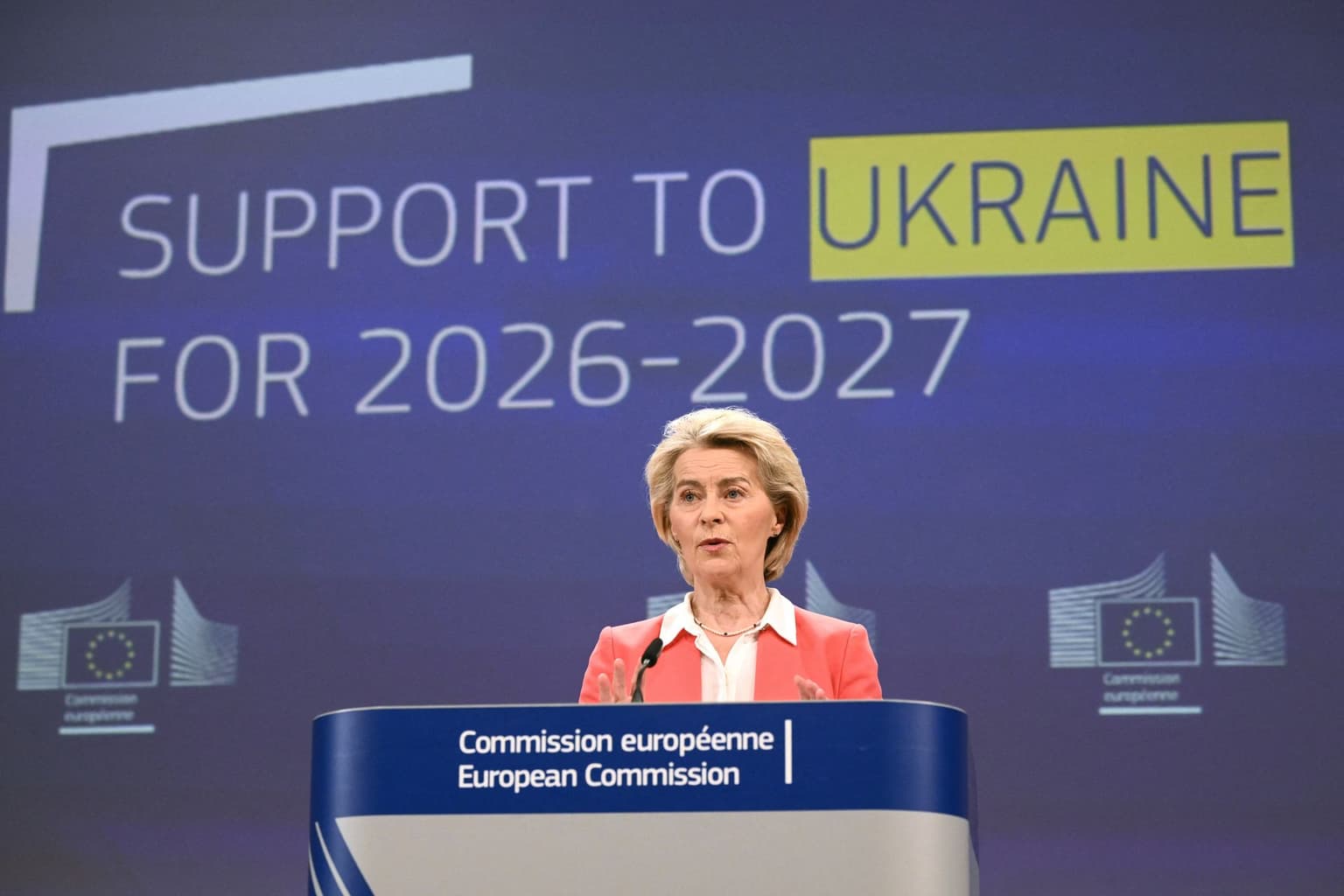
The EU's executive body unveiled the breakdown of a 90 billion euros ($105 billion) financial lifeline to Ukraine, with the majority of the funds earmarked for defense as the war in Ukraine approaches its fifth year.
Sixty billion euros ($70 billion) is designated for military spending, with the remaining 30 billion euros ($35 billion) allocated to support Ukraine's budget, European Commission president Ursula von der Leyen said during a press conference in Brussels on Jan 14.
European countries agreed at a Brussels summit in December last year to jointly raise 90 billion euros of debt to lend to Kyiv, after a plan to use frozen Russian assets to fund a so-called "reparations loan" fell apart at the eleventh hour. Ukraine was set to run out of cash by mid-2026 without additional support.
"We all want peace for Ukraine, and for that, Ukraine must be in a position of strength," von der Leyen said during the press conference.
The Commission's proposal for the funds, called the "Ukraine Support Loan," will now go to the European Parliament and Council for consideration.
The loan will cover roughly two-thirds of Ukraine's needs for 2026–2027. Kyiv needs 52 billion euros ($61 billion) for budgetary support and 83 billion euros ($97 billion) for defense in 2026 and 2027, according to EU calculations.
Ukraine will not have to pay back the loan to the EU except in the improbable case that Russia pays reparations to Ukraine after the war.
Von der Leyen said that military equipment produced in an extended list of European countries would be prioritized, but that funds could also be spent elsewhere if the necessary gear was not available.
European countries are seeking to reboot their defense industrial base in the face of mounting geopolitical tensions. Von der Leyen said during the press conference that the funds should foster closer integration with Europe's defense industrial base.
But Ukraine has repeatedly stated that American-made Patriot air defense batteries and their ammunition (PAC-3 interceptors) are non-substitutable for downing Russian ballistic missiles, which have caused widespread devastation to Ukraine's energy infrastructure in recent weeks.
On the budgetary side, von der Leyen outlined that the support is conditioned on Ukraine committing to "strong democratic processes, the rule of law, and anti-corruption measures."
"The budget support (...) is designed to help Ukraine advance its reforms and modernize the country," she said.
Although an agreement on the reparations loan in December failed, von der Leyen said that it "remained on the table." She also said that the assets could be used to repay the support loan.
Approximately $300 billion of Russian central bank reserves were frozen worldwide after Russia invaded Ukraine in February 2022. The majority of those are held in Belgium, which became the focus of the reparations loan plan.