Ukraine's race for its own ballistic missile
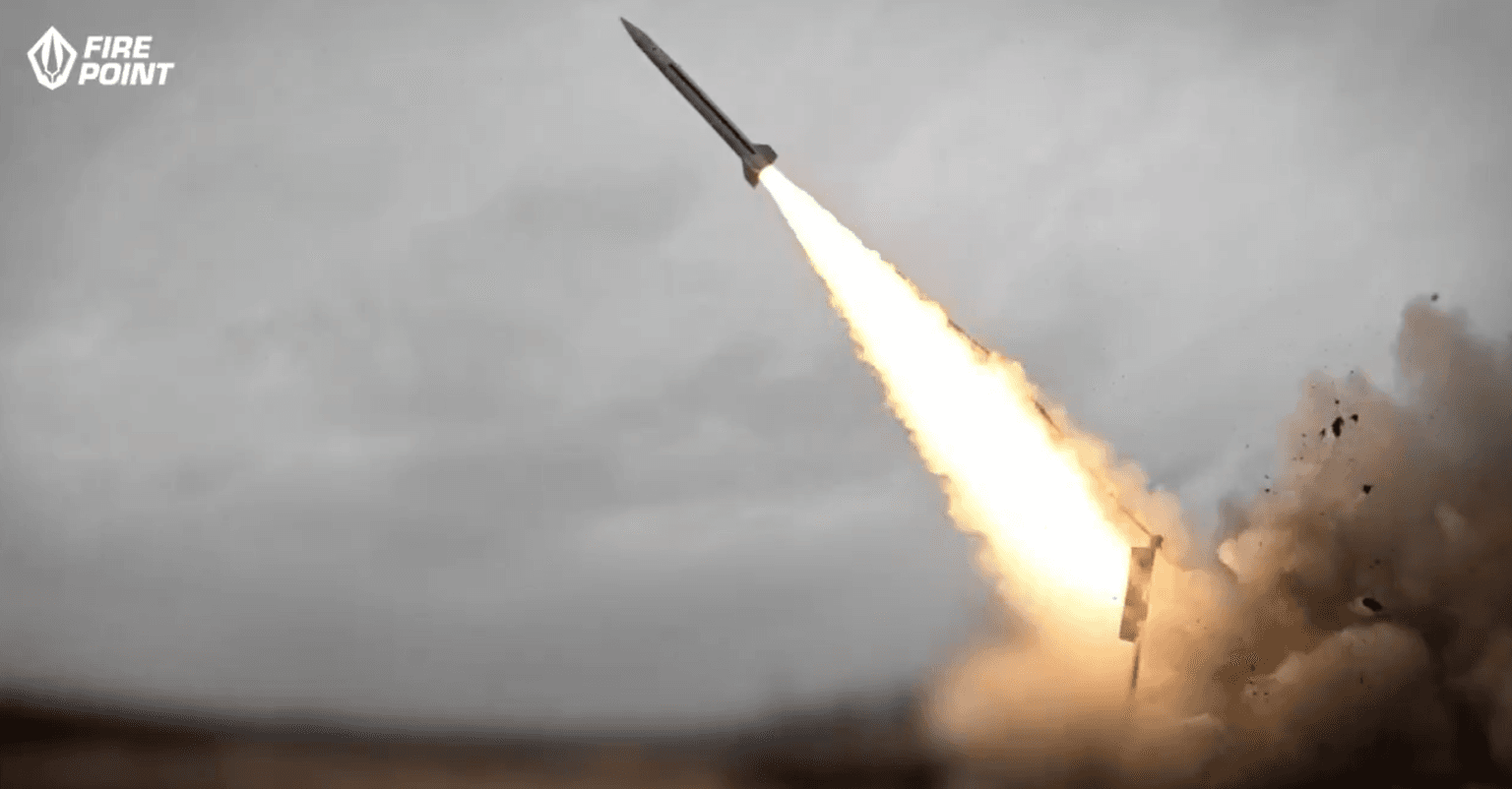
Screenshot from a video showing a test launch of the FP-7 ballistic missile, published on Feb. 27, 2026. (Denys Shtilierman / X)
 on Google
Incredibly fast and destructive, ballistic missiles have become a key feature of Russia's continuing long-range assault against Ukrainian cities. And while Kyiv has built world-leading drone technology, when it comes to producing ballistic missiles, a key capability in modern warfare, Ukraine still decisively lags behind Russia.
This could soon change, as Kyiv seeks to close the gap by mass-producing its own ballistic missiles, two of which are scheduled to enter service in the coming months.
Fire Point's new FP-7 short-range ballistic missile is due to enter service with the Ukrainian military within "weeks," with the longer-ranged FP-9 "currently undergoing flight tests," according to Fire Point's CEO, Iryna Terekh, speaking at a defense conference in Poland on Sept. 10.
"Ukraine’s new ballistic missiles could have a significant impact on the outcome of the war if they enter service in meaningful numbers," Fabian Hoffmann, a senior research fellow at the Norwegian Institute for Defence Studies, told the Kyiv Independent.
A battle of ballistics
Hoffmann said ballistic missiles would give Ukraine the ability to quickly launch devastating missile strikes against valuable, time-sensitive military targets, such as Russian ballistic missile launchers — a capability Ukraine currently lacks, though one it desperately needs.
Broadly speaking, ballistic missiles fly in high arcs at hypersonic speeds and only a handful of air defense systems can intercept them. Cruise missiles fly significantly slower and lower to the ground, and are generally easier to intercept.
Ukraine relies on American-made Patriot PAC-3 air defense systems to defend itself against ballistic missiles and a chronic shortage of Patriot interceptors has left cities highly vulnerable ahead of winter.
Russia currently produces the munitions at a rate of "about 120 ballistic missiles every month."

Russia currently produces the munitions at a rate of "about 120 ballistic missiles every month", Ukrainian President Zelensky told a NATO-Ukraine Council meeting in Kyiv on June 3, a tempo of production that allows for sustained and deadly missile barrages against Ukrainian cities.
Unfortunately for Ukraine, Russian production of ballistic missiles far outpaces Western production of Patriot ballistic missile interceptors — which Lockheed Martin currently produces at a rate of around 50 per month — let alone Ukraine's ability to acquire the costly and in-demand missiles.
When Russia’s full-scale invasion began in February 2022, Ukraine possessed around 500 OTR-21 Tochka short-range ballistic missiles for around 90 launchers, according to the International Institute for Strategic Studies (IISS), with no ability to produce more. These Soviet-legacy missiles were both limited by range of a maximum of 120 kilometers (75 miles) and were relatively inaccurate compared to modern precision weapons.
In comparison, Russia fielded 900 modern and longer-ranged Iskander-M ballistic missiles in February 2022, according to the IISS, along with significant numbers of Kh-47M2 Kinzhal aeroballistic missiles, 3M22 Zircon quasiballistic missiles, and a large number of S-300 and S-400 surface-to-air missiles with a secondary land attack role.
By ramping up domestic production, as well as by sourcing supplies of munitions from North Korea, Russia has been able to maintain a stockpile of ballistic missiles while routinely subjecting Ukrainian cities to mass barrages.
Ukraine's military intelligence agency (HUR) assessed that by mid-2026, Russian stockpiles still held 130 Iskander ballistic missiles, 400 RM-48U ballistic missiles for the S-400 system, 120 Zircon quasiballistic missiles, 50 Kinzhal aeroballistic missiles, and 50 North Korean ballistic missiles of various types.
In comparison, Ukraine currently has little to no serial domestic ballistic missile production. While President Zelensky claimed Ukraine had "begun using" the 1KR1 Sapsan short-range ballistic missile on Dec. 9, 2025, evidence of it entering widespread production has remained elusive. If the weapon system had indeed entered Ukrainian service, it did so in extremely small numbers.
Limited supplies
With such limited domestic production, Ukraine has relied on foreign allies for an extremely limited supply of replacement ballistic missiles — the American-made ATACMS. Ukraine officially received its first consignment of these older American missiles in October 2023. Unofficial reports suggested Ukraine received between 40 to 50 of the missiles.
Upon arrival, Ukraine immediately put them to use. On Oct. 17, 2023, Ukraine used M39 ATACMS to strike two helicopter forward operating bases in occupied Luhansk and Berdyansk, destroying 14 Russian helicopters, according to a British Defence Intelligence assessment — including eight Ka-52 attack helicopters — approximately 11% of Russia's entire fleet of that type.
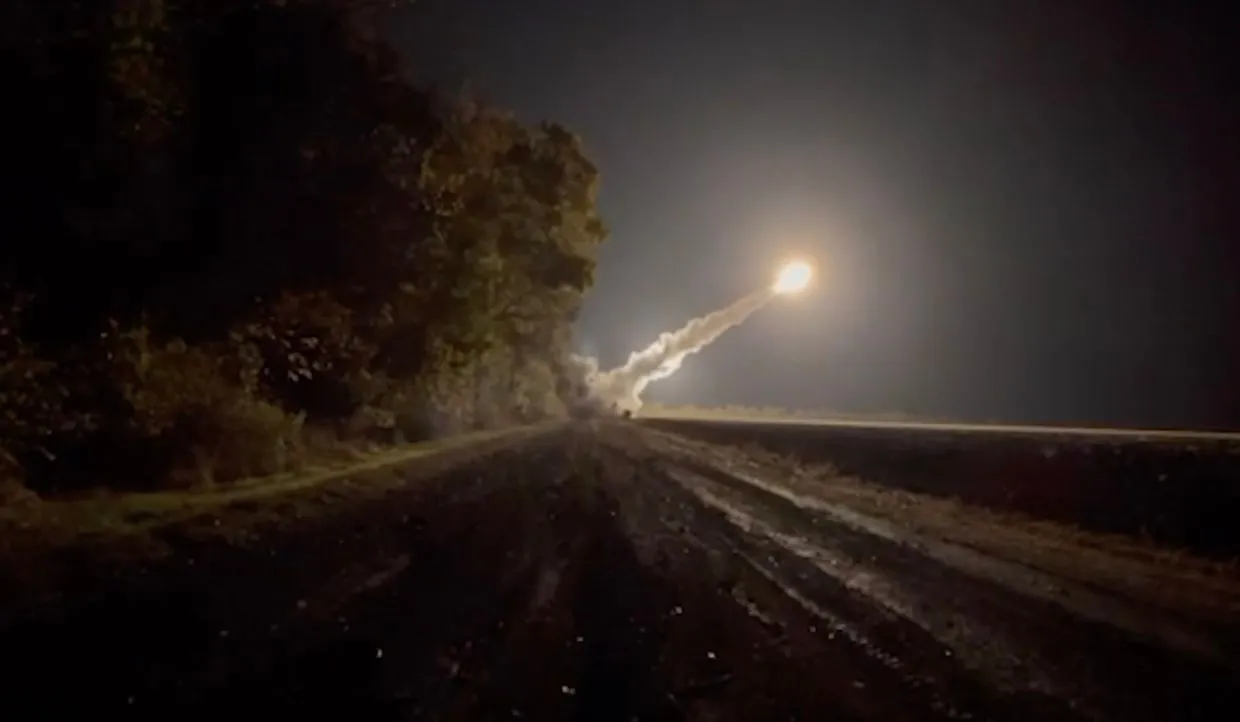
Ukraine had to use its small stockpile of ATACMS sparingly, as opportunities to replenish stocks were extremely limited. The most significant replenishment came in August 2026, when Ukraine signed an agreement to purchase 70 M39 ATACMS missiles from Turkey as part of a wider arms deal.
This reliance on external supply from often unreliable foreign partners has created a key strategic vulnerability Ukraine has sought to address with domestic ballistic missile production. As part of this, leading Ukrainian defense company Fire Point spent 150 million euros to construct a solid rocket fuel plant in Denmark to support the development of Ukraine's new FP-7 and FP-9 missiles.
Ukraine's ballistic hopefuls
Fire Point has become an important domestic defense manufacturer since its founding in 2022, manufacturing a series of highly effective long-range drones, yet corruption allegations and questions about the ultimate ownership of the company have accompanied its rise.
Despite the allegations, Fire Point's FP-1 long-range drone has become a key part of Ukraine's deep strike campaign, while the FP-2 medium-range drone — which sacrifices range for a larger warhead — has become a mainstay of Ukraine's increasingly successful mid-range strike campaign.

"The development of Ukraine's drone program has demonstrated that, with sufficient funding and prioritization, significant results can be achieved in the production of long-range weapons," Nazarii Barchuk, an analyst at the Ukrainian Security and Cooperation Center, told the Kyiv Independent, while noting that "ballistic missiles are a more complex type of weapon to manufacture."
Barchuk believes the critical factor will be ensuring "adequate funding for the program," including investment from foreign partners, as well as the "preservation and expansion of component production chains."
Although Ukraine's various domestic long-range drone programs have matured into a successful capability that frequently inflicts severe damage on Russian military and economic infrastructure, they have been less able to deal with more mobile military targets. Russian forces have frequently mitigated the damage of Ukrainian drone raids against military airfields by flying valuable aircraft away from incoming slow-flying drones.
A learning curve
Fire Point also manufactures the FP-5 Flamingo heavy cruise missile, and while the first few operational uses saw the missiles fall short of their intended targets, recent Flamingo launches have been far more successful. In June 2026, three of the large cruise missiles struck the Titan-Barrikady manufacturing plant in Volgograd, damaging the facility.
"The Flamingo was fairly inaccurate in the beginning," Hoffmann told the Kyiv Independent, explaining that Fire Point has since modified and upgraded its missile.
"The FP-5 Flamingo is now operationally more useful and I could see the same process taking place with the FP-7 and the FP-9," Hoffmann said.

The new FP-7 ballistic missile is designed with a claimed range of 200 kilometers (124 miles), a top speed of 1,500 meters per second (3,355 mph), and a 150-kilogram warhead. The missile is based on the Soviet-era 48N6 interceptor used in the S-300 and S-400 air defense systems, but uses modern components and manufacturing techniques.
"This will be an analog of ATACMS, probably even with a larger warhead. But it will cost at least twice as little," Denys Shtilerman, chief designer and co-founder of Fire Point, said in an interview in March. Shtilerman emphasized the goal was to produce the system en masse. "If you produce two or three ballistic missiles a month, it makes no sense. It will not affect the front," he said.
Likely targets
"There will be different targets for each type of missile," Barchuk told the Kyiv Independent. "The FP-7 is designed for targets at the front line and in the immediate rear, such as headquarters and command posts, weapons storage facilities, military equipment (radar stations, electronic warfare systems, air defense systems, and missile launchers), drone launch sites and military infrastructure, including airfields within the missile’s range," he said.
The larger and more complex FP-9 is due to enter service "by the end of the year," according to Terekh.
The FP-9 is a significantly larger, faster, and longer-ranged missile, with a range of 855 kilometers (531 miles), a top speed of 2,200 meters per second (4,920 mph), and the ability to carry an 800-kilogram warhead.
Besides enabling strikes on a huge number of military facilities and important industrial sites, the missile also puts Moscow, as well as other Russian cities, within range.

"If Ukraine is able to mass produce around 50 FP-9 missiles per month, and if they're reasonably accurate so they can go after high-value military assets, as well as larger infrastructure targets, then it's going to get much more uncomfortable for the Russians," Hoffmann told the Kyiv Independent. "That would be really significant, I would say, but we have to get there first."
"The FP-9 has a longer range and a larger warhead," Barchuk said. "This missile is intended to strike targets deep in the rear, specifically on Russian territory. Their targets may vary, but priority is likely to be given to military-industrial facilities, protected weapons arsenals, critical communications nodes (including satellite communications), military installations and airfields from which Russian tactical aircraft take off to carry out strikes against Ukraine," he said.
The successful introduction of the FP-9 could be a significant upgrade of Ukraine's capabilities, Hoffmann said. "Within minutes you could strike, 600, 700, 800 kilometers deep into Russia, which could make ballistic missile launcher hunting or air defense suppression and destruction a lot more successful."