Ukraine war latest: Zelensky 'not sure' Russia wants to stop strikes on energy infrastructure
 on Google
Key developments on Sept. 14:
- Trump claims Ukraine, Russia agree to halt strikes on energy targets, Kyiv unaware of deal
- Russian general involved in Donetsk offensives reportedly killed in Ukrainian strike
- Russia using Belarusian LTE networks, relay stations for mass drone attacks on Ukraine, Kyiv says
- Drone strikes near Polish border show Putin's 'desperation,' NATO's Rutte says
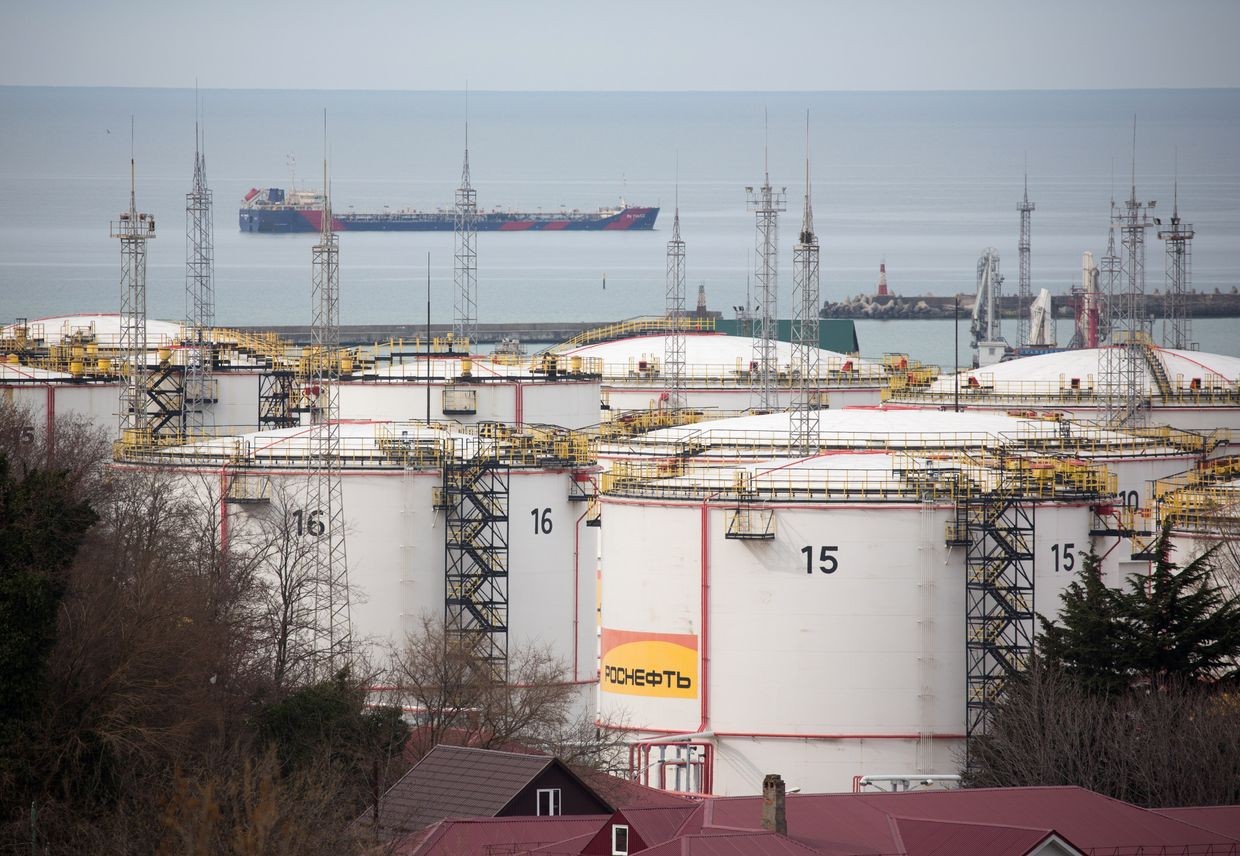
U.S. President Donald Trump claimed on Sept. 14 that Ukraine and Russia have agreed to halt strikes on "energy targets," as fuel prices continue to rise worldwide.
"Ukraine has agreed not to hit Russian Energy Targets. Russia has agreed to do, likewise!" Trump said in a Truth Social post.
"The World's Diesel prise rise is mostly caused by the Russia/Ukraine war, not Iran."
Neither Ukraine nor Russia has confirmed that such a deal had been struck. Roughly an hour after Trump's post, Zelensky responded, saying he was "not sure" of Russia's desire to adhere to any such agreement.
"If the partners are ready to ensure Russia’s real desire not to strike our electricity, other energy facilities, critical infrastructure, and food movement, then we are, of course, ready to ensure the corresponding absence of our strikes," Zelensky wrote on Telegram.
"The war must be ended. And a de-escalation step regarding critical infrastructure could be the first step towards peace. We are waiting for details from our partners."
A top Ukrainian energy official, speaking to the Kyiv Independent on condition of anonymity, said they had not heard of any such energy ceasefire.
The announcement comes just a day after Trump directly blamed Ukrainian President Volodymyr Zelensky for rising diesel prices — including in the U.S., where the price soared to a record $6.23 per gallon ($1.65 per liter) over the weekend.
Russian general involved in Donetsk offensives reportedly killed in Ukrainian strike
Lt. Gen. Sergei Milchakov, commander of Russia's 51st Combined Arms Army who oversaw operations in key sectors of Donetsk Oblast, was reportedly killed in a Ukrainian strike on a Russian military command post last month, Russian media reported on Sept. 14.
The reported death has been linked to a Ukrainian strike on Aug. 26 targeting Russian command posts in occupied Donetsk Oblast.
On Aug. 27, the General Staff confirmed the strike. Ukraine’s Defense Ministry said at the time that precision strikes had destroyed concealed Russian command posts in Donetsk and information about "heavy losses" among Russian officers was still being clarified.
Reporting on Milchakov's possible death, Russian independent outlet Vazhniye Istorii said that if confirmed, he would be the 23rd Russian general killed during the war against Ukraine.
Russian propagandist Anastasia Kashevarova said the attack appeared to be a precision strike and suggested there may have been a leak about the command post’s location "from within our own ranks."
Russia has not officially confirmed Milchakov’s death. The Kyiv Independent reached out to Ukraine’s General Staff for confirmation but had not received a response at the time of publication.
Russia using Belarusian LTE networks, relay stations for mass drone attacks on Ukraine, Kyiv says
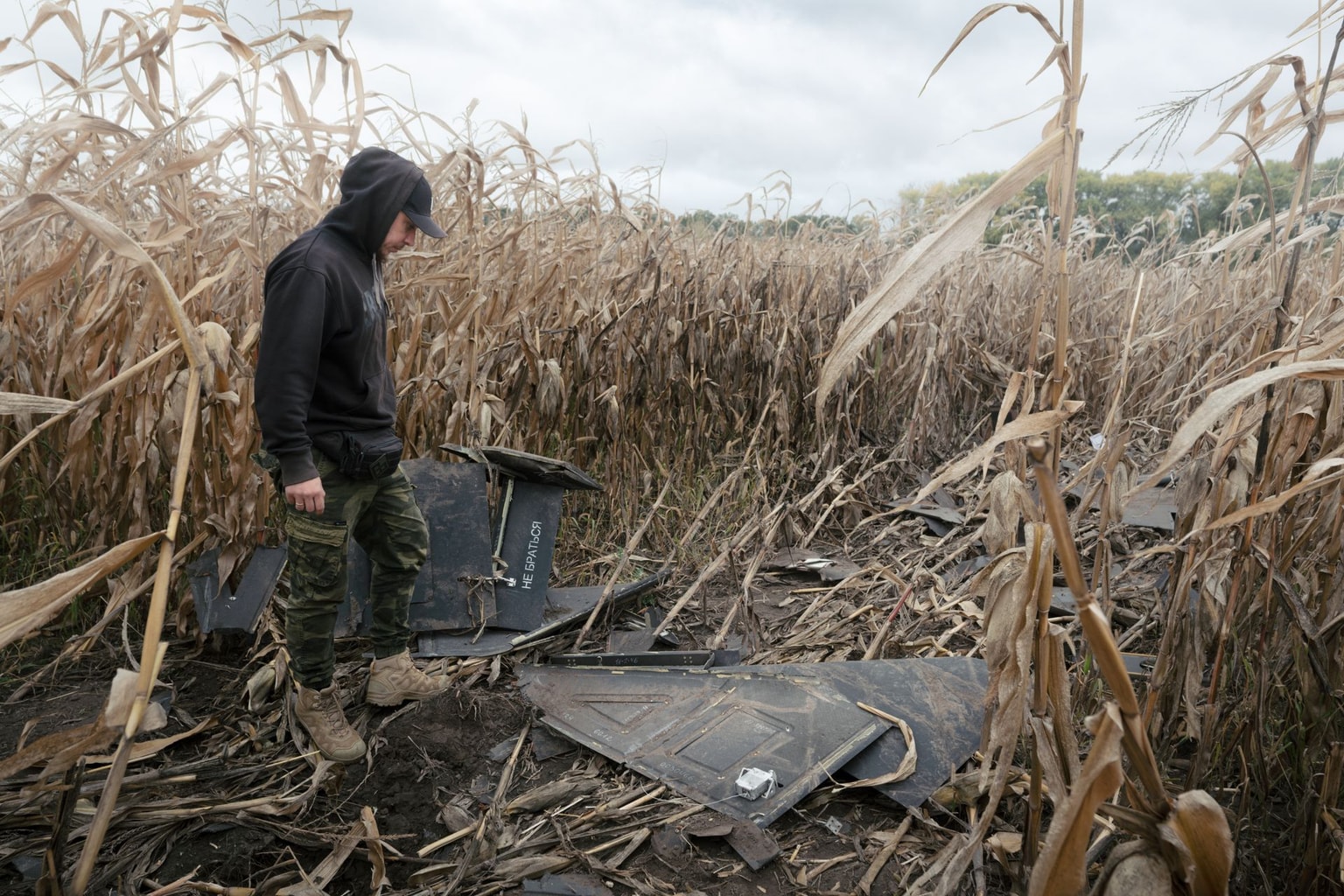
Russia is likely using Belarusian Long Term Evolution (LTE) networks, as well as a network of repeater stations on Belarusian territory, to help provide stable signals to Russian Shahed-type drones used in mass attacks on Ukraine, two Ukrainian officials said on Sept. 14.
The revelation came two days after Russia sent hundreds of the petrol-powered drones, hugging Ukraine's northern border, in rare a mass attack targeting regions in western Ukraine on Sept. 12.
Speaking on a Radio NV livestream, Presidential Advisor Serhii "Flash" Beskretnov said the flight path of the drones used in the attack suggested the use of domestic mobile networks for the cross-border attacks.
"If we look at the movement of jet-powered and conventional 'Shaheds,' they stay close to the border with Belarus," he said.
"I came to the conclusion that the 'Shaheds' probably have connectivity to Belarusian commercial LTE networks."
Separately, on the same day, State Border Guard Service Spokesperson Andrii Demchenko told Ukrainian television that Russia was also using radio repeater stations in the attacks.
"The air strikes that targeted Rivne, Volyn, and Lviv oblasts were also actually carried out from the territory of Belarus," Demchenko said.
"The air assets launched by Russia were fed with a signal through repeaters that were also located precisely on the territory of this country."
The placement of such relay stations in Belarusian territory has been a cause of tension between Kyiv and Minsk, with President Zelensky in the summer issuing a formal ultimatum for the equipment to be taken down.
At the time, Zelensky claimed that counterpart Alexander Lukashenko had agreed to take down the repeaters.
Lacking access to technology like SpaceX's Starlink, Russia consistently uses a mix of innovative radio technology to maintain connection with Shahed-type drones during mass attacks on Ukraine.
read also
Drone strikes near Polish border show Putin's 'desperation,' NATO's Rutte says
Russian drone strikes "close to NATO territory" demonstrate Russian President Vladimir Putin’s "desperation," NATO General Secretary Mark Rutte said on Sept. 14.
Speaking at NATO headquarters in Brussels, Rutte said Russia was "growing increasingly reckless as it continues its terrible war against Ukraine."
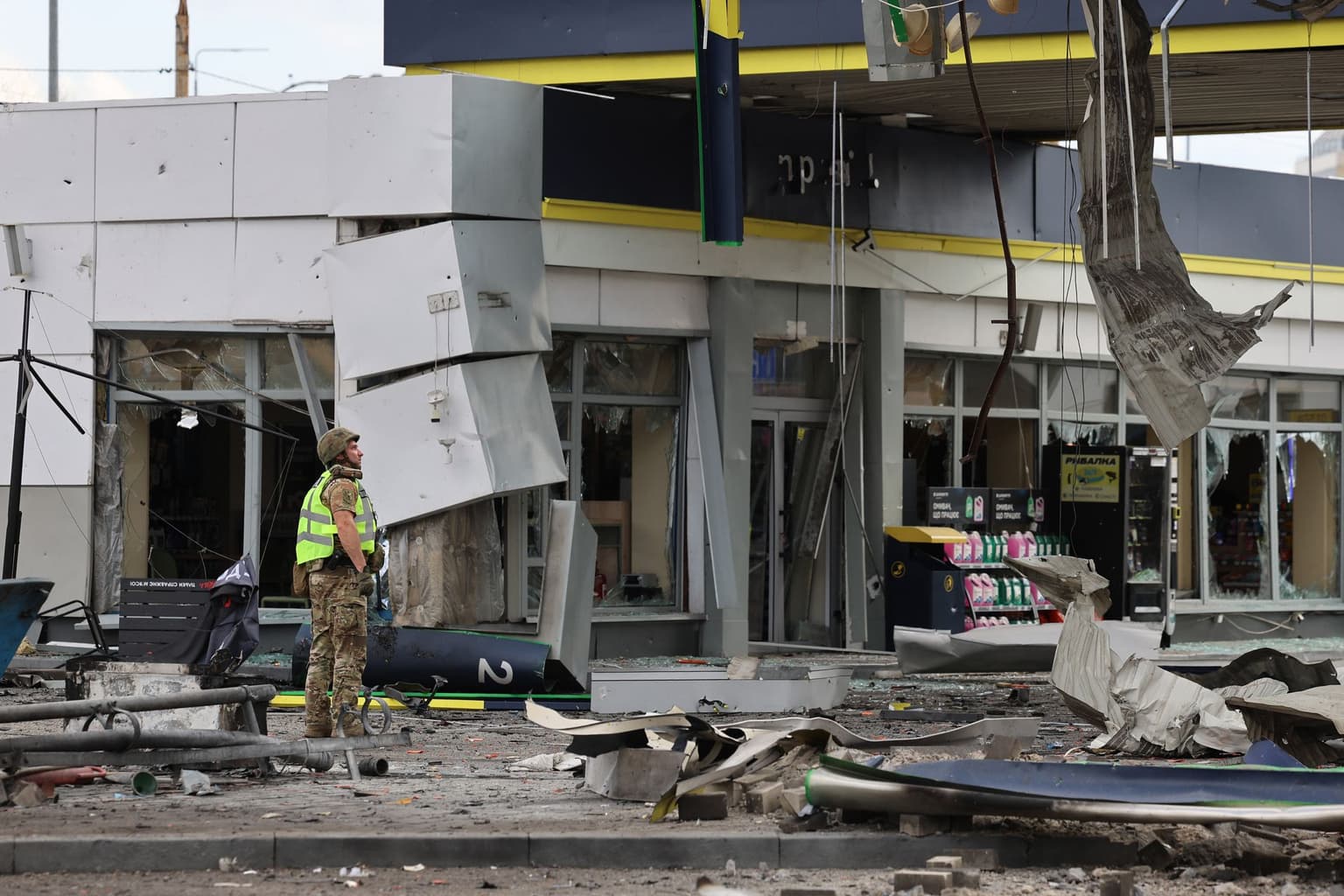
Russia launched drones overnight at western Ukraine on Sept. 13, striking a gas station near the Yahodyn-Dorohusk border crossing and a Kyiv-Warsaw passenger train just 2 kilometers (1.2 miles) from the Polish border.
The assault brought the war unusually close to Poland's border, with multiple strikes reported in Volyn Oblast, Ukraine's northwest, near the Yahodyn–Dorohusk crossing.
It was later reported that former U.K. Prime Minister Boris Johnson and other European officials were on the train in front of the one that was attacked and had passed through the border crossing shortly before.
Polish Interior Minister Marcin Kierwinski said Poland was treating the incident with the "utmost seriousness."
Polish Prime Minister Donald Tusk said Poland wants to change the organization of traffic at the border crossing to speed it up and avoid large clusters, according to Polish radio.
"It is important not to accumulate fuel trucks near our border crossings. I don't have to explain this, but this is our weak point," Tusk added.