How Ukraine's ultimatum changed the equation for Belarus
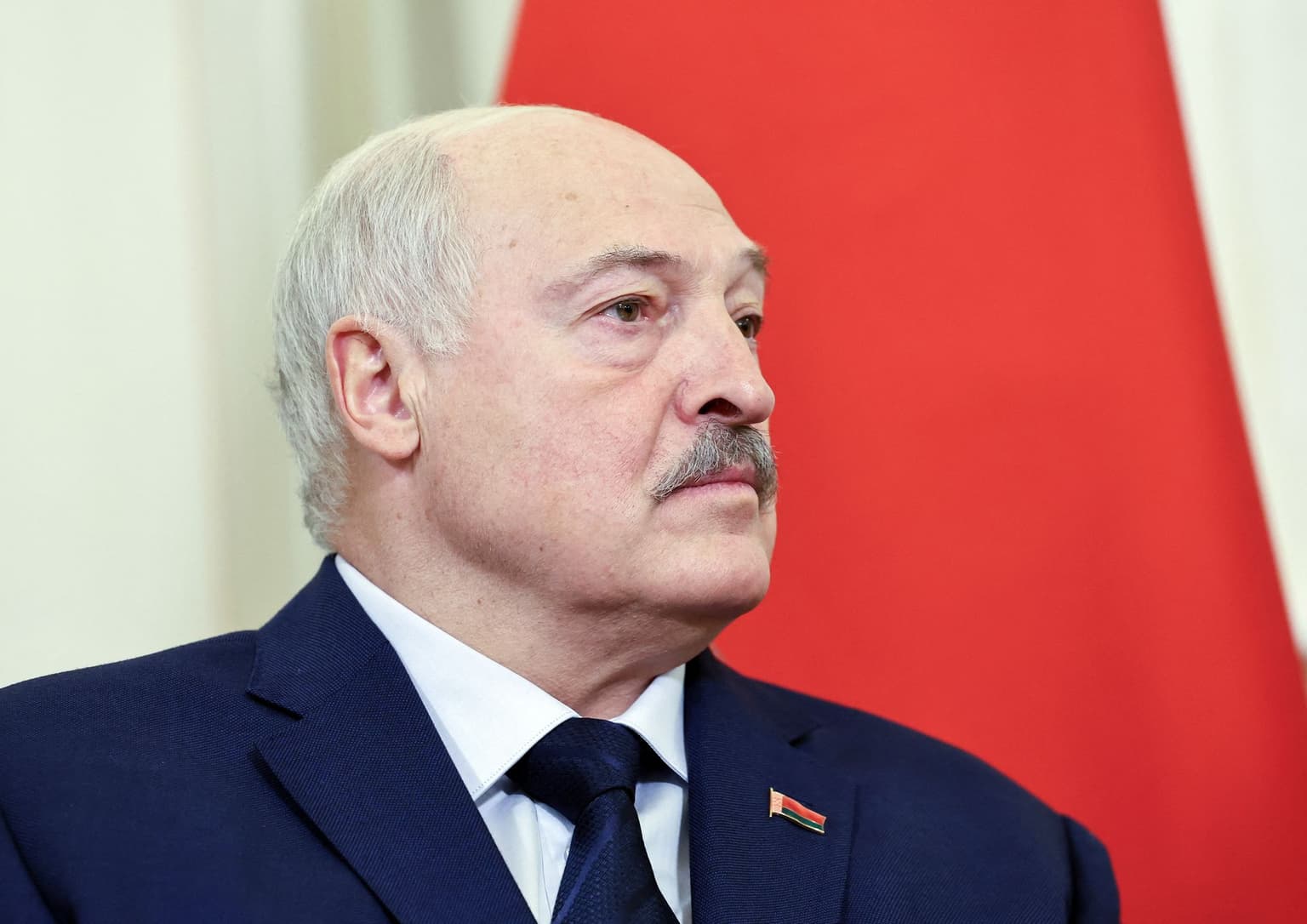
Belarusian dictator Alexander Lukashenko in St. Petersburg, Russia, on Dec. 21, 2025. (Alexander Kazakov / Pool / AFP / Getty Images)
 on Google
The relay equipment that helps guide Russian drones over Belarus went dark on June 22, days after President Volodymyr Zelensky issued a public ultimatum, threatening to disable the equipment with Ukraine's own forces if the demand is not met.
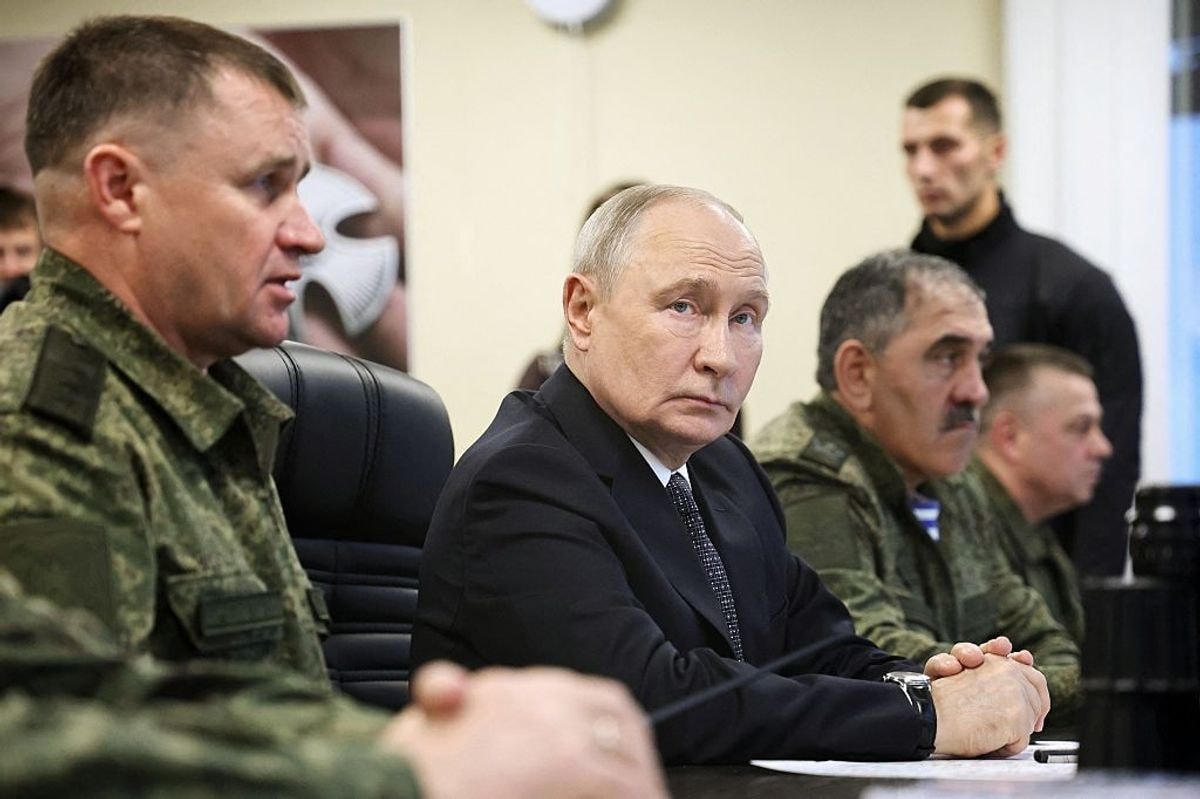
Zelensky's ultimatum to Alexander Lukashenko left the Belarusian dictator between a rock and a hard place: refuse, and Belarus risks joining Ukraine's list of drone targets. Comply, and he risks publicly defying Russian President Vladimir Putin — his country's key ally and economic lifeline.
The equipment went quiet, at least according to Zelensky. Whether the shutdown proves lasting remains unclear, but it offers the first visible sign of a broader shift: Ukraine is no longer treating Belarus as merely Russia's staging ground, but is increasingly willing to pressure Lukashenko directly.
Relay saga
Speaking to journalists on June 19, Zelensky sharpened his criticism of Lukashenko, arguing that despite repeated claims that Belarus does not want to be drawn into the war, the regime continues to assist Russia's military campaign.
The warning centered on what Zelensky described as relay systems mounted on communication towers in two Belarusian regions bordering Ukraine. According to the Ukrainian president, the equipment is being used to help coordinate Russian drone attacks against civilian areas rather than active front-line positions.
"If he does not (switch) it (off), we will," Zelensky said.
For almost a week, Lukashenko said nothing.

Fresh off an hour-long Al Arabiya interview in which he offered opinions on almost every issue of global politics, and even apologized to Zelensky, he didn't mention the ultimatum.
The tensions were resolved on June 24, when Zelensky claimed the relay equipment had been disabled a few days into the ultimatum.
"According to the information I received (…) the equipment stopped operating on the Belarusian territory as of June 22," Zelensky said. "Whether it has been dismantled or not, I honestly don't know yet."
Belarus did not confirm the claim. While there's little evidence on the ground of equipment's alleged "removal" or deactivation, the drop in the recorded number of Russian attack drones in northern Chernihiv Oblast may serve as an indirect confirmation. Large Shahed drone raids along the Belarus-Ukraine border have ceased, State Border Guard spokesperson Andrii Demchenko said on June 24.
Lukashenko broke his silence on June 25 while hosting the Moscow Oblast governor.
"Recently, Zelensky's representatives were right on this spot," he said. "I told them: tell your president that if he thinks he can talk to us this way, the quality of the war would instantly change." He left for talks with Putin the next day.
The ultimatum seems to have been solved in favor of Ukraine, at least for now. Driving the de-escalation is likely Lukashenko's understanding of his country's exposure to potential strikes, according to Katia Glod, deputy head of foreign policy at New Eurasia Strategies Center.
"He's worried about his refineries, of course — they're one of his few sources of revenue," Glod told the Kyiv Independent. "But more than that, I think he's worried about his personal safety."
Relay equipment, also known as signal repeaters, has been in the spotlight prior. In February, Zelensky claimed that Ukraine had successfully deactivated some of them.
"Drone repeaters have now appeared in Belarus, and this new technology is helping Russian 'Shaheds' strike our troops, the civilian population, and energy infrastructure, as these repeaters enable real-time targeting adjustments," Zelensky said in an interview with the Belarusian Independent news outlet Zerkalo.
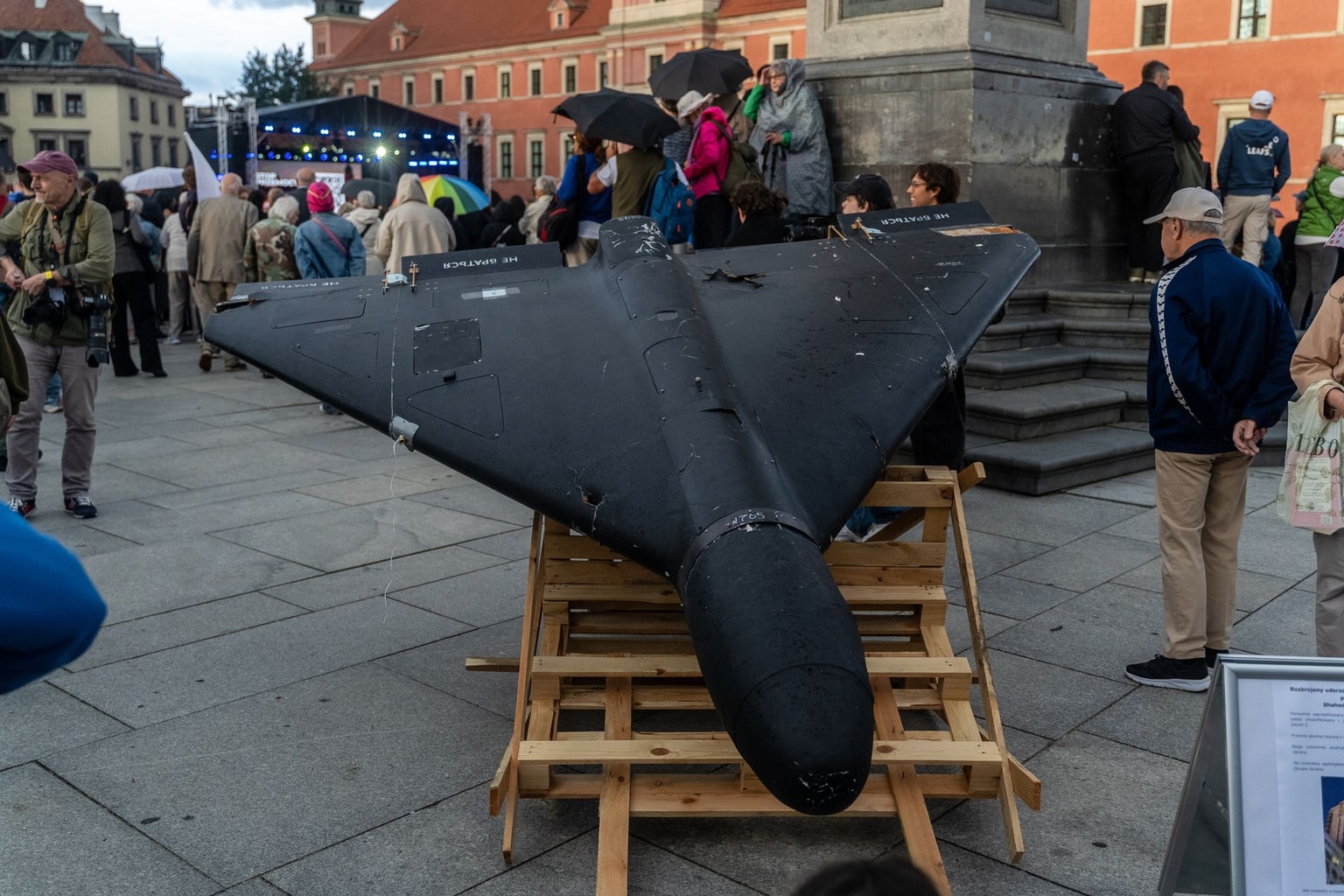
While earlier versions of Shaheds were programmed before launch to target specific coordinates, they can now be partially controlled by an operator or have their mission changed on the fly with the help of such stations, Belpol representative Uladzimir Zhyhar explains in a comment to the Kyiv Independent.
No strikes or acts of sabotage were reported in Belarus at the time. Experts believe that repeaters located close to the border were suppressed by Ukraine's electronic warfare. Stations away from the border can also be targeted by a cyberattack, avoiding direct strikes.
But the relays may matter less than the attention suggests.
"For some reason, everyone has focused so much attention on these relay stations — as if they were practically the most important issue. (...)The relay stations are only part of the picture. Beyond that, we're talking — and the Ukrainian president is talking — about enterprises that support the war effort, about oil refineries that supply fuel, including for military needs," Zhyhar told the Kyiv Independent.
"Shutting down the equipment does not mean removing it. Lukashenko is trying to buy time," he said.

Time might allow Lukashenko to come up with a strategy for dealing with Ukraine's wider demands. And because the equipment can quietly resurface within months, as it has before, the truce may be temporary.
"The aggressive war is dragging on. The Belarusian regime continues to play, as before, the role of an enabler. (…) We can predict that if these relay stations start operating again, Ukraine will most likely carry out its ultimatum," says Vadzim Kabanchuk, the Defense and National Security representative in opposition leader Sviatlana Tsikhanoukaya's shadow cabinet.
Ukraine's new strategy
Zelensky's full statement regarding Belarus and its role in the war suggests that Kyiv will make wider demands of Minsk. It comes in stark contrast to the cautious strategy Kyiv previously adopted in dealing with the Lukashenko regime, which has been providing crucial aid to Russia's war machine.
"The relay stations are a direct support. Turn it off, take it down, and show us that it's been taken down. Since this has been communicated to (Belarus) repeatedly, we've reached the stage of issuing a public warning. If they don't take it down, we'll take them down. Likewise, we're sending a message: please stop supplying fuel to the Russian army. There are no threats here. We're simply saying that we see this. The first steps are always behind the scenes, but the next steps are different," Zelensky said on June 19.
These remarks carried an implicit threat against Belarusian oil refineries in Mazyr and Navapolatsk. As Ukraine's drone strikes on Russian fuel infrastructure trigger shortages across Russia and occupied Ukraine, Belarus has stepped in to at least partially fill in the gap, exporting 26 times more gasoline to Russia in May 2026 compared to the previous year.
The absence of an explicit threat against the Belarusian refineries from Zelensky's statement was significant, according to Ukrainian journalist Yuriy Panchenko from European Pravda. A subtle threat against the refineries might have served as a powerful bargaining chip for Lukashenko to use with the Kremlin. Since Moscow is grappling with widespread fuel shortages, the loss of these key Belarusian exports would be an additional blow.
"Ukraine is seeking not tactical concessions, but an actual end to Belarus's military cooperation with Russia," Panchenko told the Kyiv Independent.
"We see that Ukraine, instead of appeasing Lukashenko as it did before, decided to act the opposite way and started threatening. And it's obvious that Ukrainian threats have become a significant factor for Lukashenko."
Glod agrees that Kyiv's new, transparent posture is fundamentally changing Lukashenko's calculations. "Ukraine's recent approach has proven effective," she notes. "If it continues, basically threatening him, he might start resisting Putin in more obvious ways too."
Further involvement in the war?
Ukraine's ultimatum was issued amid warnings that Belarus could be pulled deeper into the war.
On June 26, Zelensky said Belarus was building road infrastructure and ammunition and fuel depots in its southern border regions, adding that "the development of border infrastructure for aggression" must stop. Earlier, on June 24, the Wall Street Journal reported that Russia is pressing Belarus to expand military cooperation and possibly open a new front, though its sources saw no signs of imminent preparation. The Kremlin denies this.
Pressuring Belarus to deepen its involvement is strategically counterintuitive. Military experts say that its inexperienced armed forces would provide minimal tactical value for Russia, while simultaneously leaving Belarusian oil refineries and infrastructure vulnerable to retaliation from Ukraine.

"Putin has not pushed Lukashenko to join the war directly because he values Belarus more as a stable logistical rear — one capable of supplying fuel when Russia faces shortages," Glod said. "That role is far more valuable for Putin than committing Belarusian troops to the battlefield."
A fresh assault on Ukraine's north — heavily fortified since 2022 — would be a daunting endeavor for any invading force, and the inevitable retaliatory strikes would shatter the "peaceful sky" that remains one of the last vestiges of Lukashenko's legitimacy.
Experts generally agree that maintaining the status quo remains Lukashenko's preferred strategy. By leveraging Russian defense contracts to stabilize both his regime and the country's economy, he attempts to uphold the semblance of his foundational promise of peace.
What to watch
Warnings of Belarus's potential direct involvement in the war have intensified throughout 2026.
This week, Foreign Minister Andrii Sybiha drew attention to ongoing Belarusian mobilization exercises in Belarus's Hrodna region — the latest in a series of never-ending drills conducted since 2022.
"While officially categorized as routine data verification, these actions serve as a tactic of intimidation toward neighboring states," Sybiha wrote on X, emphasizing that Minsk's actions align with Kremlin interests and function as a form of political blackmail.
According to Belpol, these exercises are less about grouping troops for an offensive and more about laying the groundwork for internal control. They serve as a stress test to ensure that forces will hold their positions rather than scatter — a lingering fear rooted in the 2020 protests, during which numerous servicemen failed to carry out orders.
Experts emphasize that the clearest harbinger of an imminent escalation would be a visible troop concentration similar to the 2021–2022 build-up. However, Kabanchuk from Tsikhanoukaya's shadow cabinet cautions that in the era of drone-driven warfare, a modern offensive preparation might be far more clandestine, designed to remain hidden until the final moments.
While direct strikes on Belarus remain a red line, Ukraine's approach to Lukashenko and his regime has shifted 180 degrees. After four years of prioritizing caution to avoid escalation, Kyiv has moved to a strategy of open confrontation and ultimatum-based pressure.