Russia's cinemas may lose their backdoor access to Hollywood blockbusters
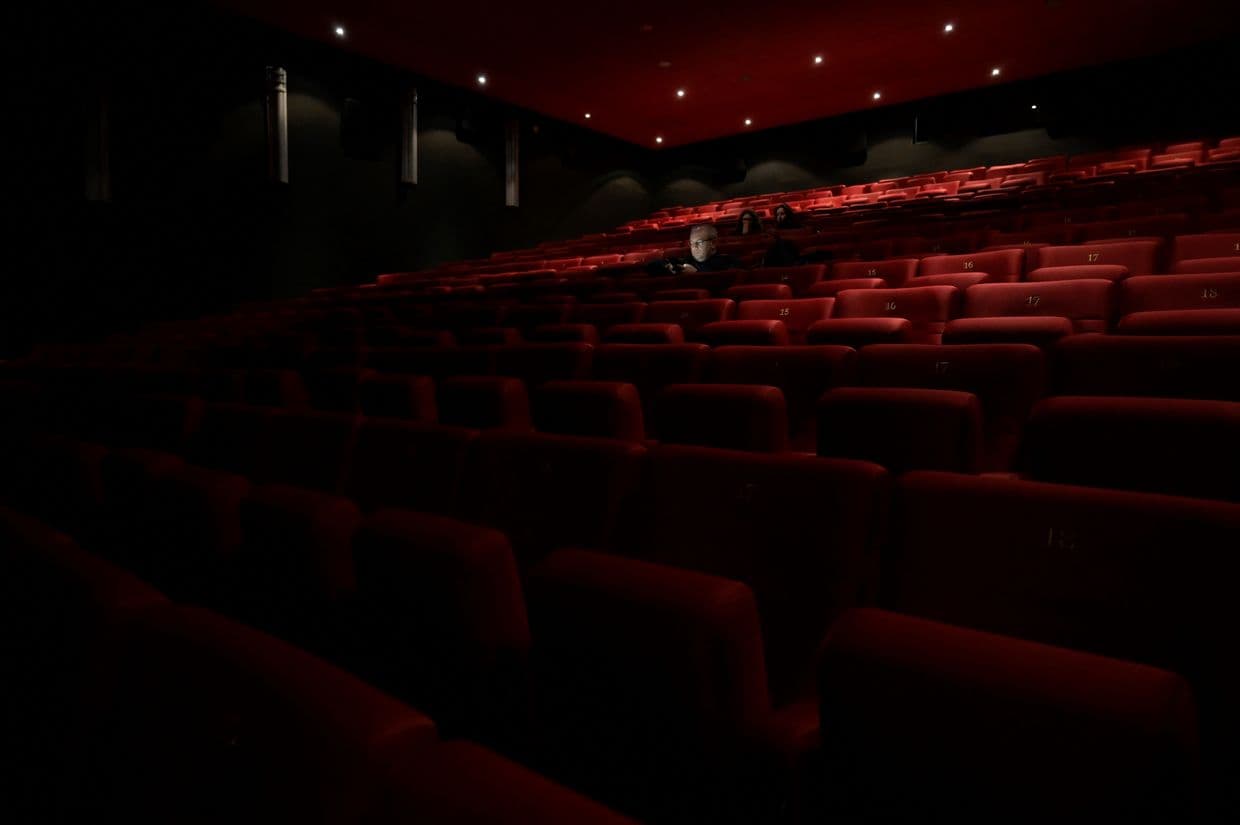
Few people are pictured in a screening room of the Oktyabr cinema in Moscow, Russia, on March 29, 2022. (Natalia Kolesnikova / AFP via Getty Images)
 on Google
After years of illegal screenings, Russians may soon lose access to major foreign films in their cinemas.
Since 2022, "pre-screening entertainment" — as the practice is known locally — has allowed Russian cinema-goers to watch Hollywood blockbusters, even as these cannot be legally distributed due to international sanctions imposed after Russia launched its full-scale invasion of Ukraine.
"Essentially, people buy tickets for a domestic film, but are shown an American blockbuster, technically for free, in violation of (international) copyright laws, before the start of the (Russian) film," explained a Russian film industry specialist who spoke to the Kyiv Independent on the condition of anonymity.
Alexey Voronkov, the president of Russia's Association of Cinema Owners, said on Sept. 7 that the situation might soon change, with upcoming installments of the Dune and Avengers sagas, as well as other new Hollywood blockbusters, unlikely to be screened anytime soon.
"I think this practice will end in the next two to three months," Voronkov told Russian media, explaining that the screenings were unlikely to resume anytime soon.
Why are Russians still watching Western hits?
Voronkov's announcement comes weeks after the monumental box office flop of Kolobok, a Russian animated film released in early August. Instead of the domestic movie featuring a bread-like creature, Russians appear to have massively watched Hollywood's new Spider-Man sequel.
To watch the film, however, they needed to wait a few extra weeks: Russia's Spider-Man premiere was postponed on government orders, Russian media reported, to give Kolobok a chance to reap at least some box office sales.
The Russian film received poor reviews domestically and was widely regarded as unpopular.
In the first weekend following its official premiere, the picture barely recouped the 250 million rubles ($3 million) in state subsidies that it received. In comparison, the new Spider-Man film is estimated to have grossed up to 900 million rubles ($10.7 million) at Russian box offices in its first days of screening, even with government-imposed restrictions.

In theory, U.S. blockbusters cannot be legally shown in Russia: all films must obtain a screening license from Russia's Culture Ministry, and this license can only be granted to companies that hold the copyright. And as all Hollywood distributors left the Russian market in 2022, obtaining such a copyright in Russia is not technically possible.
Hollywood films no more?
Since its introduction in 2022, pre-screening entertainment has been a legally dubious concept, with the practice also locally known as "gray" screenings, in reference to its unclear legal basis.
The practice clearly violates international copyright regulations because Russian film distributors typically buy copies in neighboring countries — such as Kazakhstan — from companies not authorized to conduct such sales.
The practice also violates Russian laws, even if, up till now, authorities have turned a blind eye to it. All films shown in local cinemas technically need to obtain a screening license — which, for Hollywood films, no company in Russia is legally entitled to request, due to copyright restrictions.
Despite these legal barriers, "pre-screening entertainment" seemed to have worked for years in Russia.

This situation, however, is set to change, with "no Russian film distributors" planning screenings of Dune 3 or Avengers: Doomsday, two Hollywood films which are supposed to premiere globally later this year, Voronkov said.
Recent legal changes have also made it harder to organize "gray" screenings. Since March 2026, Russia's Culture Ministry has been granted new regulatory competencies and can now more easily interfere with cinemas' operations.
Until recently, the strictest punishment theaters faced for screening a film without a license was a symbolic fine of up to 50,000 rubles ($590).
Under the new scheme, however, Russia's Culture Ministry will be able to conduct full-fledged investigations, and theaters could face more serious consequences, such as a 90-day forced closure.
More legal tricks — that are unlikely to change anything
As restrictions tighten, Voronkov noted that Russian cinemas could adopt an alternative approach to bypass legal obstacles to screening foreign blockbusters.
This would involve cinemas renting out their screening rooms to shell companies, which could then show Hollywood films, theoretically without the cinemas bearing any legal responsibility for the screenings.
That scheme might not work either, though, as renting companies would in any case need to use the cinema's equipment for screenings, meaning that the cinemas could not claim they are not participating in the scheme.

In any case, Russia's policy of imposing unpopular domestic films — at the expense of international blockbusters in cinemas — is already making theaters worry about how to keep their businesses running.
"This will mainly hit small, independent cinemas in Russia," the film industry specialist said. "For them, it will be more difficult to compensate for losses if 'pre-screening entertainment' (of Hollywood blockbusters) is banned, in one way or another. But for now, we're only hearing announcements; no decisions have been made on this yet."