'Hemingway Knows Nothing': Ukraine's writers are redefining literature of war
 on Google
When war, loss, and unimaginable suffering become routine, a book can offer a kind of lifeline — especially one by a writer who has lived through such an ordeal and tried to make sense of it.
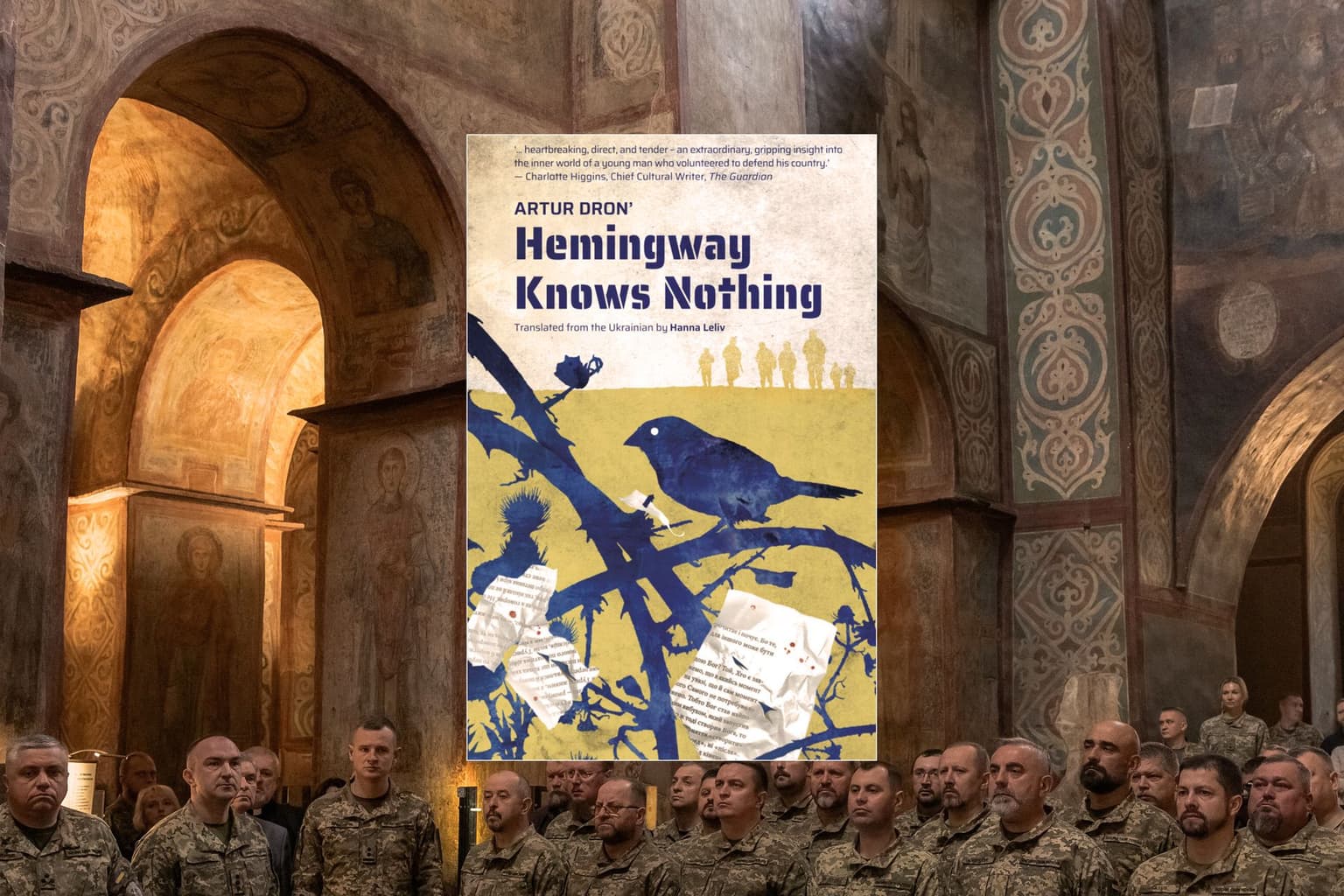
At the start of Russia’s full-scale war, some Ukrainians speculated if they’d see the rise of their own Ernest Hemingway: a writer whose books would not only capture the experience of a generation but come to define it.
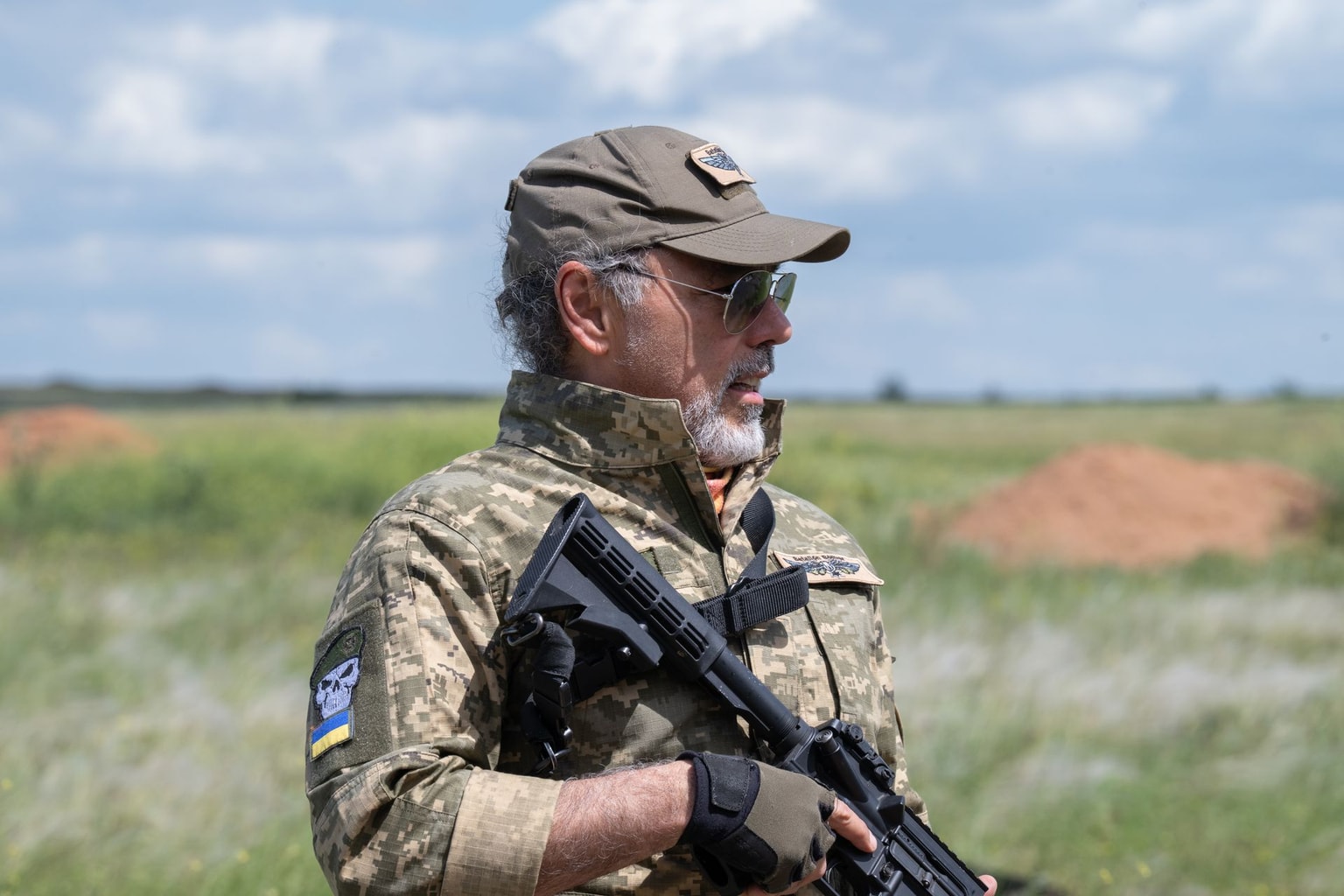
Yet it soon became clear that the old paradigms of war literature no longer spoke to them in quite the same way. Among those who sensed this was Artur Dron, a young writer who, after Russia invaded, joined the fight to defend the country.

“Hemingway knows nothing about (our) war. That’s it. For a long time, I believed in what Hemingway wrote, but I got a radically different war than the one he knew,” Dron writes in his essay collection “Hemingway Knows Nothing.”
“In 2022, it became clear that Ernest Hemingway couldn’t tell me the most important thing about what had been happening in my country since 2014.”
Originally published in Ukraine in 2025, Dron’s “Hemingway Knows Nothing” became a bestseller, with readers praising the book for how it explored the dynamics of front-line realities, the question of faith amid crisis, and how Russia’s war of total annihilation is compelling people to rethink everything they once thought they knew.
read also
It is set to be released in Hanna Leliv’s English translation by Jantar Publishing on Sept. 10.
The strength of the book is arguably Dron's thoughts on faith. Among the book’s most arresting passages are those that circle a question that has haunted writers across generations: How does one go on believing in God after witnessing the horrors of war? Moreover, is being faced with the prospect of one’s own death enough to inspire a previously lacking faith in God?
It all boils down, as Dron explains, to choice: the greatest blessing and curse bestowed by God upon man. When confronted by evil in the world, it is too easy to conclude that God “allowed” it to happen. Dron, however, writes that when people commit atrocities, it is not because God has turned away, but because they have turned away from God.
“It wasn’t God who drove tanks into Northern Saltivka in Kharkiv. It wasn’t God who fired a bullet into (my brother-in-arm’s) chest. It wasn’t God who bombed hundreds of churches in eastern Ukraine. It wasn’t God who destroyed Bakhmut and Mariupol. Human beings did that,” Dron writes.

Yet amid the horrors of war, as Dron notes, God does not abandon us. The self-sacrifice, courage, and moral authority shown by people in Ukraine — who choose to protect, help, and care for others even as they long for the chance to return to their ordinary, pre-war lives — are qualities that reveal God’s continued presence, despite the suffering Russia has inflicted upon them.
“The habit of seeing the heroes as ‘someone else’ makes it easy to justify inaction.”
In the book, Dron also explores the inevitable rifts in a society between those who went off to fight and those who did not. It's a common wartime theme, but one he approaches with unique frankness.
While it’s important to honor and thank those defenders who show remarkable bravery in wartime, Dron warns there’s also an inevitable mental trap: we can come to see their courage as so exceptional that ordinary people begin to believe they could never rise to such acts themselves.
“The habit of seeing the heroes as ‘someone else’ makes it easy to justify inaction,” Dron writes. But “joining the army now isn’t quite heroism. It’s maturity and awareness of the new mechanism of existence. You may become a hero on the battlefield. Or you might not. Not every soldier is a hero; any soldier will tell you that.”
The harsh reality — one that remains difficult for some to fully grasp even after more than four years of all-out war — is that Russia’s aim is to kill not only so-called “career” soldiers, but every man, woman, and child who proudly calls Ukraine home. That is why it’s the moral responsibility of everyone here to ask themselves what they can do to help bring Ukraine closer to victory, Dron argues.
That’s why each person who is proud to call Ukraine home must make the mental jump from believing in the Armed Forces of Ukraine to helping and eventually joining the military.

The title of the book draws its impact from the acceptance of this reality. Hemingway was of enlistment age when the U.S. entered World War I in April 1917, but he was ultimately disqualified on account of poor eyesight. Determined to make his way to Europe, he found his own way to the front, volunteering as a Red Cross ambulance driver. As he wrote to his sister Marcelline, “I can’t let a show like this go on without getting in on it.”
Hemingway would go on to become one of the foremost literary voices of the 20th century, his stark and unflinching prose shaping how generations understood the realities of war. His participation in World War I wasn’t motivated by an existential threat to his country’s existence, though. Despite the military draft, American society remained, for the most part, shielded from the devastation that was ravaging Europe.
Dron and his fellow Ukrainians, by contrast, are faced with a struggle against Russian aggression for the very survival of the nation — for Ukraine’s language, collective memory, and the right to dictate its own history. The stakes could not be higher, and the burden is shared by nearly every individual.
This difference doesn’t diminish Hemingway’s achievement or lessen the importance of his work. Rather, Dron’s so-called “dismissal” of Hemingway compels us to understand that literature must do more than recycle past frameworks — the horrors of Russia's full-scale war against Ukraine demand not only a forging of new stories but the moral reckonings that form their core.
Note from the author:
Hi, this is Kate Tsurkan, thanks for reading this article. There is an ever-increasing amount of books about or related to Ukraine, Russia, and Russia's ongoing war of aggression against Ukraine available to English-language readers, and I hope my recommendations prove useful when it comes to your next trip to the bookstore. If you like reading about this sort of thing, please consider supporting The Kyiv Independent.