Ukraine war latest: Cabinet appoints acting SBU chief as acting defense minister after day of uncertainty
 on Google

Key developments on July 17:
- Cabinet appoints Yvhen Khmara as acting defense minister after day of uncertainty
- Ukraine strikes oil refinery in Russia's Yaroslavl Oblast, vessels in Black, Azov seas, among other targets, General Staff says
- Ukrainian drones strike 12 Russian 'shadow fleet' vessels in Black Sea as Crimea comes under large-scale attack
- Russian Tu-95 bomber suffered 'critical damage' in strike on Engels air base, Zelensky says
- Ukrainian drone units strike over 1 million targets since start of 2026, including nearly 200,000 Russian troops, ministry says
- EU sanctions Russian drone manufacturers after deadly attacks on Kyiv
Ukraine's Cabinet of Ministers appointed Yevhen Khmara as acting defense minister, Prime Minister Serhii Koretskyi announced on July 17.
Koretskyi said the appointments, made in coordination with President Volodymyr Zelensky, are intended to ensure continuity in the work of Ukraine's defense policy institutions during the government transition.
After parliament approved the new Cabinet headed by Koretskyi on July 16, Defense Minister Mykhailo Fedorov automatically lost his post under Ukrainian law.
Zelensky said on July 16 that he had appointed acting Security Service of Ukraine (SBU) Chief Khmara as acting defense minister. Legally, however, the president does not have the authority to appoint an acting defense minister. Under Ukrainian law, that responsibility belongs to the Cabinet of Ministers.
Zelensky's decision to dismiss Fedorov from his role has been met with outrage across Ukrainian society, resulting in street protests.
Ukraine strikes oil refinery in Russia's Yaroslavl Oblast, vessels in Black, Azov seas, among other targets, General Staff says
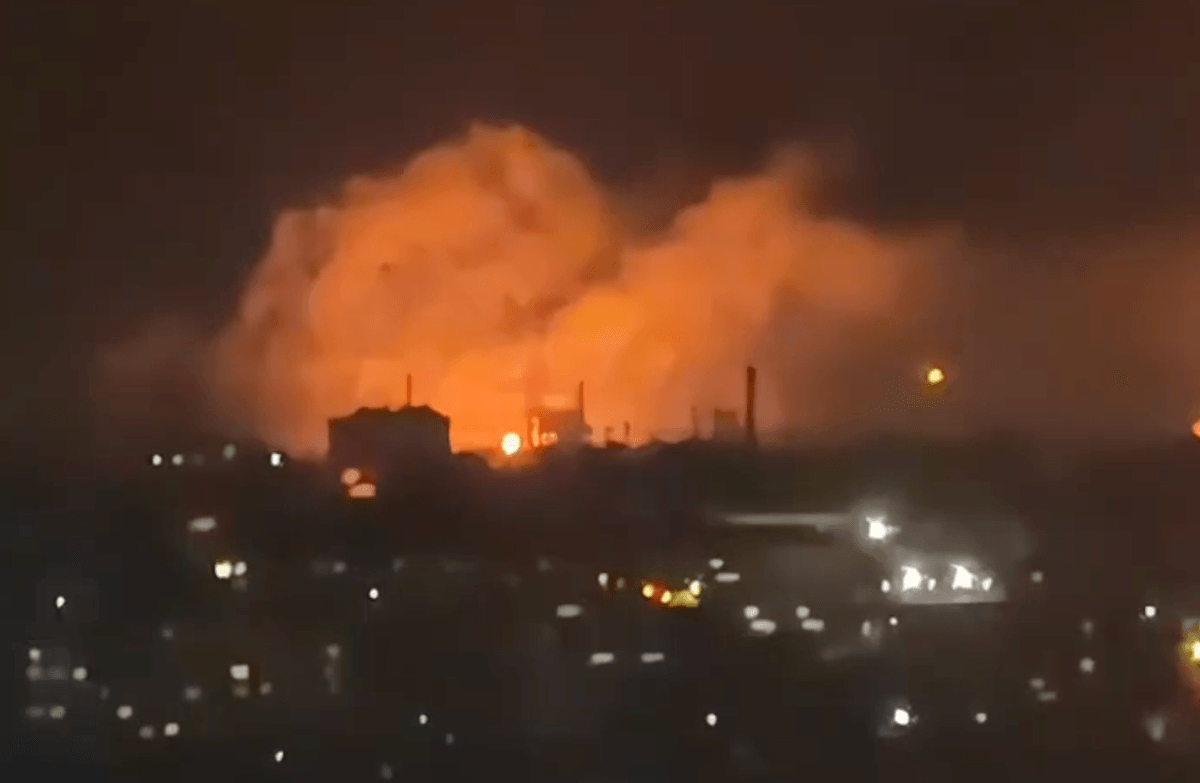
Ukrainian forces struck the Slavneft-Yanos oil refinery in Russia's Yaroslavl Oblast, as well as several Russian vessels in the Black Sea and the Sea of Azov, as part of a broader campaign against Russian military and energy targets, the General Staff said on July 17.
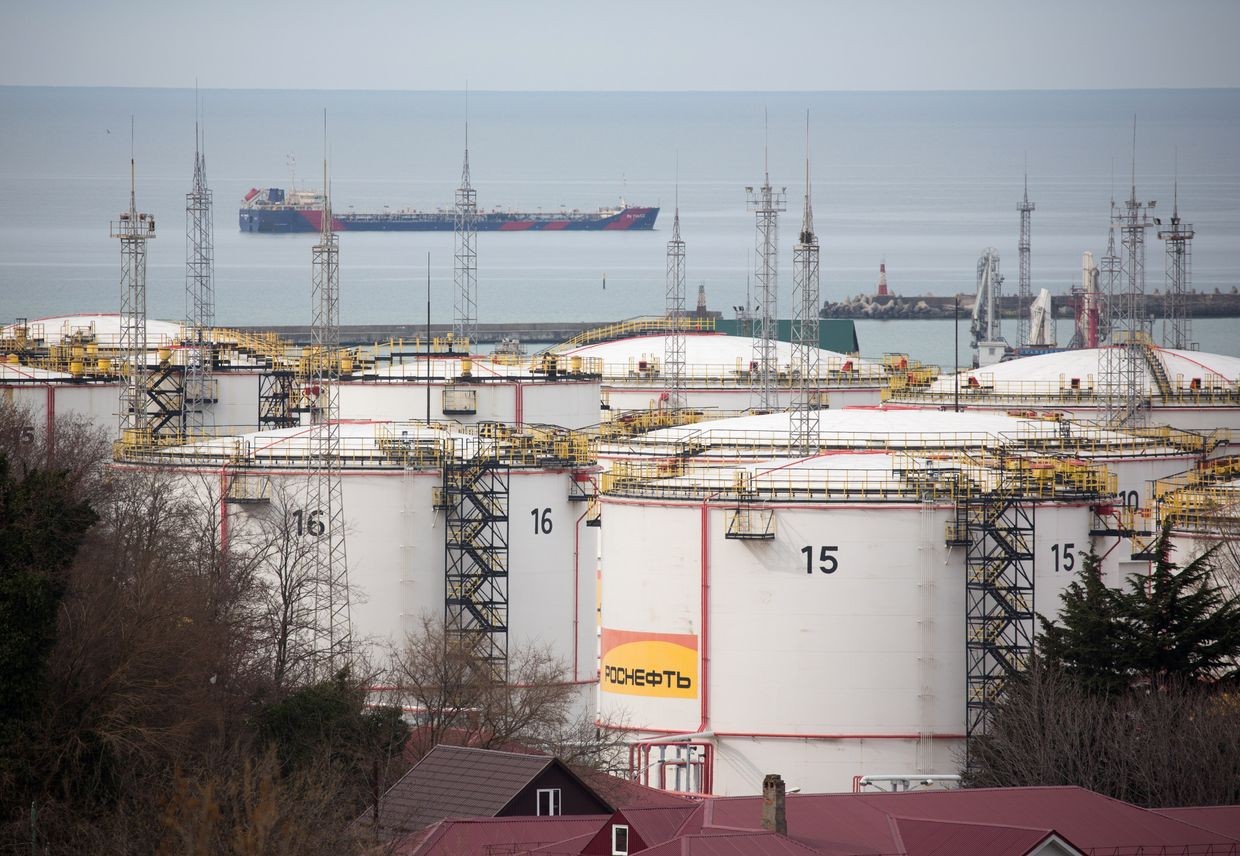
Ukraine struck two tankers, including a gas carrier, as well as a tugboat in the Black Sea and the Sea of Azov overnight on July 17. During the operation, Ukrainian forces also targeted the Project 10410 Svetlyak-class patrol ship in Kerch, Russian-occupied Crimea, according to the report.
The strikes also hit an oil terminal and a fuel and lubricants depot in Kerch, an oil depot and railway bridge in the Russian-occupied part of Donetsk Oblast, and a road bridge in Russia's Kursk Oblast, the General Staff said.
The General Staff also confirmed a strike on the Slavneft-Yanos oil refinery, which took place on July 16. The attack sparked a fire at the facility, according to the statement.
Slavneft-Yanos is one of Russia's largest oil refineries and the largest in the country's central region. The facility has an annual crude oil processing capacity of around 15 million metric tons, according to the General Staff.
Ukrainian drones strike 12 Russian 'shadow fleet' vessels in Black Sea as Crimea comes under large-scale attack
Ukrainian forces struck 12 Russian shadow fleet vessels in the Black Sea on July 17, Robert "Madyar" Brovdi, commander of Ukraine's Unmanned Systems Forces, said on Telegram.
The strikes came as Ukraine launched a large-scale attack on the Russian-occupied Crimean Peninsula. Explosions were reported across several cities, followed by fires at multiple locations.
Nine dry cargo ships, one oil tanker, one gas carrier, and one tugboat were hit in the Black Sea during the attack, Brovdi said.
According to Brovdi, the operation, codenamed "Molochka," has been underway since July 6 and aims to destroy Russia's shadow fleet operating in the Azov and Black Seas. During that period, Ukraine's Unmanned Systems Forces struck 159 vessels.
Brovdi said 117 of the vessels were struck in the Sea of Azov and another 42 in the Black Sea.
Russian Tu-95 bomber suffered 'critical damage' in strike on Engels air base, Zelensky says
The Security Service of Ukraine (SBU) destroyed a Russian Tu-95 strategic bomber at the Engels air base in Russia's Saratov Oblast, nearly 800 kilometers (500 miles) from the Ukrainian border, President Volodymyr Zelensky and the agency announced on July 17.
The Tu-95 is a long-range strategic bomber that entered service with the Soviet Air Force in 1956. Russia has repeatedly used the aircraft to launch cruise missile strikes against Ukraine from within Russian airspace.
"We are increasing the price Russia pays for its aggression against our country and our people," Zelensky said on X. "Thank you to everyone who is helping!"
The bomber suffered "critical damage," with the attack completely severing its tail section, according to the SBU.
The aircraft had been regularly used by Russian forces to carry out strikes against Ukraine, the SBU said on Telegram.
"Every strategic bomber taken out of action means dozens of missiles that are never launched at Ukrainian cities, Ukrainian lives saved, and tens of millions of dollars in irrecoverable losses for the enemy," the SBU said.
"Russian strategic aviation can no longer feel safe even at its most remote military airfields."
read also
Ukrainian drone units strike over 1 million targets since start of 2026, including nearly 200,000 Russian troops, ministry says
Ukrainian drone units have struck more than 1 million verified targets since the start of 2026, the Defense Ministry said on July 17.
In the fifth year of Russia's full-scale invasion, the nature of warfare has changed significantly, with drones becoming a central component of both Ukrainian and Russian military operations. Their use now extends beyond the front line to deep- and mid-range strikes hundreds of kilometers from the battlefield.
Ukrainian forces are using unmanned aerial vehicles (UAVs) to strike around 90% of Russian targets, according to the Defense Ministry.
The targets hit include air defense systems, electronic warfare systems, UAVs, ground-based robotic systems, vehicles, armored equipment, and command posts.
Russian forces have also suffered significant personnel losses from Ukrainian drone strikes. Since the start of 2026, Ukrainian UAV attacks have killed or seriously wounded 193,500 Russian soldiers, according to the ministry.
EU sanctions Russian drone manufacturers after deadly attacks on Kyiv
EU ministers unanimously approved six new sanctions listings targeting Moscow's drone manufacturing and energy sectors on July 17.
The move comes in response to Russian missile and drone attacks on Kyiv on July 1 and July 5 that killed dozens of people and injured hundreds more. Kaja Kallas, the EU's top diplomat, earlier wrote on X that she would propose new sanctions in response to the attacks.
"The more Moscow attacks civilians, the more sanctions must be imposed," she said.
The listings cover five entities, all part of Russia's ABS Electro group of companies, as well as the group's director, Irina Kharisova, according to an EU press release.
"Notably, these entities contribute to the development of systems which enhance the capacity of Russian Unmanned Aerial Vehicles – such as Shahed and Geran type drones – by increasing their resistance against electronic warfare," reads the EU statement.
Kharisova is also director of the company ABS ZEIM Automation, which the EU's official sanctions listing explains provides equipment to Russian oil and gas companies, a "substantial source of revenue" for the Russian government.