The EU should, can, and will hold the line on Russia, says sanctions chief
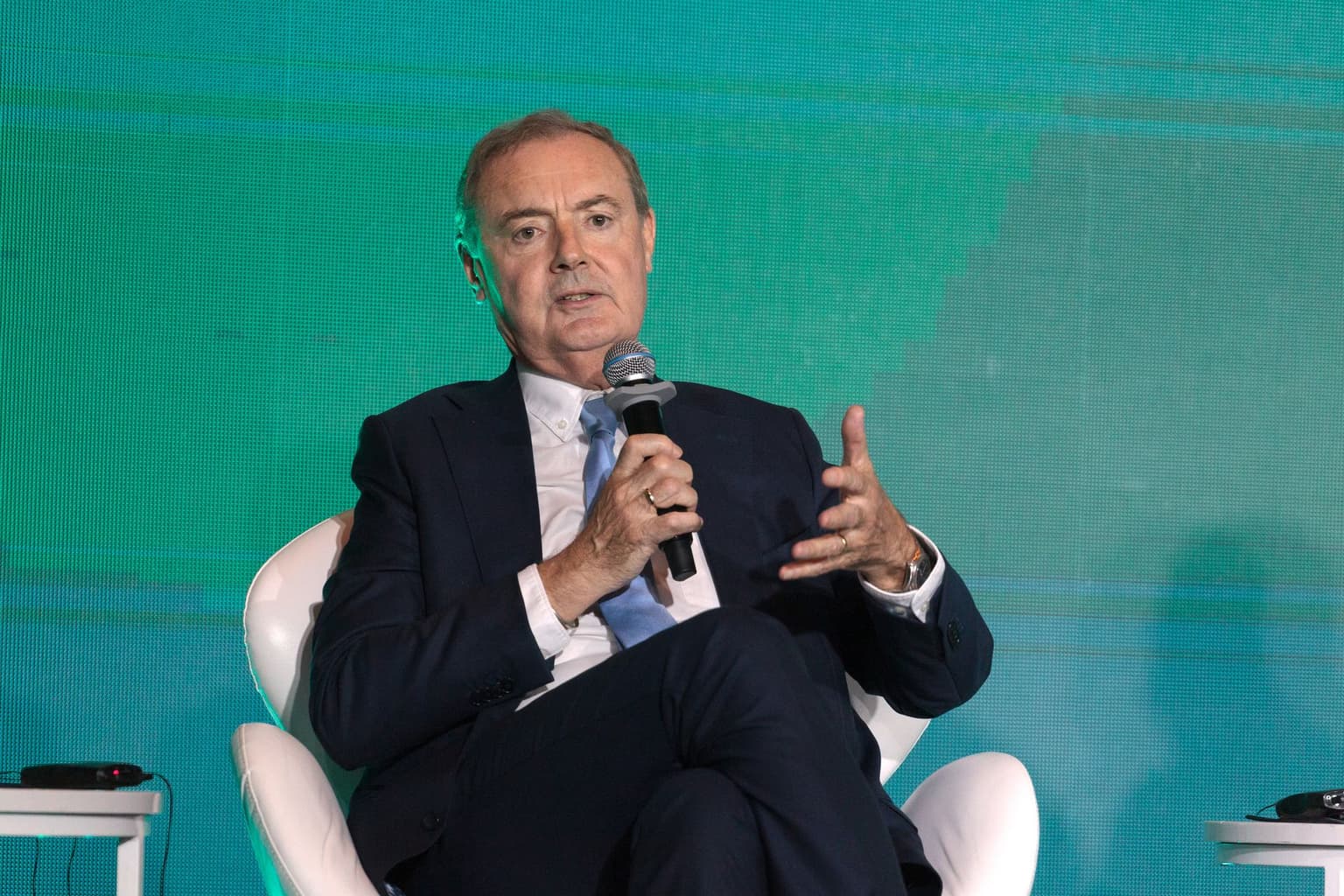
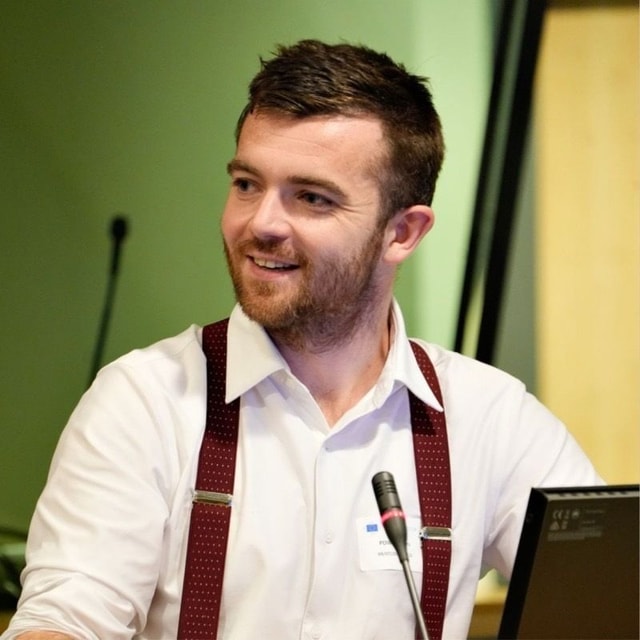
EU's Sanctions Envoy David O'Sullivan speaks at a conference on additional sanctions against Russia in Kyiv, Ukraine, on June 27, 2025. (Kyrylo Chubotin / Ukrinform / NurPhoto / Getty Images)
 on Google
BRUSSELS, Belgium — With negotiations in full flow over its next package of sanctions, the EU's Sanctions Envoy David O'Sullivan explained in an interview with the Kyiv Independent just how successful sanctions against Russia have been, and why he is confident the bloc will hold the line for as long as it needs to.
The scale of the EU's decoupling from Russia is huge, with trade down from roughly 260 billion euros ($295 billion) before Moscow launched its full-scale invasion to only 58 billion euros ($65 billion) now, a more than 75% drop.
"We are very much, I think, in the lead," O'Sullivan said, noting that on some aspects of EU-Russia trade, like energy imports, some "thought (decoupling) would be unlikely ever to happen."
Of the nearly 60 billion remaining, the EU is not aiming necessarily to ban all of it.
"It largely consists of pharmaceuticals, medical devices, things for which we have humanitarian exceptions, plus a certain amount of agricultural goods, which we have not wanted to cut back on because it doesn't really affect the war machine," O'Sullivan said.
He mentioned a few dependencies remain, "bits and pieces" such as nuclear fuel, but said the EU was still making progress.
"You can't completely decouple that over two or three years, but we're getting very close to it," he said.
O'Sullivan was appointed as the EU's first sanctions envoy, "basically the external face of our sanctions policy," as he puts it, in the wake of Russia's full-scale invasion in 2022.
He is dedicated solely to sanctions in support of Ukraine, and the main work of the role, he says, is to talk to third countries to keep them aligned.

Because sanctions are not UN-mandated and thus not legally binding under international law, "the moral and economic force of our sanctions comes from the very large coalition that we have," O'Sullivan explained.
He therefore meets with the G7 and other cooperating countries such as Australia, South Korea, Norway, and Switzerland.
Sometimes he travels jointly with partners such as the U.S. and the U.K. to third countries experiencing difficulties with applying sanctions.
"I've spent a lot of my time in Central Asia, in the Caucasus, Turkey, Serbia, the UAE, and Southeast Asia," O'Sullivan said.
Several countries on that list have appeared on more recent EU sanctions lists to prevent Russia from using them to evade sanctions.
The pressure on Russia will not drop
Following the U.S.' attack on Iran in February 2026, Washington granted multiple sanctions waivers on Russia energy, and, in May, the U.K. announced sanctions measures containing third-country exemptions, also on energy.
O'Sullivan said, "I don't think it represents a fundamental change in sanctions policy by any means," considering the measures to be short-term and in direct response to spiking energy prices.
Since he spoke with the Kyiv Independent, the U.K. announced it would tighten up on the previous third-country exemption, with all imports of diesel and jet fuel derived from Russian crude oil to be banned by Jan. 1, 2027.
And the EU is preparing its 21st sanctions package, which is expected to be adopted in July.
Nor will it stop there.
"I think we will constantly need additional packages because it's not a static situation, it's a dynamic situation," O'Sullivan said, as Russia works to identify new ways to circumvent the imposed restrictions.
But he hopes to move from packages to "constant rolling listings, rolling adaptations."
That idea is legally possible, "it just requires member states to have a self-denying ordinance of not wanting to say, as long as we're doing this, I would also like you to do that," he said.
This approach is now gaining traction, with EU foreign ministers having passed a so-called mini-sanctions package on June 15, and the bloc agreeing that sanctions would now be renewed annually instead of every six months.
O'Sullivan told the Kyiv Independent that possible new sanctions are constantly suggested by EU countries, the European Commission's staff, as well as by journalists and NGOs.
However, sanctions listings always require unanimity by the EU's 27 countries to pass, and some of those suggestions, whether alumina in Ireland, steel in Belgium, or even the head of Russia's Orthodox Church, remain blocked.
But O'Sullivan thinks the sanctions must continue, even if it might sometimes be painful.
"The security architecture of the European continent is in play here. So if we have to take some additional economic pain, well, so be it," he said.
"I don't think you can push back against unprovoked Russian aggression while saying, well, we're not willing to take any pain. That just doesn't make sense," he added.
He conceded that companies and countries have had to make adjustments when new sanctions enter force, but he believes many have found alternative markets.
"I don't think there are many companies that have had to shut down their operation because we've put sanctions on their exports to Russia," O'Sullivan said.
And ultimately, "nothing compares to the pain that the Ukrainian people are going through, both in human and material terms, in terms of what's happening in their daily lives, but also economically."

While the EU's sanctions envoy does not know for how long he will serve in post, he said "I'm here as long as I can be useful."
"People ask me, do I enjoy it? And I always hesitate and say, how can you enjoy something which is part of a war?"
But O'Sullivan said he nevertheless finds the job "professionally very challenging and rewarding."
He is most grateful for his colleagues in the European Commission and the EU's External Action Service, about whom he emphasized that "the people in Ukraine should understand that we have here small teams of people who are working night and day to make these sanctions as effective as possible, as painful (for Russia) as possible."