Russia reduces barge barriers protecting Crimean Bridge by half in a month
 on Google
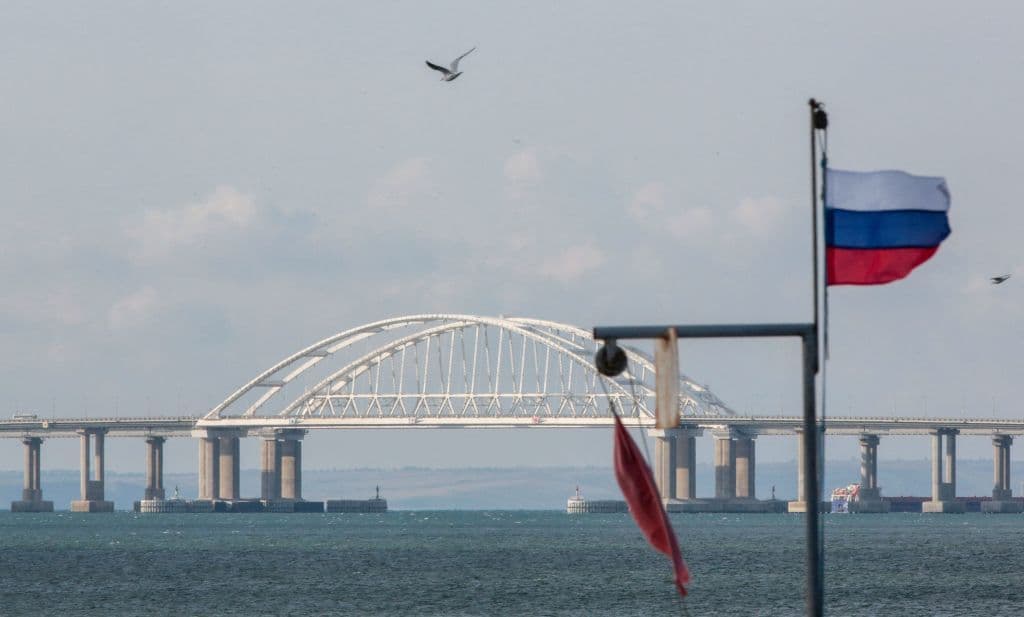
The number of barges Russia has deployed in the Kerch Strait to protect the illegal Crimean Bridge against Ukrainian maritime drones has halved in a month, the Center of Journalistic Investigations reported on Dec. 10.
The barriers form part of a network of measures, both on land and sea, set up by Moscow to protect the bridge after multiple successful Ukrainian attacks.
Satellite images from Nov. 8 showed 34 barges arranged in two rows near the shipping channel in the Kerch Strait, installed between July 27 and Aug. 8.
Recent Sentinel-2 satellite images from Dec. 8 reveal only 18 barges remaining between Tuzla Island and the Kerch Peninsula. The fate of the other 16 vessels is unclear.
On Sept. 30, it was reported that barriers intended to protect the bridge from attacks were washed ashore after a storm, with plastic and metal barrels connected by frames scattered on Kerch beaches.
The 19-kilometer-long Crimean Bridge, constructed following Russia’s illegal occupation of Crimea in 2014 and completed in 2018, serves as a vital supply route for Russian forces.
The bridge has been targeted by Ukraine multiple times, suffering heavy damage in strikes in October 2022 and July 2023.
The Crimean bridge remains a focal point of the conflict and is also the subject of a legal dispute between Ukraine and Russia at the Permanent Court of Arbitration.