Russia brings back 'pseudo-historian' Medinsky to head peace talks, reversing shift toward 'constructive' diplomacy
 on Google
Editor's note: This story has been updated to include information about the Ukrainian delegation.
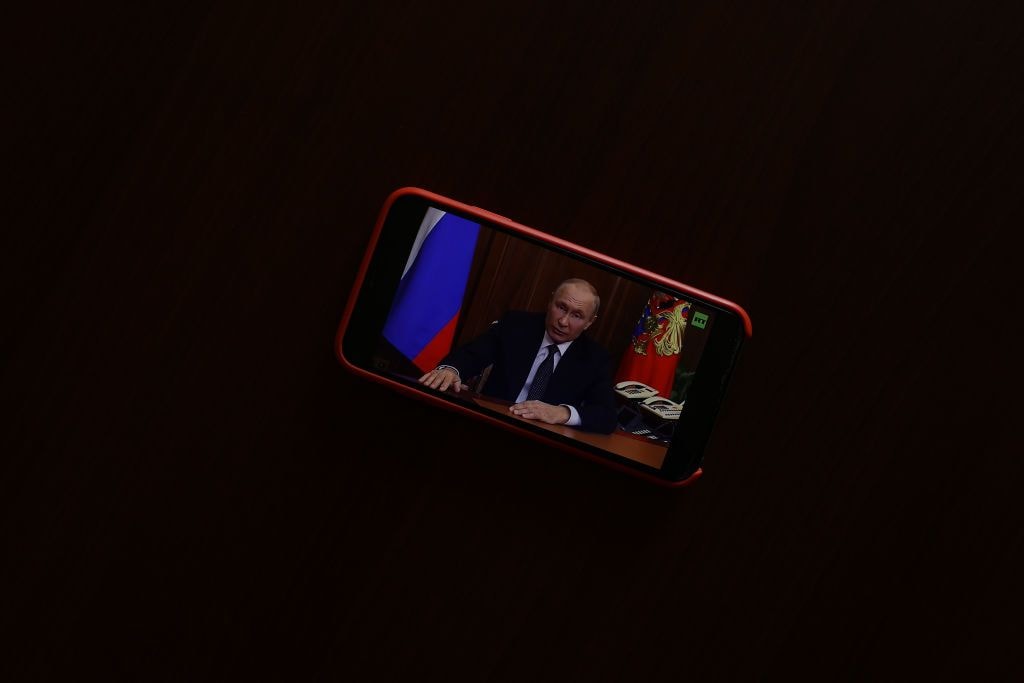
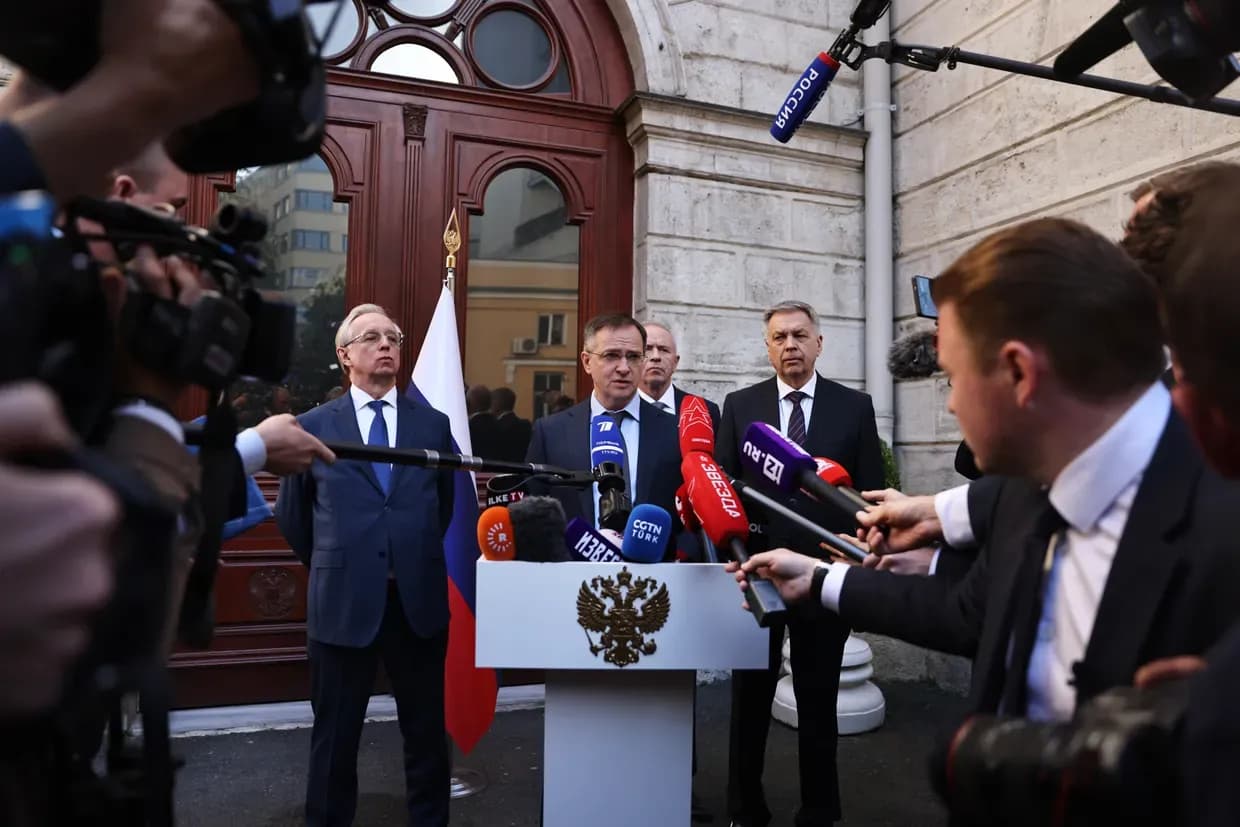
Russia will send presidential aide Vladimir Medinsky to lead its delegation at the next round of talks with Ukrainian and U.S. officials on Feb. 17–18 in Geneva, Kremlin spokesperson Dmitry Peskov said on Feb. 13.
The return of Medinsky signals a potential hardening of Moscow's stance during the negotiations, given his history of uncompromising rhetoric in previous rounds of talks.
Medinsky previously led Russia's delegation during direct negotiations in 2025, after which Ukrainian officials described him as a "pseudo-historian" and accused him of taking a hard-line position.
During negotiations, Medinsky reportedly warned that Russia was prepared to continue fighting indefinitely and threatened further territorial advances if Kyiv refused Moscow's demands.
Bloomberg earlier reported that U.S. officials had also signaled to their Russian counterparts a preference to limit the involvement of hardliners like Medinsky in the peace process.
Medinsky also headed Russia's delegation during the March–April 2022 talks in Istanbul.
In the most recent round of negotiations, Russia's delegation was led by Admiral Igor Kostyukov, chief of military intelligence, alongside senior Defense Ministry officials.
Ukrainian representatives described that team as more "constructive" and said it reflected a "qualitative change" compared to Medinsky's previous role.
The venue shift also sparked confusion after President Volodymyr Zelensky said earlier this week that Washington had proposed hosting the meeting on U.S. soil, in Miami.
"The American side has proposed a meeting in America, in Miami, next week. And we immediately confirmed it," Zelensky said on Feb. 11.
Later on Feb. 13, Zelensky's adviser Dmytro Lytvyn confirmed the talks would take place in Geneva.
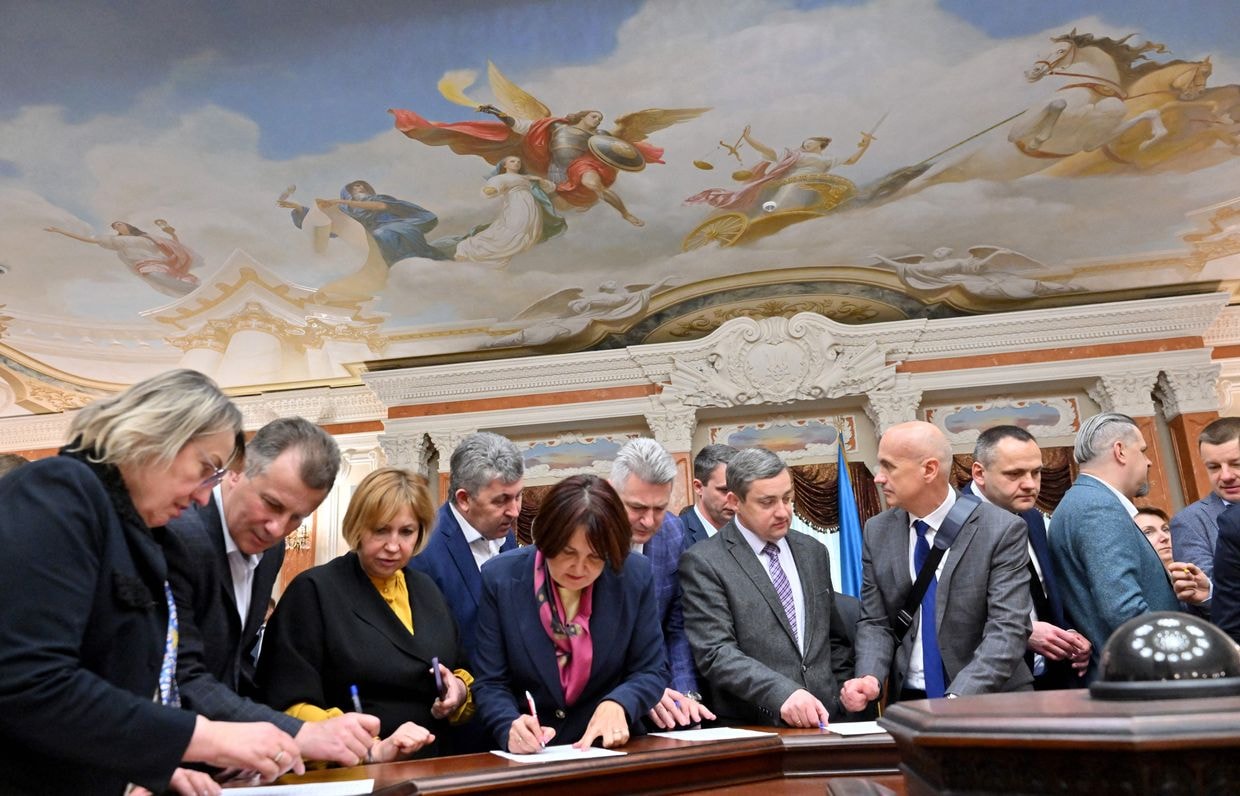
The Ukrainian delegation will still participate at the highest level, despite Medinsky now heading the Russian team.
Kyiv is sending National Security and Defense Council Secretary Rustem Umerov, Kyrylo Budanov — Zelensky's chief of staff and former spy chief — and other senior officials.
"The team was formed taking into account the military, political, and security components of the process," Umerov said. "The goal remains unchanged—a stable and lasting peace."
The upcoming talks come amid renewed Russian criticism of the broader peace process. While U.S., Ukrainian, and Russian officials met in trilateral formats in January and early February, the Kremlin has publicly questioned key elements of the proposed plan.
Russian Foreign Minister Sergey Lavrov on Feb. 11 effectively dismissed a U.S.-Ukraine 20-point plan framework, which had been expected to form the basis for peace negotiations.
Lavrov said that ahead of the August summit in Alaska, U.S. Special Envoy Steve Witkoff handed Moscow a document outlining key issues "in line with realities on the ground."
The minister claimed that the sides had identified "real approaches based on the American initiative" that "opened a path to peace" and could have formed the basis for a final agreement.
"All subsequent versions are the result of an attempt by Zelensky and (Europe) to override the American initiative," Lavrov said. "Now they are waving around some kind of 'document' with 20 points, which no one has given us either officially or unofficially."
The 20-point framework Lavrov referenced was developed by U.S. and Ukrainian officials in late December 2025. An earlier 28-point draft, widely viewed in Kyiv as pressuring Ukraine toward capitulation, was revised into a shorter document.
The minister also said the talks remain far from finished, dismissing what he called "enthusiastic perception" around the peace process that should not be embraced.
The Geneva meeting is expected to test whether the sides can bridge their competing versions of the plan, with territorial issues likely to top the agenda.